USDT Restrictions in Europe: What You Need to Know Now
When you use USDT, Tether’s USD-pegged stablecoin widely used for trading and payments. Also known as Tether, it’s the most traded crypto asset globally—but in Europe, its legal footing is crumbling. Since MiCA (Markets in Crypto-Assets Regulation) took effect, EU regulators have been tightening the screws on stablecoins that don’t meet strict reserve, transparency, and audit standards. USDT doesn’t. And that’s why banks, exchanges, and even wallet providers across Germany, France, and the Netherlands are quietly blocking it.
What’s really happening? MiCA, the EU’s new crypto law that forces stablecoins to prove they’re fully backed, audited monthly, and issued by licensed entities doesn’t ban USDT outright—but it makes it impossible to operate legally within the bloc unless Tether gets certified. Tether hasn’t applied. Meanwhile, Quantoz USDQ, a Dutch-licensed stablecoin that meets every MiCA requirement, is being pushed by European banks as the legal alternative. You can’t trade USDT on regulated EU exchanges anymore without risking fines. Even decentralized platforms are pulling support, afraid of being labeled unlicensed financial operators.
It’s not just about compliance—it’s about trust. In 2024, the EU’s financial watchdog flagged USDT’s reserve disclosures as opaque. Unlike USDC, which publishes real-time attestations, Tether still uses quarterly attestations from firms with no public audit trail. That’s a red flag for regulators who’ve seen how quickly unverified reserves can collapse. And now, with crypto mixers, tools like Tornado Cash once used to obscure transaction trails under heavy scrutiny, any stablecoin tied to anonymity risks is being treated like a liability. That’s why some EU users are switching to USDQ or even euro-backed tokens like EURS—legal, transparent, and approved.
What does this mean for you? If you’re holding USDT in a European wallet or using it to trade on an EU-based exchange, you’re already in a gray zone. Withdrawals may be delayed. Deposits might get rejected. And if you’re running a business that accepts USDT, you could be violating MiCA’s anti-money laundering rules. The clock is ticking. By 2025, unlicensed stablecoins will be effectively barred from EU markets. The real question isn’t whether USDT will be banned—it’s whether you’re ready for what comes after.
Below, you’ll find real-world breakdowns of how USDT restrictions are playing out across Europe, what alternatives actually work, and how to protect your assets before the next regulatory wave hits.
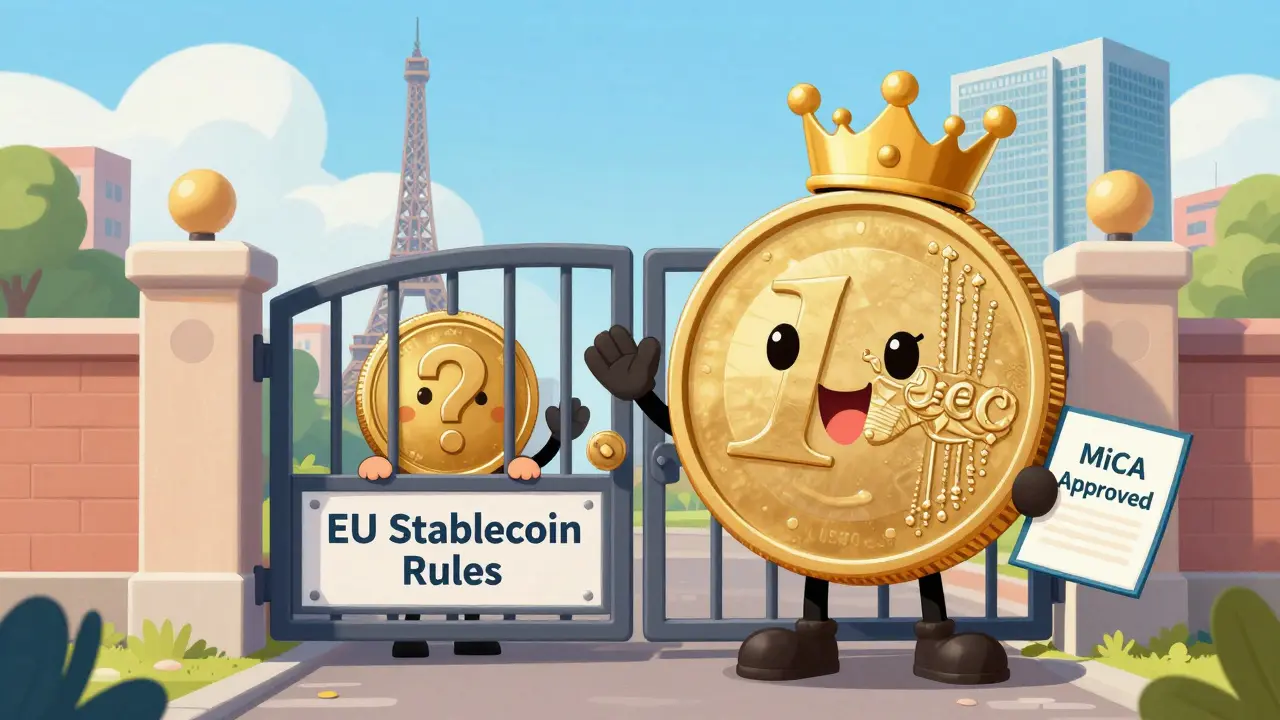
EU Stablecoin Restrictions Explained: What USDT and Other Tokens Can No Longer Do in Europe
EU's MiCA regulation banned trading of non-compliant stablecoins like USDT as of early 2025. Only fully cash-backed tokens like USDC are legal. Here's what changed, why, and what you can still do.