Stablecoin Compliance: What It Means and Why It Matters
When you hear stablecoin compliance, the set of legal and operational rules that ensure a stablecoin is trustworthy, transparent, and approved by financial authorities. It's not just about keeping the peg to the dollar—it's about proving you're not a shadow bank hiding behind code. In 2025, if your stablecoin doesn’t meet compliance standards, no one will touch it—not exchanges, not institutions, not even retail users who’ve been burned before.
MiCA compliant stablecoin, a type of digital currency issued under the EU’s Markets in Crypto-Assets Regulation that requires full reserve backing, regular audits, and clear issuer identity is now the gold standard. Projects like Quantoz USDQ, a euro-aligned stablecoin issued by a licensed Dutch EMI with 102% reserve backing aren’t just trying to compete with USDT—they’re building a legal alternative. Meanwhile, in places like Vietnam and Algeria, outright bans make compliance irrelevant. But in Europe, the U.S., and other regulated markets, ignoring compliance means getting shut down fast.
It’s not just about issuing coins. blockchain regulation, the growing global framework of laws that govern how crypto assets are issued, traded, and monitored now includes tools like Chainalysis and Elliptic, which track every dollar moved through stablecoin wallets. Regulators aren’t guessing anymore—they’re watching. And if your stablecoin is used for money laundering, you’re not just risking fines—you’re risking jail time, as seen with Tornado Cash developers.
What does this mean for you? If you’re holding a stablecoin, check who backs it. Is it audited? Is it licensed? Is it even legal in your country? The days of assuming "it’s just crypto" are over. The ones surviving aren’t the flashiest—they’re the ones with lawyers, auditors, and clear paper trails.
Below, you’ll find real-world examples of what happens when compliance is ignored, when it’s done right, and how regulators are changing the game for every crypto project—big or small.
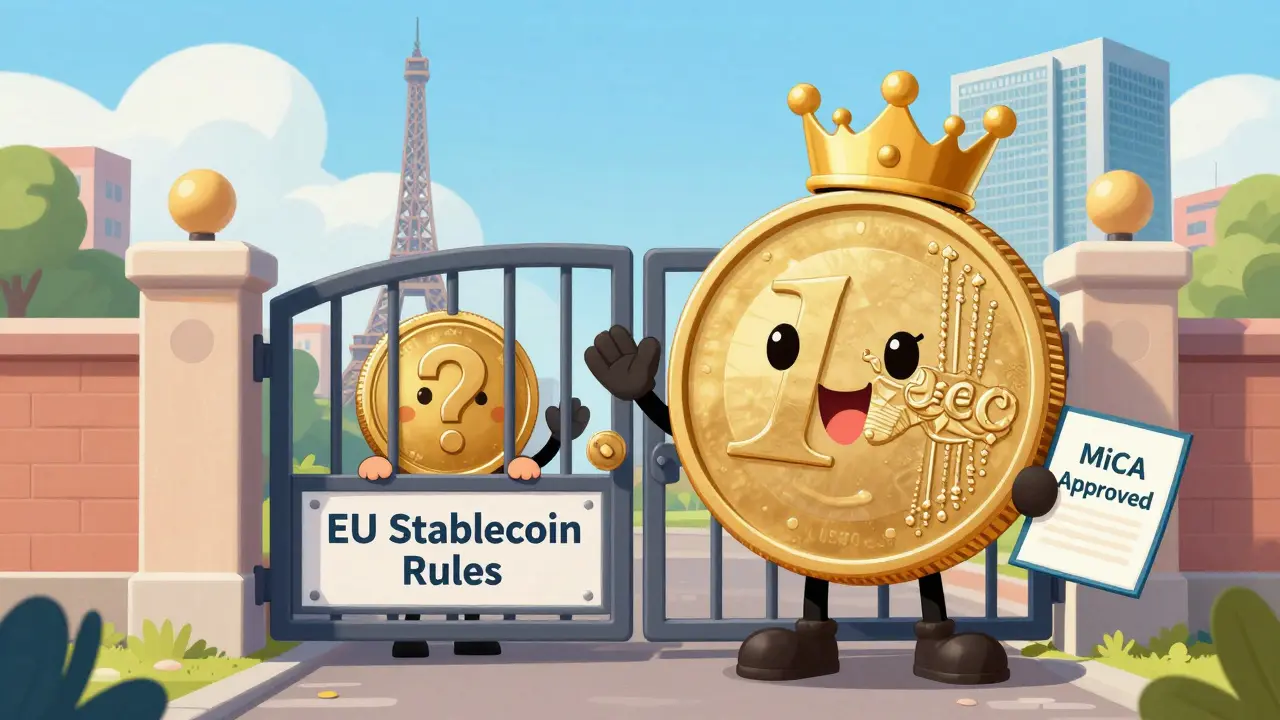
EU Stablecoin Restrictions Explained: What USDT and Other Tokens Can No Longer Do in Europe
EU's MiCA regulation banned trading of non-compliant stablecoins like USDT as of early 2025. Only fully cash-backed tokens like USDC are legal. Here's what changed, why, and what you can still do.