EU Stablecoin Rules: What You Need to Know About MiCA and Regulated Crypto
When we talk about EU stablecoin rules, the regulatory framework governing digital currencies pegged to fiat money within the European Union. Also known as MiCA stablecoin requirements, these rules are forcing crypto projects to prove they’re safe, transparent, and backed by real assets before they can operate in Europe. This isn’t just bureaucracy—it’s the difference between a stablecoin that works and one that vanishes overnight.
These rules center around MiCA, the Markets in Crypto-Assets regulation, the EU’s first unified crypto law. Also known as Crypto-Asset Market Regulation, it came into full effect in 2024 and requires every stablecoin issuer to be licensed, publish monthly reserve reports, and keep 100% of backing assets in liquid, low-risk instruments. That’s why Quantoz USDQ, a Dutch-issued stablecoin fully compliant with MiCA. Also known as USDQ, it’s one of the few stablecoins you can trust in Europe right now—because it has to be. Other coins like USDT or USDC aren’t banned, but they can’t be marketed or issued directly in the EU unless they meet these same standards.
It’s not just about stablecoins. MiCA transition periods, the deadlines crypto businesses have to comply with the new rules. Also known as CASP authorization timelines, vary by country and type of service. Missing your deadline means you can’t legally operate. That’s why some platforms are shutting down, while others are scrambling to get licensed. The EU isn’t trying to kill crypto—it’s trying to stop scams, fraud, and sudden collapses like what happened with KyberSwap Elastic. You’ll see this play out in the posts below: projects that followed the rules survive. Those that didn’t? They disappear.
What’s left is a cleaner, clearer market. If you’re using a stablecoin in Europe, you now have the right to know exactly where the money is held. If you’re running a crypto business, you can’t hide behind anonymity anymore. The EU stablecoin rules force clarity—and that’s good for everyone who’s tired of losing money to shady projects.
Below, you’ll find real-world examples of how these rules are shaping crypto in Europe—from compliant stablecoins like USDQ to the scams that got caught trying to bypass them. You’ll see what’s legal, what’s fake, and what’s still hanging in the balance. No fluff. Just what you need to know to stay safe and informed.
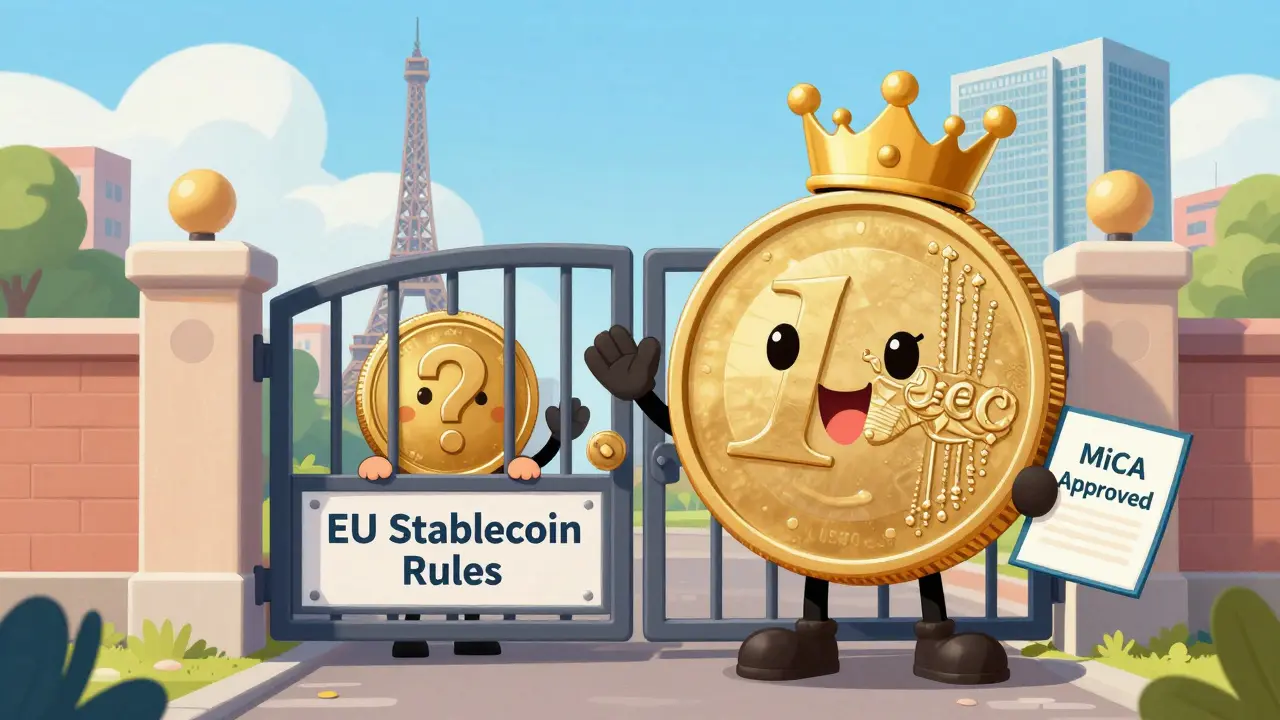
EU Stablecoin Restrictions Explained: What USDT and Other Tokens Can No Longer Do in Europe
EU's MiCA regulation banned trading of non-compliant stablecoins like USDT as of early 2025. Only fully cash-backed tokens like USDC are legal. Here's what changed, why, and what you can still do.