DEX Scam Checker
Check a DEX Contract Address
Enter a DEX contract address to verify its legitimacy. This tool checks key security indicators based on best practices from the article.
Enter a contract address to check
This tool simulates verification based on the article's guidance
How This Works
Based on the article, we check for these key indicators:
- Contract address validity (42 characters)
- Verified audit reports
- Active liquidity pools
- Official social media presence
Remember: Real DEXs like Uniswap or PancakeSwap have public records. Fake DEXs like 'Polyient Games DEX' don't.
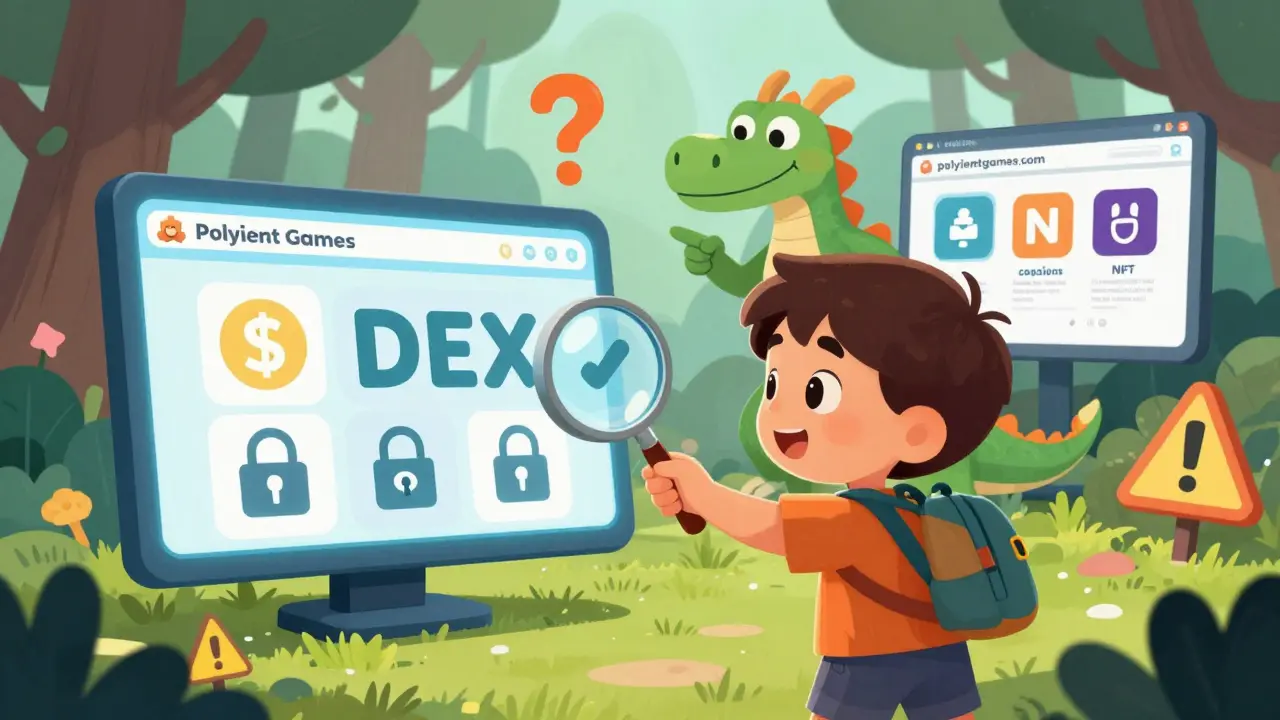
There’s no verified decentralized exchange called Polyient Games Decentralized Exchange. Not on CoinGecko. Not on DEX Screener. Not on any major blockchain explorer or crypto database as of December 2025. If you’ve seen ads, YouTube videos, or Telegram groups pushing this name, you’re likely being targeted by a scam or a fake project.
Why You Can’t Find Polyient Games DEX
Polyient Games is a real company. They’ve built blockchain-based games like Polyient Cricket and Polyient Golf, and they’ve issued their own token, $PG. But they’ve never launched a decentralized exchange. Their website, polyientgames.com, only lists game platforms, NFT marketplaces, and token utilities - nothing about trading pairs, liquidity pools, or a DEX interface.Scammers often borrow names from real projects to make their fake platforms look legitimate. They’ll copy logos, use similar domain names like polyientdex.io or polyient-exchange.com, and even fake whitepapers. Then they lure users with promises of high APYs, free token airdrops, or exclusive early access. Once you connect your wallet and approve a transaction, your funds vanish.
How to Spot a Fake DEX
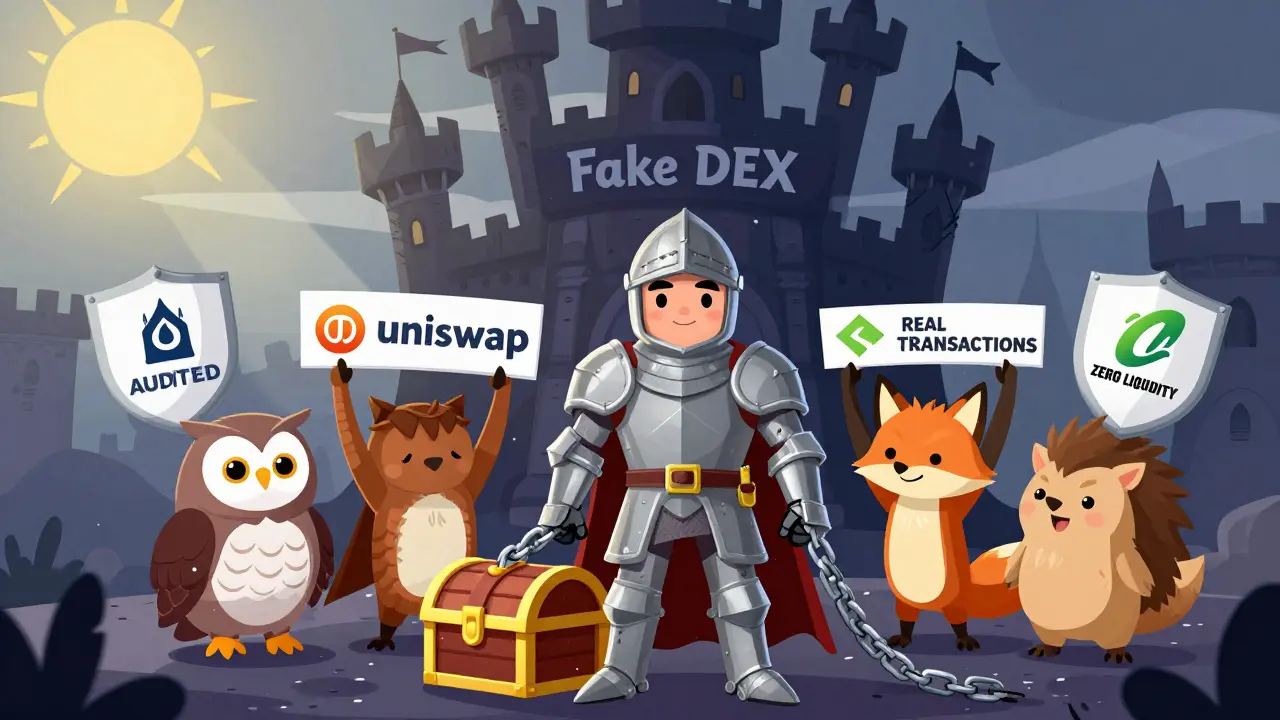
Here’s how to tell if a DEX is real or a trap:- Check the contract address - Real DEXs like Uniswap or SushiSwap have audited, publicly listed contracts on Etherscan or BscScan. A fake DEX will have a random 42-character address with zero transactions or liquidity.
- Look for audits - Reputable DEXs publish audit reports from firms like CertiK, Hacken, or PeckShield. If the site says “audited” but links to a 2019 blog post or a PDF you can’t verify, walk away.
- Search for community activity - Real projects have active Discord servers, Twitter/X accounts with thousands of followers, and GitHub repositories with recent commits. Polyient Games’ official channels have no mention of a DEX.
- Check liquidity pools - On DEX Screener, type in “Polyient Games DEX.” You’ll see zero results. If you find a pool with $500 in liquidity and 200 holders, it’s a honeypot.
What Polyient Games Actually Offers
If you’re interested in Polyient Games, here’s what you can actually use:- $PG token - Used for in-game purchases, staking, and governance in their blockchain games.
- Game NFTs - Players can buy, sell, and trade in-game items like cricket bats or golf clubs as NFTs.
- GameFi platform - A place to play crypto games and earn tokens, not trade them on a DEX.
You can buy $PG on centralized exchanges like Gate.io or MEXC. But there’s no official DEX from Polyient Games. Any site claiming otherwise is not affiliated with them.
Real Alternatives to a Fake DEX
If you want to trade crypto tokens in a safe, decentralized way, use established DEXs:| DEX | Chain | 24h Volume | Audited | Wallet Support |
|---|---|---|---|---|
| Uniswap | Ethereum | $1.2B | Yes | MetaMask, WalletConnect |
| PancakeSwap | BSC | $800M | Yes | MetaMask, Trust Wallet |
| Raydium | Solana | $350M | Yes | Phantom, Backpack |
| dYdX | Starknet | $200M | Yes | MetaMask, WalletConnect |
These platforms have been around for years, have millions in locked liquidity, and are regularly monitored by security researchers. None of them are named Polyient Games.

What to Do If You Already Lost Money
If you connected your wallet to a fake Polyient Games DEX and sent crypto:- Stop - Don’t send more. Don’t click any “recover funds” links - those are second-stage scams.
- Check your wallet - Use Etherscan or BscScan to see if your tokens were swapped or transferred. If they went to a new address with no history, recovery is nearly impossible.
- Report it - File a report with the FTC at reportfraud.ftc.gov or your local cybercrime unit. Include screenshots, transaction hashes, and the website URL.
- Secure your wallet - Change your password, revoke all token approvals using Revoke.cash, and consider moving funds to a new wallet.
Final Warning
The crypto space is full of cleverly disguised scams. Fake DEXs are one of the most common - and most destructive - because they trick you into giving up control of your own wallet. Polyient Games is a legitimate GameFi project. But they don’t run a DEX. If someone tells you otherwise, they’re trying to take your money.Stick to well-known platforms. Do your own research. Never trust a link sent in a DM. And if it sounds too good to be true - it is.
Is Polyient Games Decentralized Exchange real?
No, Polyient Games Decentralized Exchange does not exist. Polyient Games is a legitimate GameFi company that creates blockchain games and issues the $PG token, but they have never launched a decentralized exchange. Any website claiming to be their DEX is a scam.
Can I trade $PG on a DEX?
You can trade $PG on centralized exchanges like Gate.io and MEXC. There is no official DEX for $PG. Some third-party DEXs may list it if liquidity exists, but never trust a DEX labeled as "Polyient Games DEX" - that’s a fake site.
Why do scammers use the name Polyient Games?
Scammers use real project names because they’re recognizable. People trust brands they’ve heard of. By copying the Polyient Games logo and using similar domain names, scammers trick users into thinking the site is official. Always verify the official website URL and check social media for announcements.
How do I check if a DEX is safe?
Check the contract address on Etherscan or BscScan for transaction history and liquidity. Look for audit reports from reputable firms. Search for the DEX name on CoinGecko or DEX Screener - if it doesn’t appear, it’s likely fake. Also, check the project’s official Twitter/X and Discord for any mention of the exchange.
What should I do if I sent crypto to a fake Polyient Games DEX?
Stop all activity immediately. Do not send more funds. Use Revoke.cash to cancel token approvals. Report the scam to the FTC or your local cybercrime agency. Share the transaction hash in crypto scam reporting communities like ScamAdviser or Reddit’s r/CryptoScams. Recovery is unlikely, but you can prevent further loss.