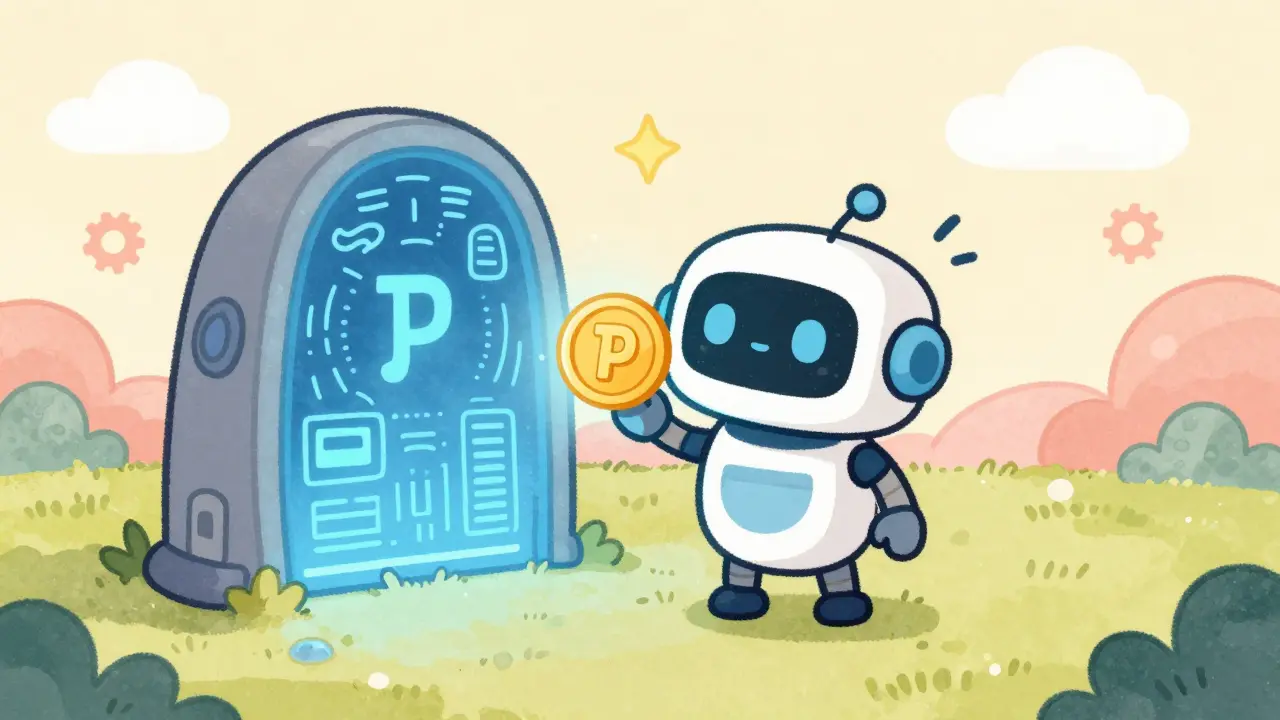
Have you heard whispers of XPi in your crypto circles and wondered if it’s the next big thing or just another fleeting meme? You are not alone. As the Pi Network continues to build its community, a wave of related tokens has emerged, and XPi (ticker: XPI) sits right at the center of that storm. But here is the hard truth: XPi is not an official part of the Pi Network. It is a community-driven experiment-a meme token built on the Solana blockchain that aims to bridge the gap between Pi enthusiasts and high-tech innovations like artificial intelligence and space exploration.
If you are holding a bag of XPi or thinking about buying some, you need to understand exactly what you are dealing with. This isn’t Bitcoin. It isn’t even Pi itself. It is a speculative asset with wild price swings, confusing supply data, and a roadmap that depends entirely on future developments in the Pi ecosystem. Let’s cut through the hype and look at the facts.
The Origin Story: Is XPi Official?
First things first: does the Pi Core Team back this project? The short answer is no. Despite the name and the branding, XPi is a third-party creation. It was launched around 2025 as a community initiative, though some market data traces its existence back to late 2023. There is no single founder or legal entity listed on major aggregators like CoinGecko or CoinMarketCap. Instead, it operates as a decentralized, community-owned project.
This distinction matters. When you buy XPi, you are betting on a grassroots movement, not an institutional product. The project describes itself as a "decentralized funding mechanism" for research in fields like Web3, AI, and decentralized science (DeSci). While that sounds ambitious, there is currently little public evidence of specific funded projects or partnerships. For now, it remains primarily a speculative meme asset tied to the broader Pi narrative.
Technical Foundation: Why Solana?
You might wonder why a token named after Pi runs on Solana. The reason is practicality. The Pi Network mainnet is still evolving its support for user-created tokens. Until Pi fully opens its doors to third-party token issuance and trading, developers need a host chain that is fast, cheap, and reliable. Enter Solana.
| Feature | Solana (Current) | Pi Network (Future Goal) |
|---|---|---|
| Status | Active deployment | Planned migration |
| Transaction Speed | High throughput (thousands per second) | To be determined by Pi SDK capabilities |
| Cost | Low fees | Dependent on Pi network conditions |
| Ecosystem Access | Immediate access to Solana DEXs and wallets | Limited until Pi mainnet tokenization matures |
By launching on Solana, XPi ensures it can be traded immediately on decentralized exchanges (DEXs) and held in standard Solana-compatible wallets. The plan is to migrate XPi to the Pi Network mainnet once Pi supports full token functionality. This migration is a key part of their long-term strategy, aiming to tap into Pi’s massive mobile user base. However, until that happens, XPi lives and breathes on Solana.
Tokenomics: The Supply Confusion
If there is one thing that screams "proceed with caution" in crypto, it is inconsistent data. And XPi delivers plenty of it. The maximum supply is widely reported as 1 billion (1,000,000,000) XPI tokens. But when it comes to how many are actually in circulation, every platform tells a different story.
- CoinTracker: Reported 0 tokens in circulation at one point, suggesting early-stage or pre-launch status.
- Bybit: Listed approximately 649.61 million circulating tokens in mid-2026.
- CoinGecko: Showed around 650 million circulating tokens.
- CoinMarketCap & Coinbase: Both have shown figures near 1 billion, implying nearly full circulation.
Why the discrepancy? It likely comes down to how each platform calculates "circulating supply." Some count only liquid tokens on exchanges, while others include self-reported numbers from the project team. For an investor, this ambiguity is a red flag. It means liquidity could be thinner than it appears, and large holders might be able to move the market significantly with relatively small trades.

Price Performance and Market Reality
Let’s talk money. XPi is a micro-cap cryptocurrency. Its market cap has fluctuated wildly, ranging from roughly $27,000 to over $1 million depending on the source and the date. In July 2026, prices hovered in the sub-cent range, often between $0.00004 and $0.0011 USD per token.
This volatility is typical for meme coins. One day, a tweet or a community rumor can spike the price by 20%. The next, silence can drain volume. Trading volumes are also modest-often under $1,000 in a 24-hour period on smaller platforms, though occasionally spiking higher during hype cycles. If you are looking for stable growth, XPi is not your friend. It is a high-risk, high-reward speculative play.
Rankings reflect this niche status. XPi usually sits outside the top 5,000 cryptocurrencies globally, ranking around #5,700 on CoinGecko and #7,800 on Bybit. It is far from the mainstream attention enjoyed by top-tier assets. This lack of visibility means fewer eyes on the contract, which brings us to security.
Security Risks and Due Diligence
Here is where most new investors get burned. Major data aggregators do not list formal security audits for the XPi smart contract. We don’t know if the mint authority has been renounced (meaning no one can create more tokens). We don’t know if freeze authorities exist (allowing creators to lock your funds). Without these details, you are trusting the code blindly.
While Solana itself is secure, the specific implementation of the XPi token is opaque. In the world of meme coins, "rug pulls"-where developers abandon the project and sell all their tokens-are a real risk. Always check the contract address on a block explorer before buying. Look for signs of centralization, such as a single wallet holding a massive percentage of the supply.

How to Buy and Store XPi
If you decide to take the plunge, here is how you actually interact with XPi. Since it lives on Solana, you cannot use a standard Ethereum wallet like MetaMask without configuring it for Solana networks. Instead, you’ll need a Solana-native wallet like Phantom or Solflare.
- Set up a Wallet: Download a reputable Solana wallet app and securely store your seed phrase offline.
- Fund Your Wallet: Buy SOL (Solana’s native currency) on a major exchange like Coinbase or Binance, then withdraw it to your wallet address.
- Find a DEX: Navigate to a decentralized exchange like Raydium or Jupiter. Connect your wallet.
- Swap for XPi: Search for the XPi token contract address. Double-check it against official community sources to avoid scams. Swap your SOL for XPi.
Note that centralized exchanges like Binance do not currently list XPi for direct trading. You will almost certainly be using decentralized platforms, which require a bit more technical know-how and carry the risk of interacting with unverified contracts.
Future Outlook: Migration to Pi Mainnet
The entire value proposition of XPi hinges on one thing: the successful migration to the Pi Network mainnet. The project’s documentation states that once Pi supports user-created tokens via its SDK, XPi plans to move there. This would theoretically give XPi access to Pi’s millions of users and its planned TokensDeFi system, where assets can be traded directly within the Pi ecosystem.
However, this is a "if" scenario. Pi Network’s timeline for full open mainnet functionality has shifted multiple times. If Pi delays further, XPi remains stranded on Solana, relying solely on meme culture and speculation for value. If Pi succeeds, XPi could become a pioneering example of community-led innovation within the Pi universe. Until then, it remains an experimental bet on both the Pi ecosystem’s success and the enduring power of internet memes.
Is XPi the same as Pi Coin?
No, they are completely different. Pi Coin is the native currency of the Pi Network, mined by users through the Pi app. XPi is a separate, community-created meme token that runs on the Solana blockchain. It is not officially endorsed by the Pi Core Team.
Can I buy XPi on Binance or Coinbase?
Not directly. Major centralized exchanges like Binance do not list XPi for trading. You typically need to use a decentralized exchange (DEX) on the Solana network, such as Raydium or Jupiter, swapping SOL for XPi.
What is the total supply of XPi?
The maximum supply is capped at 1 billion (1,000,000,000) XPI tokens. However, the circulating supply varies across data providers, ranging from roughly 650 million to nearly 1 billion, due to differing calculation methods.
Is XPi a safe investment?
XPi is considered a high-risk asset. It lacks formal security audits, has inconsistent supply data, and relies heavily on speculative demand. Only invest what you can afford to lose, and always verify contract addresses to avoid scams.
When will XPi migrate to the Pi Network?
There is no fixed date. The migration is planned for when the Pi Network mainnet fully supports user-created tokens and DeFi functionalities. This depends entirely on the development timeline of the Pi Core Team.
Who created XPi?
XPi is a community-driven project without a publicly identified individual founder or legal entity. It emerged as a third-party initiative within the Pi ecosystem, rather than being developed by the official Pi Core Team.


Michelle Walker
July 5 2026Stop pretending this is anything other than a scam waiting to happen. The supply data is a mess because nobody is tracking it properly, and that’s by design.