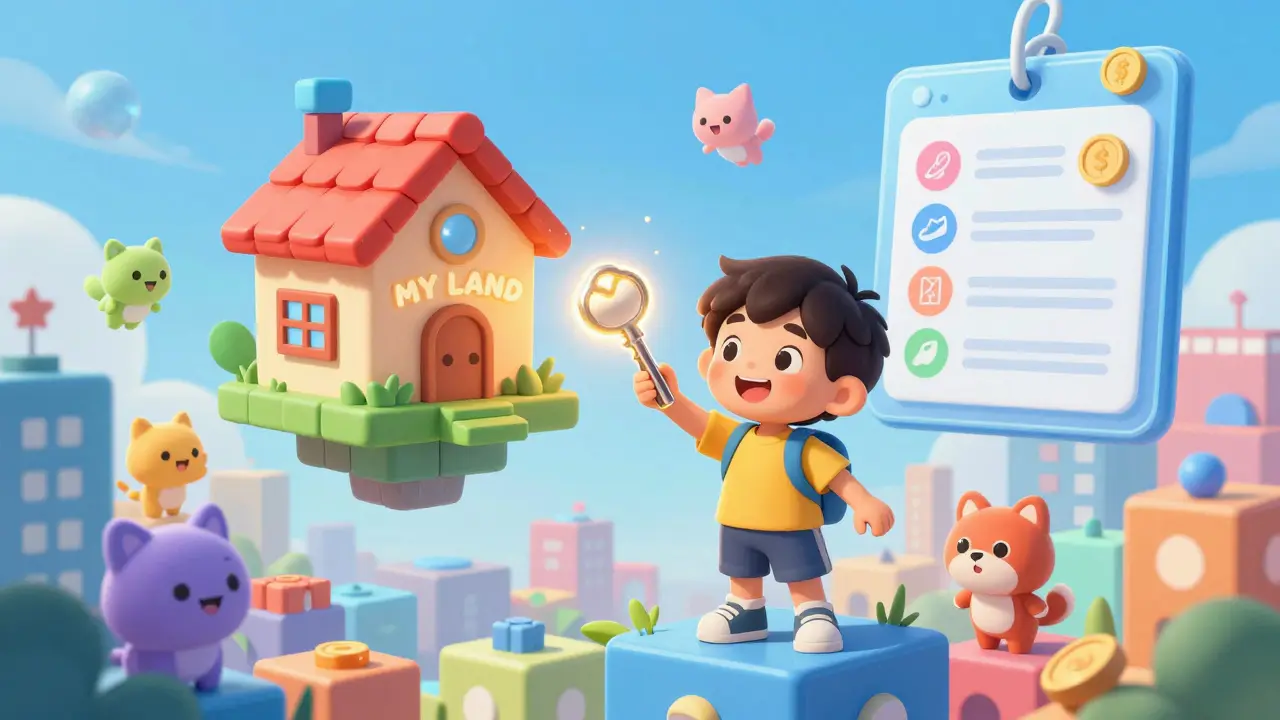
The blockchain metaverse isn't just another buzzword. It's a real, working blend of virtual worlds and blockchain technology that lets people own, trade, and build things in digital spaces-with proof that they actually own them. Unlike games where your items disappear when the server shuts down, the blockchain metaverse gives you real control over your digital stuff. Think of it like owning a house in a video game… but that house is recorded on a public ledger, can’t be deleted, and you can sell it for real money.
How It Works: Blockchain + Virtual Worlds
The blockchain metaverse combines two big ideas: immersive virtual environments (like VR worlds you can walk around in) and blockchain, the same tech behind Bitcoin. Blockchain keeps a permanent, unchangeable record of every transaction. In this case, it tracks who owns what in the virtual world-whether it’s a plot of land, a digital sneaker, or a piece of art.
Platforms like Decentraland and The Sandbox use Ethereum’s blockchain to make this happen. Every piece of virtual land, called a LAND, is a unique NFT (non-fungible token). There are only 93,686 LAND parcels in Decentraland. Each one has its own coordinates, like a real street address. If you buy one, you don’t just get access-you own it. The private key to that NFT is yours. No company can take it away.
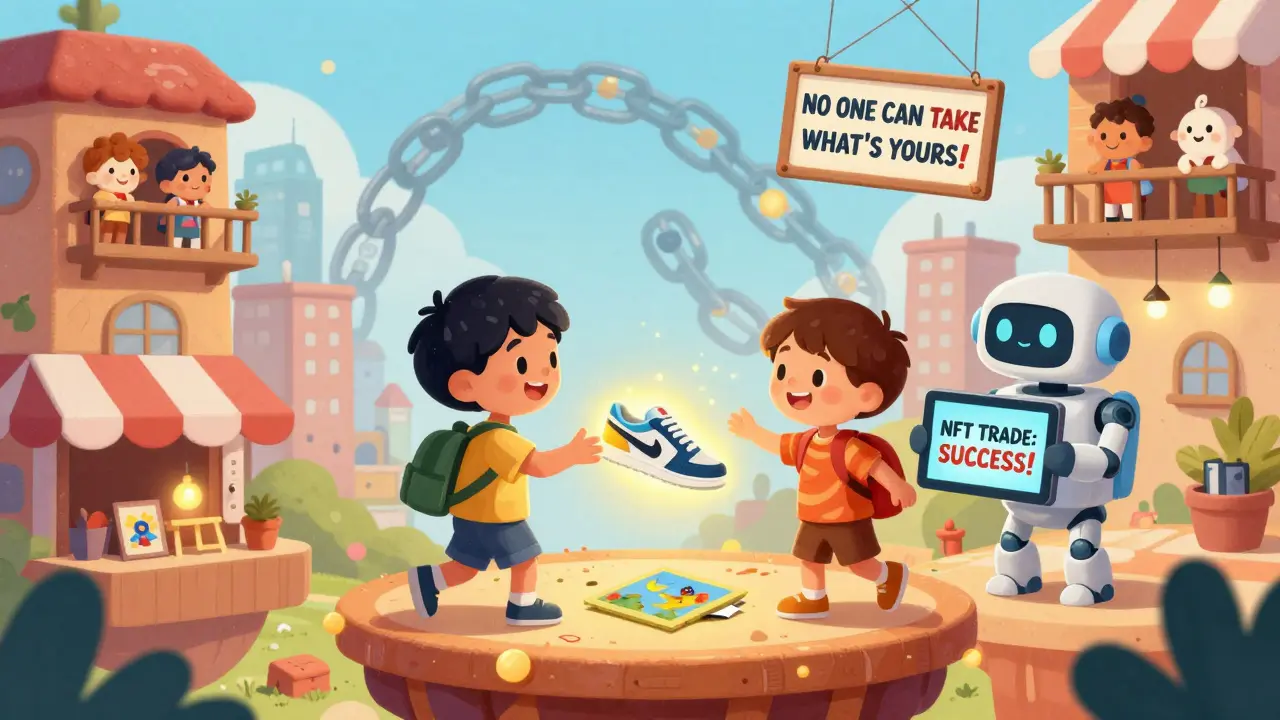
When you buy something, the transaction is recorded on the blockchain. That means anyone can verify it. No middleman. No hidden rules. That’s the core promise: true digital ownership.
What You Can Do in the Blockchain Metaverse
You’re not just a visitor-you can build, earn, and trade.
- Buy virtual land: People have paid over $2 million for a single plot in Decentraland. Brands like Atari, Samsung, and HSBC have bought space to host events or pop-up stores.
- Create and sell digital items: Design a virtual outfit, a piece of art, or even a mini-game. Sell it as an NFT. You can earn royalties every time someone resells it.
- Attend events: Concerts, art shows, and conferences happen live in these worlds. In 2023, a virtual music festival in The Sandbox drew over 200,000 attendees.
- Work and earn: Some users earn $1,000+ a month by running virtual galleries, hosting tours, or building content for others. One Reddit user reported making $1,200/month from selling digital art in Somnium Space.
These aren’t hypotheticals. Between January 2021 and December 2023, virtual land sales in Decentraland totaled $145.7 million. The Sandbox reported $2.1 million in Q1 2024 revenue from brands, with 37% coming from secondary royalties.
Decentraland vs. The Sandbox vs. Traditional Platforms
Not all metaverses are the same. Here’s how blockchain ones compare to regular ones like Roblox or Meta’s Horizon Worlds.
| Feature | Blockchain Metaverse (e.g., Decentraland) | Traditional Platform (e.g., Roblox, Meta) |
|---|---|---|
| Ownership | You own your assets (NFTs). Private key = control. | Platform owns everything. You’re just a user. |
| Trading | Can sell assets on open marketplaces for crypto or fiat. | Assets locked inside the platform. No resale. |
| Governance | Users vote on rules via DAO (token-based voting). | Company makes all decisions. No user input. |
| Interoperability | Potential to use assets across platforms (still limited). | Assets can’t leave the platform. |
| Entry Barrier | Need crypto wallet, gas fees, understanding of blockchain. | Sign up and play. No crypto needed. |
Decentraland holds about 12.3% of the blockchain metaverse market share as of mid-2024, followed by The Sandbox at 10.7%. But while these platforms are growing, traditional platforms like Roblox are starting to add NFT features-though with heavy restrictions. True ownership? Not yet.
Why It’s Still Hard to Use
Here’s the catch: the blockchain metaverse is still clunky for most people.
- You need a crypto wallet (like MetaMask), which takes time to set up.
- Every action costs gas fees-$0.50 to $15 per transaction depending on network traffic.
- Transactions can take 15 seconds to 10 minutes to confirm.
- Graphics are often basic. Decentraland runs at 30-45 FPS; Unreal Engine 5 games hit 90+ FPS.
- Onboarding takes an average of 8.2 hours for new users to get comfortable.
Trustpilot reviews of Decentraland show a 2.7/5 star rating. Over 78% of complaints mention complexity. 63% of negative reviews cite transaction failures during busy events.
It’s not just about tech-it’s about culture. 78.3% of users are male. 61.2% are aged 25-44. Only 12.7% of users are complete beginners to crypto. This isn’t mainstream yet. It’s a niche for early adopters, developers, and crypto-savvy creators.
Who’s Using It-and Why
While regular users struggle, companies are diving in.
- JPMorgan opened “Onyx Lounge” in Decentraland for client meetings.
- Siemens uses blockchain-integrated digital twins to simulate factory operations.
- Atari made $2.1 million in Q1 2024 from its virtual arcade in The Sandbox.
63 of the Fortune 100 companies are running blockchain metaverse pilots as of mid-2024, according to industry reports. Their goal? Not just fun-real ROI. Virtual events cut travel costs. Digital real estate becomes a new marketing channel. NFTs unlock new revenue streams through royalties.
Experts like Gartner predict enterprise adoption will lead consumer use by 3-5 years. Why? Businesses can measure ROI clearly. For consumers? The value isn’t obvious yet.
The Big Problems
It’s not all hype. There are real issues.
- Scalability: Ethereum handles 15-30 transactions per second. Visa handles 24,000. Layer-2 solutions like Polygon (used by Decentraland) help, but they’re still not perfect.
- Ownership inequality: A 2023 study found 1.5% of wallet addresses owned 47.3% of Decentraland’s LAND. It’s becoming a luxury market, not a public space.
- Energy use: Each blockchain transaction uses 0.00012 kWh. That’s low compared to traditional servers (0.0024 kWh), but critics still point to environmental impact.
- Interoperability: You can’t take your Decentraland shirt to The Sandbox. The tech exists, but no universal standard is in place. 92% of whitepapers claim interoperability as a benefit-but it’s still theoretical.
And then there’s the risk of crashes. A $2.3 million virtual land purchase in The Sandbox in 2021 lost 87% of its value by 2023. Speculation runs high. Not all investments pay off.
What’s Next?
Things are moving fast.
- Decentraland’s “Atlas 2.0” upgrade (announced June 2024) brings full 3D avatars with real-time facial animation.
- The Sandbox plans “HyperCity” with 10,000 branded districts by 2025.
- Animoca Brands has bought 15 smaller metaverse projects since 2022 for $412 million.
Market projections are wild: Grand View Research says the blockchain metaverse will grow from $38.85 billion in 2023 to $678.8 billion by 2030. But Forrester and Gartner warn of a potential “metaverse winter” between 2025-2027 as hype fades.
Stanford’s Virtual Human Interaction Lab says: without solving accessibility and presence, blockchain metaverses will stay niche-serving less than 5% of the global population by 2035.
Final Take
The blockchain metaverse isn’t the future of everything. But it is the future of digital ownership. If you care about owning your virtual stuff-really owning it, not just renting it from a company-this is the only system that delivers.
It’s still early. It’s still hard. It’s still expensive. But for creators, developers, and crypto-native users, it’s already a place to build, earn, and control your digital life. For everyone else? It’s a glimpse of what’s possible-if the tech catches up to the vision.
Is the blockchain metaverse the same as VR?
No. VR (virtual reality) is the hardware and interface-you wear a headset and step into a 3D world. The blockchain metaverse is the underlying system that gives you ownership and control over what’s in that world. You can use VR to access a blockchain metaverse, but you can also access it on a regular computer. The blockchain part is what makes it different.
Can you make real money in the blockchain metaverse?
Yes. People earn money by selling virtual land, digital art, clothing, and services. Some run virtual galleries, host events, or build content for others. Decentraland recorded over $145 million in land sales from 2021-2023. Atari made $2.1 million in Q1 2024 from its virtual arcade. But it’s not easy. Success requires skill, effort, and understanding the market.
Do you need crypto to join the blockchain metaverse?
Yes, currently. You need cryptocurrency to buy land, pay gas fees, or trade NFTs. You’ll also need a wallet like MetaMask. Some platforms are testing fiat payment options, but crypto is still required for full access and ownership.
Is the blockchain metaverse safe?
The blockchain itself is secure-it’s nearly impossible to alter transactions. But scams are common. Fake marketplaces, phishing wallets, and rug pulls (where developers vanish with funds) happen. Always verify contracts, use trusted wallets, and never share your private key. If it sounds too good to be true, it probably is.
Why isn’t the blockchain metaverse more popular?
Because it’s complicated. Setting up a wallet, buying crypto, paying gas fees, and understanding NFTs takes time and knowledge. Most people just want to play a game or hang out with friends-not manage a digital asset portfolio. Until the experience becomes as simple as logging into Instagram, adoption will stay limited to crypto-savvy users.


Allison Davis
March 10 2026The blockchain metaverse isn't magic-it's just accounting with better branding. Owning an NFT land parcel doesn't make you a real estate mogul; it makes you a very specific kind of investor: one who trusts code more than courts.
But let's be honest: if you can't explain to your grandma why your digital plot of land is worth more than your actual backyard, maybe you're not seeing the full picture.
Companies like JPMorgan aren't here for the fun-they're testing how blockchain can reduce friction in enterprise contracts. The metaverse is just their sandbox. The real innovation is in the smart contracts behind the scenes, not the pixelated buildings.
And yes, gas fees are annoying. But so is paying a lawyer to draft a deed. The difference? One is permanent. The other? Disappears when the firm goes under.
It’s not about VR. It’s about sovereignty. If you want to own something digital, this is the only system that doesn’t require you to beg permission from a corporation that could vanish tomorrow.
Still, adoption will be slow. Most people don’t care about ownership-they care about ease. And right now, ease is a luxury in this space.