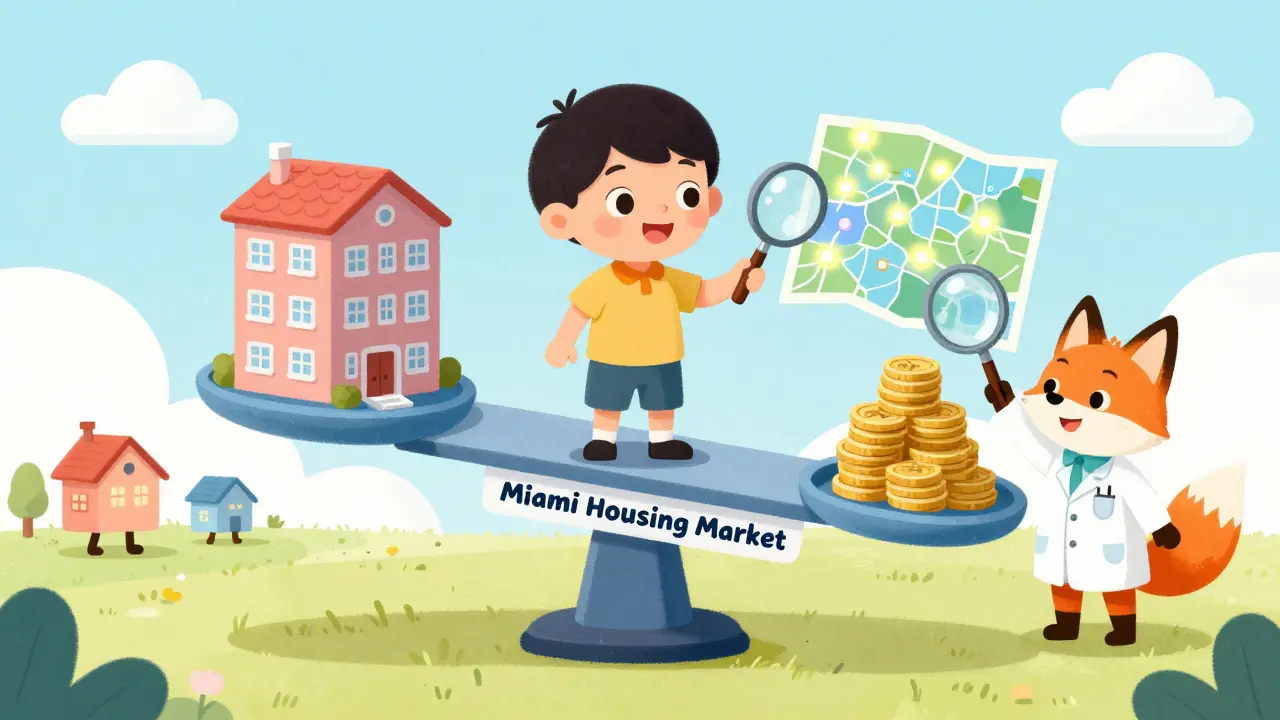
Most people think of real estate as something you buy with a down payment, a mortgage, and years of waiting. But what if you could trade the price of a Miami apartment or a Berlin apartment like you trade stocks - without ever stepping foot inside? That’s exactly what Parcl (PRCL) does. It’s not another meme coin. It’s a real platform built on Solana that turns housing markets into tradeable assets. And its native token, PRCL, lets you earn, vote, and profit from the movement of property prices - no property needed.
How Parcl Turns Real Estate Into Tradeable Tokens
Parcl doesn’t own buildings. It doesn’t even manage rentals. Instead, it creates digital versions of real estate markets. Each city - like Los Angeles, Tokyo, or Austin - has its own index based on median price per square foot. These indexes are updated daily using real data from property listings, tax records, and rental trends collected by Parcl Labs. Then, the Parcl protocol turns those indexes into perpetual futures contracts. That means you can go long (betting prices will rise) or short (betting they’ll fall) on any city’s housing market.
Think of it like betting on the price of oil without owning an oil rig. You’re not buying a house. You’re betting on whether house prices in San Diego will go up or down next month. And because these are perpetual contracts, there’s no expiration date. You can hold your position for hours or months. You can even use up to 10x leverage to amplify your moves - though that also increases your risk.
Every trade happens on-chain, fully collateralized. There’s no loan, no credit check, and no counterparty risk. If you open a position, you must put up enough collateral (like USDC or SOL) to cover potential losses. The system automatically liquidates you if your position gets too risky. This design keeps the whole platform solvent, even during wild swings.
Why Solana? Speed, Cost, and Scale
Parcl runs on Solana for one big reason: speed. Traditional crypto networks like Ethereum can be slow and expensive when handling hundreds of trades per second. Solana processes over 65,000 transactions per second with fees under a penny. That’s critical for a platform where traders are reacting to real-time housing data. A delay of even five seconds could mean missing a price shift in Chicago’s market.
On Solana, Parcl’s smart contracts handle everything automatically: matching buyers and sellers, calculating funding rates, updating indexes, and triggering liquidations. No middlemen. No delays. No paperwork. This is why Parcl can offer real-time access to 50+ city markets - something no traditional real estate platform even attempts.
The PRCL Token: More Than Just a Currency
PRCL isn’t just a token you buy and hope it goes up. It’s the engine that keeps Parcl running. Here’s what it actually does:
- Governance: Holders vote on new city markets, fee changes, and protocol upgrades. No central team decides alone.
- Fee Discounts: Using PRCL to pay trading fees cuts them by up to 30%. The more you trade, the more you save.
- Liquidity Rewards: If you deposit USDC or SOL into a city’s market pool, you earn trading fees - and you get extra PRCL as a bonus.
- Staking: Lock your PRCL to earn more PRCL. Rewards are distributed weekly, based on how much you stake and how long you lock it.
- Access to Data: PRCL holders unlock premium analytics from Parcl Labs - like historical price trends, rental yield forecasts, and market sentiment scores.
- Insurance Fund: A portion of PRCL supply is reserved to cover losses during extreme market crashes. This protects the whole system.
PRCL launched on April 16, 2024, after three seasons of "Parcl Points" - a system that rewarded early users who tested the platform, provided feedback, and added liquidity. This wasn’t a quick coin drop. It was a slow, community-driven rollout.
Real Use Cases - Not Just Speculation
People don’t just use Parcl to gamble. Here are three real scenarios where it makes sense:
- Hedging: You own a condo in Seattle but are moving to Denver. You’re worried your Seattle property will lose value. Instead of selling now at a loss, you short the Seattle market on Parcl. If prices drop, your gains offset your property loss.
- Global Exposure: You’re in Canada and want exposure to Tokyo’s housing market. Buying property there costs $1 million and takes months. On Parcl, you can open a position with $500 and track it live.
- Income Generation: You hold USDC and want yield. You deposit it into the Austin market pool. You earn trading fees from others who trade Austin, plus PRCL rewards. You’re not speculating - you’re earning.
These aren’t theoretical. Real users are doing this. The platform’s 24-hour trading volume hit $1.66 million on February 22, 2026 - not a huge number compared to Bitcoin, but massive for a niche DeFi product focused on real estate.
How Risky Is It?
Parcl isn’t a get-rich-quick scheme. It’s a complex financial tool. Here’s what you need to know:
- Isolated Markets: The Miami pool has nothing to do with the Paris pool. A crash in one doesn’t drag down the others. This prevents system-wide collapse.
- Zero Credit Risk: You can’t borrow. You can’t owe more than you put up. Your max loss is your collateral.
- Liquidations: If your position moves against you too fast, the system closes it automatically. You won’t get a margin call - you just lose what you risked.
- Price Feed Reliability: Parcl Labs uses multiple data sources - MLS listings, public tax records, rental platforms - to avoid manipulation. One bad source won’t skew the index.
Still, real estate can crash. If a city’s economy collapses, its index drops hard. Leverage magnifies that. If you go long on Miami with 10x leverage and prices fall 15%, you’re wiped out. Know your risk. Start small.
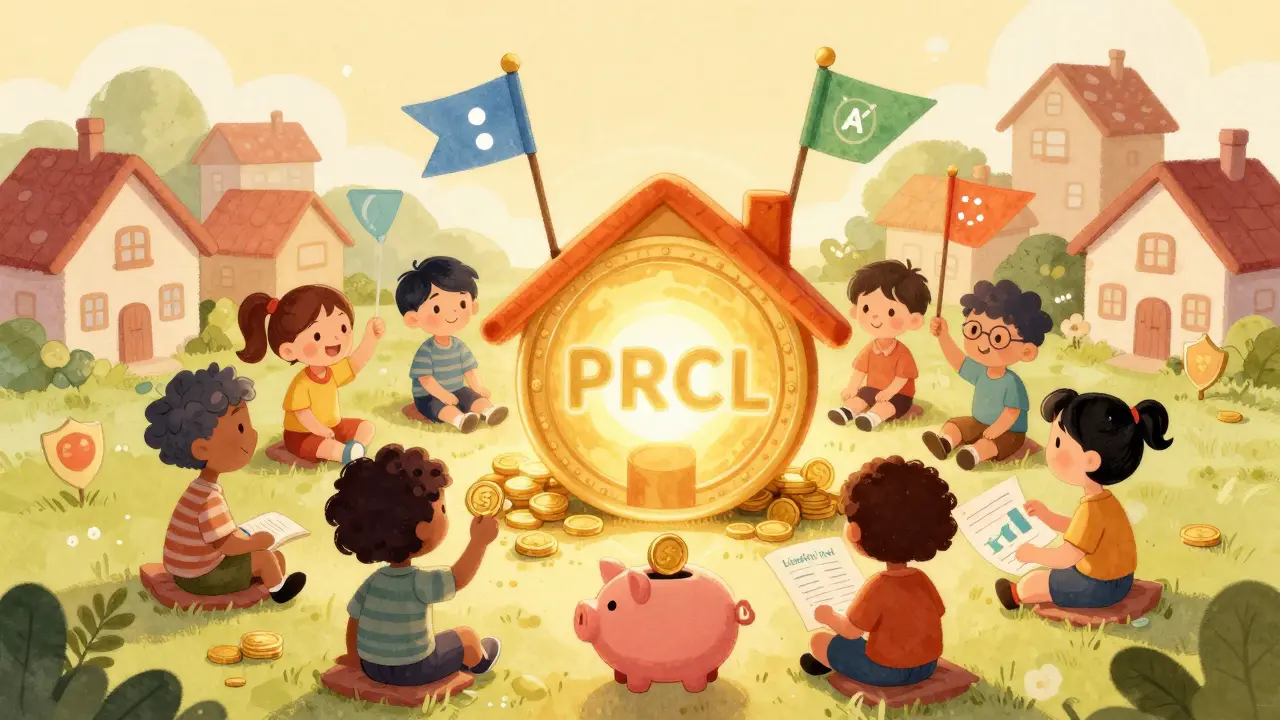
What’s Next for Parcl?
Parcl isn’t stopping at residential markets. The roadmap includes:
- Commercial real estate (office buildings, retail centers)
- International expansion beyond the US and Europe
- Integration with DeFi wallets like Phantom and Backpack
- Mobile app for real-time alerts and trading
- Partnerships with property data firms to improve index accuracy
The team has already shipped three major upgrades since 2022 - v1 in July 2022, v2 in January 2023, and v3 in November 2023. Each one added new markets, improved risk controls, and lowered fees. The fact they’re still building means they’re not done.
Where to Buy PRCL
As of February 2026, PRCL trades on major exchanges like KuCoin and OKX. The price hovers around $0.0142 to $0.0143. The total supply is fixed - no inflation. All PRCL was distributed through community rewards, liquidity mining, and private sales. There’s no mining. No staking rewards from mining. Just governance, staking, and trading incentives.
To get started, you need a Solana wallet (like Phantom), some SOL for fees, and USDC or SOL to trade. Visit the official Parcl website for their "101 Guide" - it walks you through opening your first position in under 10 minutes.
Why This Matters
Real estate is the largest asset class in the world - worth over $300 trillion. But 99% of it is locked up. You can’t easily buy a slice of Tokyo. You can’t short London. You can’t hedge your home against a local market crash without selling.
Parcl changes that. It turns a slow, opaque, capital-heavy market into something fast, transparent, and open to anyone with an internet connection. PRCL is the key that unlocks it. It’s not about speculation. It’s about access. About control. About building a new kind of financial system - one where real estate isn’t just for the rich.
Is PRCL a good investment?
PRCL isn’t a traditional investment like Bitcoin or Ethereum. Its value comes from usage - if more people trade on Parcl, the token becomes more useful and potentially more valuable. But if the platform fails to grow, PRCL could lose its purpose. Only invest what you can afford to lose. Use it to trade, stake, or govern - not just hold.
Can I lose more than I deposit on Parcl?
No. Parcl uses a zero-credit-risk model. You must fully collateralize every trade. If your position loses value, the system liquidates it before you owe anything extra. Your maximum loss is the amount of collateral you put in.
Do I need to own real estate to use Parcl?
No. Parcl lets you trade synthetic versions of real estate markets. You’re betting on price movements, not owning property. You don’t need a home, a lease, or even a bank account - just a crypto wallet and some USDC or SOL.
How does Parcl get real estate data?
Parcl Labs, the data arm of the project, pulls data from public sources like MLS listings, tax records, rental platforms, and government housing reports. It combines them with proprietary algorithms to create accurate, city-specific price indices. This data feeds directly into the smart contracts.
Why is Parcl on Solana and not Ethereum?
Solana offers faster transaction speeds and much lower fees - critical for a platform that needs to update prices and execute trades every few seconds. Ethereum’s high fees and slower blocks would make real-time real estate trading impractical and expensive.
Can I stake PRCL to earn passive income?
Yes. Staking PRCL lets you earn additional PRCL tokens as rewards. The more you stake and the longer you lock it, the higher your rewards. This helps secure the network and gives holders a reason to keep their tokens active in the ecosystem.
Is Parcl regulated?
Parcl operates as a decentralized protocol and currently does not hold licenses from financial regulators like the SEC or FCA. Users trade at their own risk. The platform does not offer legal or financial advice. Always check local regulations before trading.
What happens if a city’s real estate data is wrong?
Parcl Labs uses multiple independent data sources and cross-checks them before updating the index. If one source is inaccurate, others balance it out. The system also has a governance vote mechanism to adjust or replace faulty data feeds if needed.
Can I trade Parcl on mobile?
Yes, through Solana-compatible wallets like Phantom and Backpack, which have mobile apps. The official Parcl website works on mobile browsers, and a dedicated mobile app is in development for 2026.
How is Parcl different from REITs or property crowdfunding sites?
REITs and crowdfunding platforms let you own shares of actual properties - you’re still tied to physical assets, slow liquidity, and centralized management. Parcl lets you trade synthetic price movements with full control, 24/7 access, leverage, and no intermediaries. It’s a derivatives market, not an ownership platform.


Jessica Carvajal montiel
March 2 2026Okay, so let me get this straight - you’re telling me we’re now betting on housing prices like it’s a fucking casino, but with blockchain? 🤡
And this PRCL token is supposed to be the "engine"? Nah. This is just another way for Wall Street to weaponize housing insecurity. You think people in Detroit or Cleveland are gonna benefit from this? Nah. They’re the ones getting crushed by rent hikes while some guy in Miami flips a short position on his phone.
And don’t even get me started on "data sources." MLS listings? Tax records? You think those are clean? Half of them are manipulated by investors flipping homes under LLCs. Parcl Labs is just automating the same fraud, but now with more gas fees.
They call it "decentralized"? Bullshit. It’s just another DeFi Ponzi with a fancy UI and a Solana rug-pull aesthetic. You think the rich are gonna let regular people short their own neighborhoods? Please. The system’s rigged. Always has been. This just makes it look like science.
And don’t even mention "stake PRCL to earn more PRCL." That’s not income - that’s compounding delusion. You’re not building wealth. You’re feeding a feedback loop designed to suck in the gullible while the dev team cashes out.
They say "no credit risk"? Cute. You lose your collateral, sure. But what about the ripple effect? What happens when five major markets crash at once because of some algorithmic glitch? You think the system just pauses? Nah. It liquidates everyone. And who’s left holding the bag? The little guy. Again.
This isn’t innovation. It’s exploitation with a whitepaper.
And the fact that people are calling this "access"? That’s the most toxic part. You’re not democratizing real estate. You’re turning it into a derivatives game for degens who think "leverage" is a personality trait.
Wake up. This isn’t the future. It’s the same old exploitation, but now with NFTs in the background.
They’ll be selling PRCL NFTs next. "Own a slice of the housing crisis!"
Just… stop. Please.