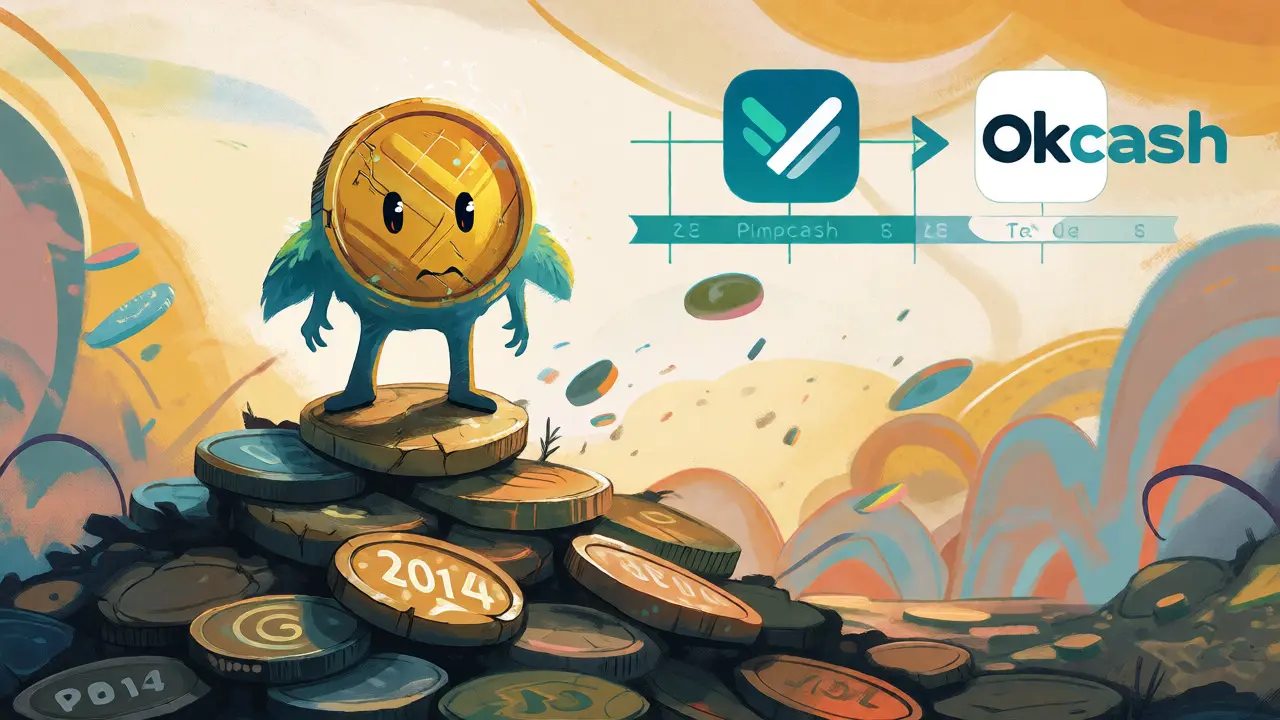
You might have heard the buzz about Bitcoin’s energy consumption or Ethereum’s gas fees and wondered if there’s a quieter, greener alternative lurking in the long tail of the cryptocurrency market. Enter Okcash (OK). It’s not the flashy new token everyone on Twitter is hyping today, but it has been around since late 2014, surviving multiple market crashes that wiped out thousands of other projects. So, what exactly is this coin, and why does it still exist when so many others have vanished?
Okcash is a small-cap, open-source, multichain cryptocurrency designed for fast, eco-friendly peer-to-peer transactions. Unlike many modern tokens that rely heavily on venture capital and centralized teams, Okcash positions itself as a community-driven project with no Initial Coin Offering (ICO). This means nobody owned the early supply, and development has been sustained by volunteers rather than corporate funding. If you are looking for a mainstream investment vehicle, you probably won’t find it here. But if you are curious about how older, niche blockchains adapt to the modern era of AI agents and multichain interoperability, Okcash offers a fascinating case study.
The Origin Story: From Pimpcash to Okcash
The history of Okcash is a bit like a digital archaeology dig. The project didn’t start under its current name. In November 2014, it launched as Pimpcash. Yes, really. By February 2015, it was rebranded to Okcash by a pseudonymous developer known only as "OKToshi." This rename wasn’t just cosmetic; it signaled a shift in identity from a novelty meme coin to a more serious attempt at electronic cash.
Why does this matter? Because knowing the origin helps you understand the culture. Many altcoins born during the 2014-2015 boom were quick cash grabs. Okcash survived because it adopted a volunteer model similar to Bitcoin’s early days. There was no ICO, meaning the team didn’t sell millions of coins to investors upfront. Instead, the community mined and staked their way to ownership. This lack of central control makes it harder to predict where the price goes, but it also means there’s no single entity that can rug-pull the project overnight.
How Does Okcash Work? PoW to PoS Evolution
Technically, Okcash started life as a Proof-of-Work (PoW) coin using the Scrypt algorithm, much like Litecoin. Miners used their computer hardware to solve complex puzzles and secure the network. However, the project quickly pivoted to a Proof-of-Stake (PoS) system called LTSS (Long-Term Sustainable Staking).
This switch was significant for two reasons:
- Energy Efficiency: PoS requires far less electricity than PoW. You don’t need massive mining rigs; you just need to hold your coins in a wallet to help validate transactions.
- Incentivized Holding: The LTSS protocol rewards users who keep their coins staked for longer periods. It’s essentially a savings account with interest paid in more OK coins.
The transition to PoS made Okcash one of the earlier adopters of staking mechanisms, predating the massive shift we saw with Ethereum’s Merge years later. Today, the network uses SHA-256 hashing within its staking design, blending security features from Bitcoin with the efficiency of stake-based validation.
Tokenomics: Supply and Market Reality
If you are thinking about buying some OK, you need to look at the numbers carefully. The total maximum supply is hard-capped at 105,000,000 OK. As of mid-2026, approximately 89 million coins are in circulation, which means about 85% of all coins that will ever exist are already out in the wild. There isn’t a flood of new supply coming to dilute the value, which is a plus for long-term holders.
However, the market reality is stark. Okcash is a micro-cap asset. Its market capitalization hovers between $350,000 and $450,000, placing it well outside the top 1,000 cryptocurrencies. The price per coin fluctuates wildly, often trading between $0.003 and $0.005. Because the liquidity is thin-daily trading volumes can sometimes drop below $1,000-a single large buy or sell order can swing the price by double digits in minutes.
| Metric | Okcash (OK) | Typical Mid-Cap Altcoin |
|---|---|---|
| Max Supply | 105 Million | Varies (often billions) |
| Funding Model | No ICO (Community Driven) | Often VC-backed or ICO |
| Consensus | PoS (LTSS) | PoS or PoW |
| Market Rank | ~#4851 | Top 100-500 |
| Liquidity | Very Low (<$1k/day often) | Moderate to High |

The Multichain Pivot and AI Integration
Here is where things get interesting for tech enthusiasts. While the native chain is old-school, the community has aggressively pushed a narrative of modernization. Since 2024, Okcash branding emphasizes its role as a "multichain" ecosystem. This means OK isn’t just sitting on its own isolated blockchain anymore. Smart contracts and tokens associated with Okcash have been deployed across more than nine different networks, including those compatible with Ethereum and Binance Smart Chain.
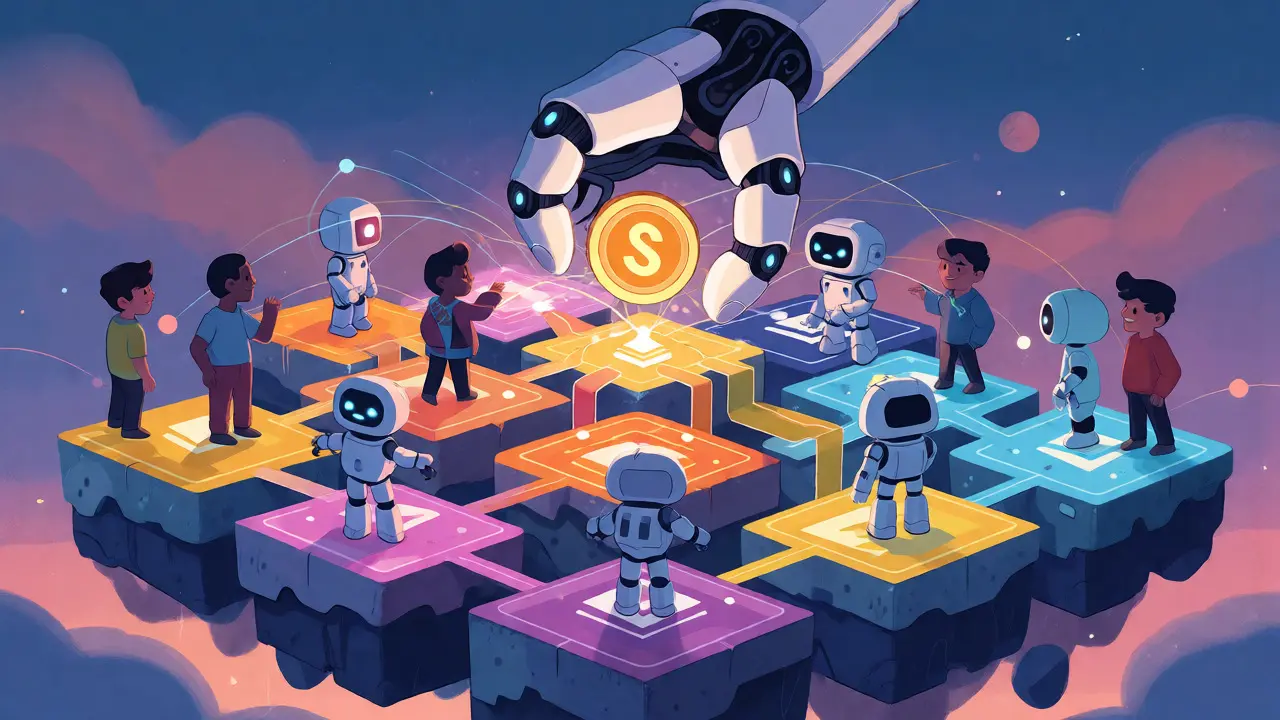
Furthermore, the project is experimenting with AI Agents. The developers have introduced tools that allow AI personas to interact with the blockchain, potentially handling governance votes or automated trading strategies. This is part of their "OK Revolution" marketing, aiming to position a legacy coin as a forward-looking Web3 player. Whether these AI integrations bring real utility or are mostly experimental remains to be seen, but it shows the community is trying to stay relevant in an AI-dominated tech landscape.
Where Can You Buy and Trade Okcash?
Don’t expect to find Okcash on every major exchange. Due to its low market cap, it is rarely listed on tier-one platforms like Coinbase or Binance for direct fiat trading. Instead, you’ll typically find it on smaller centralized exchanges like LBank, Bitget, or through decentralized exchanges (DEXs) like Uniswap V3 on BSC-compatible networks.
Buying OK requires patience. You might need to swap USDT or ETH for OK on a DEX, paying attention to slippage. Slippage is high here because there aren’t many buyers and sellers. If you try to buy $500 worth of OK, you might end up paying significantly more than the quoted price because your order eats through the available liquidity. Always check the depth chart before executing trades.
Risks and Challenges: Why Is It Still Small?
If Okcash has such cool features, why hasn’t it exploded in popularity? Several factors hold it back:
- Brand Confusion: There is a popular Nigerian fintech app called "OKash" that offers loans. When people search for "OK," they often land on the loan app instead of the crypto coin, hurting visibility.
- Lack of Marketing Budget: Without VC money, there’s no big ad campaign. Growth relies entirely on word-of-mouth and community effort.
- Competition: Newer PoS chains offer faster speeds and better developer tooling. Okcash competes against giants like Solana and Avalanche, which have vastly larger ecosystems.
Additionally, the volatility is extreme. Historical data shows prices swinging over 500% in a single week. For conservative investors, this is a nightmare. For speculators, it’s an opportunity, but one that comes with the risk of losing most of your capital if the community activity dries up.
Getting Started: Wallets and Staking
If you decide to dive in, you’ll need the official desktop wallet. The project provides clients for Windows, Mac, and Linux. One helpful feature for new users is the "Instant Sync" option. Since the blockchain has been running since 2014, downloading the full history from scratch takes a long time. The instant sync files let you bootstrap your node quickly so you can start staking without waiting days for synchronization.
Staking is straightforward: unlock your wallet, leave it online, and earn rewards. However, remember that if you spend your coins, your staking weight resets. It’s a commitment to holding, not just a passive income stream you can ignore.
Frequently Asked Questions
Is Okcash a scam?
Not necessarily. It is an open-source project with active GitHub repositories and a community that has existed since 2014. However, being legitimate doesn't mean it's a good investment. It lacks the marketing power and adoption of major coins, making it a high-risk, speculative asset.
Can I mine Okcash?
You can technically mine it using Scrypt miners, but the network primarily operates on Proof-of-Stake now. Most participants earn coins by staking existing holdings rather than mining new blocks with hardware.
What is the difference between Okcash and OKX?
They are completely unrelated. OKX is a major global cryptocurrency exchange. Okcash is a specific cryptocurrency coin. Don't confuse the ticker symbols or the names; they operate in entirely different sectors of the industry.
Does Okcash have smart contracts?
Yes, through its multichain expansion. While the native chain is simple, OK-related tokens and logic have been deployed on smart-contract-enabled networks like BSC and others, allowing for DeFi interactions.
Why is the volume so low?
Low volume is due to its micro-cap status and limited exchange listings. Few institutional investors track it, and retail interest is concentrated in a small, dedicated community rather than the broader market.
Final Thoughts
Okcash is a relic that refuses to die. It represents a specific era of crypto idealism-volunteer-driven, anti-ICO, and focused on sustainable technology. Today, it tries to blend that old ethos with new trends like AI and multichain compatibility. If you enjoy digging through codebases, participating in niche Discord communities, and betting on long-shot recoveries, Okcash might scratch that itch. Just remember: with great potential upside comes the very real possibility that it remains a tiny, obscure footnote in crypto history forever.