You might have seen marumaruNFT, also known by its ticker MARU, popping up on decentralized exchanges or in niche crypto forums. The project claims to be a revolutionary platform bridging Japan's nightlife entertainment industry with blockchain technology. But before you swap any tokens for MARU, you need to understand exactly what this project is, where it stands today, and why experts are raising serious red flags.
This isn't just another generic NFT marketplace. It targets a very specific cultural sector-Japanese host and hostess clubs-and promises a metaverse built around that theme. However, as of May 2026, the reality on the ground looks drastically different from the ambitious roadmap released years ago. This guide breaks down the tokenomics, the technical setup, the risks, and the current status of the project so you can make an informed decision.
The Core Concept: Nightlife Meets Blockchain
marumaruNFT positions itself as the world’s first NFT content platform centered on the stories of men and women living in night entertainment districts. The vision was bold: create a narrative-driven digital asset collection that reflects the unique culture of Japanese nightlife. The team behind the project aimed to disrupt the traditional NFT model by focusing on human stories rather than just pixel art or random generative collections.
The native utility token, MARU, was designed to serve three main functions within this ecosystem:
- Governance: Allowing holders to vote on platform decisions.
- Investment: Serving as a vehicle for funding further development of the platform.
- Transaction Medium: Used to purchase NFTs directly on the marketplace.
While the concept sounds intriguing, execution has been the primary hurdle. The project was developed by an anonymous team, which is already a significant risk factor in the crypto space. Without publicly disclosed founders or a verified development company, accountability is virtually non-existent. The platform operates under the domain marumaruNFT.com, but independent verification of their claimed milestones remains elusive.
Technical Specifications and Tokenomics
To understand the value proposition, you have to look at the underlying technology. MARU operates exclusively on the BNB Smart Chain (BSC). This means it follows the BEP-20 token standard, allowing for fast and relatively cheap transactions compared to Ethereum-based networks.
| Attribute | Value / Detail |
|---|---|
| Blockchain | BNB Smart Chain (BSC) |
| Token Standard | BEP-20 |
| Total Supply | 2,000,000,000 (2 Billion) |
| Circulating Supply | 0 (as of May 2026) |
| Current Price | ~$0.0002771 USD |
| All-Time High | $1.01447273 USD |
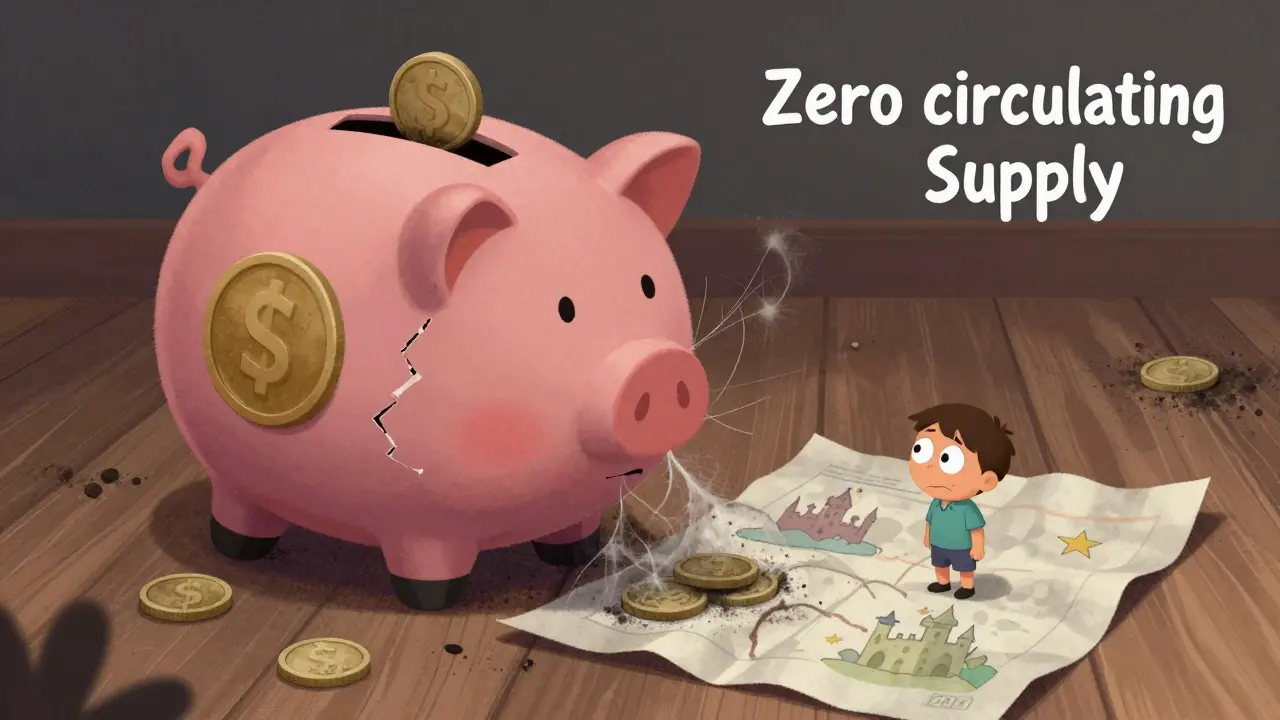
The most alarming statistic here is the circulating supply. According to data from CoinMarketCap in May 2026, the circulating supply of MARU is reported as zero. This usually indicates one of two things: either the tokens are locked in escrow mechanisms that haven't been released, or there is a severe distribution failure. When a token has no circulating supply but still trades on decentralized exchanges, it often points to liquidity issues or potential manipulation by early insiders.
The price action tells a grim story. MARU has plummeted 99.93% from its all-time high of over $1.00 to its current valuation of fractions of a cent. This level of depreciation exceeds even the most volatile meme coins and high-risk NFT projects. For context, while other niche projects like CryptoDickheads maintained some value retention through 2025, MARU has effectively lost nearly all of its market value.
The Failed Metaverse Promise
In Q2 2024, the marumaruNFT team announced plans to launch an "entertainment district-themed Metaverse." They set an ambitious target of creating 1 million people NFT models and capturing a market size of 18 billion yen (approximately $117 million USD at the time).
Fast forward to May 2026, and there is no verifiable evidence that this metaverse ever launched. Web archives show that the official website last updated on March 15, 2024-before the targeted launch window even closed. The absence of a live product, combined with the lack of communication from the anonymous team, suggests that the roadmap was abandoned or never feasible.
Larry Cermak, a research analyst at The Block, noted in a January 2026 podcast that projects promising billion-yen implementations with zero circulating supply typically indicate tokenomics designed for early investor extraction rather than sustainable ecosystem development. His assessment aligns with what we see in MARU: big promises, small delivery, and massive price collapse.
How to Buy MARU (And Why You Should Be Careful)
If you are determined to acquire MARU tokens, you cannot buy them on major centralized exchanges like Binance, Coinbase, or Kraken. Instead, you must use a decentralized exchange (DEX) such as PancakeSwap. Here is the process, but read the warnings below carefully.
- Set Up a Wallet: You will need a wallet compatible with the BNB Smart Chain, such as MetaMask or the Binance Web3 Wallet.
- Fund Your Wallet: Purchase BNB (Binance Coin) on a centralized exchange and transfer it to your wallet address.
- Connect to DEX: Go to PancakeSwap and connect your wallet.
- Find the Token: Paste the official MARU contract address into the search bar. Never rely on the name alone, as scammers often create fake tokens with similar names.
- Adjust Slippage: Due to low liquidity, you may need to set slippage tolerance above 12% to complete the trade. This increases the risk of front-running bots.
- Execute Swap: Confirm the transaction. Be aware that gas fees on BSC are low, but the price impact on such a thin order book can be devastating.
Binance Academy rates the learning curve for trading MARU as "expert-level" due to these complexities. Furthermore, Binance announced in May 2026 that it would permanently delist unsupported tokens from its Web3 Wallet discovery features by July 1, 2026. This move will likely cut off the last easy access point for mainstream users trying to find MARU.
Risks and Community Sentiment
The community sentiment surrounding marumaruNFT is overwhelmingly negative. On Reddit’s r/CryptoScams, users have documented numerous cases of "impossible withdrawal conditions" when attempting to trade MARU. In one thread from May 2025, 47 users reported issues, with 32 claiming total capital loss averaging $245 per victim.
Trustpilot reviews average just 1.2 out of 5 stars, with common complaints citing metaverse launch delays and zero customer support response over periods exceeding six months. While some early investors on Japanese forums like 2channel claim they made huge profits before the crash, these accounts lack verifiable transaction evidence and do not reflect the experience of recent buyers.
Regulatory concerns also loom large. Japan’s Financial Services Agency issued a warning in February 2025 regarding NFT platforms monetizing adult entertainment content, citing potential violations of the Payment Services Act. Although marumaruNFT was not named explicitly, the nature of its business places it in a gray area that could invite future legal scrutiny.

Comparison with Mainstream NFT Platforms
To put MARU’s performance in perspective, let’s compare it with established players in the NFT space.
| Platform | Market Share | Quarterly Volume | Status |
|---|---|---|---|
| OpenSea | 98% | $1.7 Billion | Dominant Leader |
| Blur | 1.5% | Significant | Active Competitor |
| CyberKink (420K) | Negligible | $1.2M Market Cap | Niche Adult Focus |
| marumaruNFT (MARU) | <0.01% | No Data Available | Zombie Project |
As the table shows, marumaruNFT holds a statistically insignificant position in the industry. Even CyberKink, another niche adult-oriented platform, maintains a higher market cap and more visible activity. MARU’s trading volume is so low that major data aggregators like Crypto.com report "No data available" for 24-hour volume.
Future Outlook: Is Recovery Possible?
Messari’s Crypto Theses 2026 report categorizes marumaruNFT among "zombie projects" with less than a 0.1% probability of recovery. This classification is based on three critical factors:
- Zero Circulating Supply: Indicates broken distribution or hoarding.
- Failed Roadmap Milestones: The promised metaverse never materialized.
- Extreme Price Depreciation: A 99.93% drop from ATH destroys investor confidence.
LBank’s price prediction algorithm projects MARU’s value will decline further to $0.000012 by Q4 2026, citing vanishing liquidity and zero development activity. Unless the anonymous team suddenly reveals themselves, releases a working product, and injects significant liquidity, the token is likely heading toward irrelevance.
For comparison, successful Japanese Web3 projects like Startbahn reported 127,000 verified users in their 2025 transparency report. MarumaruNFT offers no such metrics, leaving its actual user base unverifiable and likely minimal.
Is marumaruNFT a scam?
While not officially labeled a scam by law enforcement, marumaruNFT exhibits many characteristics of high-risk or failed projects. These include an anonymous team, zero circulating supply, unfulfilled promises (the metaverse), and widespread user complaints about withdrawal issues. Experts classify it as a "zombie project" with little chance of recovery.
Where can I buy MARU tokens?
MARU is not available on major centralized exchanges like Binance or Coinbase. You can only buy it via decentralized exchanges (DEX) like PancakeSwap using the BNB Smart Chain. Note that Binance is removing unsupported tokens from its Web3 Wallet discovery by July 2026, making access even harder.
What happened to the marumaruNFT Metaverse?
The project announced a Q2 2024 launch for its entertainment-themed metaverse, but there is no evidence it ever went live. The official website stopped updating in March 2024, and the team has provided no updates since. Industry analysts believe the project was abandoned.
Why is the circulating supply of MARU zero?
A zero circulating supply usually means tokens are locked, unstaked, or not distributed to the public. In MARU’s case, it suggests severe tokenomic flaws, possibly designed to benefit early insiders while leaving retail investors with illiquid assets. This is a major red flag for sustainability.
Is MARU a good investment in 2026?
No. With a 99.93% drop from its all-time high, no active development, and negative expert assessments, MARU is considered a high-risk asset with negligible prospects. Most analysts advise avoiding it entirely due to the likelihood of total capital loss.