You see a new token popping up on your exchange app. It has a catchy name, a low price tag, and promises to revolutionize how we watch short videos. That’s Lunarlens (LUNARLENS) for you. But before you throw your hard-earned dollars at it, you need to know what you’re actually buying. Is it the next TikTok killer powered by blockchain? Or is it just another ghost token with more hype than substance?
The short answer: proceed with extreme caution. As of late October 2026, Lunarlens is a speculative cryptocurrency token associated with a proposed blockchain-based short-video platform. It claims to offer "universal profit-sharing" for creators and users. However, the project lacks verified development teams, audited code, or a functioning mainnet that matches its grandiose descriptions. If you are looking for a safe investment, this might not be it. Let’s break down exactly what LUNARLENS is, where the data conflicts, and why the market history looks so shaky.
The Identity Crisis: What Does LunarLens Actually Do?
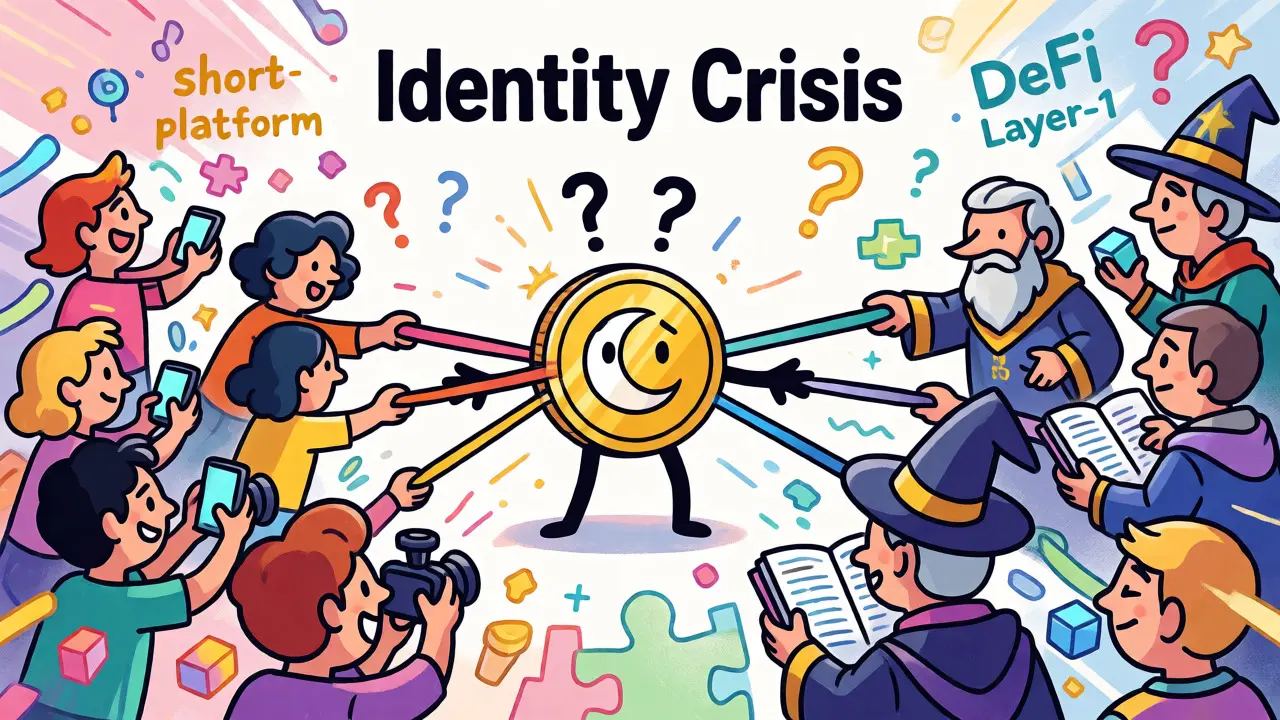
Here is the first red flag: different sources describe LunarLens differently. This isn’t just a minor detail; it suggests a lack of clear product definition or inconsistent marketing.
CoinMarketCap describes LunarLens as a "short video platform leveraging blockchain technology." The pitch here is about creator rewards. Users create content, share it, and get paid in tokens. They mention an "Oxygen Alliance," which sounds like a community participation mechanism to boost platform benefits.
But then you look at Coinpaprika, and the story changes completely. They describe it as a Layer-1 DeFi network using proof-of-stake, launched around 2022. They talk about staking, governance, and fees. These two descriptions don’t match. A short-video social app is fundamentally different from a general-purpose DeFi Layer-1 blockchain. Which one is real? The evidence points toward the short-video concept being the primary marketing angle, but the technical reality remains murky because the official website, lunarlens.live, blocks crawlers and hasn’t provided verifiable whitepapers or team details recently.
Tokenomics: The Numbers Don’t Always Add Up
If you dig into the supply numbers, things get even weirder. Data providers often disagree on basic metrics for small-cap coins, but the discrepancies here are significant enough to worry any investor.
| Metric | CoinMarketCap Data | Coinbase Data | Note |
|---|---|---|---|
| Price | $0.0007240 | $0.000094 (Stale) | Prices vary wildly by provider. |
| Market Cap | $14.48K | $0 | Coinbase shows zero liquidity/supply. |
| Circulating Supply | 20 Million | 0 | Huge discrepancy in active tokens. |
| Total Supply | 109.21 Million | N/A | Matches third-party planning docs. |
| All-Time High | $19.38 (Oct 2024) | $19.44 | Both show massive crash since peak. |
Let’s look at the math. CoinMarketCap lists a circulating supply of 20 million tokens and a price of roughly $0.0007. Multiply those, and you get a market cap of about $14,480. That seems consistent. But they also list a "Fully Diluted Valuation" (FDV) of $79,070 based on a max supply of 109.21 million. This implies that over 80% of the tokens are still locked or held by the team/founders, waiting to hit the market.
Then there’s the "Holders" count. CoinMarketCap displays over 805,000 holders. For a token with a $14k market cap, having nearly a million wallets holding it is statistically improbable unless most of them hold dust amounts (tiny fractions of a token) or the number includes bot wallets. It’s likely a formatting error or inflated metric. Do not interpret "805K holders" as 805,000 engaged users. In crypto, wallet counts often include inactive addresses created during airdrops.
The Rise and Fall: A Price History Warning
If you bought LUNARLENS at the wrong time, you lost almost everything. The price history tells a brutal story of pump-and-dump mechanics common in micro-cap altcoins.
In October 2024, LUNARLENS hit an all-time high of $19.38. Fast forward to today, and it trades for fractions of a cent. We are talking about a drop of approximately 99.996%. Yes, four nines. If you invested $1,000 at the peak, you’d have less than ten cents left. This isn’t just volatility; this is a collapse.
Why did it crash? While no single cause is confirmed, reports indicate unusual trading patterns on Gate.io, one of the few exchanges listing it. Gate.io detected irregularities and eventually offered compensation to users who bought before October 31, 2024. They credited accounts with GT (the native token of Gate.io) at a specific rate. This event highlights two major risks:
- Exchange Counterparty Risk: You are relying on a centralized exchange to manage fair trading. If they detect manipulation, you might get compensated, but only if you qualify under their specific rules.
- Liquidity Risk: With such low volume ($17k daily on CMC), selling large amounts could crash the price further instantly.
Technology and Verification: Where’s the Code?
A legitimate crypto project usually has a GitHub repository, a verified smart contract, and an audit report. For LunarLens, these elements are missing or inaccessible.
The token exists on the Base network (an Ethereum Layer-2 solution). You can find a contract address starting with 0xf95e and ending in 5519e5. But finding this address doesn’t prove safety. Without a verified source code on Etherscan or BaseScan, you cannot see if the developers minted extra tokens, if they can pause trading, or if they have ownership privileges to change the rules.
Furthermore, the "Oxygen Alliance" reward system described in promotional materials mentions releasing 64% of the total supply into a prize pool over a year. Who controls this pool? Is it decentralized? There is no public dashboard showing real-time distribution of these rewards. Without transparent on-chain data proving that creators are actually getting paid, the "profit-sharing" model remains theoretical.
Red Flags and Risks: Why You Should Be Careful
If you are considering buying LUNARLENS, you need to weigh these specific risks against the potential upside. The upside is speculative: if the video app launches and gains users, the token might rise. The downside is total loss.
- No Verified Team: There are no known founders, executives, or registered companies linked to LunarLens in reliable news sources. Anonymous teams are common in crypto, but combined with other red flags, it increases risk.
- Inaccessible Website: The official site lunarlens.live blocks automated tools. When a project hides its documentation behind robots.txt, it makes independent verification difficult.
- Contradictory Narratives: One source says it’s a video app; another says it’s a DeFi Layer-1. Confusion often signals a lack of product-market fit or poor communication.
- Extreme Volatility: The 99% drop from ATH shows how fragile the price is. Low market caps are easily manipulated by whales (large holders).
- Listing Limitations: Major exchanges like Binance and Coinbase do not list LUNARLENS. It is primarily traded on smaller platforms like Gate.io. This limits exit strategies and exposes you to lower-tier exchange risks.
Practical Checklist Before Buying
Don’t just trust the price chart. If you want to buy LUNARLENS, do your own due diligence. Here is a quick checklist:
- Verify the Contract Address: Copy the full address from CoinGecko or CoinMarketCap and paste it into a block explorer like Basescan. Check if the code is verified.
- Check Holder Distribution: Use a tool like DexScreener or Bubblemaps. Are the top 10 wallets holding 90% of the supply? If yes, they control the price.
- Test Liquidity: Try to sell a tiny amount (like $10 worth) immediately after buying. If you can’t sell without huge slippage, the liquidity pool is too thin.
- Ignore Hype Metrics: Don’t believe the "800k holders" claim without checking active transactions. Look for actual user activity, not just wallet creation.
- Assume Total Loss: Only invest money you can afford to lose completely. Micro-cap tokens like this often go to zero.
Is Lunarlens (LUNARLENS) a good investment?
It is a highly speculative, high-risk asset. With a market cap under $15k, no verified team, and a 99% price drop from its all-time high, it is suitable only for gamblers willing to lose their entire stake. It lacks the fundamental stability of established cryptocurrencies.
Where can I buy Lunarlens coin?
LUNARLENS is not listed on major exchanges like Binance or Coinbase. It is primarily available on Gate.io and potentially through decentralized exchanges (DEXs) on the Base network. Always verify the contract address before connecting your wallet.
What is the total supply of LUNARLENS?
The reported maximum supply is 109.21 million tokens. However, circulating supply estimates vary significantly between data providers, with some claiming 20 million and others reporting near-zero active circulation. This inconsistency requires on-chain verification.
Did Lunarlens have a security breach?
There was no widely reported hack of the protocol itself. However, Gate.io identified "unusual price changes and irregular trading patterns" in late 2024, leading to a compensation plan for affected traders. This indicates market manipulation issues rather than a technical exploit of the blockchain.
Does Lunarlens have a working app?
Evidence of a fully functional, widely adopted short-video application is lacking. Promotional materials describe a "video impact investment gameplay" and an "Oxygen Alliance," but there is no verifiable user base or app store presence confirming mass adoption as of late 2026.