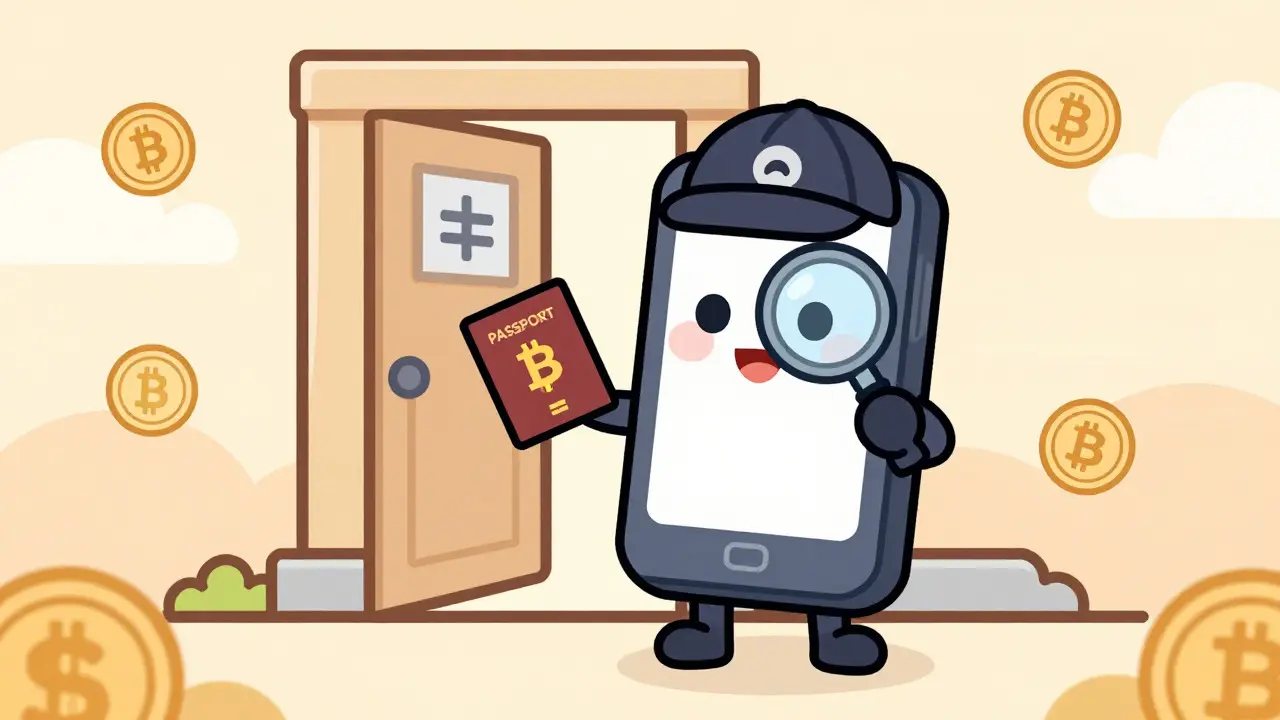
Imagine trying to open a bank account without showing an ID. In the physical world, that’s impossible. But for years, the crypto world felt like the Wild West-open, anonymous, and free from bureaucracy. That era is largely over. If you’ve ever tried to buy Bitcoin on a major platform like Coinbase or Binance, you’ve likely hit a wall of questions asking for your passport, selfie, and home address. This process is called KYC, or Know Your Customer.
It might feel intrusive, but it’s now the standard gatekeeper for entering the mainstream crypto economy. Understanding what KYC is, why regulators demand it, and how it affects your privacy is crucial whether you’re a casual investor or a tech-savvy trader looking to protect your assets.
The Basics: What Does KYC Actually Mean?
Know Your Customer (KYC) is a regulatory framework requiring financial institutions to verify the identity of their clients before establishing a business relationship. It sounds dry, but its roots go back decades. The concept originated from the Bank Secrecy Act of 1970 in the United States, designed to stop money laundering. For a long time, this applied only to banks.
Crypto changed the game. Because digital assets can move across borders instantly and anonymously, regulators started worrying about illicit activities. The turning point came around 2014-2015 when agencies like FinCEN (the Financial Crimes Enforcement Network) classified cryptocurrency exchanges as "money transmitters." This meant if you ran an exchange, you had to follow the same rules as a bank. Today, nearly every major centralized exchange requires KYC to operate legally.
How the Verification Process Works Step-by-Step
You don’t just hand over a piece of paper and walk away. Modern KYC is a multi-layered technical process. Here is what happens behind the scenes when you submit your details:
- Identification: You provide basic personal data: full legal name, date of birth, and residential address.
- Document Verification: You upload a government-issued ID, such as a passport or driver’s license. AI software scans this document to check for holograms, UV patterns, and signs of tampering. Advanced systems can detect over 1,200 document types from more than 200 countries with near-perfect accuracy.
- Liveness Check: To prove you are a real person and not a photo or a deepfake, you’ll be asked to take a selfie or turn your head while holding your ID. Facial recognition technology compares your live face to the photo on your ID.
- Address Verification: You may need to upload a utility bill or bank statement dated within the last three months to confirm where you live.
- Risk Scoring: The platform analyzes your transaction history and profile. If you’re flagged as high-risk, they might ask for proof of income or source of funds.
This entire process usually takes between 15 minutes and 72 hours, depending on the platform’s workload and the clarity of your documents.
Why Regulators Are Pushing So Hard
It’s not just about being difficult. The primary goal of KYC in cryptocurrency is to prevent financial crimes. The Financial Action Task Force (FATF) is an intergovernmental organization that sets standards to combat money laundering and terrorist financing. Established in 1989, the FATF updated its recommendations in 2019 to specifically target Virtual Asset Service Providers (VASPs). They mandated that crypto exchanges implement KYC procedures equivalent to traditional banks.
The stakes are high. According to recent data, 98% of the top 50 cryptocurrency exchanges by volume now enforce mandatory KYC. Non-compliance isn’t just a slap on the wrist; in the U.S., penalties can reach $500,000 per violation. In places like Singapore and Switzerland, failing to comply can mean losing your operating license entirely. With approximately 180 countries following FATF guidelines, there is almost no jurisdiction left where large-scale crypto trading can happen completely anonymously.

KYC Exchanges vs. No-KYC Alternatives
Not all crypto platforms require your identity. Understanding the difference helps you choose the right tool for your needs.
| Feature | KYC Exchanges (e.g., Coinbase, Kraken) | No-KYC Options (e.g., Uniswap, P2P) |
|---|---|---|
| Identity Required | Yes (Passport, Selfie, Address) | No (Wallet address only) |
| Fiat On-Ramp | Yes (Buy directly with USD/EUR) | No (Must convert crypto-to-crypto first) |
| Transaction Limits | High ($50k+ daily for verified users) | Variable (Often lower or peer-dependent) |
| Privacy Level | Low (Data stored by exchange) | High (Pseudonymous) |
| Regulatory Risk | Low (Licensed entities) | Higher (Less consumer protection) |
Centralized exchanges like Coinbase and Binance offer convenience and security. If you lose your password, they can help you recover your account because they know who you are. However, this comes at the cost of privacy. Decentralized Exchanges (DEXs) like Uniswap is a protocol for automated trading of cryptocurrencies on Ethereum. allow you to trade without linking your name to your wallet. But here’s the catch: you usually need to already own crypto to use them. Getting that initial crypto often involves a KYC step somewhere down the line.
Also, the landscape for no-KYC options is shrinking. Since 2020, the number of viable anonymous on-ramps has dropped by 45% due to stricter laws in the EU and US. Even Bitcoin ATMs, once a haven for anonymity, now require ID for transactions over $900 in many regions.
The Privacy Debate: Is Your Data Safe?
This is the biggest pain point for crypto purists. Many users joined crypto to escape surveillance and banking control. Now, they have to give their most sensitive data to private companies. A 2023 survey found that 68% of crypto users cite personal data protection as their main reason for seeking no-KYC alternatives.
However, experts argue that KYC provides a safety net. Dr. David L. Shrier, an expert in digital identity, notes that while KYC is necessary, it’s not enough on its own-it must be paired with transaction monitoring. On the flip side, former FinCEN Director James H. Freis argues that KYC remains the best defense against terrorist financing, helping identify 83% of sanctioned entity transactions.
The risk of data breaches is real. When an exchange gets hacked, your ID photos and addresses could end up in the wrong hands. Yet, without KYC, recovering stolen funds is nearly impossible. One user on Reddit shared how KYC verification helped Kraken freeze his compromised account and recover $12,000 in stolen Bitcoin. Without that identity link, those funds would likely be gone forever.
Tips for a Smooth KYC Experience
If you decide to use a regulated exchange, you want to get approved fast. Here are practical tips to avoid rejection:
- Use Good Lighting: Glare is the number one reason for ID rejection (34% of failures). Use natural light and ensure no shadows fall on your document.
- Check Expiration Dates: Most platforms reject IDs older than five years. Make sure your passport or license is current.
- Match Names Exactly: If your ID says "John Michael Doe" but you sign up as "J.M. Doe," the system will flag it. Use the exact spelling from your government ID.
- Use the Mobile App: Apps often have built-in camera guides that adjust focus and lighting automatically, reducing rejection rates significantly.
- Have Proof of Address Ready: Keep a recent utility bill or bank statement scanned and saved. It should clearly show your name and address matching your ID.
The Future: Will KYC Disappear?
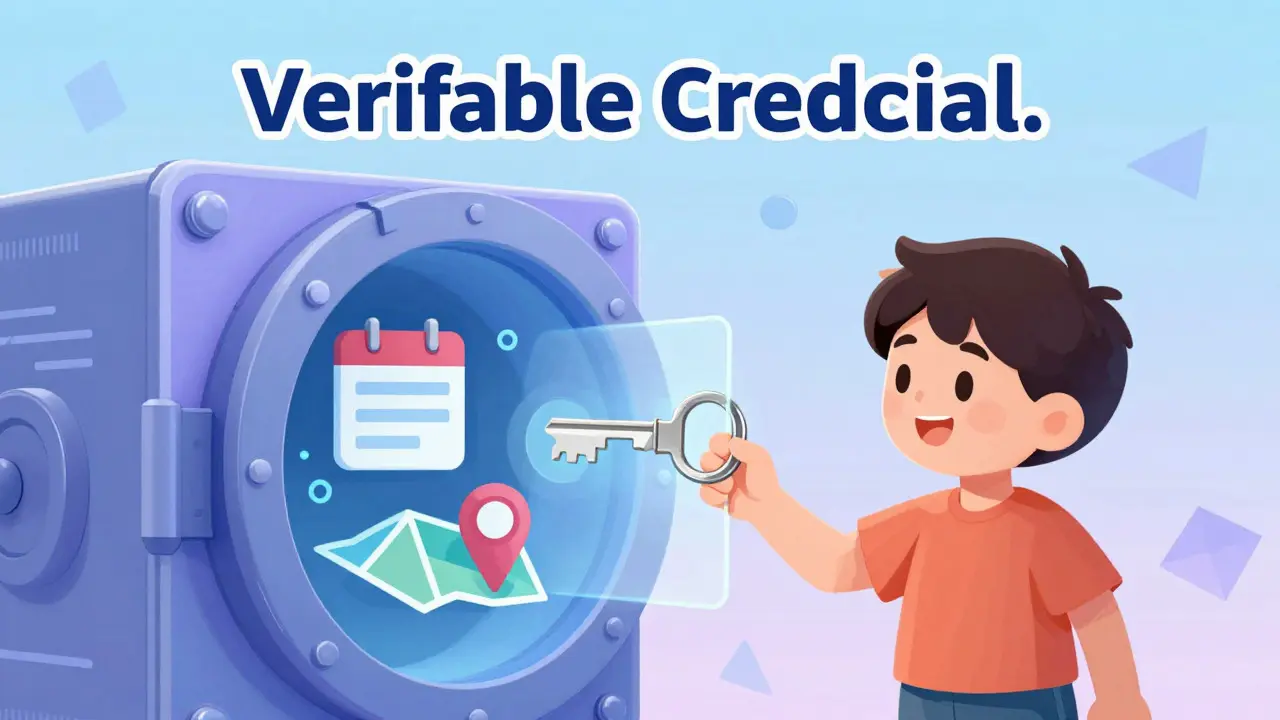
Probably not anytime soon. In fact, it’s getting stricter. The IRS introduced mandatory 1099-DA reporting requirements in 2026, which means comprehensive KYC is needed for taxable transactions. Meanwhile, new technologies like Verifiable Credentials are a W3C standard for digital identity that allows users to control their own data. aim to solve the privacy issue. These decentralized identity solutions let you prove you are over 18 or a US resident without revealing your actual name or address. Pilot programs are already underway in Europe.
For now, KYC is the price of admission for mainstream crypto adoption. It balances the need for innovation with the demand for security and legal compliance. Whether you love it or hate it, understanding how it works puts you in control of your digital financial life.
Is KYC mandatory for all cryptocurrency exchanges?
Not technically all, but it is mandatory for almost all major centralized exchanges (CEXs) like Coinbase, Binance, and Kraken to operate legally in regulated jurisdictions. Decentralized exchanges (DEXs) like Uniswap do not require KYC, but accessing them often involves using a CEX first, which does require verification.
How long does the KYC verification process take?
For most major exchanges, automated KYC can be completed in 15 to 30 minutes. However, during peak times or if manual review is required, it can take anywhere from 24 to 72 hours. Using clear, well-lit photos of your ID speeds up the process significantly.
Can I buy crypto without KYC?
Yes, but options are limited. You can use Peer-to-Peer (P2P) marketplaces like LocalBitcoins (where available), certain Bitcoin ATMs (for small amounts under $900), or decentralized exchanges. However, these methods often have higher fees, lower liquidity, or require you to already own cryptocurrency.
Is my personal data safe on a KYC exchange?
Major exchanges invest heavily in cybersecurity to protect user data, but no system is 100% immune to breaches. While KYC adds a layer of security for account recovery, it also creates a target for hackers. Users should enable two-factor authentication (2FA) and consider using hardware wallets for long-term storage to minimize risk.
What happens if my KYC application is rejected?
Common reasons for rejection include blurry images, glare on the ID, expired documents, or mismatched names. If rejected, you can usually resubmit corrected documents through the app or website. Ensure your name matches your government ID exactly and that your ID is not older than five years.


Namrata Mapgaonkar
August 7 2026honestly this is such a relief to read because i was so confused about why my app kept asking for selfies and stuff. it feels like too much privacy invasion sometimes but knowing it stops bad guys helps a bit :) thanks for explaining the liveness check part clearly