
The JONES coin isn't just another cryptocurrency. It's the backbone of Jones DAO, a DeFi protocol built to let everyday users access institutional-level options strategies without needing a finance degree or a trading terminal. If you've ever felt overwhelmed by complex DeFi vaults, locked assets, or manual position management, Jones DAO was made for you.
What Exactly Is Jones DAO?
Jones DAO is a decentralized finance platform focused on yield, strategy, and liquidity. It doesn't just offer staking or lending - it automates sophisticated financial tools like options trading and concentrated liquidity management. Think of it as a financial assistant that runs on blockchain. You deposit your crypto, choose a vault, and let the protocol handle the rest. No need to monitor prices, adjust leverage, or vote in governance bribes.The protocol’s core innovation is its vault system. Instead of locking your funds in rigid positions like older platforms, Jones DAO lets you earn yield while keeping your assets liquid. This is done through something called jAssets - tokenized versions of your deposited assets that keep growing in value as the protocol generates returns. For example, if you deposit USDC, you get jUSDC, and over time, each jUSDC token represents more underlying value thanks to compounding yields.
How Does JONES Work?
The JONES token is the native currency of the Jones DAO ecosystem. It's used for governance - meaning holders can vote on changes to the protocol, like adding new vaults, adjusting fees, or modifying risk limits. But it's not just a voting token. It's also tied to the protocol's incentives and long-term sustainability.Here’s how users interact with the system:
- You deposit ETH, BTC, USDC, or AURA into one of Jones DAO’s automated vaults.
- The protocol automatically executes a strategy - like leveraged GLP trading or auto-compounding AURA yield.
- You receive jAssets (like jGLP or jAURA) in return, which increase in value over time.
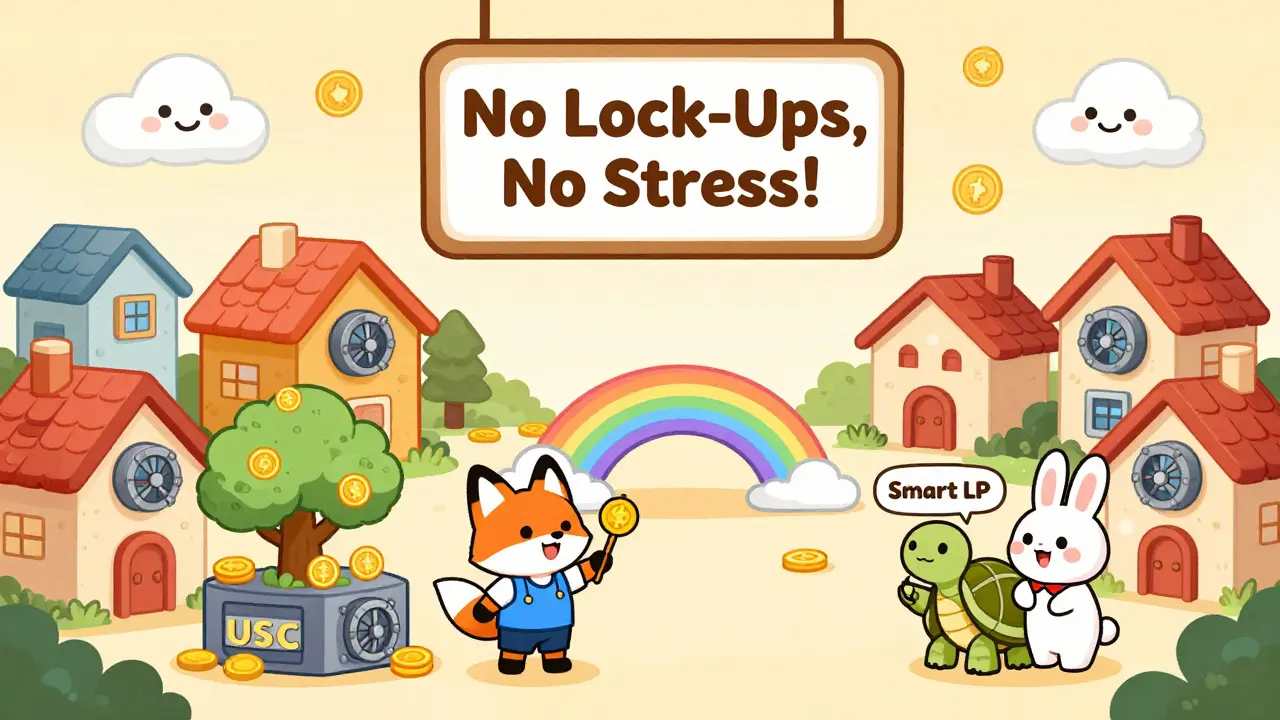
- You can withdraw your original deposit plus earnings at any time - no lock-up periods.
This is a big deal because most DeFi options platforms force you to lock funds for weeks or months. Jones DAO removes that friction. You’re not gambling on price movements - you’re using automated strategies that are designed to profit regardless of whether the market goes up or down.
Key Vaults and Strategies
Jones DAO doesn’t offer one-size-fits-all products. Each vault is built for a specific purpose:- jAURA: This vault automatically compounds yield from Aura Finance tokens. It connects to Balancer and Hidden Hand to collect bribes and rewards without you ever having to vote or claim tokens manually. Each jAURA token grows in value as more vlAURA (vested liquidity) accumulates behind it.
- jGLP & jUSDC: These are smart leverage vaults. They take your GLP (a liquidity pool token from GMX) or USDC and use Jones DAO’s own reserves to borrow and create leveraged positions. The system auto-adjusts leverage based on market conditions - so if prices swing wildly, the vault reduces exposure to avoid liquidation. This is rare in DeFi, where most leveraged positions blow up during volatility.
- Smart LP: This isn’t a vault, but a tool for managing Uniswap V3 liquidity positions. It automatically rebalances your concentrated liquidity to stay in the most profitable price range. For liquidity providers, this means higher fees and less impermanent loss without lifting a finger.
Each of these tools targets a different pain point. jAURA solves the hassle of claiming rewards. jGLP solves the risk of leverage. Smart LP solves the complexity of liquidity provision. Together, they make Jones DAO one of the most practical DeFi protocols for non-technical users.
Current Market Data (as of February 2026)
As of early 2026, JONES trades around $0.23 to $0.27 USD, depending on the exchange. The market cap hovers near $1.2 million, with daily trading volume under $2,000. That’s small compared to major DeFi tokens - but it’s not about size. It’s about utility.On some exchanges like LBank, JONES is actively traded. But on major platforms like Crypto.com, it’s not listed yet. That means liquidity is limited, and price swings can be sharp. A 12% hourly spike doesn’t mean the project is exploding - it often means a small group of traders is moving the price.
Total Value Locked (TVL) in Jones DAO is around $2.18 million. That breaks down into:
- $1.68 million in vault TVL (jAURA, jGLP, jUSDC)
- $499,839 in Smart LP TVL
These numbers show real usage. People aren’t just holding JONES - they’re using the platform to earn yield. The fact that Smart LP holds nearly half a million dollars in liquidity positions proves that traders trust its automation.
Who Is Jones DAO For?
Jones DAO isn’t for crypto speculators. It’s for:- DeFi users tired of manual management - If you hate checking your positions every day, this is your fix.
- Protocols with treasury assets - DAOs and funds that hold USDC or ETH can use jUSDC or jGLP to earn better returns than staking.
- Retail traders without technical skills - You don’t need to understand delta-neutral strategies to use jGLP. The protocol does it for you.
It’s not for people looking for quick flips. JONES isn’t a meme coin. Its value comes from real, ongoing utility within the protocol. If you’re not using the vaults, holding JONES alone gives you very little.

How It Compares to Other DeFi Platforms
Jones DAO sits between two worlds:- On one side: Simple staking platforms like Aave or Compound - easy to use, but low yields.
- On the other: Complex options protocols like Dopex or OptionBlitz - high yields, but you need to manage positions, vote on bribes, and monitor liquidation risks.
Jones DAO bridges that gap. It doesn’t just offer yield - it offers smart yield. Where other platforms require you to be an expert, Jones DAO hides the complexity. You don’t need to know what a “gamma squeeze” is. You just need to know how to deposit.
It’s also more flexible than Vaultka or Dual Finance. Those platforms often lock your assets or require you to stake tokens for long periods. Jones DAO doesn’t. You can exit anytime. That’s a huge advantage.
What’s Missing? The Risks
Jones DAO looks clean - but there are blind spots:- No public audit reports - There’s no record of a third-party security audit. That’s a red flag in DeFi.
- Unknown team - No names, no LinkedIn profiles, no public history. It’s anonymous.
- Small TVL - $2 million is tiny. If a major vault gets exploited, the whole protocol could be at risk.
- Low trading volume - If demand drops, JONES could crash hard.
There’s also no clear fee structure. How much does the protocol take from each vault? Is there a performance fee? A withdrawal fee? The official docs don’t say. That lack of transparency is dangerous.
And while the strategies sound smart, they rely on other protocols - Aura, Balancer, GMX, Uniswap V3. If one of those breaks, Jones DAO’s vaults could fail. DeFi is a house of cards. Jones DAO is one of the higher ones - but it’s still a card.
Should You Buy JONES?
If you’re looking to speculate - skip it. The price is too volatile, the volume too low, and the token has no clear use outside governance.If you want to earn yield on your crypto - try the vaults first. Deposit a small amount of USDC into jUSDC or ETH into jGLP. See how it performs over a month. If the returns are stable and you can withdraw anytime, then JONES might be worth holding as a governance token.
But never invest more than you can afford to lose. Jones DAO is innovative. But innovation in DeFi often comes with hidden risks. The tech is promising. The team is invisible. The market is tiny. Proceed with caution.
What is the JONES coin used for?
The JONES token is used for governance in Jones DAO. Holders can vote on proposals like adding new vaults, changing fees, or adjusting risk parameters. It also serves as a reward token for users who provide liquidity or participate in protocol development. However, it has no utility outside the Jones DAO ecosystem - meaning you can’t use it to pay for goods or services elsewhere.
Can I stake JONES to earn rewards?
No, Jones DAO does not offer staking for JONES tokens. Instead, users earn yield by depositing assets like USDC, ETH, or AURA into the protocol’s vaults (jUSDC, jGLP, jAURA). The JONES token itself is not yield-bearing. Its value comes from governance rights and potential future incentives, not staking rewards.
Is Jones DAO safe to use?
There’s no public audit report for Jones DAO’s smart contracts, and the team is anonymous. While the vault strategies are well-designed, the lack of transparency makes it risky. Always start with a small deposit. Never invest more than you can afford to lose. Use only trusted wallets and avoid connecting to unknown third-party sites.
Where can I buy JONES coin?
JONES is available on smaller decentralized exchanges like LBank and PancakeSwap. It is not listed on major platforms like Crypto.com, Binance, or Coinbase. Always check the contract address before buying - fake tokens are common on lesser-known exchanges.
What makes Jones DAO different from other DeFi protocols?
Jones DAO stands out by automating complex DeFi strategies into one-click vaults. Unlike other platforms that require manual position management, voting, or locking assets, Jones DAO lets users earn yield without active involvement. Its Smart Leverage system auto-adjusts risk, and its jAssets keep growing in value without needing to claim rewards. This makes it uniquely accessible for non-technical users.


Charrie VanVleet
February 20 2026Man, I tried jUSDC last week and honestly? It’s been a game-changer. No more stressing over when to claim rewards or adjusting leverage. I just deposited my USDC, forgot about it for a month, and came back to find my balance up 8%. No drama, no manual work. This is what DeFi should feel like - simple, smooth, and actually useful.
Also, jAURA is pure magic if you’re holding Aura. It just compounds itself. I didn’t even know I was getting bribes until I checked my wallet. Like, someone else is doing the boring stuff for me. Bless.
Don’t overthink it. Start small. Try $50. If you’re not losing sleep over it, you’re doing it right. 😊