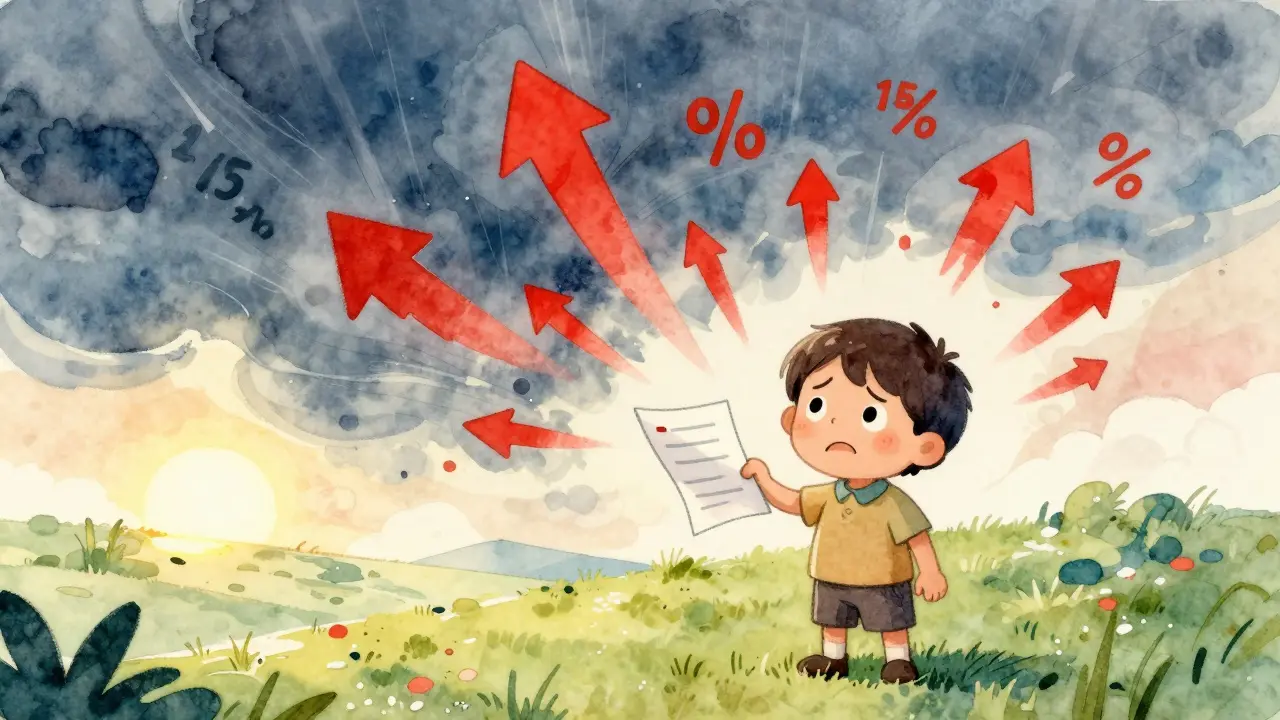
Have you ever tried to take out a loan in DeFi, only to watch the interest rate spike while you were still paying it off? It’s a nightmare scenario for anyone trying to manage debt. That uncertainty is exactly what DOLA Borrowing Right, or DBR, was designed to fix.
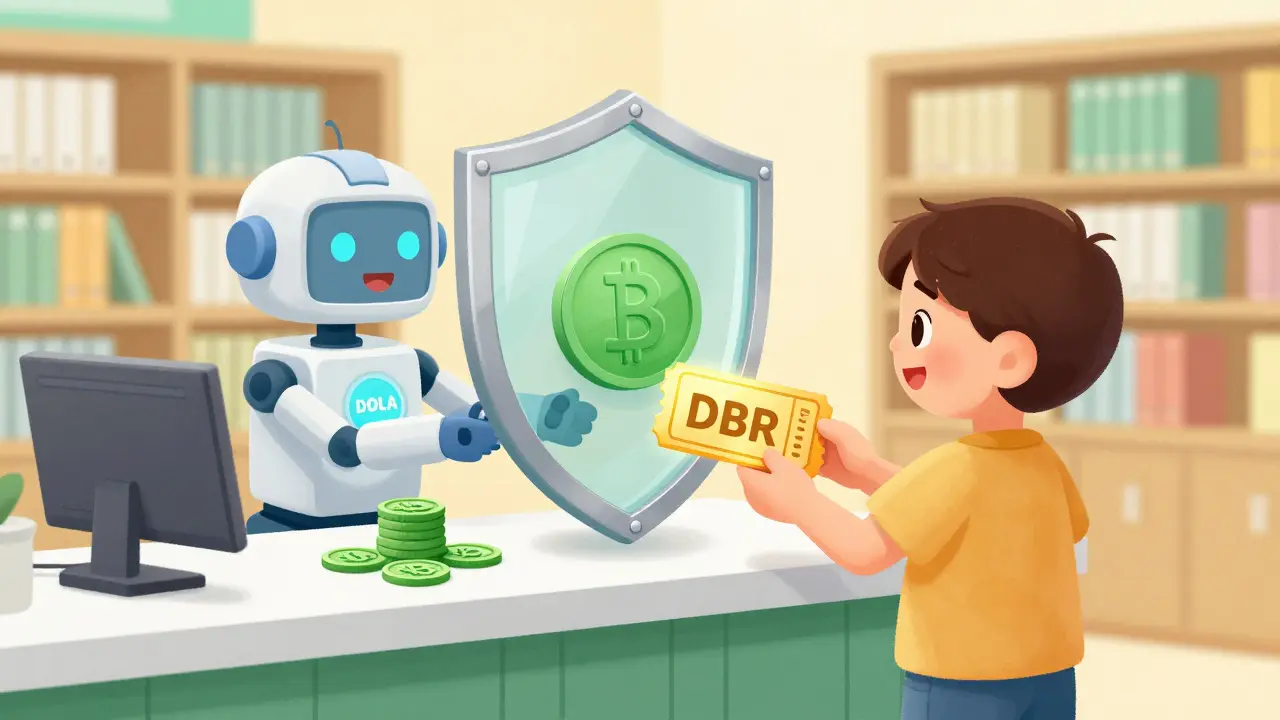
If you are wondering what this token actually does, the short answer is: it locks in your borrowing cost. Unlike standard loans where rates float up and down with the market, DBR lets you pre-pay for the right to borrow money at a fixed price. Think of it like buying a coupon that guarantees you can borrow $10 worth of service later, no matter how much prices rise today.
In this guide, we will break down how DBR works within the Inverse Finance ecosystem, why it matters for stablecoin users, and how you can actually get your hands on it without getting lost in complex code.
The Problem With Variable Rates in DeFi
To understand why DBR exists, you first need to look at how most decentralized finance (DeFi) lending works. Protocols like Aave or Compound operate on variable interest rates. This means the cost of your loan changes constantly based on supply and demand.
Imagine you borrow $1,000 when the annual percentage rate (APR) is 3%. You plan to hold that loan for six months. But suddenly, everyone rushes to borrow from the same pool. The rate jumps to 15% overnight. Your monthly payment just quintupled. For casual users, this is risky. For businesses or long-term investors, it is unmanageable.
Inverse Finance created a solution called FiRM (Fixed Rate Money Market). Instead of guessing what your interest will be next week, you pay for the right to borrow now. This is where DBR comes in. It turns an abstract financial concept-interest rates-into a tangible, tradable asset.
How Does DBR Actually Work?
The mechanics of DBR are surprisingly simple once you strip away the jargon. Here is the core rule:
- 1 DBR gives you the right to borrow 1 DOLA for one year.
DOLA is the native stablecoin of Inverse Finance, pegged to the US dollar. When you want to take out a loan in the FiRM market, you don't just deposit collateral; you also need to have enough DBR tokens to cover the "interest" portion of that loan.
Let’s say you want to borrow 100 DOLA for a year. If the fixed rate implies a cost of 10 DBR per year, you must acquire those 10 DBR tokens upfront. As time passes, the protocol consumes (or burns) those DBR tokens as payment for the loan. If you pay back the loan early, you might get some unused DBR back, depending on the specific contract terms.
This structure creates two distinct markets:
- The Lending Market: Where people lend DOLA to earn yield.
- The DBR Market: Where people buy and sell the rights to borrow.
Because DBR is a tradeable token, its price fluctuates. If many people expect borrowing costs to rise, they buy DBR now to lock in cheaper rates later. This makes DBR act somewhat like a futures contract for interest rates.
Who Uses DBR and Why?
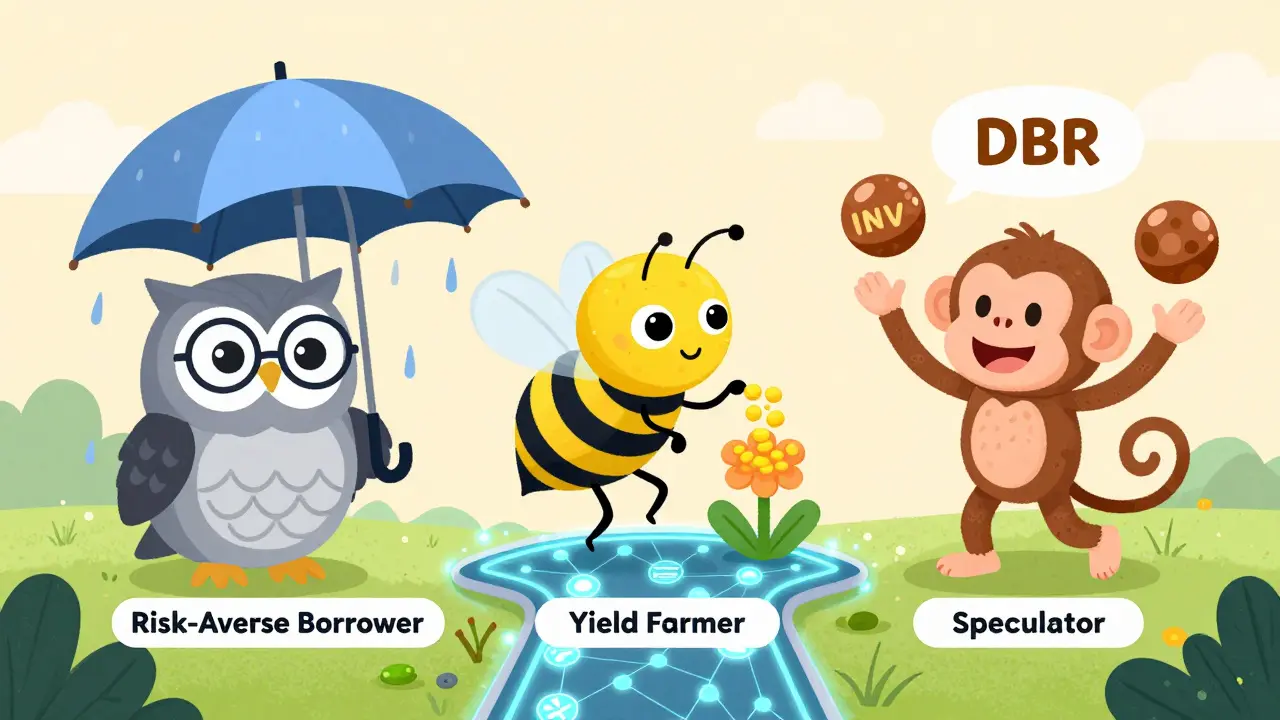
You might be asking, "Why would I bother with this complexity?" There are three main groups of people who benefit from holding or using DBR.
1. The Risk-Averse Borrower If you need capital for a project and cannot afford surprise rate hikes, DBR provides certainty. You calculate your total cost today, buy the necessary DBR, and sleep soundly knowing your debt service won't explode if the market goes crazy.
2. The Yield Farmer Inverse Finance incentivizes participation by rewarding stakers of their governance token, INV. When you stake INV in the FiRM market, you often receive DBR as a reward. These users can then use that DBR to borrow more DOLA, compounding their strategies, or sell the DBR on the open market for profit.
3. The Speculator Since DBR is traded on decentralized exchanges, traders can bet on the future state of borrowing demand. If you believe DeFi adoption will surge and everyone will want cheap loans, you buy DBR. If you think credit markets will dry up, you sell. It adds a layer of speculation separate from the price of DOLA itself.
Key Differences: DBR vs. Traditional DeFi Tokens
It is easy to confuse DBR with other tokens you might see in your wallet. Let’s clear up the confusion by comparing it to common DeFi assets.
| Feature | DBR (Inverse Finance) | Variable Rate Loans (Aave/Compound) | Governance Tokens (UNI/AAVE) |
|---|---|---|---|
| Interest Type | Fixed (Pre-paid via DBR) | Variable (Changes hourly/daily) | N/A (Not a lending instrument) |
| Primary Utility | Paying for borrowing rights | Accessing liquidity pools | Voting on protocol changes |
| Price Driver | Demand for fixed-rate loans | Market utilization rates | Speculation and governance power |
| Risk Profile | Token volatility risk | Interest rate spike risk | High market volatility |
Notice that DBR is not a governance token. Holding DBR does not give you voting power in Inverse Finance. Its value is strictly tied to its utility as a tool for managing debt costs. This distinction is crucial because it means DBR’s price action is driven by economic fundamentals (borrowing demand) rather than pure hype.
How to Buy and Store DBR
Unlike Bitcoin or Ethereum, you won’t find DBR listed on major centralized exchanges like Binance or Coinbase. This is typical for niche utility tokens in the DeFi space. To get DBR, you need to use a decentralized exchange (DEX).
Here is the step-by-step process:
- Get a Web3 Wallet: Download a self-custody wallet like Trust Wallet or MetaMask. Make sure you secure your seed phrase offline.
- Fund with ETH: Buy Ethereum (ETH) on a central exchange and send it to your wallet address. You need ETH to pay for gas fees and to swap for DBR.
- Connect to a DEX: Open a browser-based swap interface. Since Inverse Finance operates primarily on Ethereum, you can use platforms like Uniswap or the Inverse Finance swap page directly.
- Import the Token: DBR might not appear in the default search list. You will likely need to paste the official smart contract address for DBR into the input field. Always verify this address from official Inverse Finance channels to avoid scams.
- Execute the Swap: Set your slippage tolerance appropriately (often higher for low-liquidity tokens) and confirm the transaction.
Once you have DBR, it sits in your wallet like any other ERC-20 token. You can hold it, transfer it, or connect your wallet to the Inverse Finance app to use it for borrowing DOLA.
Risks and Considerations
No investment is risk-free, and DBR has specific risks you should understand before diving in.
Liquidity Risk: DBR is a micro-cap token. Market data shows trading volumes often staying under $20,000 per day. This means if you try to sell a large amount at once, you could significantly impact the price (slippage), resulting in fewer dollars than expected.
Protocol Dependency: The value of DBR is entirely dependent on the health of Inverse Finance and the DOLA stablecoin. If DOLA loses its peg to the dollar, or if the Inverse protocol suffers a security breach, the demand for borrowing rights will vanish, likely crashing the value of DBR.
Data Discrepancies: Because DBR is consumed as interest and issued as rewards, tracking its exact circulating supply is tricky. Different data aggregators like CoinGecko and CoinTracker may show different numbers for market cap and supply. Always check multiple sources before making decisions.
Is DBR Right for You?
If you are a casual crypto holder looking for a quick flip, DBR probably isn't the best fit due to its low liquidity and technical barrier to entry. However, if you are already active in DeFi, particularly with stablecoins, DBR offers a sophisticated tool for hedging against interest rate volatility.
It represents a shift toward more predictable financial products in a chaotic market. By turning borrowing capacity into a tradeable asset, Inverse Finance allows users to plan their finances with the precision of traditional banking, but with the flexibility of blockchain technology.
What is the current price of DBR?
The price of DBR fluctuates based on market demand. Recent data points show it trading in the range of $0.04 to $0.10. Because it is a low-volume token, prices can vary slightly between different decentralized exchanges. Always check real-time data on platforms like CoinGecko or Uniswap before trading.
Can I use DBR to earn passive income?
Not directly. DBR is a utility token used to pay for borrowing costs. However, you can earn DBR by staking the INV governance token in the Inverse Finance ecosystem. Some users provide liquidity for DBR pairs on DEXs to earn trading fees, but this carries impermanent loss risk.
Is DBR listed on Binance or Coinbase?
No, DBR is not currently listed on major centralized exchanges like Binance or Coinbase. It is primarily traded on decentralized exchanges (DEXs) such as Uniswap or through the Inverse Finance platform itself. You will need a Web3 wallet to access these markets.
What happens if I don't use my DBR tokens?
If you hold DBR and do not use it to borrow DOLA, the tokens simply sit in your wallet. Their value depends on market speculation and future demand for borrowing rights. They do not expire automatically, but their utility is tied to the existence of the FiRM lending market.
How is DBR different from DOLA?
DOLA is a stablecoin pegged to the US dollar, used as the actual currency you borrow or spend. DBR is a utility token that acts as a "coupon" or fee payment to allow you to borrow that DOLA at a fixed rate. One is money; the other is a key to access cheap credit.