
You’ve probably stumbled upon Blend (BLEND), a low-cap cryptocurrency with extremely limited market presence and trading volume while scrolling through lists of obscure tokens or hearing whispers in niche crypto forums. It’s easy to get caught up in the excitement of finding the "next big thing" before it explodes. But when you look closer at BLEND, the picture isn’t quite as rosy as the hype might suggest. In fact, it raises some serious red flags that every investor needs to understand before risking a single dollar.
The core question isn't just "what is Blend?" but rather, "is Blend worth your attention?" The short answer is that BLEND is currently a ghost town in the vast landscape of digital assets. It trades at fractions of a cent, has almost no daily trading activity, and lacks the fundamental documentation that separates legitimate projects from dead ends. Let’s break down exactly what this means for you if you’re considering buying, holding, or simply trying to make sense of this token.
The Hard Truth About BLEND’s Market Status
To understand BLEND, we have to look at the raw numbers. As of mid-2024 data which still reflects its current trajectory into 2026, BLEND was trading at approximately $0.0005. That sounds cheap, right? It’s the kind of price that makes people think they can buy millions of tokens for a few bucks. But price alone tells you nothing about value. What matters is liquidity-the ability to actually sell those tokens when you want to.
| Metric | Value / Status | Implication for Investors |
|---|---|---|
| Price | ~$0.0005 | Extremely low; requires massive volume to move significantly |
| 24-Hour Volume | $3.06 | Critically illiquid; nearly impossible to exit large positions |
| Daily Decline | -49.60% | High volatility driven by lack of buyers/sellers |
| RSI (14-Day) | 45.21 | Neutral momentum; no strong bullish or bearish pressure |
Look at that 24-hour trading volume: $3.06. Yes, three dollars. This means that on an average day, only about three dollars worth of BLEND changes hands. If you tried to sell even $100 worth of BLEND, you would likely crash the price because there are simply not enough buyers in the order book to absorb your sale. This is the definition of extreme illiquidity. It’s not a healthy market; it’s a stagnant pool.
Furthermore, the token has seen significant drops, including a -49.60% decline in a single day. When volume is this low, prices don’t move based on supply and demand fundamentals. They move based on random noise or manipulation. A single person selling a modest amount can tank the price by half, leaving everyone else holding bags of worthless tokens.
Missing Fundamentals: The Ghost Project?
In the crypto world, information is king. For any legitimate project, you expect to find a whitepaper, a team page, a GitHub repository showing code development, and a clear roadmap. These are the pillars of trust. With BLEND, these pillars are missing entirely.
There is no authoritative source that clarifies who created BLEND, what blockchain it runs on, or what problem it solves. Is it a privacy coin? A governance token? A meme coin? The ambiguity is staggering. Major platforms like CoinCodex note that BLEND lacks sufficient historical trading data for reliable price prediction modeling. While this could mean it’s brand new, combined with the lack of any online footprint-no Twitter/X account with real engagement, no Discord community, no news articles-it suggests something more concerning: abandonment.
Compare this to the broader crypto trends of 2025 and 2026. Reports from firms like Cherry Bekaert highlight that venture capital is flowing toward AI-driven tokens and projects with strong products. Established narratives include DeFi, Web3 gaming, and Layer 2 scaling solutions. BLEND fits into none of these categories. It isn’t mentioned in analyses of the best cryptos to buy, nor does it appear in discussions of privacy tools or emerging tech. It exists in a vacuum.
The Confusion of Multiple Tokens
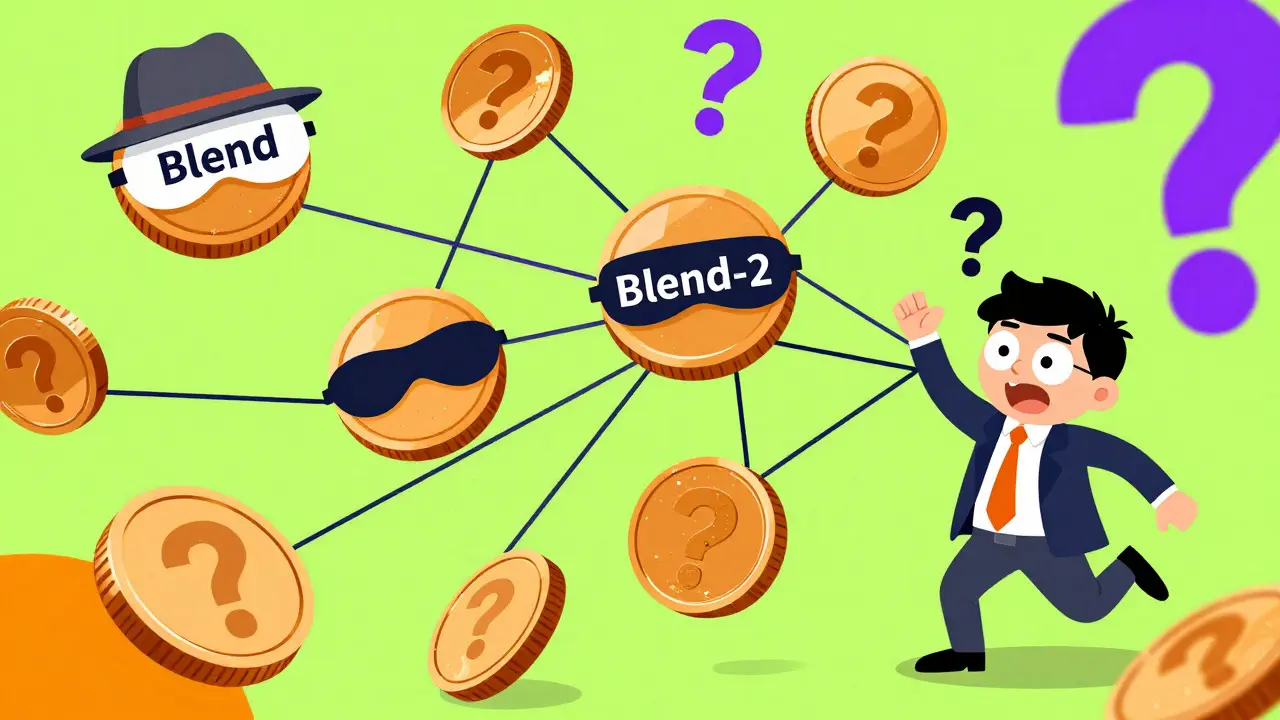
Here’s another headache for anyone researching BLEND: naming collisions. The crypto space is littered with duplicate names. CoinCodex lists multiple variants: "blend," "blend-2," and "blend-3." This indicates that either several different projects have used the same name across different blockchains, or there is significant confusion in how data aggregators track this asset.
For an investor, this is a major risk. You might be looking at the chart for one version of BLEND while buying a completely different, possibly scam, version on another exchange. Without a verified contract address and clear branding, distinguishing between these tokens is nearly impossible for the average user. This lack of clarity is a classic sign of a project that hasn’t put in the work to establish its identity.
Why Predictions Are Meaningless Here
You might see headlines predicting BLEND will drop to $0.00037 or rise tenfold. Take these with a grain of salt-or better yet, ignore them. Algorithmic predictions rely on historical data patterns. Since BLEND has virtually no consistent trading history, these models are essentially guessing.
For instance, a bearish sentiment rating might coincide with a "Greed" score on the Fear & Greed Index, creating contradictory signals. This happens because the metrics aren’t measuring real market participation; they’re measuring noise. When a token has $3 in daily volume, technical indicators like RSI (Relative Strength Index) become irrelevant. There is no trend to follow, only random fluctuation.
Regulatory Risks and Security Concerns
As we move further into 2026, regulatory frameworks are tightening globally. The EU’s Markets in Crypto-Assets (MiCA) regulation, which came into force in late 2024, sets strict standards for transparency and consumer protection. Projects that lack clear teams, audits, and compliance measures are increasingly being flagged or delisted from reputable exchanges.
BLEND shows no evidence of complying with these emerging standards. There are no security audits, no vulnerability assessments, and no public legal entity behind the token. This makes it highly vulnerable to being classified as a security or even a fraudulent scheme. In a market where institutional adoption is growing, tokens without proper documentation are left behind. They become stranded assets-tokens you own but can’t easily trade or use.
Is There Any Upside?
Let’s play devil’s advocate. Could BLEND suddenly explode? Technically, yes. Low-cap coins can surge if a whale buys a large portion or if a viral social media trend picks them up. However, this is gambling, not investing. The odds are heavily stacked against you.
Consider the opportunity cost. Every dollar tied up in an illiquid, undocumented token like BLEND is a dollar not invested in projects with real utility, active development, and liquid markets. The crypto market is projected to grow significantly, reaching nearly $30 billion in the US alone by 2033. But that growth is concentrated in established ecosystems like Ethereum, Solana, and Bitcoin. Obscure tokens like BLEND rarely capture that upside unless they have a unique technological edge-which, again, BLEND fails to demonstrate.
What Should You Do?
If you already hold BLEND, your options are limited. Due to the low liquidity, exiting slowly might be necessary to avoid crashing the price further. If you’re thinking of buying, ask yourself: Why? Is there a specific use case? Is there a team you trust? If the answer is "no" or "I don’t know," then it’s safer to stay away.
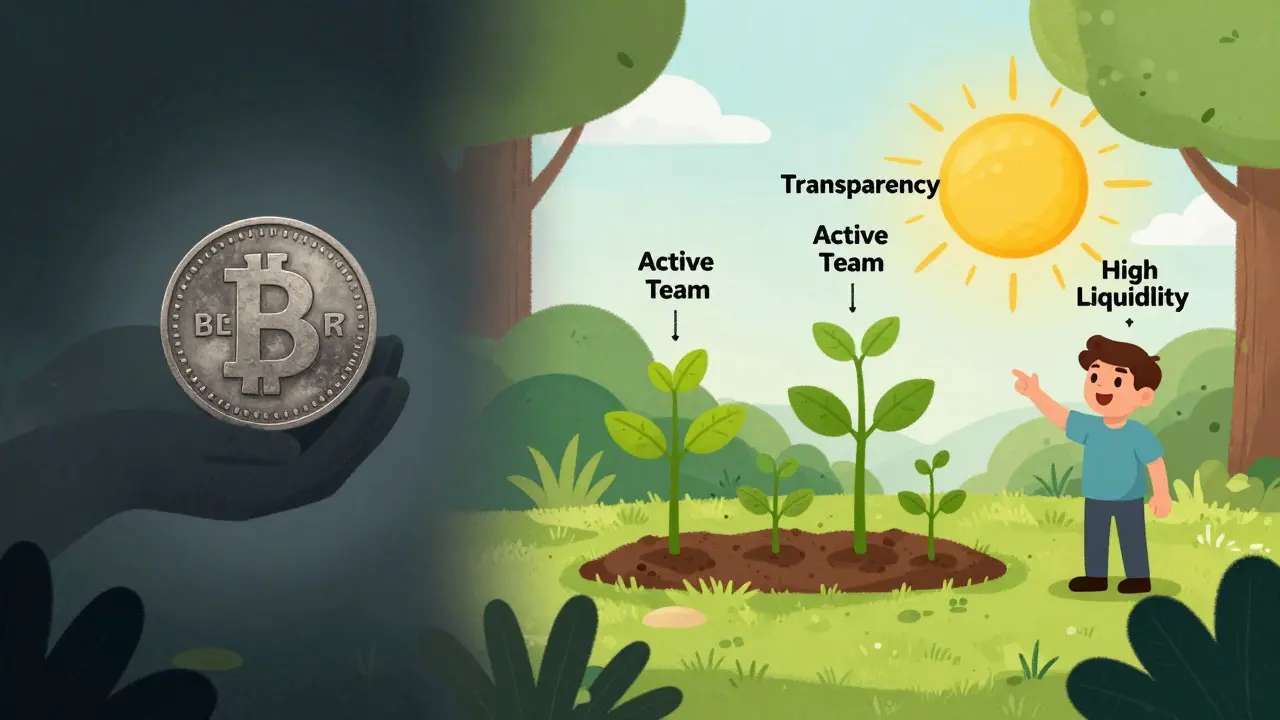
Instead of chasing ghosts like BLEND, focus on doing your own research (DYOR). Look for projects with:
- Transparent Teams: Real names, LinkedIn profiles, and past experience.
- Active Development: Regular commits on GitHub and public roadmaps.
- Liquidity: Daily trading volumes in the millions, not dollars.
- Clear Utility: A solved problem or a unique feature set.
The crypto market is full of opportunities, but they aren’t hidden in the dark corners of illiquid tokens. They’re in the projects building the future of finance, technology, and digital ownership. Don’t let the allure of a cheap price distract you from the reality of value.
Is Blend (BLEND) a good investment in 2026?
Based on current data, BLEND is considered a high-risk, speculative asset rather than a solid investment. Its extremely low trading volume ($3.06/day) and lack of fundamental documentation make it prone to manipulation and illiquidity. Most experts advise caution with such low-cap tokens unless you fully understand the risks of losing your entire principal.
Who created the Blend (BLEND) token?
The creators of BLEND are not publicly identified in any authoritative sources. There is no official team page, whitepaper, or verified social media presence that confirms the identities of the developers. This anonymity is a significant red flag for potential investors.
What blockchain does BLEND run on?
There is no confirmed information regarding the underlying blockchain for BLEND. Data aggregators list multiple variants (blend, blend-2, blend-3), suggesting possible existence on different chains or confusion in tracking. Without a verified contract address, it is difficult to determine its technical infrastructure.
Why is the trading volume for BLEND so low?
The low volume indicates a lack of market interest and liquidity. Few people are buying or selling the token, which often happens with abandoned projects, very new launches with no marketing, or tokens that have failed to gain traction. This makes it difficult for users to enter or exit positions without affecting the price drastically.
Are there other tokens named Blend?
Yes, there appears to be confusion with multiple tokens using similar names (e.g., blend-2, blend-3). This is common in crypto where naming conventions are not strictly regulated. Always verify the contract address and official project links to ensure you are interacting with the correct asset, though for BLEND specifically, official verification is lacking.
Can I trust price predictions for BLEND?
Price predictions for BLEND should be viewed with extreme skepticism. Because the token lacks sufficient historical trading data, algorithmic models cannot generate reliable forecasts. Predictions are often based on noise rather than genuine market trends, making them largely meaningless for decision-making.