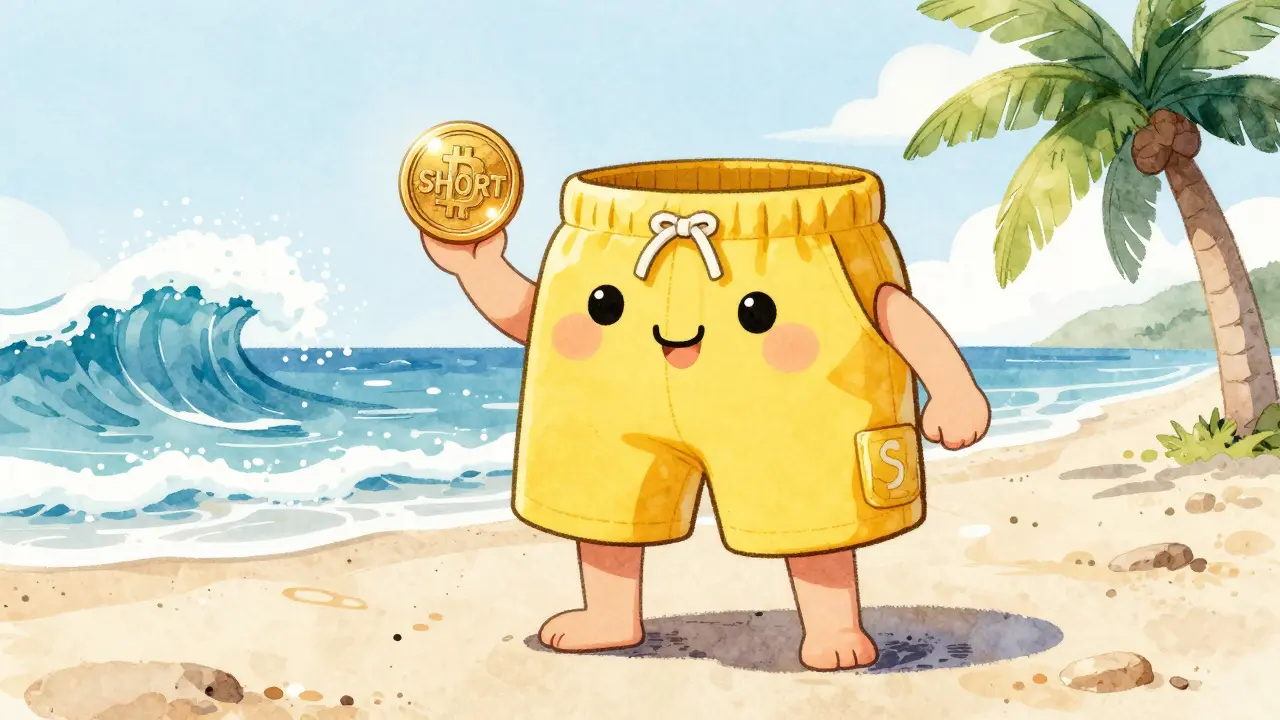
Have you ever seen a cryptocurrency ticker that looks like a trading strategy but is actually a joke? That’s exactly what Bermuda Shorts is. With the ticker symbol $SHORT, this token plays on the confusion between fashion humor and financial bearishness. It is not a tool for betting against the market; it is a meme coin built on the Binance Smart Chain (BSC).
If you are wondering whether $SHORT is a serious investment or just another internet trend, you need to look past the clever name. The reality of this token involves massive supply numbers, thin liquidity, and a community driven by culture rather than complex technology. Understanding what lies beneath the surface helps you decide if it belongs in your portfolio or just your browser history.
The Origin Story: Fashion Meets Blockchain
Bermuda Shorts ($SHORT) launched in 2021. At first glance, the concept seems absurd. Why name a digital asset after casual summer clothing? The creators aimed to blend crypto culture with fashion humor. Their slogan, "Don't short the market, just buy SHORT," flips the script on traditional finance. Instead of borrowing assets to profit from price drops, holders are encouraged to simply hold the token.
The project started as a hybrid experiment. Early descriptions suggested it would enhance Decentralized Finance (DeFi) applications through staking and governance. However, over time, the narrative shifted heavily toward meme culture. By mid-2026, the focus was less on technical utility and more on community identity. A significant update occurred on June 24, 2026, when the official X account (@bscwearshorts) announced a change in ownership. The new management promised to continue the "real culture of the BSC network," signaling a transition in leadership without revealing specific legal entities or detailed roadmaps.
Technical Specs and Tokenomics
To understand the value of any crypto, you must look at its underlying structure. Bermuda Shorts operates as a BEP-20 token on the Binance Smart Chain. This means it relies on the BNB ecosystem for transactions and liquidity. You can verify the token’s authenticity using its contract address:
0xACee924Ec7FCEB684369519e2d135DB2eAabE192
The most striking feature of $SHORT is its supply. The total and maximum supply stands at 4,000,000,000,000 (4 trillion) tokens. This massive number is typical for meme coins, allowing the unit price to appear very low. A low price per token often tricks beginners into thinking they can buy millions of coins for pennies, creating a false sense of affordability.
Data discrepancies plague the circulating supply metrics. Some platforms report that only about 4 billion tokens (0.1% of the total) are in circulation, while others list the full 4 trillion as circulating. This inconsistency makes calculating the true market capitalization difficult. As of March 2026, CoinMarketCap listed approximately 2,540 holders. If distributed evenly, each holder would own roughly 1.57 billion tokens, though in reality, meme coin distributions are usually highly skewed toward early investors and developers.
Price History and Volatility
Meme coins are known for wild swings, and $SHORT is no exception. The token has experienced extreme volatility since its inception. Its all-time high (ATH) reached $0.0007796 in November 2025. By March 2026, the price had dropped to around $0.00001906, representing a decline of nearly 97.5% from its peak.
Here is how the price data looks across different snapshots:
- All-Time High: $0.0007796 (November 9, 2025)
- All-Time Low: $0.0000133 (April 20, 2025)
- Recent Price (June 2026): ~$0.000018 - $0.000019
- 24-Hour Volume: Often under $100, indicating very thin liquidity
This pattern is classic for speculative assets. Initial hype drives prices up, followed by a long tail of gradual decline as interest wanes. The low trading volume means that even small buy or sell orders can cause significant percentage changes in price. For example, a single large sale could crash the price by 20% or more in minutes because there aren't enough buyers in the pool to absorb the shock.
Utility vs. Hype: What Can You Actually Do?
One of the biggest questions surrounding $SHORT is its utility. Does it do anything besides sit in your wallet? Early promises included staking rewards and governance rights within DeFi protocols. However, current data suggests these features are either non-existent or minimally used.
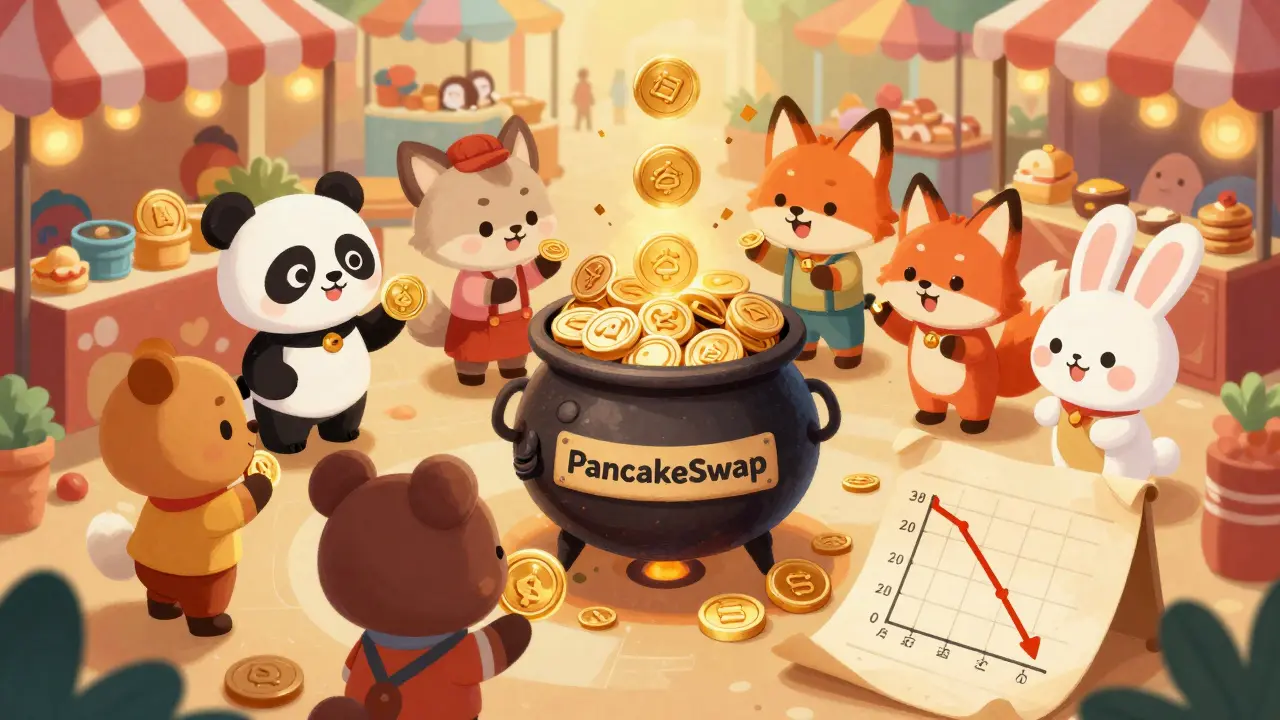
In practice, the primary use case for Bermuda Shorts is speculative trading and community participation. Most interactions happen on decentralized exchanges like PancakeSwap V3. Users provide liquidity or swap WBNB for SHORT tokens based on social media trends and meme virality. There are no major lending platforms, yield farms, or enterprise integrations currently associated with the token.
The branding emphasizes "culture instead of conflict." This positions $SHORT as a social token-a digital badge of membership in a niche online community. While this can foster strong loyalty among holders, it offers little fundamental value compared to tokens backed by revenue-generating protocols or real-world assets.
Common Confusion: Short Selling vs. Buying SHORT
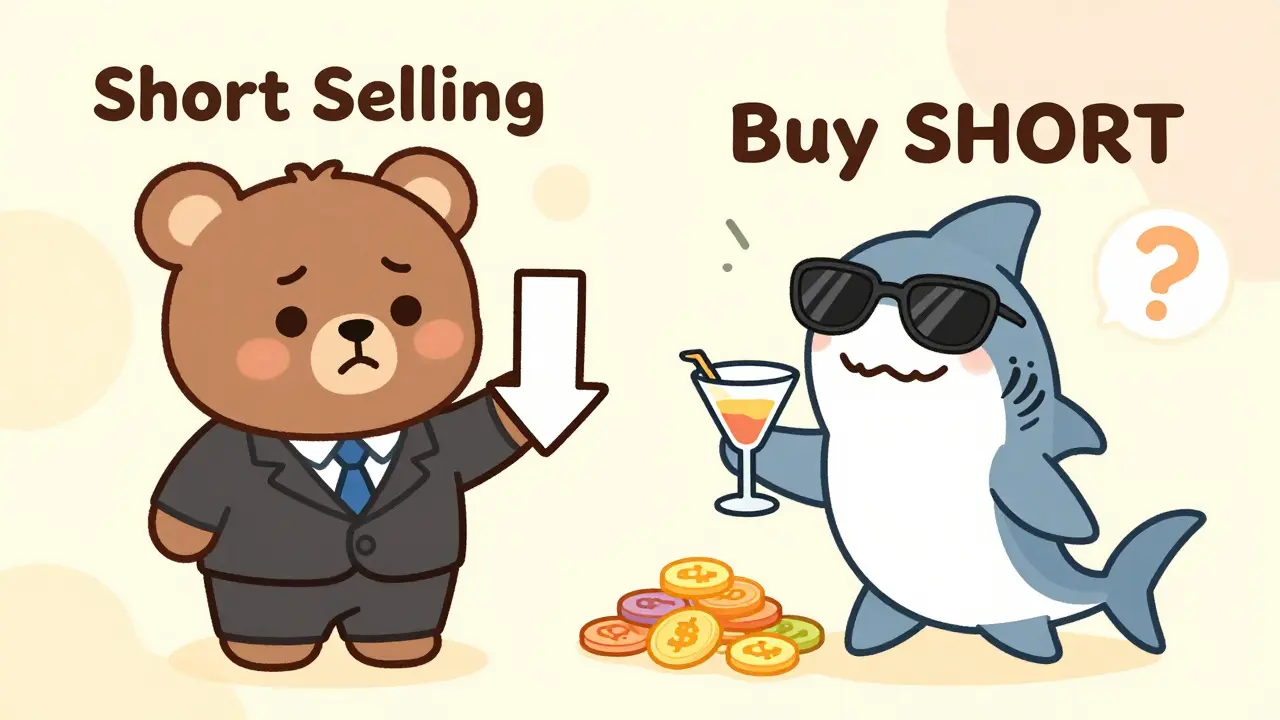
Newcomers to crypto often confuse the ticker $SHORT with the financial concept of short selling. These are two completely different things.
Short Selling is a trading strategy where you borrow an asset, sell it at the current price, and hope to buy it back later at a lower price to return it, pocketing the difference. It is a bet that the price will go down. This requires margin accounts, leverage, and carries unlimited risk if the price goes up.
Buying $SHORT is simply purchasing a token. When you buy Bermuda Shorts, you are betting that the price will go *up*. The token’s name is ironic. It encourages people to stop trying to predict market crashes and instead join a fun, humorous community. Never assume that holding $SHORT protects you from market downturns or allows you to profit from them directly.
Risks and Red Flags
Investing in micro-cap meme coins like Bermuda Shorts comes with substantial risks. Here is what you need to watch out for:
- Liquidity Risk: With daily volumes often below $100, exiting a position can be difficult. You might find yourself unable to sell your tokens without crashing the price further.
- Data Inconsistency: Different trackers show vastly different market caps (from $70k to $76 million). This lack of transparency makes it hard to assess true value.
- Concentration Risk: With only ~2,500 holders, a few large wallets likely control a significant portion of the supply. If one of these "whales" decides to sell, the impact on price would be devastating.
- No Fundamental Backing: Unlike established cryptocurrencies, $SHORT has no clear revenue model, team disclosure, or regulatory compliance framework.
How to Buy Bermuda Shorts ($SHORT)
If you still want to proceed, here is how you can acquire the token. Note that $SHORT is not listed on major centralized exchanges like Binance or Coinbase. You must use a decentralized exchange (DEX).
- Set Up a Wallet: Download a compatible wallet like MetaMask or Trust Wallet. Ensure it supports the Binance Smart Chain network.
- Buy BNB: Purchase BNB (Binance Coin) on a centralized exchange and transfer it to your wallet. You will need BNB to pay for gas fees and to swap for SHORT.
- Connect to PancakeSwap: Go to the official PancakeSwap website and connect your wallet.
- Add the Token: Paste the contract address (
0xACee924Ec7FCEB684369519e2d135DB2eAabE192) into the search bar. Always double-check the address to avoid scams. - Swap: Set your slippage tolerance appropriately (often higher for volatile tokens) and swap your BNB for SHORT.
Final Thoughts on Bermuda Shorts
Bermuda Shorts is a quintessential meme coin. It thrives on humor, irony, and community engagement rather than technological innovation. While the idea of "buying SHORT" to mock bearish traders is entertaining, the financial reality is stark. The token has suffered massive drawdowns, suffers from poor liquidity, and lacks transparent data.
Treat $SHORT as entertainment spending, not an investment. Only allocate funds you are fully prepared to lose entirely. If you are looking for serious exposure to blockchain technology, consider established assets with proven track records. If you want to join the fun of BSC culture, keep your expectations grounded and your position size small.
Is Bermuda Shorts ($SHORT) a good investment?
It is considered a high-risk speculative asset. Due to its low liquidity, massive supply, and lack of fundamental utility, it should not be viewed as a reliable investment. Most meme coins experience significant long-term depreciation.
Can I buy SHORT on Binance?
No. Bermuda Shorts is not listed on the Binance centralized exchange. You can only trade it on decentralized exchanges like PancakeSwap using the Binance Smart Chain network.
What does the ticker $SHORT mean?
The ticker is a play on words. It references "short selling" in finance but ironically encourages users to "just buy SHORT" instead of betting against the market. It is a meme coin, not a financial instrument for shorting.
Who owns Bermuda Shorts?
As of June 2026, the project announced new ownership and management via their social media channels. However, the specific identities of the new owners remain undisclosed, which is common for anonymous meme coin projects.
What is the total supply of SHORT?
The total and maximum supply is 4 trillion (4,000,000,000,000) tokens. This large supply contributes to the extremely low unit price of the token.


ross harris
July 2 2026The sheer audacity of naming a financial instrument after beachwear is the kind of satirical genius that defines our current economic epoch. It is not merely a token; it is a mirror held up to the grotesque vanity of speculative markets, reflecting back a distorted image of desire and folly. We are dancing on the edge of a volcano, convinced that the lava is just warm sand. The irony is thick enough to cut with a knife, yet we swallow it whole, choking on the absurdity. To buy SHORT is to participate in a grand theatrical performance where the script is written by chaos and directed by greed. I find myself compelled to watch the train wreck, not because I enjoy the destruction, but because it reveals the raw, unfiltered truth of human nature. We are all just waiting for the other shoe to drop, or perhaps, for the shorts to fall down. It is a beautiful, terrible spectacle.