
Imagine living in a city where the power cuts out for hours every day, not because of a storm, but because someone is stealing electricity to mine Bitcoin. For millions of Iranians, this isn't science fiction; it's their daily reality. At the heart of this crisis lies a massive, often invisible operation run by the Islamic Revolutionary Guard Corps (IRGC). While the government officially legalized cryptocurrency mining in 2019, a shadowy network of state-backed miners has turned the industry into a tool for sanctions evasion and profit, leaving ordinary citizens in the dark.
The Rise of the Crypto Cartel
Unlicensed cryptocurrency mining in Iran refers to large-scale Bitcoin production operations that bypass official licensing, often utilizing subsidized or stolen electricity through state connections. This phenomenon didn't start with private individuals hacking meters. It began systematically around 2019-2020 when Tehran’s most powerful military group decided to enter the space. Facing tightening international sanctions that cut off access to global dollar markets, the regime saw an opportunity. By mining Bitcoin, they could generate hard currency without needing traditional banking channels.
The scale is staggering. Estimates suggest that well over half of all mining hardware in Iran is controlled by state-related entities. With approximately 180,000 active mining devices across the country, only about 80,000 are in private hands. That leaves roughly 100,000 units under the direct control of the IRGC or its affiliated organizations. These aren't small setups in garages; they are industrial farms located in special economic zones or even inside military bases, protected by armed guards and political immunity.
How the IRGC Exploits National Energy
The secret sauce for these operations is electricity. Iran has some of the lowest electricity prices in the world due to heavy state subsidies. For a miner, low costs mean high profits. But for the IRGC, it’s even better. They don’t just pay low rates; they often get free power or simply refuse to pay bills entirely.
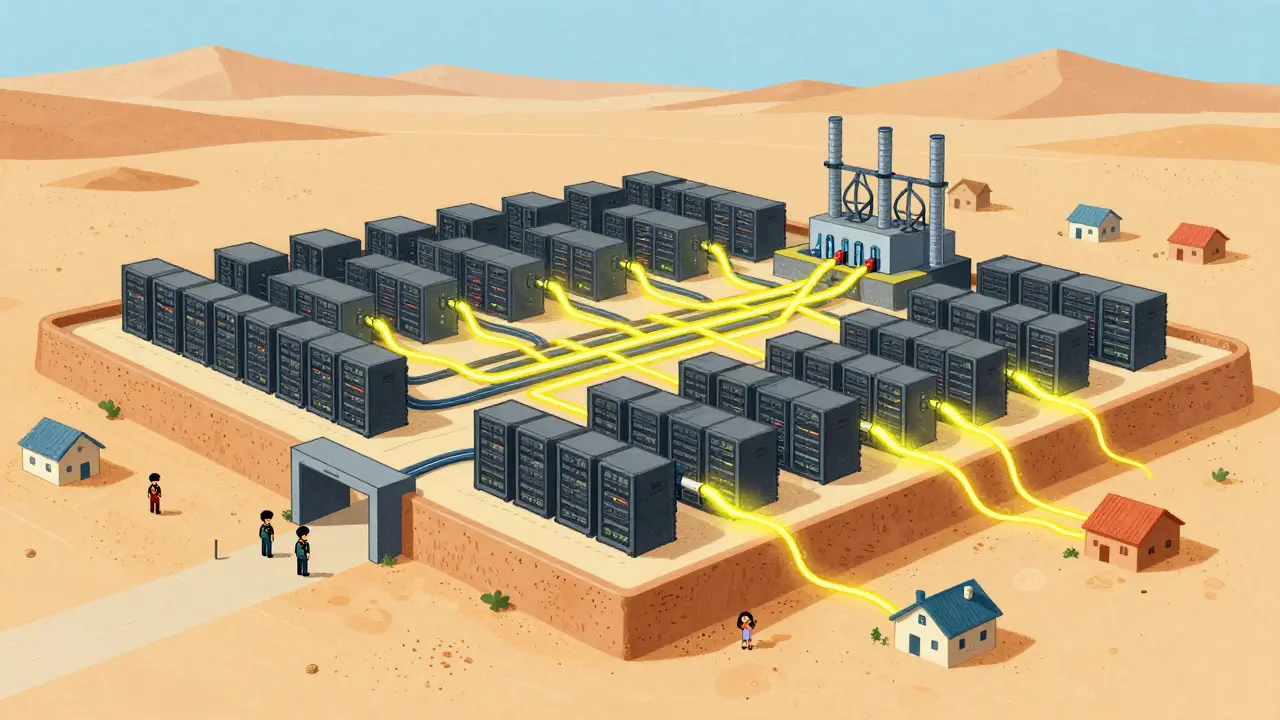
In 2022, the Iranian parliament quietly passed legislation allowing the military to build its own power plants and transmission lines. This was a game-changer. It enabled the IRGC to redirect public electricity resources-power meant for homes and factories-straight to their secret mining farms. A prime example is the 175-megawatt Bitcoin mining farm in Rafsanjan, Kerman Province. Nominally a joint venture with foreign investors, it operates with exclusive access to cheap energy, draining the grid that serves local communities.
- Subsidized Access: IRGC mines tap directly into state-subsidized grids, paying pennies per kilowatt-hour compared to commercial rates.
- Infrastructure Control: Military-built power lines allow them to bypass civilian oversight and metering.
- Political Immunity: Unlike private miners who face fines or shutdowns, IRGC operations are protected by the state apparatus itself.
Sanctions Evasion Through Bitcoin
Why go through all this trouble? The answer is simple: sanctions. International restrictions make it hard for Iran to trade oil or move money globally. Bitcoin solves two problems at once. First, it allows for direct, intermediary-free transactions. Second, it offers relative anonymity through encryption. Unlike bank transfers that leave audit trails, crypto exchanges happen between digital wallets without central oversight.
Blockchain analytics firms have identified Iran as one of the world's major Bitcoin producers. The U.S. Treasury Department and Israeli intelligence have specifically targeted Bitcoin wallets tied to IRGC operations. These funds are reportedly used to finance proxy groups involved in regional conflicts. In essence, the IRGC is using the nation's electricity bill to fund geopolitical strategies, turning a domestic energy resource into a weapon of financial warfare.
The Impact on Ordinary Citizens
While the IRGC counts its Bitcoin profits, Iranian families count the minutes of darkness. The energy consumption of these industrial-scale farms is so massive that it contributes directly to debilitating power outages across cities and provinces. Factories shut down, hospitals struggle, and homes go black for hours or days at a time.
The irony is thick. Ali Abadi, Iran's Energy Minister, is himself a former IRGC commander. When asked about the crisis, he likened unauthorized crypto mining to "putting a hand in others' pockets" and called it "an ugly and unpleasant theft." Yet, his background raises serious questions about how aggressively the government will crack down on operations run by his former organization. The result is a two-tiered system: state actors exploit national resources for private gain, while ordinary citizens bear the cost in comfort and economic stability.
Regulatory Cat-and-Mouse Game
On paper, mining is legal in Iran. The Ministry of Industry, Mines, and Trade manages licenses. But the rules are designed to favor the regime. Licensed miners face high energy tariffs and must sell their digital assets directly to the Central Bank of Iran (CBI) at set prices. This makes mining financially unsustainable for most legitimate private operators, pushing them underground or out of business.
Meanwhile, the state tightens its grip. In December 2024, the Central Bank blocked all Iranian cryptocurrency-to-rial payments via internet websites. But by January 2025, it selectively unblocked certain exchanges using a government API that provides full access to user data. This isn't about banning crypto; it's about controlling it. The regime wants to keep the benefits of mining for itself while preventing private citizens from accessing the same sanctions-evasion tools.
| Feature | Private Miners | IRGC-Affiliated Miners |
|---|---|---|
| Electricity Cost | High commercial tariffs | Subsidized or free access |
| Licensing Status | Officially licensed but heavily regulated | Operates in gray area/military zones |
| Sales Requirement | Must sell to Central Bank at fixed price | Can hold/sell freely for strategic use |
| Legal Protection | Subject to fines/shutdowns | Armed protection/political immunity |
| Primary Goal | Profit (often unsustainable) | Sanctions evasion/state funding |

Key Takeaways
- The IRGC controls an estimated 100,000+ mining devices, far exceeding private sector holdings.
- Military-built infrastructure allows the IRGC to steal subsidized electricity, causing nationwide power outages.
- Bitcoin mining serves as a primary tool for the Iranian state to bypass international sanctions.
- Regulations are structured to disadvantage private miners while protecting state-affiliated operations.
- Civilian welfare is sacrificed as energy resources are redirected to state-funded crypto farms.
Frequently Asked Questions
Is cryptocurrency mining actually illegal in Iran?
Technically, no. Mining was legalized in 2019. However, the regulatory framework is so restrictive-high tariffs and mandatory sales to the Central Bank-that it pushes many operations into the unlicensed sphere. The IRGC operates in a legal gray zone, leveraging military status to avoid standard regulations.
How much of Iran's electricity is used for crypto mining?
Exact figures are hard to pin down due to lack of transparency, but estimates suggest that IRGC-linked farms consume a significant portion of the national grid. The 175-megawatt farm in Rafsanjan alone rivals the output of small power plants. This massive draw contributes directly to the frequent blackouts experienced by civilians.
Who benefits from IRGC crypto mining?
The primary beneficiaries are the IRGC itself and Supreme Leader Ali Khamenei's office. Profits help offset losses from oil sanctions and fund regional proxy activities. Entities like Astan Quds Razavi, a massive religious foundation under state supervision, also play a key role in managing these assets.
Can Iranian citizens still buy and sell crypto?
Yes, but with difficulty. The Central Bank has frequently blocked local exchanges and restricted fiat-to-crypto transfers. Many Iranians use VPNs to access foreign platforms like Nobitex or international exchanges to avoid state surveillance and control, creating a parallel market outside official oversight.
What is the future of crypto mining in Iran?
As long as sanctions remain, the incentive for state-sponsored mining will persist. Unless the energy crisis forces a major policy shift or international pressure increases, the IRGC is likely to continue expanding its control over the sector, further marginalizing private miners and straining the national grid.


J Shepherd
August 25 2026Looking at the hashrate distribution here, it’s pretty clear the state actors are running a massive ASIC farm operation that completely distorts the local energy market. The subsidized grid access is basically an infinite margin play for them, which makes the private sector uncompetitive unless you have deep pockets or political ties. It’s a classic case of regulatory capture where the rules are written to protect the incumbents while starving the new entrants.