
Ever wonder where your money actually goes after you hit the "donate" button? For decades, charitable giving has been a leap of faith. You trust that the organization is honest, but the actual path of your money is often a black box. Traditional reporting is slow, vague, and usually arrives months after the funds were spent. This lack of visibility is exactly why blockchain charity tracking is the use of decentralized ledger technology to provide an immutable, real-time record of how donations move from a donor to the final end-recipient. It turns a "trust-based" system into a "verification-based" system.
The Problem with Traditional Charity Tracking
In a standard nonprofit setup, funds pass through multiple layers. You give to a headquarters, they allocate to a regional office, who then pays a local contractor, who finally buys supplies. Each handoff is a chance for inefficiency or, in worst-case scenarios, fraud. Because these records are kept in private databases, the only way you know if the money was used correctly is if the organization tells you it was.
This opacity creates "donor fatigue." People stop giving not because they don't care about the cause, but because they aren't sure their contribution is making a difference. The delay in reporting means by the time you see an impact report, the project might have been finished or failed a year ago.
How Blockchain Actually Fixes the Trust Gap
Imagine a public ledger that everyone can see but no one can edit. That is the core of blockchain. When a donation is made via a blockchain-based platform, it isn't just a line in a private spreadsheet; it is a permanent transaction on a network. This creates an unbroken chain of custody.
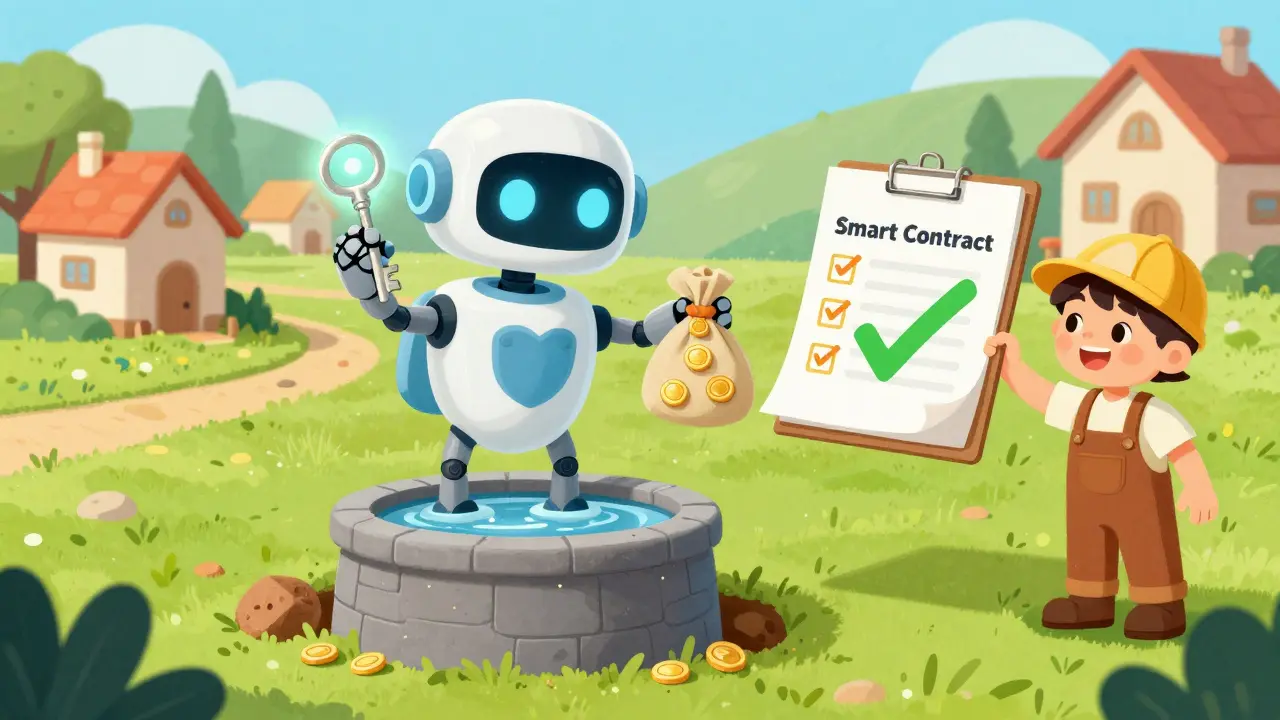
A critical part of this process is the Smart Contract, which is a self-executing contract with the terms of the agreement directly written into lines of code. Instead of relying on a human to approve a payment, a smart contract can automatically release funds only when specific milestones are met. For example, a charity might receive 30% of a grant upfront, and the remaining 70% is only released once a third-party auditor verifies that a well has been dug in a specific village. This ensures that money isn't just sent-it's used for its intended purpose.
Real-World Implementation: The LUXARITY Example
To see this in action, look at how LUXARITY uses technology from ConsenSys to track donations. In their model, consumers buy pre-owned luxury goods, and the proceeds are destined for charity. But instead of the store just saying "we donated the money," the system gives the buyer a unique PIN. This allows the donor to choose the specific cause they want to support and track that exact contribution through a decentralized application (dApp).
The donor doesn't just get a thank-you email; they get a specialized report showing the exact percentage of their contribution and the total grant amount. This moves the experience from a passive transaction to an active engagement with the social impact.
| Feature | Traditional Systems | Blockchain Systems |
|---|---|---|
| Visibility | Delayed / Opaque | Real-time / Public |
| Verification | Manual Audits | Cryptographic Proof |
| Fund Control | Organization-led | Smart Contract-automated |
| Reporting | Annual/Quarterly PDFs | On-demand Digital Dashboards |
Technical Frameworks: BECP and the Flow of Goods
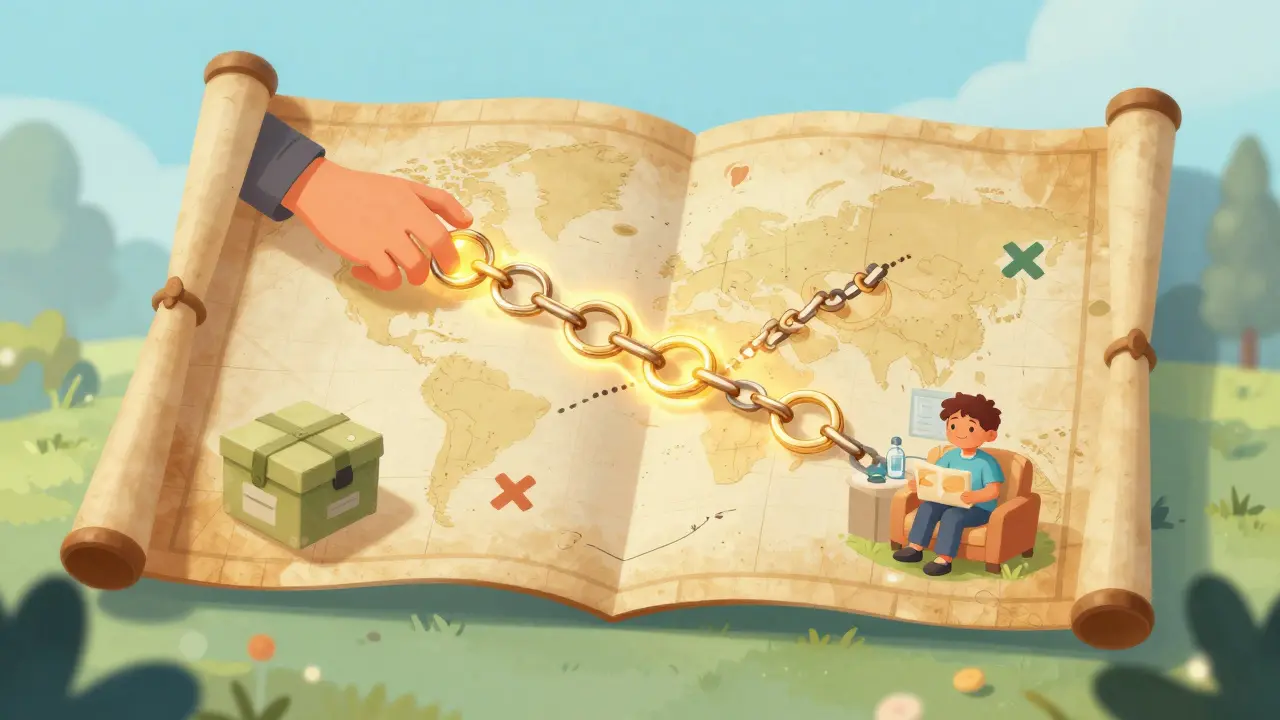
Tracking money is one thing, but tracking physical goods is another. The BECP (Blockchain Enabled Charity Process Framework) provides a structured way to register all participants in a charity operation. By granting specific authorizations, the system can track not just the cash, but the actual supply chain of donated items.
For instance, if a group donates medical supplies, BECP can record the purchase of the equipment, the shipment, the receipt by the local nonprofit, and finally, the delivery to the patient. This prevents "leakage," where donated goods are diverted to the black market before reaching those in need.
Platforms like the Charity Wall further this by requiring documents to match the transaction flow. If a payment is made to a supplier, the corresponding invoice must be uploaded and verified. If the numbers don't match, the system flags it immediately, making it nearly impossible to hide modified or fake documents.
The Donor's Experience: Getting Started
If you're new to this, the process is slightly different from using a credit card on a website. Most blockchain platforms require a Digital Wallet, such as MetaMask, which is a software wallet that allows users to interact with the Ethereum blockchain and other compatible networks.
The typical onboarding process looks like this:
- Wallet Setup: You install a wallet extension and secure your seed phrase.
- Registration: You link your wallet address to the charity platform.
- Donation: You send tokens or stablecoins to a smart contract.
- Tracking: You use a blockchain explorer or the platform's dashboard to watch your funds move toward the project milestone.
While this has a steeper learning curve than a standard checkout page, the trade-off is total control. You can see the transaction hash-the unique fingerprint of your donation-and verify it on the public ledger yourself.
Overcoming the Challenges
It sounds perfect, but there are hurdles. The biggest is digital literacy. Many people find the concept of "private keys" and "gas fees" intimidating. If a donor loses their wallet password, they lose access to their tracking history. There's also the issue of scalability; public blockchains can sometimes be slow or expensive during peak times.
However, we are seeing a shift. Newer platforms, like Firefly Giving, are focusing on removing the friction. By offering zero transaction fees and integrating better screening tools, they make the blockchain part invisible, giving the user a clean interface while keeping the powerful ledger running in the background. Financial advisors are also starting to recommend these tools because the automatic transaction histories they generate are a dream for tax deductions and IRS compliance.
Is blockchain charity tracking more expensive than traditional donating?
Not necessarily. While some networks charge a "gas fee" to process transactions, many specialized charity platforms now offer zero-fee structures. More importantly, by removing intermediaries and reducing administrative waste, more of the actual donation reaches the end cause, which can actually make it more cost-effective than traditional charities with high overhead.
Can a charity "cheat" a blockchain system?
It is much harder, but not impossible. While the blockchain records that money was sent to a specific person or supplier, it cannot magically know if that supplier provided a fake service. However, by using smart contracts tied to third-party verification and requiring matching documentation (as seen in the Charity Wall platform), the window for fraud is shrunk significantly compared to private ledgers.
Do I need to own cryptocurrency to use these platforms?
Not always. Many modern platforms act as a bridge. You can donate in traditional currency (USD, EUR), and the platform handles the conversion to a stablecoin or token on the backend to utilize the blockchain's tracking capabilities. You get the transparency of the blockchain without having to trade on an exchange.
What happens if the blockchain network goes down?
Decentralized networks don't have a single "off switch." Because the ledger is mirrored across thousands of computers (nodes) globally, it is nearly impossible for the entire system to go down. Even if one platform's website crashes, the record of your donation still exists on the blockchain and can be accessed via any other blockchain explorer.
How does this help with tax deductions?
Traditional donors often scramble to find receipts at the end of the year. Blockchain platforms provide an immutable, time-stamped record of every transaction. This creates a digital audit trail that is far more reliable than a manual receipt, making it much easier to prove a donation's value and date to tax authorities.
Next Steps for Donors and Organizations
If you're a donor, start by looking for "transparent giving" platforms that allow you to view the transaction hash of your gift. Try a small donation first to get comfortable with the digital wallet process.
For nonprofit leaders, the first step is a gap analysis. Where is your reporting slowest? Which part of your fund flow is most opaque? Starting with a hybrid approach-using blockchain for one specific high-profile project-is a great way to build donor trust without overhauling your entire operation overnight. As digital literacy grows, the pressure from donors for this level of transparency will only increase.


Gloris Young
April 24 2026This is a game changer for people who are skeptical about where their money goes. It's just way more relaxing when you can actually see the proof instead of just trusting a PDF report.