Thailand Crypto Platform Checker
Check if your crypto trading platform is permitted in Thailand under the 2025 regulatory crackdown.
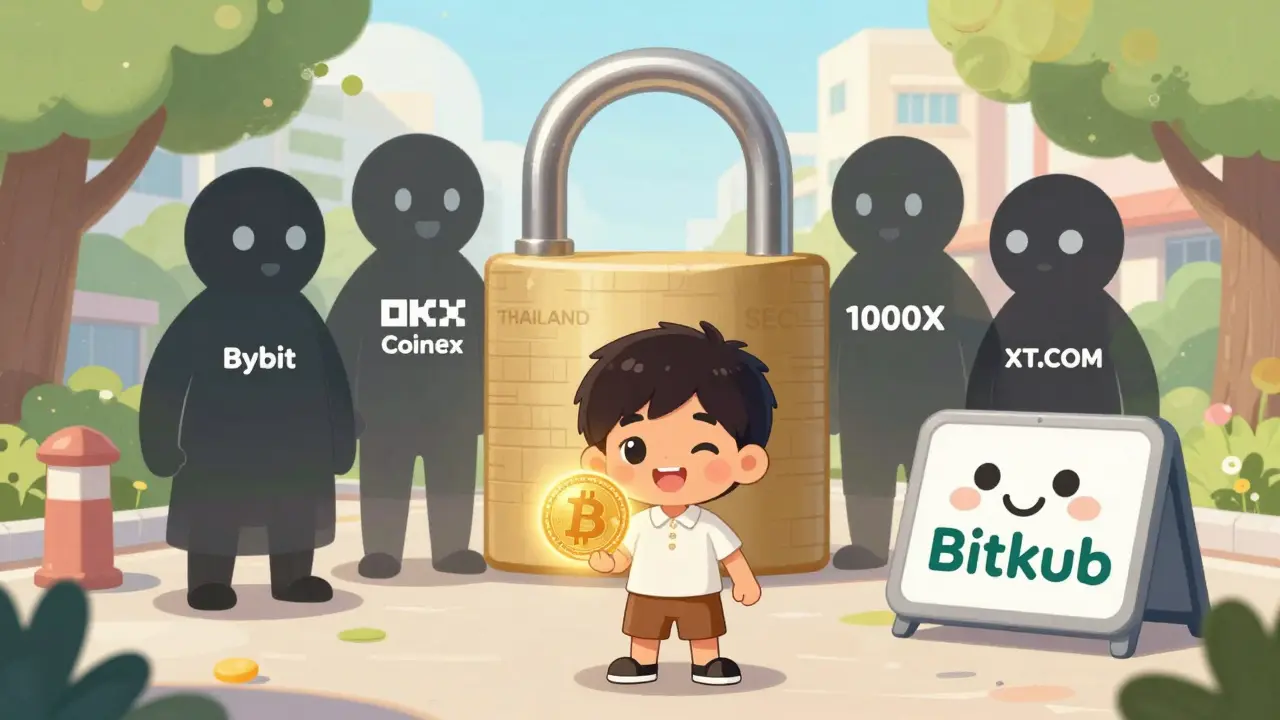
On June 28, 2025, Thailand cut off access to five major foreign peer-to-peer (P2P) crypto platforms-Bybit, 1000X, CoinEx, OKX, and XT.COM-without warning, without court orders, and without exceptions. If you were using any of these platforms to trade crypto in Thailand, your account suddenly became unreachable. No emails. No grace period beyond one month. Just a black screen where your wallet used to be.
Why Thailand Did This
Thailand didn’t wake up one day and decide to ban foreign crypto platforms because it hated innovation. The move was a direct response to a flood of scams, money laundering, and fraud tied to unregulated P2P trading. According to the Thai Securities and Exchange Commission (SEC), over 70% of crypto-related financial crimes in 2024 involved foreign platforms that had no legal presence in the country. These platforms allowed users to bypass Know Your Customer (KYC) checks, move large sums anonymously, and disappear after draining wallets. The SEC’s goal was simple: stop criminals before they hit Thai wallets. The government didn’t ban crypto. It banned foreign, unlicensed crypto platforms. Locally licensed exchanges like Bitkub and Zipmex are still fully operational. You can still buy Bitcoin, Ethereum, or even Thailand’s own upcoming government-backed digital tokens-just not through Bybit or OKX.The Legal Framework: Two Royal Decrees, One Message
The ban wasn’t a whim. It was built on two emergency laws passed in April 2025:- Royal Decree on the Operation of Digital Asset Businesses (No. 2), B.E. 2568 - Any foreign platform targeting Thai users must get a license from the Thai SEC. No license? Illegal.
- Royal Decree on Measures to Prevent and Suppress Technology Crimes (No. 2), B.E. 2568 - Gave the Ministry of Digital Economy and Society (MDES) the power to block websites instantly, without needing a judge’s approval.
Who Got Hit-and Who Didn’t
Five platforms were publicly named and blocked:- Bybit
- OKX
- CoinEx
- 1000X
- XT.COM

What Happened to Users’ Money
The SEC gave users a one-month warning. The announcement came on May 29, 2025: “Withdraw your assets before June 28.” That was it. No step-by-step guides. No customer support extensions. No help moving funds to licensed platforms. Thousands scrambled. Some pulled out their crypto in time. Others didn’t. Reports flooded in from Reddit and Thai Facebook groups: users locked out with $10,000 or more stuck on Bybit. Some tried to contact customer service-only to find the chatbots gone, emails bounced, support pages blank. The SEC didn’t offer compensation. They didn’t promise to recover funds. Their message was clear: if you used an illegal platform, you took the risk. The burden was on the user to verify legitimacy before depositing a single baht.Who Else Got Caught in the Net
This wasn’t just about crypto apps. The new laws forced banks, telecom companies, and even messaging apps like LINE and Telegram to act as gatekeepers. If a bank processed a payment to an unlicensed crypto platform, it could be fined. If a telecom provider let a user download a blocked app, they could be held liable. LINE had to remove links to foreign P2P services from its payment feature. TrueMove H and AIS had to block access to domain names linked to the banned exchanges. It turned every Thai digital service into a compliance officer. The goal? Make it harder for criminals to move money through the country’s infrastructure.What This Means for Business and Cross-Border Payments
Thai businesses that relied on foreign crypto platforms for payments now face major headaches. A Thai startup paying freelancers in India used to send USDT via Bybit P2P-fast, cheap, no bank fees. Now, they must route payments through a licensed Thai exchange, which adds days to transactions and fees that can hit 3-5%. The same applies to Thai importers paying suppliers in Vietnam or Indonesia. Direct crypto transfers are blocked. They now need intermediaries-local exchanges that convert crypto to baht, then send via traditional banking. That’s slower. More expensive. Less flexible. Experts say this is intentional. Thailand wants to control every dollar moving in and out of its borders. For the government, it’s about sovereignty. For businesses, it’s a cost they didn’t budget for.
Thailand Isn’t Anti-Crypto-It’s Anti-Loopholes
Don’t confuse this ban with an anti-crypto stance. Thailand is actually pushing forward with blockchain innovation. On May 13, 2025, the government announced plans to issue 5 billion baht ($150 million) in digital tokens called “G Tokens,” backed by government bonds. These will be sold to institutional investors as part of the national debt strategy. The Bank of Thailand is also testing a blockchain-based securities trading platform for local firms. This isn’t hypocrisy. It’s control. Thailand wants its own digital assets-regulated, traceable, and under its jurisdiction. Foreign platforms? They’re seen as wild west outposts. Domestic ones? They’re part of the national financial system.What Comes Next?
As of October 2025, the ban is holding. No court has overturned it. No foreign exchange has gotten a license. The SEC says it’s reviewing applications-but none have been approved yet. The bar is high: local offices, Thai staff, full AML compliance, and real-time transaction monitoring. Other Southeast Asian countries are watching closely. Indonesia and Malaysia are already drafting similar rules. Singapore, which took a more open approach, now faces pressure to tighten controls on foreign platforms targeting its neighbors. For Thai users, the message is clear: if you want to trade crypto, use a Thai-licensed exchange. If you want to use Bybit or OKX, you’ll need to leave the country-or risk breaking the law.Can You Still Use Crypto in Thailand?
Yes. But only through licensed platforms. You can still buy Bitcoin, Ethereum, Solana, or even Thai government-backed digital tokens. You can still earn interest, stake, or trade. You just can’t do it through foreign apps that ignore Thai law. The government isn’t trying to kill crypto. It’s trying to tame it. And for now, that means no more anonymous trades. No more offshore wallets. No more loopholes. If you’re in Thailand and still holding crypto on a banned platform, you’re not alone. But you’re also not protected. The SEC won’t help you recover it. The law won’t save you. And the clock isn’t ticking anymore.Are foreign crypto platforms completely banned in Thailand?
Yes. Any foreign peer-to-peer (P2P) crypto platform that doesn’t hold a license from Thailand’s SEC is blocked. This includes major exchanges like Bybit, OKX, CoinEx, 1000X, and XT.COM. They are inaccessible within Thailand’s internet infrastructure.
Can I still trade crypto in Thailand?
Yes, but only through exchanges licensed by the Thai SEC. Platforms like Bitkub, Zipmex, and Krungthai Digital Asset Exchange are legal and fully operational. You can buy, sell, and stake crypto on these platforms without risk of legal action.
What happens if I don’t withdraw my crypto before the ban takes effect?
If you don’t withdraw your assets before the platform is blocked, you risk losing access permanently. The Thai SEC does not provide recovery services or compensation. Once a platform is blocked, its servers are cut off from Thailand, and funds may become unreachable indefinitely.
Why were only five platforms banned?
The Thai SEC targeted the five largest foreign platforms with the highest number of Thai users and the most reports of fraud or money laundering. These platforms had no Thai licensing, no local compliance teams, and no transparency. Smaller or less active platforms may be blocked later if they meet the same criteria.
Can I use a VPN to access banned crypto platforms?
Technically, yes-but it’s risky. Using a VPN to bypass the ban violates Thailand’s Computer Crimes Act. Authorities can trace VPN usage linked to crypto transactions, and users have been fined or investigated for circumventing legal restrictions. It’s not recommended.
Is cryptocurrency legal in Thailand?
Yes, crypto is legal as a digital asset, but it’s not legal tender. You can own, trade, and use it-but only through SEC-licensed platforms. The government supports blockchain innovation and even plans to issue its own digital tokens, but foreign, unregulated platforms are strictly prohibited.
Will Thailand allow foreign crypto platforms to apply for licenses in the future?
Possibly, but the requirements are strict. Platforms must establish a local office in Thailand, hire Thai staff, comply with full AML/KYC rules, submit to audits, and allow real-time monitoring by Thai regulators. So far, no foreign platform has met these conditions. The bar is high to prevent loopholes.
How does this affect Thai businesses using crypto for international payments?
It makes cross-border crypto payments slower and more expensive. Businesses must now use licensed Thai exchanges as intermediaries to convert crypto to baht before sending funds abroad. This adds delays, fees, and compliance steps that weren’t needed before the ban.


Abby Daguindal
December 15 2025So let me get this straight - Thailand blocks foreign crypto platforms, leaves local ones open, and says ‘you took the risk’ when people lose money? Sounds less like regulation and more like a state-sanctioned heist. If they wanted to protect users, they’d have enforced KYC on all platforms years ago. Now they’re just cleaning up the mess after letting the wild west run free for a decade.
And don’t even get me started on the ‘G Tokens’ - same people who let Bybit operate unchecked now want to mint their own digital currency? Classic hypocrisy. You don’t get to be both the casino and the cop and then blame the gamblers for losing.
Also, 70% of fraud came from foreign platforms? Funny how no one ever mentions how many Thai exchanges had shady staking pools and fake volume. But hey, at least the SEC can now say they ‘did something.’