Tornado Cash: What It Was, Why It Got Banned, and What It Means for Crypto Privacy
When you send crypto, everyone on the blockchain can see where it came from and where it went. That’s not always a bad thing—but for people who want privacy, it’s a problem. Tornado Cash, a decentralized crypto mixer built on Ethereum that allowed users to break the link between sender and receiver addresses. Also known as a privacy protocol, it let people deposit ETH or ERC-20 tokens and withdraw them from a different address, making transactions untraceable. It wasn’t a company. No team ran it. No customer support. Just smart contracts and code. And for years, it worked exactly as designed.
That’s why regulators took notice. The U.S. Treasury’s OFAC sanctioned Tornado Cash in August 2022, calling it a tool used by hackers, scammers, and North Korean cybercriminals to launder over $7 billion. The move didn’t just block the website—it made it illegal for Americans to interact with the protocol, even accidentally. Wallets that touched Tornado Cash got flagged. Exchanges froze funds. Developers faced legal risk just for maintaining open-source code. Blockchain anonymity, the idea that users should control who sees their financial history. Also known as financial privacy, it’s a core principle in crypto—but now it’s under direct legal attack. Tornado Cash forced the world to ask: Is privacy a right, or a loophole?
What happened after the ban? Developers disappeared. The code stayed live on the blockchain—unstoppable, unchanged. But now, using it means breaking U.S. law. Even tools that detect Tornado Cash activity are used by exchanges to block users. Crypto mixer, a service that obscures the origin of cryptocurrency by pooling and redistributing funds. Also known as privacy mixer, it’s now a dirty word in compliance circles. Other mixers like Blender.io and RenVM got quieter. New ones popped up, but none with the same scale. And while some argue Tornado Cash helped ordinary people avoid surveillance, others say it made crypto a haven for crime. The truth? Both are right.
Today, Tornado Cash lives on as a cautionary tale. It showed how powerful open-source tools can be—and how quickly governments can move to shut them down. It exposed the tension between decentralization and regulation. And it made every crypto user ask: If your money can be traced, who’s really in control? The posts below dig into what happened after the ban, how people tried to bypass it, what it means for your wallet, and whether true privacy in crypto is even possible anymore.
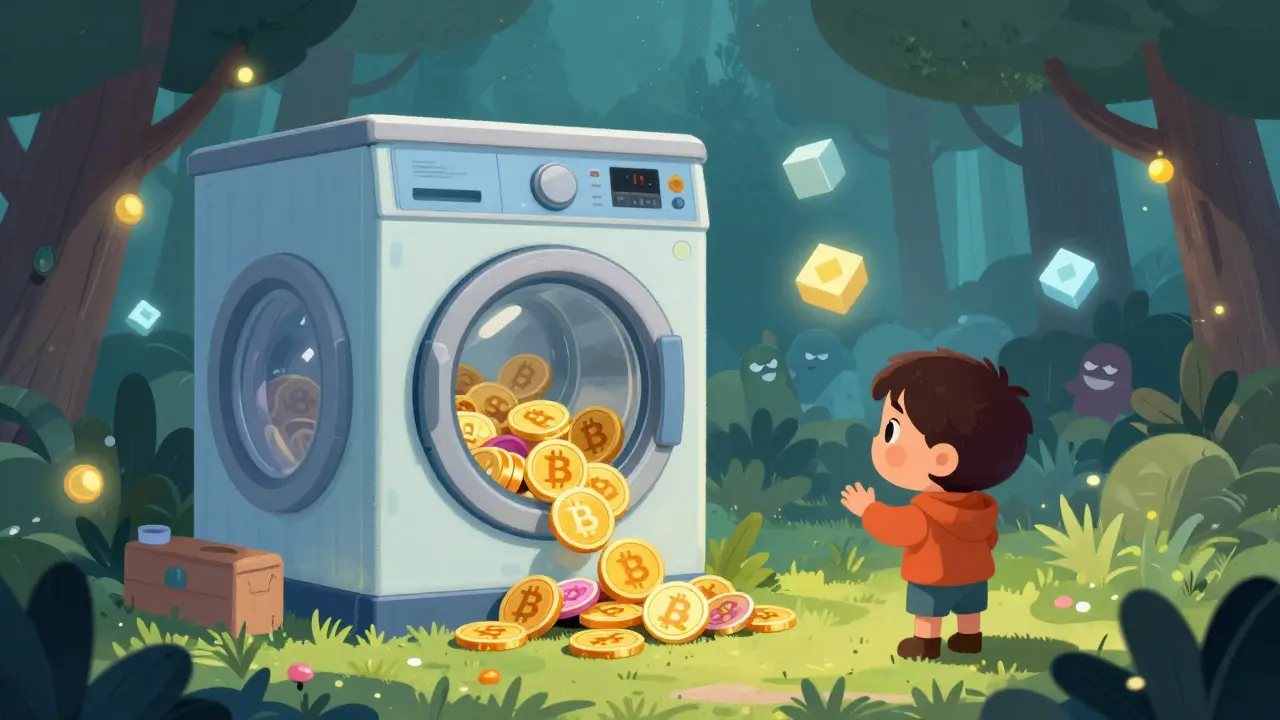
Crypto Mixers and Tornado Cash Sanctions Explained: What Happened and What It Means Now
Tornado Cash was sanctioned by the U.S. government for helping launder stolen crypto, but a court later ruled the sanctions were illegal. Now the smart contracts are legal again - but developers face criminal charges. Here's what you need to know.