Crypto Penalties in Algeria: What You Need to Know About Legal Risks and Enforcement
When it comes to crypto penalties in Algeria, legal consequences for using or trading cryptocurrency without government approval. Also known as cryptocurrency bans, these penalties are among the strictest in North Africa. Algeria doesn’t just discourage crypto—it makes it illegal. The central bank and government have repeatedly warned that any transaction involving Bitcoin, Ethereum, or any other digital asset violates national financial laws. This isn’t a gray area. It’s a clear red line.
These crypto penalties, fines, asset seizures, and potential criminal charges for violating Algeria’s financial regulations aren’t theoretical. In 2023, Algerian authorities raided homes and offices where crypto mining rigs were found. People were fined thousands of dollars, and some faced temporary detention. The government doesn’t need to prove money laundering or fraud—just owning or using crypto is enough to trigger action. This is different from countries that tax crypto. In Algeria, there’s no tax system for crypto because crypto itself is banned.
Why such a hard stance? Algeria’s economy relies heavily on state-controlled oil revenue, and the government fears crypto could undermine its control over foreign currency flows. Banks aren’t allowed to process crypto transactions, and local exchanges are shut down. Even using a VPN to access foreign platforms like Binance or Coinbase can get you flagged. The Algeria crypto ban, a nationwide prohibition on cryptocurrency trading, holding, and mining since 2017 is enforced by both financial regulators and telecom providers, who monitor internet traffic for crypto-related activity.
There’s no official roadmap for legalization. Unlike other countries that slowly ease restrictions, Algeria’s position has only hardened. Even peer-to-peer trades over Telegram or WhatsApp aren’t safe. If you’re caught, you won’t get a warning—you’ll get a fine, and possibly a court date. There’s no gray market. No legal loopholes. No safe way to hold crypto inside the country.
What does this mean for you? If you’re in Algeria, your best move is to avoid crypto entirely. If you’re outside Algeria but dealing with Algerian users, understand that any transaction with them carries legal risk. Even sending crypto to someone in Algeria could make you complicit under local law. The blockchain enforcement, government actions to track, seize, and punish unauthorized cryptocurrency use here isn’t about technology—it’s about control.
Below, you’ll find real cases and breakdowns of how crypto rules are applied in Algeria, what happens when people get caught, and how even well-meaning users end up in legal trouble. These aren’t hypotheticals. These are documented incidents. You’ll also see how this compares to other countries with similar bans—and why Algeria’s approach is uniquely strict.
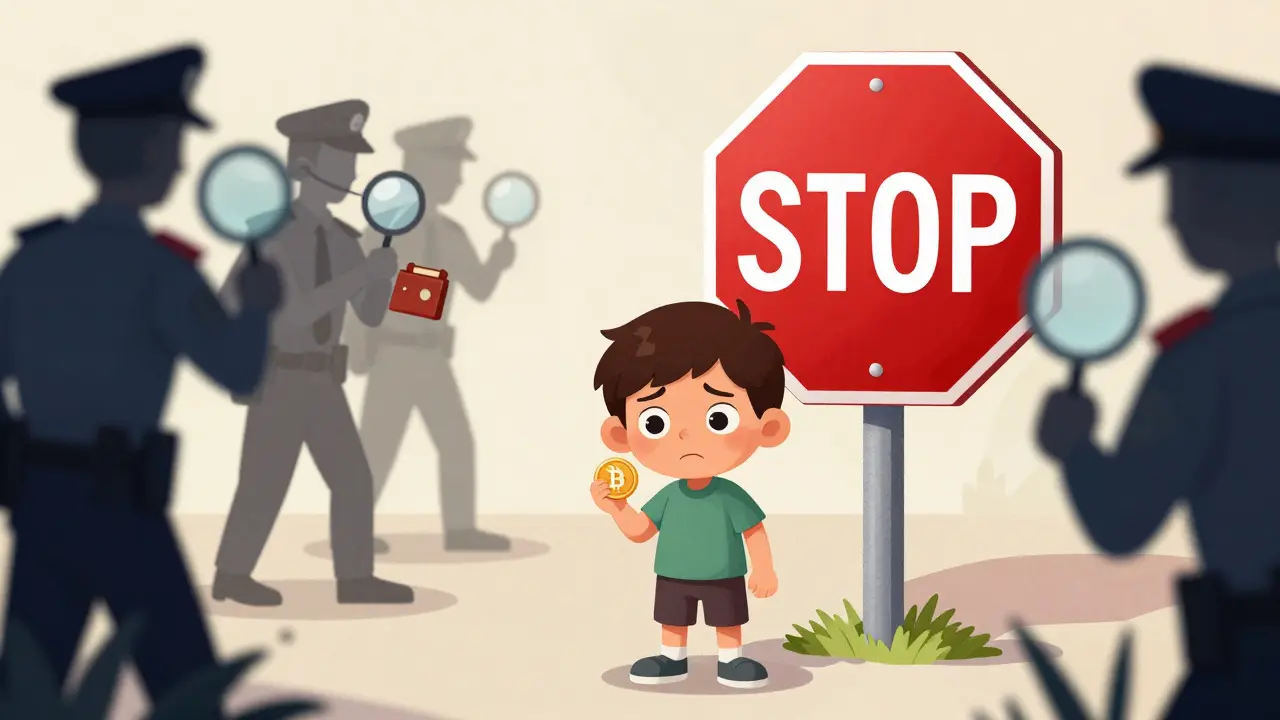
Legal Penalties for Crypto Trading in Algeria: Fines, Jail Time, and What's Banned
Algeria bans all cryptocurrency activities under Law No. 25-10. Violators face jail time, heavy fines, and asset seizures. Learn what's illegal, who gets targeted, and how enforcement works.