Blockchain Regulation: What It Means for Crypto Users Today
When you hear blockchain regulation, government rules that control how cryptocurrencies are issued, traded, and taxed. Also known as crypto compliance, it’s no longer just a legal buzzword—it’s the line between keeping your funds safe or losing them overnight. Whether you’re holding a meme coin, staking tokens, or using a stablecoin to pay for goods, regulation is already deciding what you can and can’t do.
Take MiCA regulation, the European Union’s first full crypto rulebook that came into force in 2025. It killed off non-compliant stablecoins like USDT in Europe, forcing users to switch to fully backed, licensed tokens like USDC. That’s not a minor change—it means your wallet’s balance could suddenly become unusable if you’re in the EU and holding the wrong coin. And it’s not just stablecoins. crypto taxation, how governments track and tax your crypto gains is tightening everywhere. In Taiwan, you now pay 20% on profits and 5% VAT on sales. In Switzerland, you don’t pay tax when you sell, but you must declare your entire crypto holdings every year. Miss that, and you risk an audit. In Algeria? Just owning crypto can land you in jail.
Regulation isn’t just about punishment—it’s also about what’s allowed. Vietnam’s new rules require exchanges to have $379 million in capital and ban foreign access. No one’s applied for a license yet. Meanwhile, in the EU, companies have strict deadlines to get licensed under MiCA’s transition periods. Miss yours, and you’re done. This isn’t theory. It’s happening right now. And it’s why you’re seeing so many fake airdrops—like POLYS or POTS—sprouting up. Scammers count on you being confused by the rules. They know you might not realize that no official Polystarter airdrop exists, or that Quantoz USDQ is one of the few legal stablecoins in Europe.
Blockchain regulation isn’t stopping innovation. It’s forcing it to grow up. The projects that survive are the ones built on transparency, real reserves, and legal compliance. The ones that don’t? They vanish overnight, like KyberSwap Elastic or TitanSwap. You’ll find posts here that show you exactly which coins are still legal, which exchanges are safe, and how to spot a scam before you lose money. Whether you’re in Europe, Asia, or anywhere else, this collection cuts through the noise. You’ll learn what’s real, what’s risky, and what you need to do next to protect your crypto.
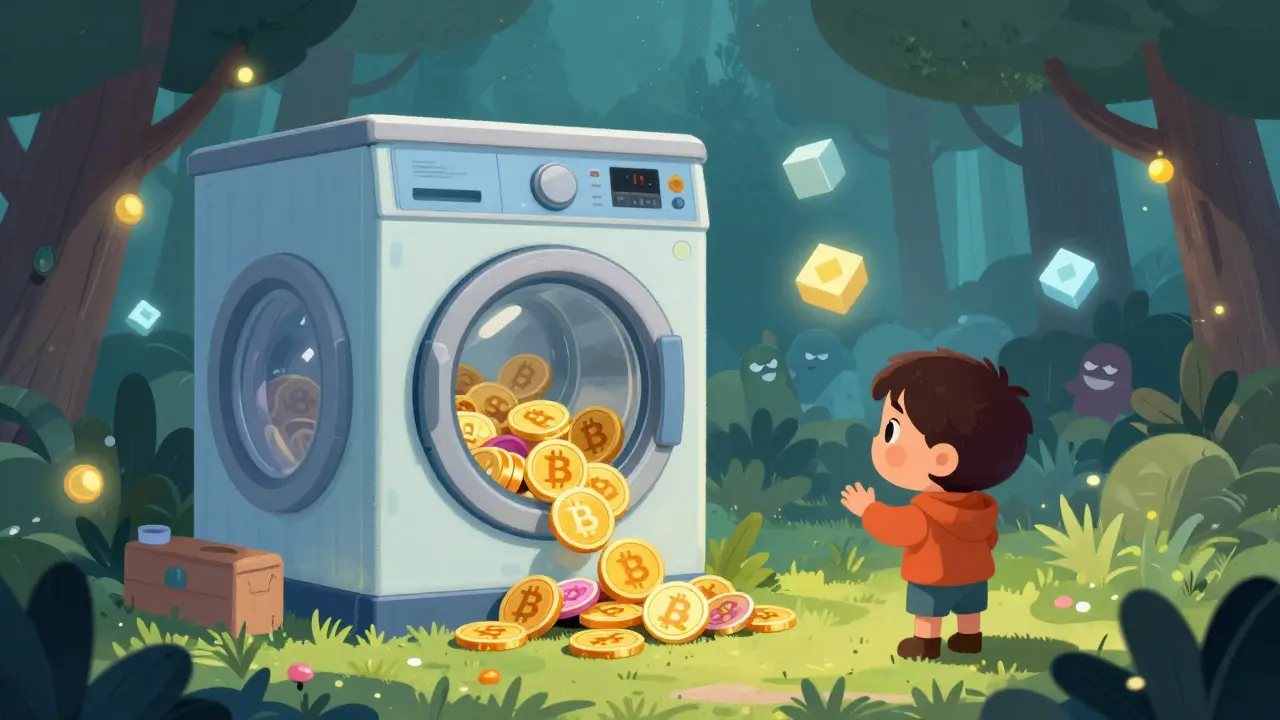
Crypto Mixers and Tornado Cash Sanctions Explained: What Happened and What It Means Now
Tornado Cash was sanctioned by the U.S. government for helping launder stolen crypto, but a court later ruled the sanctions were illegal. Now the smart contracts are legal again - but developers face criminal charges. Here's what you need to know.