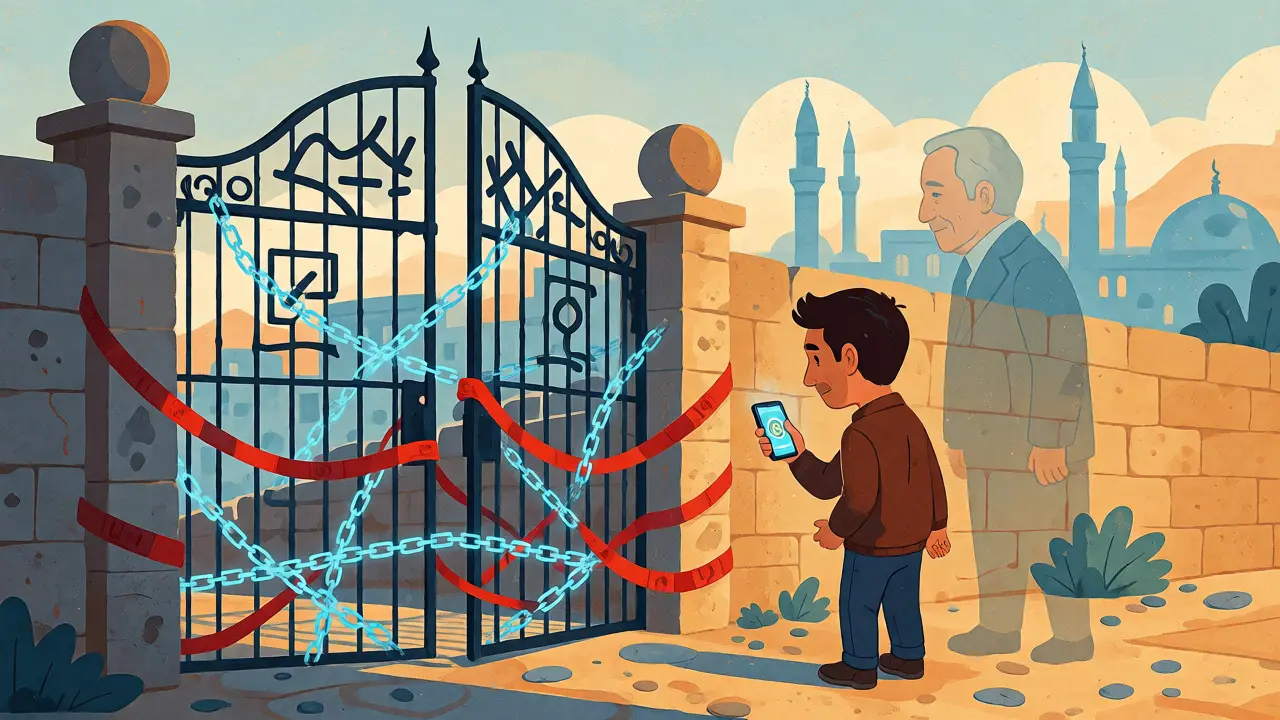
Imagine trying to buy Bitcoin while your bank account is frozen by a ghost from the past. That’s the reality for many Syrians today. Even though the United States officially lifted comprehensive economic sanctions on Syria in mid-2025, the path to cryptocurrency adoption remains riddled with landmines. You might think the Syria crypto ban complications are over, but they’ve just changed shape. Instead of a blanket prohibition, users and businesses now face a complex web of residual restrictions, undefined local laws, and intense scrutiny from international banks.
The End of Comprehensive Sanctions Didn’t Mean Free-for-All
On July 1, 2025, the U.S. Treasury formally revoked the sweeping sanctions that had choked Syria’s economy since 2004. This shift followed Executive Order 14312, signed by President Trump after the regime change that installed Ahmed al-Sharaa. The Office of Foreign Assets Control (OFAC) removed the Syrian Sanctions Regulations from the Code of Federal Regulations, signaling a new era. But here’s the catch: "revoked" doesn't mean "gone." While 518 entities were unblocked, 139 individuals and companies tied to the former Assad regime remain designated under Executive Order 13894. For anyone touching crypto in Syria, this means you’re still walking through a minefield. Every transaction needs to be screened against these remaining lists, or you risk having your funds seized or your account locked.
Why Banks Are Still Scared of Syrian Money
You’d expect that once sanctions lift, banks would open their doors wide. Not so fast. International financial institutions are notoriously risk-averse. Even with General License 24 and 25 authorizing certain transactions, banks require "enhanced due diligence." This isn’t just paperwork; it’s a barrier to entry. Lightspark, a major payments infrastructure provider, notes that 78% of cross-border payment attempts involving Syrian counterparties now trigger additional verification steps. These checks add an average of 47 hours to processing times. If you’re trying to convert fiat currency to crypto, you’re not just fighting exchange limits; you’re fighting a banking system that views any Syrian connection as a potential compliance violation until proven otherwise.
| Country/Region | Domestic Crypto Law Status | US Sanctions Status | Banking Access for Crypto | Primary Challenge |
|---|---|---|---|---|
| Syria | Undefined / No specific law | Partially Lifted (Residual Designations) | Limited (Only 3 of 12 major banks active) | Compliance ambiguity & residual SDN lists |
| Iran | Formal regulations exist | Heavy Sanctions | Restricted | Strict government oversight |
| Venezuela | Petro cryptocurrency created | Heavy Sanctions | Very Restricted | Hyperinflation & state control |
| Ukraine | Legal framework established | No direct sanctions | Open | War-time volatility |
The Regulatory Vacuum at Home
While the U.S. changes its mind every few months, Syria hasn’t updated its own rulebook. There is no specific law legalizing or banning cryptocurrency. This creates a regulatory vacuum. On one hand, it allows flexibility. On the other, it leaves users unprotected. Without clear domestic guidelines, Syrian exchanges operate in a gray zone. They must comply with traditional anti-money laundering (AML) frameworks that weren’t designed for blockchain technology. This mismatch forces businesses to spend 14-16 weeks just assessing regulatory risks-double the time required in more stable emerging markets. If you’re a business owner, this uncertainty kills long-term investment plans. Who wants to build infrastructure when the rules could change tomorrow?

User Experience: High Friction, Low Limits
Let’s look at what this means for regular people. Since July 2025, Syrian users have reported accessing platforms like Binance. But "access" is a generous term. Trustpilot reviews from Syrian IP addresses show an average rating of 2.8 out of 5 stars. Why? Excessive verification requirements. Users report sudden account freezes during onboarding and strict transaction caps, often limited to $500 per trade. Many turn to peer-to-peer (P2P) trading to bypass these hurdles. However, P2P carries its own risks. An informal community survey found that 22% of users lost funds due to fraud or failed transfers because there’s no robust legal recourse. It’s a high-stakes game where convenience comes at the cost of security.
The Caesar Act Waiver: A Temporary Band-Aid
A critical piece of the puzzle is the Caesar Syria Civil Protection Act of 2019. This act imposes secondary sanctions on non-U.S. entities doing business with Syria. To encourage reconstruction, the State Department granted a 180-day waiver. But waivers expire. As we move deeper into 2026, the looming question is whether this waiver will be extended or if full Caesar Act enforcement will return. For crypto investors, this is a ticking clock. If the waiver lapses without a permanent solution, any foreign entity facilitating Syrian crypto trades could face U.S. penalties. This uncertainty discourages major exchanges from fully committing resources to the Syrian market, leaving users reliant on smaller, less regulated platforms.

Export Controls and Mining Equipment
It’s not just about trading tokens. What about mining? The Bureau of Industry and Security (BIS) updated export controls effective September 2, 2025. While most EAR99 items can now be exported to Syria, anything on the Commerce Control List still requires specific authorization. This includes advanced semiconductors and specialized hardware used in mining rigs. So, if you want to set up a mining farm in Damascus, you can’t just order parts online. You need licenses. This bureaucratic hurdle slows down infrastructure development, keeping Syria dependent on older, less efficient technology compared to neighbors like Jordan or Lebanon.
How to Navigate the Current Landscape
If you’re dealing with Syrian crypto assets today, here is your survival kit:
- Screen Everything: Use real-time tools to check counterparties against the remaining 139 SDN designations. Don’t assume old lists are obsolete.
- Expect Delays: Plan for 2-3 days for fiat conversions due to enhanced due diligence at correspondent banks.
- Diversify Banking Partners: Only three of Syria’s twelve major commercial banks have active correspondent relationships with U.S. institutions. Stick to those to avoid rejected transfers.
- Document Rigorously: Keep audit-ready records of every transaction. Treasury officials demand proof that funds aren’t flowing to designated entities.
The situation in Syria is a case study in how geopolitical shifts don’t instantly fix technical and regulatory problems. The Syria crypto ban complications are a mix of legacy sanctions, missing local laws, and global banking caution. Until Syria establishes a formal crypto framework and the U.S. clarifies the long-term status of the Caesar Act, the market will remain fragmented and risky. But for those willing to navigate the red tape, opportunities exist in remittances and cross-border trade, where crypto offers speed that traditional banking simply cannot match.
Is cryptocurrency legal in Syria right now?
There is no specific law banning or legalizing cryptocurrency in Syria. It operates in a regulatory vacuum, meaning it is not explicitly illegal, but it also lacks consumer protections or clear tax guidelines.
Did the US lift all sanctions on Syria?
No. While comprehensive economic sanctions were revoked in July 2025, 139 individuals and entities affiliated with the former Assad regime remain designated under Executive Order 13894. Additionally, military embargoes and specific export controls remain in place.
Can I use Binance in Syria?
Yes, access has improved since the sanctions relief. However, users face strict identity verification, lower transaction limits (often around $500), and frequent account freezes due to enhanced compliance checks.
What is the Caesar Act waiver?
The Caesar Act imposes secondary sanctions on non-US entities doing business with Syria. The US State Department granted a temporary 180-day waiver to allow for economic reconstruction. Its future extension is uncertain, creating risk for long-term investments.
Are there crypto taxes in Syria?
Because there is no specific crypto legislation, there are no explicit crypto taxes defined yet. However, general income and capital gains laws may apply, leading to confusion and inconsistent enforcement.