SXP Airdrop Eligibility & Value Calculator
About This Tool
Calculate if you would have qualified for Solar Network's October 2023 airdrop and see how much your potential tokens are worth today. The airdrop required 30-day-old CoinMarketCap accounts, official Solar wallets, and passing a blockchain quiz.
On October 26, 2023, CoinMarketCap launched a targeted airdrop for Solar Network’s SXP token - not as a giveaway for everyone, but as a carefully designed push to get people onto the new Solar blockchain. The campaign offered 50,000 SXP tokens total, split evenly among 5,000 winners who each got exactly 10 SXP. At the time, that was about $1 per person, based on SXP’s $0.10 price. It wasn’t a big payout, but it wasn’t meant to be. This was about adoption, not windfalls.
Why This Airdrop Was Different
Most crypto airdrops hand out tokens to anyone with a wallet. Solar didn’t. They only accepted SXP mainnet wallet addresses - the brand-new wallet system built specifically for Solar’s own blockchain. If you had SXP tokens sitting in an Ethereum (ERC-20) or Binance Smart Chain (BEP-20) wallet, you were out. That’s because Solar wasn’t trying to reward old users. They were trying to build a new network. Before this, SXP was just a token on other chains, used mostly for buying gift cards or paying fees on Swipe’s crypto card service. But in early 2023, Solar Network fully cut ties with Swipe and launched its own Layer-1 blockchain with 53 Block Producers running on Delegated Proof of Stake. The airdrop was their first real test: could they get people to switch?How to Qualify for the Airdrop
Getting in wasn’t easy. You had to do three things:- Create a new CoinMarketCap account that was at least 30 days old. No new or fake accounts allowed.
- Download and install the official Solar desktop wallet (version 2.0.1), then generate a brand-new mainnet wallet address.
- Complete a short educational quiz about Solar’s blockchain, NFT marketplace, and metaverse plans.
The Wallet Problem
One of the biggest hurdles? Generating a valid mainnet address. About 17% of applicants messed this up. Some used testnet wallets by accident. Others downloaded fake wallets from Google ads. Solar’s official desktop wallet was only available at solar.org/desktop-wallet. Any other link was a scam. Even after downloading the right wallet, users reported slow sync times - an average of 22 minutes just to load the first block. That’s long for something meant to be user-friendly. But once synced, the wallet worked smoothly for staking and sending SXP.Who Got Left Out
About 12,437 people were disqualified - not because they failed the quiz, but because their CoinMarketCap account was younger than 30 days. That rule wasn’t clearly highlighted in early posts. On Reddit and Telegram, users complained they’d spent hours completing everything, only to get rejected for a technicality. Another big group excluded: existing SXP holders. According to Bitget’s analysis, nearly 87% of all SXP tokens were still sitting on Ethereum or Binance chains. That meant most people who already owned SXP couldn’t participate. Solar knew this. They didn’t care. They wanted new users, not more wallets for old ones.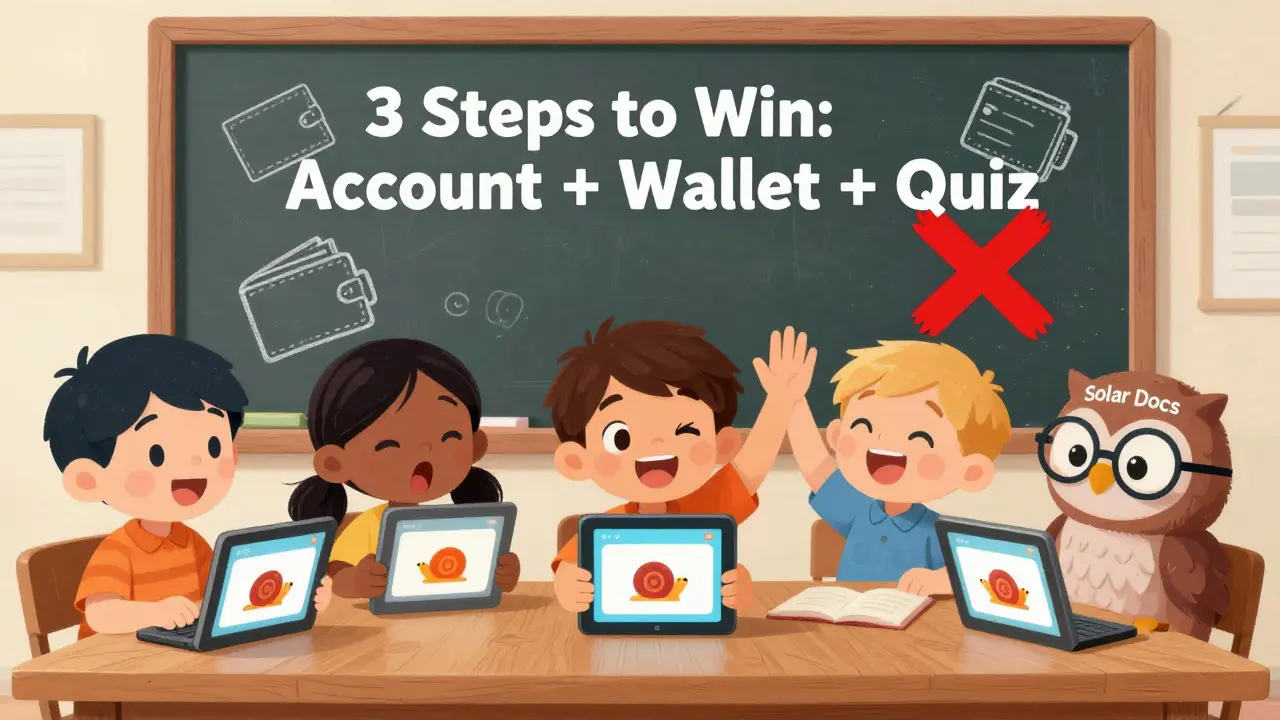
Did It Work?
Yes - but not in the way most people expected. The 5,000 winners got their 10 SXP tokens within 14 days, and most received them faster. One Reddit user posted on November 1: “Got my 10 SXP on November 1 - two days after the campaign ended.” But the real win? The number of new mainnet wallets created. Solar’s team confirmed over 15,000 unique mainnet wallets were generated during the campaign. That’s three times the number of winners. People signed up, made wallets, took the quiz - even if they didn’t win. That’s how networks grow. Industry analysts compared this to Polygon’s early days. The same pattern happened: a small airdrop, a steep learning curve, but a flood of new wallets. Solar’s network went from processing 800 transactions per minute to over 1,200 within weeks after the airdrop ended.What Went Wrong
The campaign had serious flaws. Blockchain security expert Dr. Sarah Jamie Lewis pointed out the lack of KYC. With only a CoinMarketCap account and a Telegram follow as verification, bots and duplicate accounts were easy to create. Her team estimated 32-41% of applicants were sybil accounts - fake profiles created just to grab free tokens. Community managers reportedly blocked accounts created within 24 hours of the airdrop announcement. But that wasn’t automated. It was manual. That’s risky. The desktop wallet also had issues. Trustpilot reviews showed a 3.7/5 rating. Users liked the clean interface for staking but hated the slow sync. One user wrote: “I waited 30 minutes just to send 10 SXP. I gave up and used a different wallet.”What Happened After
By November 10, 2023, all 50,000 SXP tokens were distributed. Winners were announced on Solar’s Twitter and Telegram. The campaign closed. But Solar didn’t stop. Based on feedback, they started beta testing a new wallet version (0.8.3) that simplified onboarding. They also announced Ledger hardware wallet support, launching December 15, 2023. And on January 10, 2024, they launched staking rewards - letting users earn more SXP just by locking their tokens. Analysts at Messari predicted staking could boost mainnet wallet adoption by 200% in six months. That’s the real goal: turning one-time airdrop takers into active users.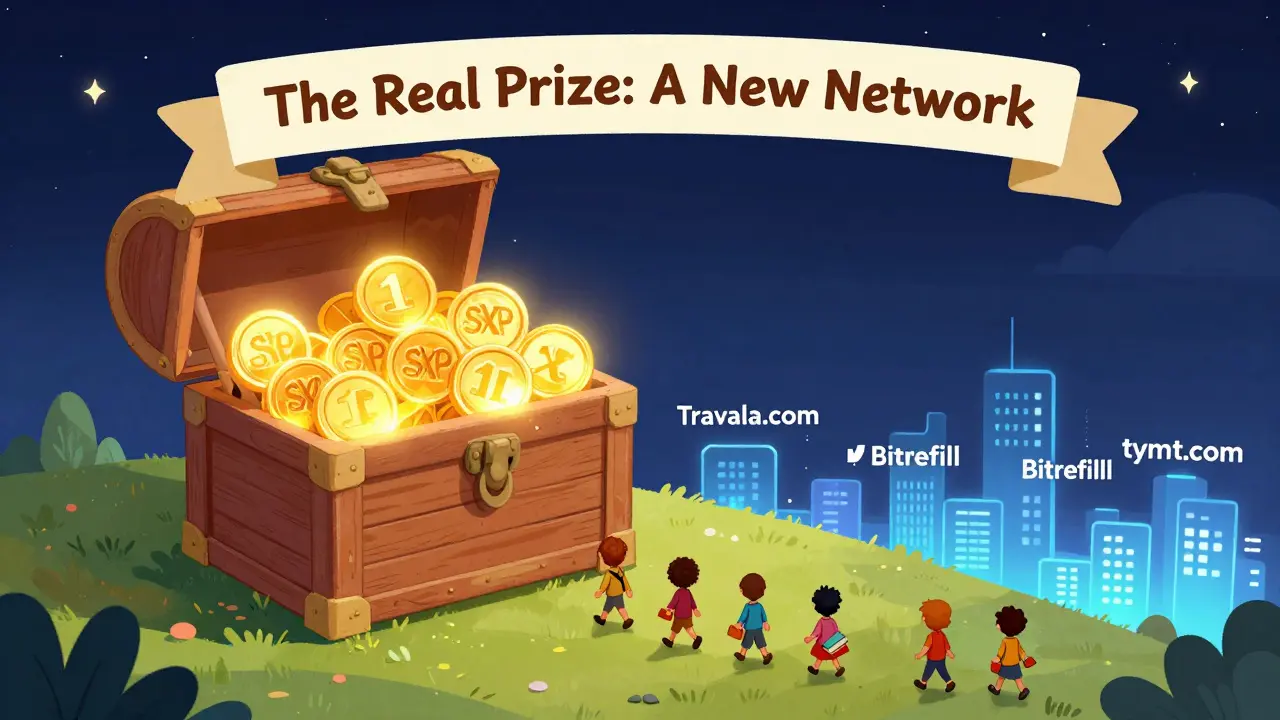
What’s the Value Now?
As of December 10, 2025, SXP is trading around $0.58 - up from $0.10 during the airdrop. That means the 10 SXP you got back then is now worth about $5.80. Not life-changing, but better than $1. Longer-term forecasts vary. CoinPedia predicts SXP could hit $0.61 by end of 2025 - which it already did. Bitget thinks it’ll plateau around $0.32. But Solar’s real value isn’t in the token price. It’s in the ecosystem: travel bookings on Travala.com, digital gift cards via Bitrefill, and gaming platforms like tymt.com all accept SXP now.Could This Happen Again?
Unlikely in the same form. Solar’s mainnet is now live. The network is stable. The token is in circulation. Future airdrops will likely target specific use cases - like rewarding users who complete a travel booking with SXP or who mint an NFT on their marketplace. This campaign was a bridge. It moved SXP from a token on someone else’s chain to the native currency of its own blockchain. That’s rare. Most projects keep their tokens on Ethereum forever. Solar didn’t. And that’s why this airdrop matters.What You Can Learn From It
If you’re thinking about joining the next airdrop, remember this:- Don’t assume all airdrops are the same. Some are for wallets. Some are for usage. Some are for learning.
- Check the official site. Fake wallets and phishing links are everywhere.
- Old accounts matter. If you need a 30-day-old CoinMarketCap profile, start one now - don’t wait until the next campaign drops.
- Learn the basics. If you don’t know what a mainnet is, you’ll get rejected. Take 10 minutes to read the project’s docs.
- Don’t chase small payouts. Look at what the project is building. That’s where the real value is.
The Solar airdrop wasn’t about free money. It was about building a new foundation. And in crypto, that’s the only kind of airdrop that lasts.


Taylor Farano
December 11 2025So let me get this straight - they spent months building a blockchain just to give away $1 to people who could read a quiz? And we’re supposed to be impressed? The real airdrop was the 15,000 wallets created by people who didn’t even win. That’s not adoption - that’s digital hoarding with a side of FOMO.
Meanwhile, the bots are still spamming Telegram with ‘SXP 2.0’ links while real users wait 30 minutes for a wallet to sync. Brilliant engineering.
Also, ‘no KYC’? Please. That’s not decentralization - that’s a free token buffet for Russian bot farms and 12-year-olds with five Gmail accounts.