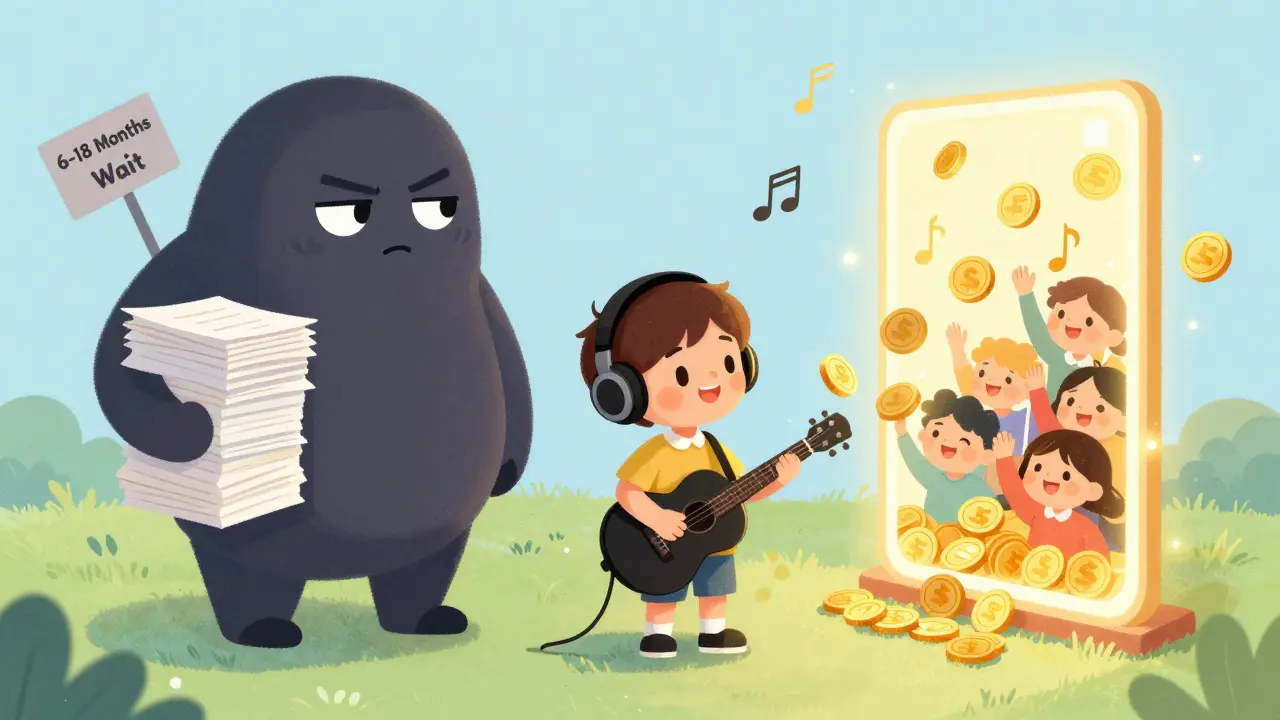
Imagine uploading a song and getting paid instantly every time someone streams it. No middlemen. No six-month wait for checks from record labels. Just you, your art, and a direct line to your fans. This is the promise of streaming rights as NFTs. It sounds like science fiction, but it’s happening right now. Artists are using blockchain technology to sell tokens that grant listeners access to exclusive content while automatically paying creators their fair share.
But here’s the catch: this isn’t just about buying a digital picture of an album cover. It’s about changing how we think about owning and accessing music. When you buy an NFT with streaming rights, you’re not just collecting art; you’re entering a new contract with the artist. Let’s break down what this actually means for creators, fans, and the future of the music industry.
The Core Concept: What Are Streaming Rights NFTs?
To understand this, we first need to separate the music file from the rights to stream it. In traditional systems, when you buy a song on iTunes or stream it on Spotify, you aren’t buying ownership. You’re renting access. The platform holds the keys, and they decide how much money goes back to the artist.
NFTs (Non-Fungible Tokens) are unique digital certificates of ownership recorded on a blockchain. Unlike Bitcoin, where one coin equals another, each NFT has a distinct identifier. When applied to streaming, an NFT acts as a ticket or a license key. It proves that the holder has the right to access specific content-like a private concert stream or an unreleased track-and often includes a built-in mechanism to pay the creator every time that right is exercised or resold.
Think of it like this: A traditional streaming service is a public library. Everyone can read the books, but the librarian takes a cut, and the author gets pennies. An NFT streaming model is more like selling a membership card to a private club. Only people with the card get in, and the owner of the club (the artist) keeps the door open directly.
Why Traditional Streaming Fails Creators
The current system is broken for most independent artists. Major platforms like Spotify and Apple Music process billions of streams monthly, but the payout structure is opaque. According to Hyperglade, traditional royalty systems require fees paid by the artist, and the distribution process takes an unnecessarily long time-often 6 to 18 months.
Here is why the old way hurts:
- Delayed Payments: Artists wait months or years to see revenue from a hit song.
- Intermediary Fees: Labels, distributors, and collection societies take significant cuts before the artist sees a dime.
- Lack of Transparency: It is nearly impossible for an artist to verify exactly how many times their song was played or if they were paid correctly.
NFTs solve this by using Smart Contracts, which are self-executing programs on a blockchain that enforce agreed-upon rules without intermediaries. When a fan buys an NFT with streaming rights, the smart contract automatically sends a percentage of the sale price to the artist’s wallet instantly. If the fan later sells that NFT to someone else, the artist can be programmed to receive a royalty fee automatically. This creates a permanent, transparent revenue stream.
How It Works: The Technology Behind the Scenes
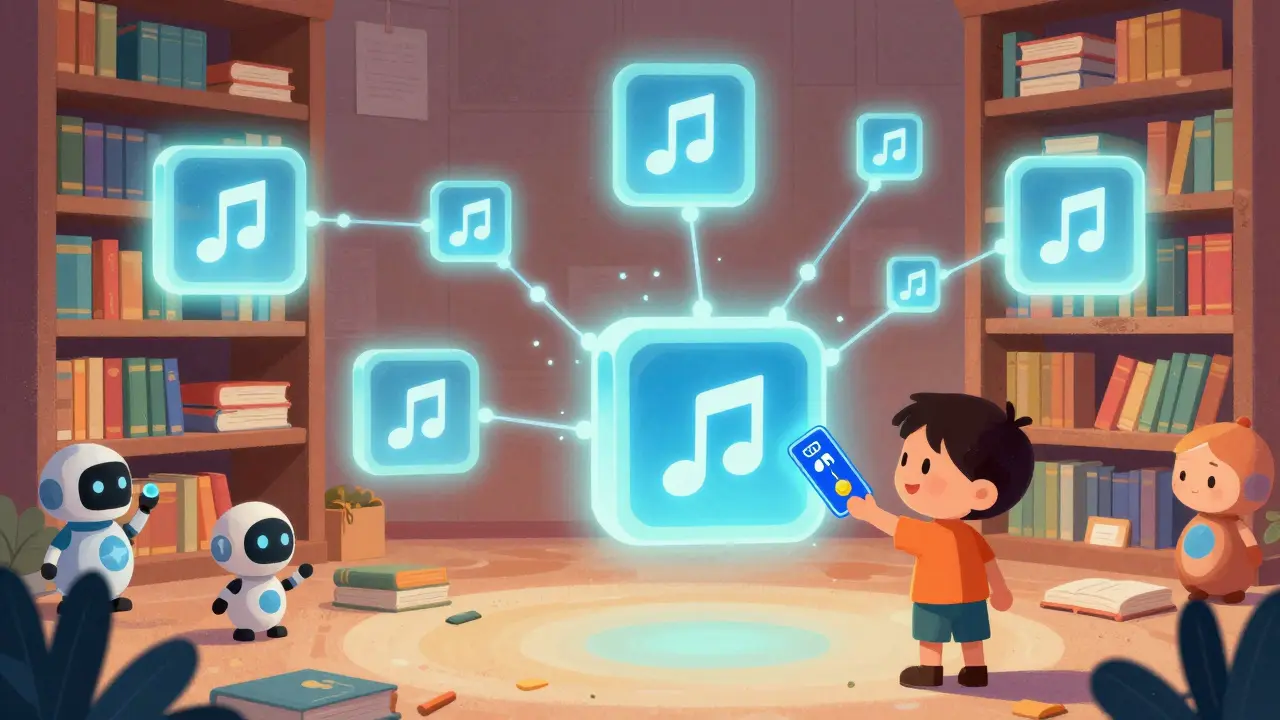
You might wonder, "Where is the actual music stored?" This is a critical distinction. Blockchains are not good at storing large files like high-quality audio or video. Instead, the NFT contains a metadata link pointing to where the content lives.
Most projects use IPFS (InterPlanetary File System), a decentralized protocol for storing and sharing data in a distributed file system. IPFS ensures that even if one server goes down, the content remains accessible across the network. This prevents "link rot," a common issue where NFTs become worthless because the image or audio file they pointed to disappears from a centralized server.
The technical stack usually looks like this:
- Blockchain Layer: Ethereum, Polygon, or Solana hosts the NFT token (ERC-721 or ERC-1155 standards).
- Storage Layer: IPFS or Arweave stores the actual audio/video files.
- Interface Layer: A website or app (like Audius or Royal) allows users to view, play, and trade these tokens.
Performance matters here. On Ethereum mainnet, transactions can take minutes and cost high fees. However, Layer 2 solutions like Polygon settle transactions in seconds for fractions of a cent, making real-time streaming authorization feasible.
Real-World Success Stories and Failures
This isn’t just theory. We have seen both massive wins and painful lessons.
On the success side, DJ 3LAU sold an NFT album titled 'Ultraviolet' that generated $11.7 million in sales, giving fans exclusive access to tracks and behind-the-scenes content. This proved that fans are willing to pay premium prices for direct connection and ownership.
However, user feedback reveals significant friction. On Reddit, users frequently report issues with broken links. One user noted, "Tried using an NFT for exclusive podcast access-worked once, then the link broke when the storage provider changed addresses." This highlights a major risk: if the project team fails to pin the content properly on IPFS, the NFT becomes a dead link.
Trustpilot reviews for various NFT music platforms average around 2.8 out of 5 stars, with complaints centering on technical difficulties and confusing interfaces. For mainstream adoption, the experience needs to be as smooth as clicking "Play" on Spotify.
Comparison: Traditional Streaming vs. NFT Streaming
| Feature | Traditional Streaming (Spotify/Apple) | NFT Streaming (Audius/Royal) |
|---|---|---|
| Payout Speed | 6-18 months | Instant (via Smart Contract) |
| Ownership | Rental/License only | Verifiable Digital Ownership |
| Secondary Sales | Artist earns nothing | Artist earns automatic royalties |
| User Experience | Polished, easy to use | Complex, requires crypto wallet |
| Cost to Listener | Low ($10/month subscription) | Variable (Market-driven, often higher) |
| Scalability | High (Billions of users) | Low (Niche communities) |
Legal Gray Areas and Risks
Before you rush to tokenize your entire discography, consider the legal landscape. Rebecca Tushnet, a legal scholar at Harvard Law School, warns that purchasing an NFT does not automatically transfer copyright. "The purchaser acquires whatever the art world thinks they have acquired. They definitely do not own the copyright to the underlying work unless it is explicitly transferred."
In March 2023, the U.S. Copyright Office clarified that NFT ownership does not convey copyright ownership unless stated in a written agreement. This means artists must clearly define what rights the buyer is getting. Are they getting the right to listen privately? To broadcast publicly? To remix the track? Ambiguity leads to lawsuits.
Additionally, security risks remain. Smart contracts can have bugs. In 2022, several NFT platforms suffered hacks due to vulnerabilities in their code. Users must verify that the platform uses audited contracts and reputable storage solutions.
The Future Outlook: Will This Replace Spotify?
Probably not anytime soon. Gartner predicts that while NFT-based rights management will grow, it will likely remain a niche application for exclusive content rather than replacing mass-market streaming services. The barrier to entry-managing crypto wallets and understanding gas fees-is still too high for the average listener.
However, the hybrid model is emerging. Spotify launched "Artist Fundraising Links" in 2023, incorporating limited NFT functionality. Major labels like Universal Music Group and Warner Music Group are actively investing in NFT companies like 10:22PM and Royal. The trend suggests that within 5-7 years, we may see a blended ecosystem where mainstream platforms handle discovery, and blockchain handles direct monetization and exclusive access.
For artists, the advice is clear: Start small. Use NFTs for limited editions, VIP experiences, or direct fan funding. Don’t expect it to replace your Spotify income overnight, but do use it to build a loyal community that values direct support.
Do I own the copyright when I buy a streaming rights NFT?
No. Buying an NFT typically grants you a license to access or use the content under specific terms defined by the seller. Unless there is an explicit, written transfer of copyright, the original creator retains all intellectual property rights. Always read the terms of service or license agreement associated with the NFT.
What happens if the NFT link breaks?
If the content is stored on a centralized server that shuts down, the NFT may become worthless. This is why reputable projects use decentralized storage like IPFS (InterPlanetary File System). IPFS distributes the file across many nodes, making it highly resistant to link rot. Always check where the media is hosted before buying.
Are NFT streaming platforms free to use?
Listening is often free, but buying the NFT requires cryptocurrency. Additionally, you may pay "gas fees" (transaction fees) to the blockchain network when minting or transferring the NFT. Platforms like Audius or those built on Polygon aim to minimize these costs compared to Ethereum mainnet.
Can artists earn royalties from secondary sales?
Yes. This is one of the biggest advantages of NFTs. Smart contracts can be programmed to automatically send a percentage (e.g., 5-10%) of every resale price back to the original creator. This creates a passive income stream that traditional streaming does not offer.
Is it safe to store my music on blockchain?
The blockchain itself is secure, but the storage method matters. Storing large audio files directly on-chain is expensive and inefficient. Most projects store the file on IPFS or Arweave and store the link (hash) on the blockchain. Ensure the project uses reputable pinning services to keep your content permanently accessible.


Monica Pathammavong
June 16 2026you are so wrong terry. its actually very smart if you think about it. i have been looking into this and the smart contracts are amazing. you get paid instantly. why wouldnt you want that? stop being so paranoid. its just technology helping artists make money. its not a conspiracy its capitalism working correctly. also your spelling is bad.