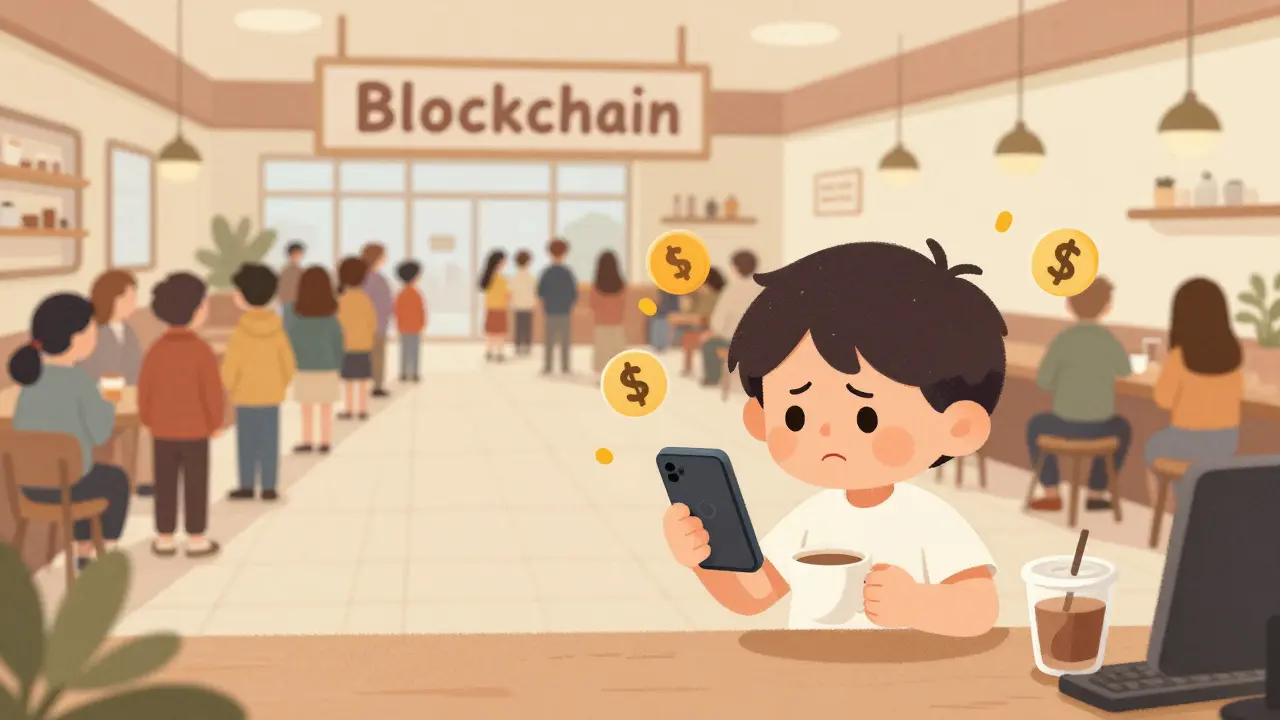
Imagine trying to buy a coffee with Bitcoin. You open your wallet, send the transaction, and wait. Minutes pass. The network is congested. Your $0.50 transaction costs $3 in fees because of network demand. It’s frustrating, right? This is the classic scalability problem that plagues blockchains like Bitcoin and Ethereum. They are secure and decentralized, but they are slow and expensive when everyone tries to use them at once.
Enter state channels. Think of them as a private side room where you and another party can trade back and forth instantly without bothering the main hall (the blockchain). You only step back into the main hall when you’re done trading to settle the final score. This concept isn’t just theoretical; it’s the engine behind the Lightning Network for Bitcoin and the Raiden Network for Ethereum. But how do they actually work under the hood, and are they the silver bullet for blockchain scaling?
What Exactly Is a State Channel?
A state channel is a Layer-2 scaling solution. In simple terms, it allows two or more parties to conduct multiple transactions off-chain while relying on the underlying blockchain for security and final settlement. Instead of broadcasting every single micro-transaction to the entire network, participants exchange cryptographically signed updates representing their current balances. These updates are cheap and instant. Only the opening and closing states are recorded on the main blockchain.
The core idea was formalized in the 2016 Lightning Network whitepaper by Joseph Poon and Thaddeus Dryja. Before that, blockchain transactions were limited by block size and time. Bitcoin handles about 7 transactions per second (TPS), and Ethereum manages around 15-30 TPS. State channels theoretically enable millions of TPS between connected participants because the bottleneck of global consensus is removed from the individual trades.
According to research from CSIRO’s Blockchain Patterns group, a state channel creates a “two-way pathway” for transacting parties. The magic lies in the fact that no new blocks need to be mined for each interaction. You are essentially writing checks against a locked deposit, and only cashing the final check later.
The Three Phases of State Channel Implementation
To understand how developers build these systems, you need to look at the three distinct phases of a state channel’s lifecycle: Opening, Operating, and Closing.
- Channel Opening: Both parties lock funds into a multisignature smart contract on the blockchain. For example, in Bitcoin’s Lightning Network, this involves a 2-of-2 multisig output. This means both Alice and Bob must sign any transaction that moves these funds. On Ethereum, a channel manager contract defines the rules for disputes. This step requires an on-chain transaction, so it has gas fees and confirmation times.
- Off-Chain Operations: Once the channel is open, Alice and Bob can exchange signed state updates. If Alice sends Bob 1 BTC, she signs a document saying “Alice has 9 BTC, Bob has 1 BTC.” Bob countersigns. This new state supersedes the previous one. These signatures happen locally between wallets, often in less than 100 milliseconds. No miners, no network propagation delay. Just pure cryptography.
- Channel Settlement: When they decide to close the channel, one party submits the latest mutually agreed-upon state to the blockchain. The smart contract verifies the signatures and distributes the funds accordingly. If there is a dispute-say, Bob tries to cheat by submitting an old state where he had more money-the protocol uses penalty mechanisms to punish the cheater.
This architecture reduces transaction costs by up to 99.8% compared to on-chain alternatives. A Lightning payment might cost $0.0001, whereas an equivalent on-chain Bitcoin transaction during peak congestion could cost $1 to $5.
Lightning Network vs. Raiden Network: A Comparison
While the concept is universal, the implementation differs based on the underlying blockchain. The two most prominent examples are the Lightning Network for Bitcoin and the Raiden Network for Ethereum. Let’s break down how they compare in practice.
| Feature | Lightning Network (Bitcoin) | Raiden Network (Ethereum) |
|---|---|---|
| Underlying Chain | Bitcoin | Ethereum |
| Primary Language | Go (LND), Rust, C++ | Python, Solidity |
| Smart Contract Role | Minimal (Multisig outputs) | Complex (Channel Manager Contracts) |
| Dispute Resolution | Penalty Transactions (HTLCs) | Challenge Periods in Smart Contracts |
| Routing Success Rate | ~68.3% (for payments <$10) | Data varies, generally higher for direct channels |
| Community Size | Large (1,247+ GitHub contributors) | Smaller (~389 GitHub contributors) |
The Lightning Network relies heavily on Bitcoin Script, which is intentionally limited. This makes implementing complex logic difficult but enhances security. Payments often require multi-hop routing, meaning if Alice doesn’t have a direct channel to Bob, the payment routes through Charlie and Dave. This introduces complexity in liquidity management.
Raiden, built on Ethereum, leverages Solidity smart contracts. This allows for more flexible logic within the channel manager but increases the risk of bugs in the contract code. Raiden also supports token transfers beyond just ETH, making it attractive for gaming and DeFi microtransactions, though its adoption has lagged behind Lightning due to the rise of rollups.

Security Mechanisms: Preventing Cheating
You might wonder: What stops someone from cheating? After all, if I hold the latest state update, why can’t I just submit an older one where I had more money?
This is where Hashed Timelock Contracts (HTLCs) and dispute windows come in. In a state channel, every state update includes a timelock. If Bob tries to broadcast an outdated state, Alice has a specific window of time (e.g., 1,000 blocks on Ethereum) to detect this and submit a “penalty transaction.” This penalty transaction proves that Bob submitted an invalid state and seizes his funds as punishment.
For this to work, Alice must remain online and monitor the blockchain during the dispute window. If she goes offline and misses the window, Bob can successfully steal her funds. This requirement for constant availability is a significant usability hurdle. It’s why user experience scores for state channels often lag behind other solutions. Dr. Sarah Jamie Lewis from Open Privacy has also warned about surveillance risks, noting that even if transaction content is private, the pattern of channel liquidity can reveal sensitive information through traffic analysis.
State Channels vs. Rollups: Choosing the Right Tool
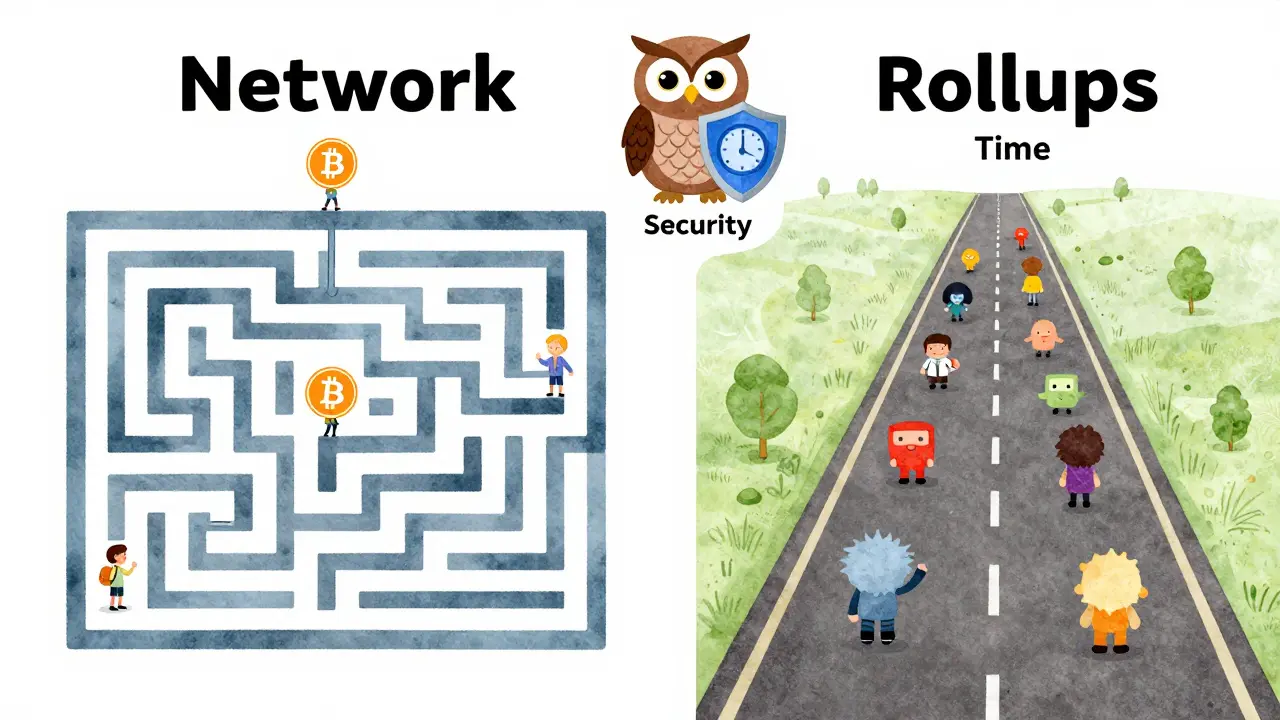
State channels aren’t the only Layer-2 solution. Optimistic Rollups (like Optimism) and ZK-Rollups (like StarkNet) have gained massive traction. So, when should you use a state channel versus a rollup?
It comes down to the nature of the transaction. State channels excel in high-frequency, bilateral interactions where the same parties interact repeatedly. Think of utility payments, gaming microtransactions, or streaming services. If you are paying a friend for lunch every day, a state channel is perfect. It’s private, instant, and cheap.
However, rollups are better for sporadic, many-to-many interactions. If you want to trade tokens on a decentralized exchange or play a game with strangers, rollups offer superior composability. They don’t require you to pre-fund a channel with a specific person. Vitalik Buterin, Ethereum’s co-founder, has noted that while state channels are theoretically optimal for specific use cases, they have proven harder to generalize than rollups. Rollups achieve near 100% capital efficiency, whereas state channels often suffer from capital inefficiency because you must lock 100% of the channel capacity upfront.
Consider this scenario: You want to buy a digital collectible from a stranger. With a state channel, you’d need to open a channel, fund it, wait for confirmation, then close it. That’s three on-chain transactions just for one purchase. With a rollup, you just send the token. The rollup batches thousands of such transactions together. For spontaneous commerce, rollups win. For recurring relationships, state channels win.
Practical Challenges for Developers and Users
Implementing state channels is not plug-and-play. Developers face a steep learning curve. For Lightning, you need expertise in Go (for LND) or Rust. For Raiden, Python and Solidity are essential. A 2023 survey by BlockAndCapital found that 78% of developers cited channel liquidity management as their biggest headache.
Liquidity management is tricky. If you have a channel with $100, and you spend $90, you can’t receive any more payments until you rebalance the channel. Rebalancing often requires complex routing or using tools like Lightning Loop, which adds its own layer of complexity and cost. User reviews for wallets like Phoenix frequently mention “initial setup complexity” and “unexpected channel closures” as major pain points.
Furthermore, regulatory uncertainty looms large. The SEC’s 2023 enforcement action against Zap, a Lightning-enabled exchange, highlighted that off-chain facilitators might still be classified as money transmitters. This legal gray area slows enterprise adoption. While 12.3% of enterprises have implemented state channels, 37.8% prefer rollups due to predictable operational overhead.
Future Outlook: Hybrid Approaches and Virtual Channels
The technology isn’t stagnant. Innovations are addressing the core weaknesses. Lightning Labs released Lightning Loop v2, which enables non-custodial liquidity management, reducing rebalancing costs by 63%. On the Ethereum side, protocols like Connext are exploring “state channel hubs” to improve routing success rates.
Academic research from MIT’s Digital Currency Initiative proposes “virtual channels,” which would allow two parties to transact without a direct channel connection, leveraging intermediate nodes without requiring direct trust or funding. This could solve the network effects problem that currently limits adoption.
Despite the rise of rollups, state channels retain a unique niche. Arcane Research forecasts Lightning Network capacity will reach 25,000 BTC by late 2025, driven by remittance corridors in emerging markets like El Salvador and Mexico. For micropayments and recurring billing, state channels remain the most efficient tool in the blockchain toolbox.
Are state channels faster than regular blockchain transactions?
Yes, significantly. State channel transactions occur off-chain between participants, typically processing in less than 100 milliseconds. Regular blockchain transactions require network propagation and mining/validation, which can take minutes to hours depending on the network congestion.
Do state channels cost money to use?
Opening and closing a state channel requires on-chain transactions, which incur gas fees or miner fees. However, the off-chain transactions within the channel are virtually free, often costing fractions of a cent. This makes them ideal for high-volume, low-value transactions.
Can anyone cheat in a state channel?
Cheating is technically possible but economically discouraged. Protocols use cryptographic proofs and penalty mechanisms. If a participant tries to submit an outdated state, the counterparty can claim the cheater's funds during a dispute window. This requires the honest party to stay online to monitor for disputes.
What is the difference between Lightning Network and Raiden Network?
Lightning Network is built on Bitcoin and uses simple multisignature scripts, focusing on native Bitcoin payments. Raiden Network is built on Ethereum and uses smart contracts, allowing for more complex logic and support for various ERC-20 tokens. Lightning has broader adoption, while Raiden offers more flexibility for Ethereum-based applications.
Why aren't state channels used for everything?
State channels require participants to lock up capital upfront and maintain connectivity for dispute resolution. They are inefficient for one-off transactions with strangers. Rollups are better suited for general-purpose scaling because they handle many users and transactions without requiring pairwise channel setups.


Andrew Schneider
July 9 2026Oh, look at us, pretending we’ve solved the scalability trilemma with a magic wand called 'state channels' 🙄. It’s adorable how everyone ignores the liquidity fragmentation nightmare. You can’t just open a channel to anyone; you need routing paths that actually exist. The Lightning Network is less of a highway and more of a tangled mess of garden hoses where half the water leaks out before it reaches the tap. And don’t get me started on the centralization risk of relying on large nodes for routing. It’s not scaling Bitcoin; it’s creating a two-tier system where the whales play poker while the little guys wait in line. 📉💸