
You’ve probably heard the horror stories. You leave your money on a centralized exchange because it’s easy, and then suddenly you can’t withdraw it. Maybe the company goes bankrupt, maybe they freeze your account for "maintenance," or maybe they just vanish with your savings. It’s a nightmare scenario that played out repeatedly in 2022. So, what if there was a way to trade millions of tokens across different blockchains without ever handing over your private keys? And what if you didn’t have to pay trading fees while doing it?
Enter Slingshot Finance. This platform pitches itself as a bridge between the ease of traditional banking and the security of decentralized finance (DeFi). But does it actually deliver, or is it just another interface with hidden costs? Let’s break down exactly how this web-based decentralized cryptocurrency exchange and cross-chain trading platform works, whether its zero-fee model is sustainable, and what its recent acquisition by Magic Eden means for you.
What Is Slingshot Finance?
At its core, Slingshot Finance is a decentralized exchange (DEX) aggregator. Unlike centralized exchanges like Coinbase or Binance, where the company holds your funds in their wallets, Slingshot lets you keep control of your assets in your own wallet. Think of it less as a bank and more as a super-smart router. When you want to swap Bitcoin for Ethereum, or move funds from Polygon to Arbitrum, Slingshot scans multiple liquidity pools to find you the best price and executes the trade directly from your wallet.
The platform gained attention for one specific feature that sets it apart from many competitors: the ability to buy crypto directly from a bank account. Most DeFi platforms require you to already have crypto to start trading. Slingshot attempts to solve the "on-ramp" problem by allowing fiat currency transfers directly into your wallet. This makes it particularly attractive for beginners who don’t know how to navigate the complex world of bridging assets manually.
The Fee Structure: Too Good To Be True?
Let’s talk about money, because that’s usually why people switch platforms. Standard centralized exchanges charge anywhere from 0.1% to 0.5% per trade. Major decentralized exchanges like Uniswap typically charge around 0.3%. Slingshot Finance claims a 0.00% taker and maker fee structure for trading. That sounds incredible, right? No trading fees at all?
Here is the catch. While the trading fee might be zero, you still pay network gas fees. These are the costs required to process transactions on the blockchain itself (like Ethereum, Polygon, or BSC). Since Slingshot operates largely on Layer 2 networks like Arbitrum and Polygon, these gas fees are significantly lower than on mainnet Ethereum. However, they aren’t zero. Additionally, because Slingshot acts as an aggregator, it pulls liquidity from other DEXs. Those underlying protocols often have their own small fees, which may be baked into the final exchange rate you see rather than listed as a separate line item.
| Platform Type | Trading Fee | Custody Model | Fiat On-Ramp |
|---|---|---|---|
| Slingshot Finance | 0.00% (plus gas/network fees) | Non-Custodial | Yes (Bank-to-Wallet) |
| Centralized Exchanges (e.g., Coinbase) | 0.1% - 0.5% | Custodial | Yes |
| Major DEXs (e.g., Uniswap) | ~0.3% | Non-Custodial | No (Crypto only) |
Cross-Chain Trading and Supported Networks
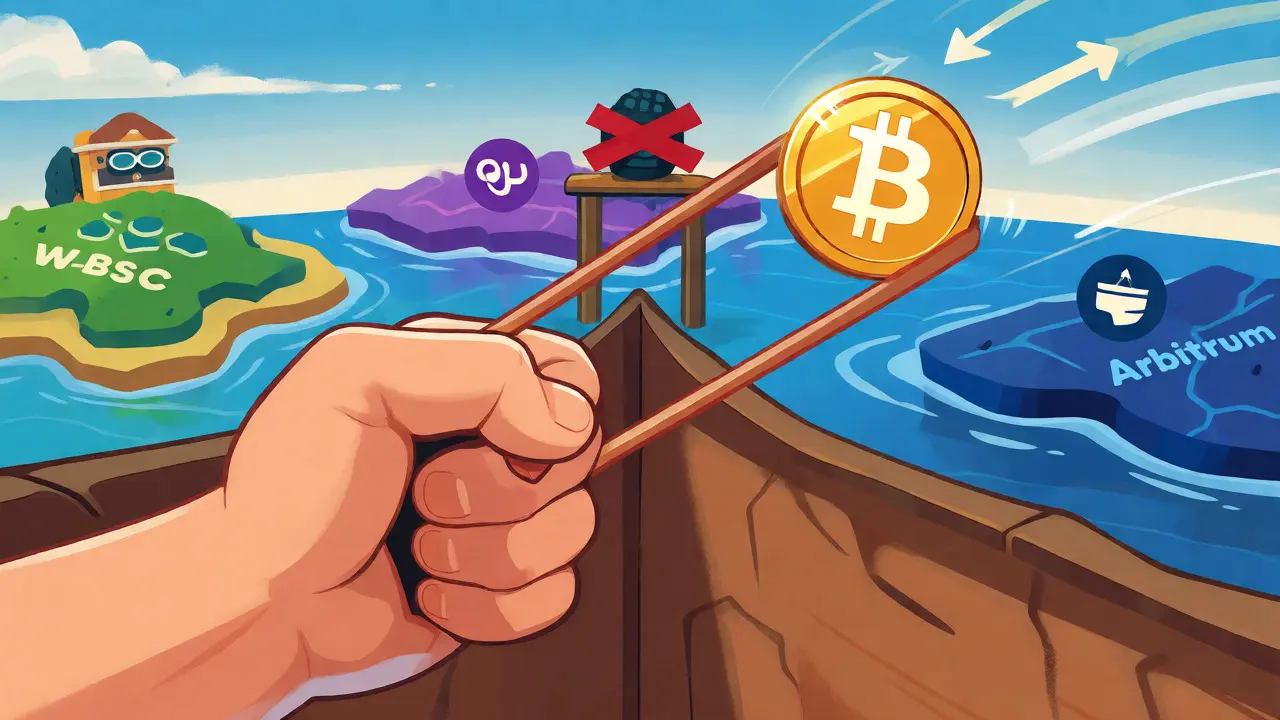
If you’re tired of jumping through hoops to move assets between chains, Slingshot offers a streamlined experience. The platform supports major networks including Ethereum, Arbitrum, Polygon, and Binance Smart Chain (BSC). This multi-chain capability allows users to access over 40,000 cryptocurrencies without needing to install five different wallets or learn three different bridges.
The user interface simplifies this complexity. Instead of seeing technical terms like "L1 to L2 bridge," you simply select the token you have and the token you want. Slingshot handles the routing logic in the background. For retail traders who just want to buy some altcoins on Polygon without worrying about Ethereum gas spikes, this convenience is a massive selling point.
Safety and Regulatory Status: The Big Caveat
Now, let’s address the elephant in the room: regulation. As of late 2023, assessments indicated that Slingshot Finance operated without oversight from any major government authority. In the US, this places it in a gray area similar to many other DeFi protocols. If you are looking for FDIC insurance or strict consumer protection laws, you won’t find them here.
However, the non-custodial nature of the platform adds a layer of security that centralized exchanges lack. Because you hold your own private keys, a hack of Slingshot’s website doesn’t necessarily mean a loss of your funds. Your assets remain in your wallet unless you explicitly sign a transaction approving a smart contract interaction. This distinction is crucial. While the platform itself isn’t regulated, the smart contracts it interacts with are open-source and auditable, though always check for the latest audit reports before connecting large sums.
The Magic Eden Acquisition: What Changed?
In a significant move for the industry, Magic Eden, previously known as the largest NFT marketplace on Solana, acquired Slingshot Finance. Why would an NFT marketplace buy a crypto exchange? The answer lies in diversification. After the 2022 bear market, many companies realized that relying solely on NFT volume was risky. By acquiring Slingshot, Magic Eden expanded its footprint into broader on-chain cryptocurrency trading.
This acquisition brings mixed implications for users:
- Resource Boost: Magic Eden has substantial funding and a large existing user base, which could lead to better development resources and marketing for Slingshot.
- Ecosystem Integration: We may see tighter integration between NFT trading and token swapping within the Magic Eden ecosystem.
- Brand Trust: Magic Eden is a recognized name in Web3, potentially lending credibility to Slingshot’s operations compared to smaller, anonymous DeFi projects.
It’s worth noting that Slingshot’s web traffic rankings have historically been modest, sitting around 440th among tracked crypto exchanges. The Magic Eden backing aims to change that trajectory by driving more organic traffic to the platform.

User Experience and Mobile Accessibility
Historically, Slingshot was primarily a web-based tool. However, recognizing that most casual traders operate from their phones, the team developed a mobile application for iOS and Android. Early reviews described the app as "the fastest cross-chain trading app," highlighting its intuitive design. The goal was to make buying crypto as simple as using Venmo, but with the added power of DeFi.
The learning curve is moderate. If you have used MetaMask or Phantom before, you will feel right at home. If you are coming from Coinbase, the concept of "connecting a wallet" might take a few minutes to grasp, but the interface guides you through it. The platform emphasizes speed and simplicity, stripping away the cluttered charts and order books found on pro-trading sites.
Pros and Cons Summary
To help you decide if Slingshot fits your needs, here is a quick breakdown based on current data and expert analysis.
| Pros | Cons |
|---|---|
| Zero trading fees (0.00%) | Lack of regulatory oversight |
| Non-custodial (you own your keys) | Lower liquidity compared to Binance/Coinbase |
| Easy fiat-to-crypto on-ramps | Smaller community and support network |
| Multi-chain support (ETH, ARB, POLY, BSC) | Gas fees still apply on blockchain level |
Final Verdict: Who Should Use Slingshot?
Slingshot Finance isn’t trying to replace Binance for high-frequency day traders who need deep order books and margin trading. Instead, it targets a specific niche: the everyday investor who wants to participate in DeFi without the headache of managing multiple bridges and paying hefty trading commissions.
If you prioritize self-custody and want a simple way to buy tokens on Polygon or Arbitrum directly from your bank account, Slingshot is a strong contender. The acquisition by Magic Eden adds a layer of stability and potential future growth that makes it more attractive than it might have been two years ago. Just remember: always do your own research, keep your seed phrases safe, and never invest more than you can afford to lose in unregulated markets.
Is Slingshot Finance safe to use?
Slingshot Finance uses a non-custodial model, meaning you retain control of your private keys. This reduces the risk of the platform losing your funds in a bankruptcy event. However, as a decentralized platform, it lacks traditional regulatory protections like FDIC insurance. Users should ensure they interact with the official website and verify smart contract addresses when possible.
Does Slingshot Finance really have zero fees?
Slingshot charges 0.00% trading fees on swaps. However, you must still pay network gas fees to process transactions on the blockchain (such as Ethereum or Polygon). Additionally, because it aggregates liquidity from other DEXs, small underlying protocol fees may be reflected in the exchange rate spread.
Which blockchains does Slingshot support?
The platform supports major networks including Ethereum, Arbitrum, Polygon, and Binance Smart Chain (BSC). This allows users to trade thousands of tokens across these ecosystems without needing separate wallets for each chain.
Can I buy crypto with a credit card on Slingshot?
Yes, Slingshot integrates fiat on-ramps that allow users to purchase cryptocurrency using bank transfers and credit/debit cards. This feature distinguishes it from many pure-play DEXs that only accept crypto deposits.
Who owns Slingshot Finance now?
Slingshot Finance was acquired by Magic Eden, a prominent NFT marketplace. This acquisition suggests a strategic expansion by Magic Eden into broader decentralized finance services, potentially providing Slingshot with increased resources and user visibility.