
Imagine running a bank or fintech firm in Lagos and suddenly realizing that the digital assets you once ignored are now legally classified as securities. That is exactly what happened when President Bola Ahmed Tinubu signed the Investment and Securities Act (ISA) 2025 into law on March 31, 2025. This wasn't just a minor update; it was a complete overhaul of how Nigeria handles digital money. If you work in finance, banking, or tech in Nigeria, your compliance playbook has changed overnight. The days of operating in a grey area are gone. Now, the Securities and Exchange Commission (SEC) holds the keys, and if you aren't following their new rules, you're facing fines that can shut you down.
This article breaks down exactly what these changes mean for you. We aren't talking about vague predictions. We are looking at hard numbers, specific penalties, and the operational shifts required to keep your doors open in 2026. Whether you are a traditional bank wanting to serve crypto clients or a startup trying to get licensed, here is the reality of navigating SEC Nigeria's crypto guidelines.
The Big Shift: Why Crypto Is Now a Security
For years, Nigerian regulators were hesitant. They worried about volatility and fraud. But the market moved faster than the law. By mid-2025, Nigeria had processed an estimated $92.1 billion in cryptocurrency transactions between July 2024 and June 2025. That volume nearly doubled South Africa’s activity during the same period. You cannot ignore that kind of economic weight. The ISA 2025 officially recognizes digital assets as securities. This classification is crucial because it brings cryptocurrencies under the direct authority of the SEC, superseding the old ISA 2007 Act.
What does this mean practically? It means that if you offer investment contracts involving digital tokens, you are likely regulated like a stockbroker or fund manager. SEC Director-General Emomotimi Agama stated that the act reflects a commitment to building a "dynamic, inclusive and resilient capital market." In plain English, the government wants to capture the value of this booming sector while protecting investors from the Ponzi schemes that have plagued the space. The SEC now has the power to license, supervise, and regulate all Virtual Asset Service Providers (VASPs). If you don't have a license, you are operating illegally.
Navigating the Regulatory Maze: Who Watches Whom?
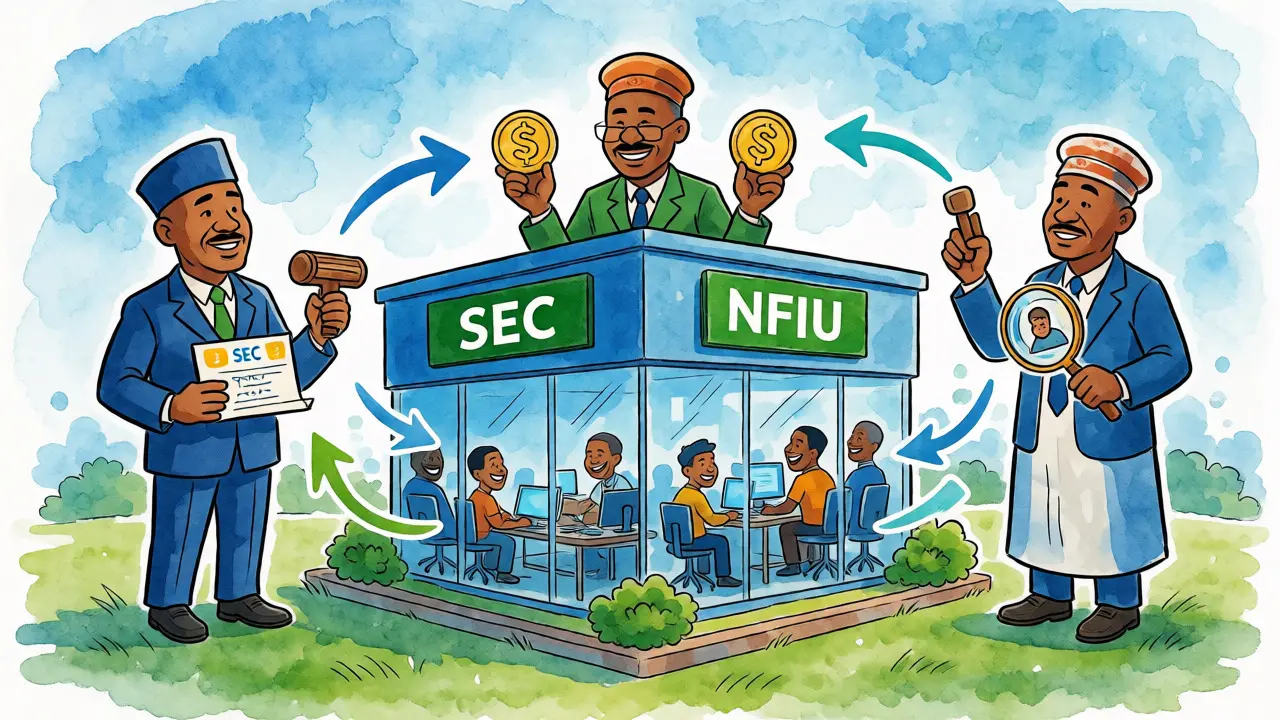
You might think dealing with one regulator is enough. Think again. Financial institutions in Nigeria must juggle three main authorities, each with a different focus. Ignoring any one of them can lead to trouble.
| Regulator | Primary Focus | Impact on Institutions |
|---|---|---|
| SEC Nigeria | Licensing, investor protection, market conduct | Must obtain VASP license; comply with securities laws |
| Central Bank of Nigeria (CBN) | Monetary policy, banking stability, fiat-crypto bridges | Banks can serve licensed VASPs; must monitor naira impact |
| Nigerian Financial Intelligence Unit (NFIU) | Anti-Money Laundering (AML), Counter-Terrorism Financing (CTF) | Strict reporting on suspicious transactions; KYC enforcement |
The relationship between banks and crypto has flipped. Back in 2021, the CBN banned banks from facilitating crypto transactions. This starved many platforms of liquidity. However, in 2023, the CBN reversed course, allowing financial institutions to provide banking services to licensed VASPs. This was a lifeline. But there is a catch: you can only serve entities that hold a valid SEC license. Banks are no longer just passive observers; they are active gatekeepers ensuring their crypto clients play by the rules.
Taxation and Penalties: The Cost of Non-Compliance
Let’s talk money. Specifically, the money you lose if you mess up. The Nigeria Tax Administration Act (NTAA) 2025, effective from 2026, introduces specific tax obligations for VASPs. The government isn't just asking nicely; they are enforcing strict penalties.
If you fail to comply, the initial penalty hits hard: ₦10 million (approximately $6,693) for the first month of default. For every subsequent month you remain non-compliant, you face an additional ₦1 million ($669). These figures might seem manageable for large firms, but for smaller startups, they are existential threats. Furthermore, the SEC has the authority to suspend or revoke licenses entirely. Losing your license means losing your business model.
The taxation framework positions Nigeria alongside other emerging markets that are serious about capturing crypto revenue. The SEC is working on amendments to expand licensing frameworks, specifically to enable better monitoring of centralized exchange transactions for tax purposes. Expect more data requests and stricter audits as we move deeper into 2026.
Licensing Requirements: How to Get Authorized
Getting a license is not a formality. It is a rigorous process designed to weed out fly-by-night operators. Homegrown exchanges like Quidax and Busha received authorization in 2024, setting a precedent for what compliance looks like. To secure a VASP license from the SEC, you need to demonstrate comprehensive adherence to AML/CFT requirements. This goes beyond just having a privacy policy.
- Know Your Customer (KYC): You must verify user identities rigorously. Anonymous trading is effectively dead.
- Capital Adequacy: You need sufficient reserves to cover potential liabilities.
- Reporting Obligations: Regular submissions to the SEC and NFIU are mandatory.
- Investor Protection: Clear terms of service and dispute resolution mechanisms are required.
Financial institutions acting as partners or service providers to these VASPs also need to ensure their internal controls align with these standards. If your bank serves a VASP, you share some reputational risk. Ensure your due diligence processes are robust enough to handle the nuances of digital asset flows.
Market Reality: Adoption vs. Regulation
Here is the paradox of the Nigerian crypto market. Despite the regulatory tightening, adoption is exploding. Projections suggest Nigeria will reach 28.69 million crypto users by 2026. Nigerians rank first globally in peer-to-peer transaction volume. Why? Because the local currency, the naira, faces volatility and inflation pressures. People use stablecoins and Bitcoin not just for speculation, but for savings and cross-border payments.
However, remember that cryptocurrency is not legal tender. You cannot walk into a supermarket in Abuja and pay for groceries with Ethereum. The regulations reinforce this distinction. The goal isn't to replace the naira but to integrate digital assets into the formal financial system. This creates opportunities for fintechs to build bridges-apps that let users convert naira to stablecoins seamlessly, backed by licensed infrastructure.
Strategic Moves for Financial Institutions
So, what should you do right now? If you are a traditional bank, don't retreat. Engage. The reversal of the banking ban means there is profit to be made in serving the crypto sector. But you must specialize. Generalist compliance teams often struggle with blockchain analytics. Consider partnering with specialized compliance tech providers who understand wallet clustering and transaction tracing.
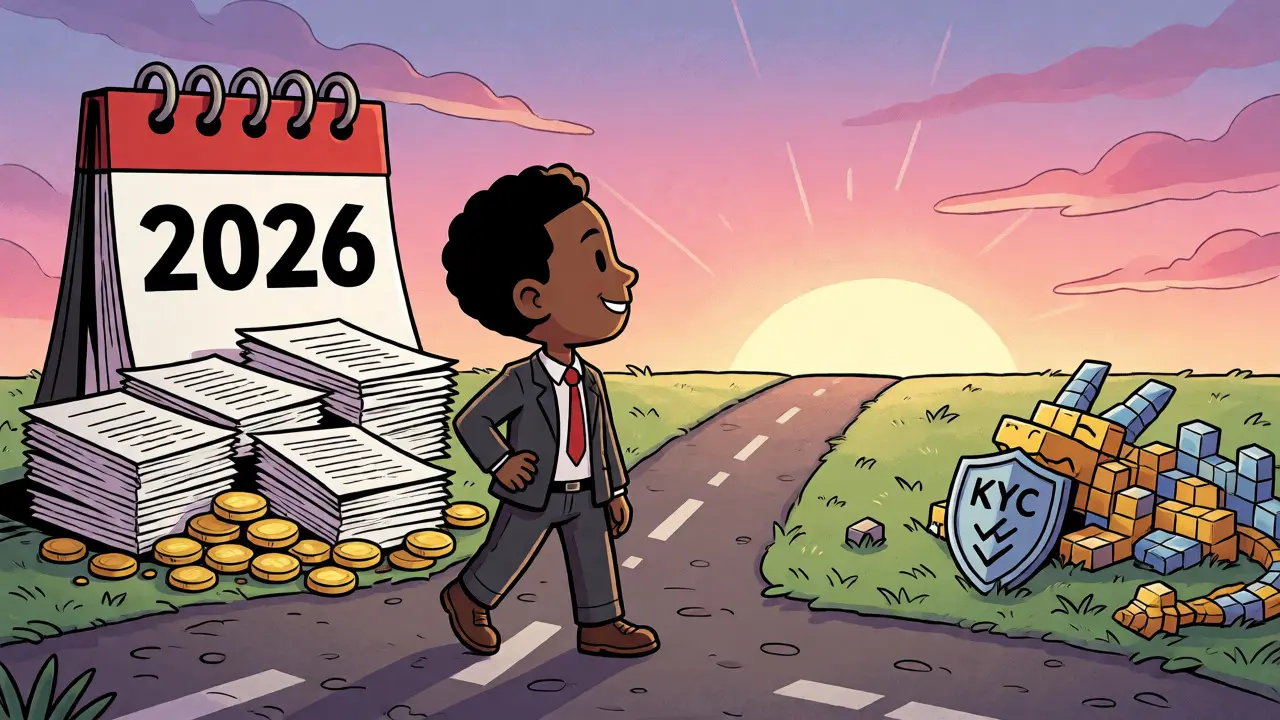
If you are a crypto native, prioritize getting licensed immediately. The window for easy entry is closing. As more competitors enter, the SEC will raise the bar for capital and technical requirements. Also, start preparing for the 2026 tax implementation. Audit your transaction records now. Identify gaps in your AML reporting before the auditors find them for you.
Foreign investors are watching closely. The clarity provided by the ISA 2025 makes Nigeria a safer bet for venture capital compared to jurisdictions with ambiguous laws. If you are seeking funding, highlight your compliance status. It is becoming a key valuation metric.
Frequently Asked Questions
Is cryptocurrency legal tender in Nigeria?
No, cryptocurrency is not recognized as legal tender in Nigeria. It cannot be used to settle debts or official payments directly. However, it is legally recognized as a security and can be traded and held as an investment asset under SEC regulations.
Can Nigerian banks still refuse to serve crypto companies?
Yes, banks retain discretion in choosing clients. However, the CBN lifted the blanket ban in 2023, meaning banks are permitted to serve licensed VASPs. Refusal is often based on internal risk appetite rather than a regulatory prohibition.
What happens if I operate a crypto exchange without an SEC license?
Operating without a license exposes you to severe penalties, including fines starting at ₦10 million for the first month of non-compliance. Additionally, the SEC can suspend or revoke your ability to operate, effectively shutting down your business.
How does the NFIU affect my crypto transactions?
The Nigerian Financial Intelligence Unit monitors transactions for money laundering and terrorism financing. You must report suspicious activities and maintain strict Know Your Customer (KYC) protocols. Failure to do so can result in investigations and heavy fines.
Are taxes applied to crypto profits in Nigeria?
Yes, the Nigeria Tax Administration Act 2025 establishes tax obligations for VASPs and potentially for users depending on the nature of the income. Specific rates and collection mechanisms are being refined, but compliance is mandatory starting in 2026.