Iranian users can’t log into Binance, Coinbase, or Kraken-not because they forgot their password, but because OFAC sanctions block them outright. Since 2015, the U.S. Treasury’s Office of Foreign Assets Control has turned cryptocurrency into a battleground, targeting Iranian individuals and networks that use digital assets to bypass financial restrictions. The result? A high-stakes game of cat and mouse between regulators and crypto users, with billions of dollars in blocked transactions and new exchanges popping up overnight to fill the void.
How OFAC Targets Iranian Crypto Activity
OFAC doesn’t just blacklist names. It freezes wallet addresses. On November 28, 2018, it made history by publishing the first-ever cryptocurrency addresses tied to Iranian actors involved in the SamSam ransomware attacks. These weren’t random guesses. The addresses were traced through blockchain analysis, showing exactly where ransom payments in Bitcoin were converted into Iranian rials and funneled into local banks. This move signaled a major shift: regulators now treat blockchain as a public ledger they can mine for evidence. By 2025, this tactic had become routine. In September of that year, OFAC designated five specific wallet addresses linked to Arash Estaki Alivand, a key figure in a $600 million shadow banking network. Two were Ethereum wallets:0xe3d35f68383732649669aa990832e017340dbca5 and 0x532b77b33a040587e9fd1800088225f99b8b0e8a. Three were Tron addresses: TYDUutYN4YLKUPeT7TG27Yyqw6kNVLq9QZ, TRakpsE1mZjCUMNPyozR4BW2ZtJsF7ZWFN, and TQ5H49Wz3K57zNHmuXVp6uLzFwitxviABs. These weren’t just random accounts-they held Tether, Ether, and Bitcoin used to launder oil profits for Iran’s military.
Every exchange operating in the U.S. or serving U.S. customers now checks every transaction against OFAC’s Specially Designated Nationals (SDN) list. If a wallet on that list sends or receives funds, the transaction gets blocked. No appeal. No exception. That’s why Iranian users can’t access mainstream platforms-even if they use a VPN.
Why Iranian Users Can’t Use Major Exchanges
Most global exchanges like Coinbase, Kraken, and Binance have strict geo-blocking rules. They don’t just check your IP address. They scan your wallet history, device fingerprints, and even the metadata of your login attempts. If any signal points to Iran, access is denied before you even type your password. This isn’t arbitrary. It’s survival. In September 2025, ShapeShift AG paid $750,000 to settle charges for allowing users from Iran, Cuba, and Syria to trade over $12.5 million in crypto over two years. The exchange had no sanctions screening in place. The fine wasn’t punishment-it was a warning to every platform: if you ignore OFAC, you’ll pay. For Iranian users, this means the door to easy, liquid, low-fee trading is closed. They can’t buy Bitcoin with a credit card. They can’t sell Ethereum for dollars. They can’t cash out profits without risking their funds being frozen or their accounts permanently banned.The Rise of Sanctions-Evasion Exchanges
When Garantex was shut down by the U.S. Secret Service in March 2025, its operators didn’t vanish. They built Grinex-right away. Within days, customer deposits were moved to the new platform. Grinex’s own marketing materials admitted it was created to replace Garantex after sanctions froze its assets. Grinex doesn’t offer traditional KYC. Instead, users get access through a token called A7A5, issued by a Kyrgyzstani company. The token acts as a key: hold it, and you can log in. It’s not legal tender. It’s not backed by a government. But it’s a workaround-a digital key to a system designed to keep Iranians out. These successor exchanges operate from jurisdictions with weak U.S. oversight: Kyrgyzstan, the UAE, Hong Kong, and parts of Southeast Asia. They use shell companies like Alpha Trading Co. in Hong Kong and Blue Sky General Trading LLC in Dubai to hide the real beneficiaries. They route payments through layers of intermediaries, making it hard for regulators to trace the money back to Iran’s military. The result? Billions of dollars still flow out of Iran through crypto-just not through the platforms you’ve heard of.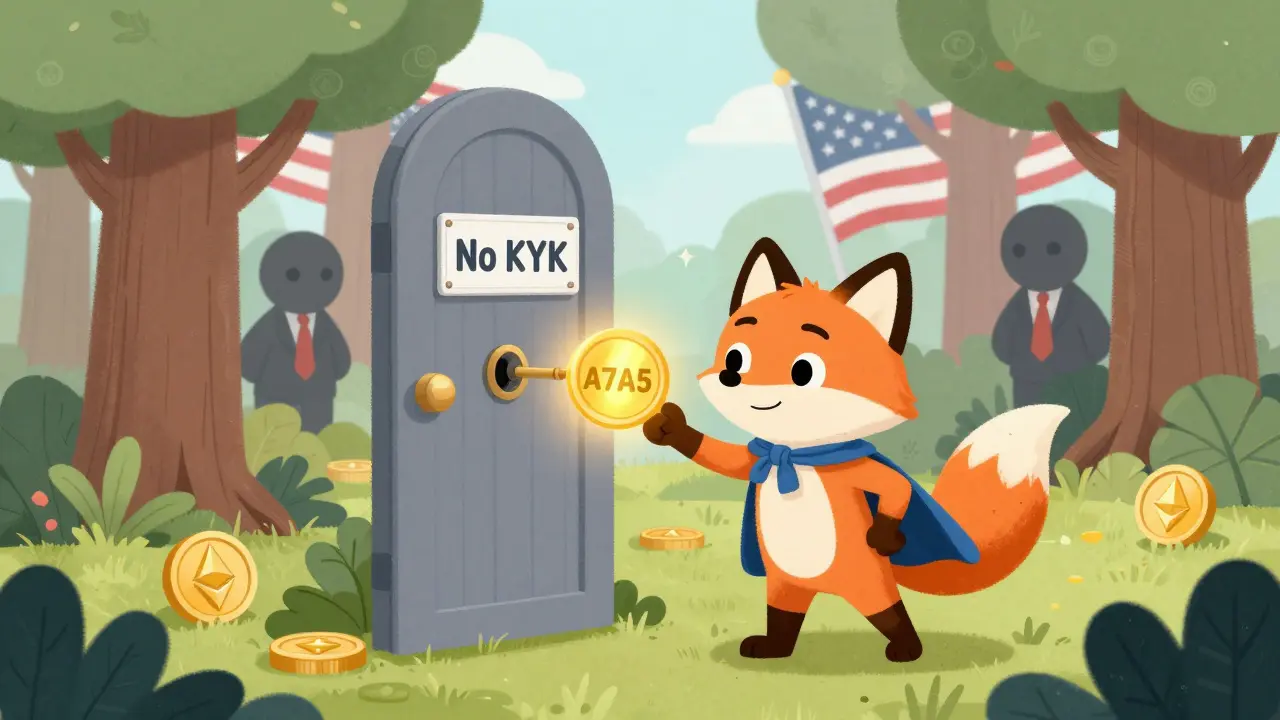
How Iran Circumvents the Blockade
Iranians aren’t sitting idle. They’ve adapted. Many now use peer-to-peer (P2P) platforms like LocalBitcoins or Paxful, where buyers and sellers transact directly. No exchange holds the funds. No KYC is required. Payments are made via bank transfers, gift cards, or even cash deposits. The risk? Higher prices and scams. But for many, it’s the only option. Others turn to privacy coins-Monero, Verge, Zcash. These cryptocurrencies obscure sender, receiver, and amount. OFAC can’t trace them easily. But there’s a catch: liquidity. You can’t trade Monero for dollars on Coinbase. You need to find someone willing to buy it, and that’s harder. The spreads are wider. The wait times are longer. Decentralized exchanges (DEXs) like Uniswap or PancakeSwap are another route. No account needed. No ID. Just connect your wallet and swap tokens. But here’s the problem: if your wallet has ever interacted with a sanctioned address, even once, it gets flagged. And once flagged, every future transaction-even with non-sanctioned users-can trigger alerts. Then there’s the shadow banking network. Iranian operators use front companies in China, the UAE, and Hong Kong to buy hardware, pay for cloud services, and move money. Shenzhen Jiasibo Technology Co. shipped military-grade equipment under fake labels. Blue Sky General Trading LLC in Dubai received wire transfers disguised as “oil equipment payments.” The crypto was just the last leg of a much longer pipeline.The Real Cost of Sanctions: Less Access, Higher Risk
OFAC’s goal was to cut off funding to Iran’s military and IRGC-QF. And it’s worked-up to a point. The $600 million network exposed in 2025 was massive. But it didn’t stop the flow. It just made it harder, slower, and more expensive. Iranian users now pay more for crypto. P2P premiums can be 15-30% above global rates. Privacy coins have lower trading volumes, so prices swing wildly. DEXs have higher gas fees. And if you mess up? Your funds vanish. No customer service. No chargebacks. No recourse. The sanctions also pushed Iran’s crypto ecosystem underground. What was once a growing market of traders and investors is now a network of smugglers, middlemen, and risk-takers. The people who benefit most aren’t ordinary users. They’re the operators of Grinex, the owners of front companies, the brokers who move money between Dubai and Tehran.
What Comes Next?
OFAC isn’t slowing down. In 2025, it started using AI to detect patterns in blockchain transactions-like sudden spikes in small transfers from known Iranian wallets, or repeated interactions with flagged addresses. Blockchain analytics firms like Chainalysis and Elliptic now work directly with U.S. agencies to flag suspicious activity in real time. Meanwhile, Iran is investing in its own blockchain infrastructure. Reports suggest Tehran is developing a domestic crypto settlement layer to bypass international networks entirely. It’s still early, but if successful, it could mean a future where Iranian crypto transactions never touch a global exchange. For now, the divide is clear: if you’re an Iranian citizen, you can’t use the same tools as the rest of the world. You’re forced into a parallel system-riskier, costlier, and less transparent. The sanctions didn’t stop crypto use in Iran. They just made it harder, darker, and more dangerous.Can Anything Change?
Not unless the rules change. As long as U.S. financial institutions control the gateways to global markets, and as long as exchanges fear massive fines, Iranian users will remain locked out. The only way forward is through decentralized systems that don’t rely on centralized platforms-or political agreements that lift sanctions entirely. Until then, Iranian crypto users are left with one truth: the blockchain is open, but the doors are locked.Can Iranian users still trade cryptocurrency at all?
Yes, but not on major exchanges like Binance or Coinbase. Iranian users rely on peer-to-peer platforms, decentralized exchanges (DEXs), privacy coins like Monero, and shadow exchanges like Grinex. These options are riskier, have lower liquidity, and often charge higher fees. Some use front companies and crypto-to-cash methods to move funds without triggering sanctions filters.
Why do OFAC sanctions target cryptocurrency wallets specifically?
Because blockchain transactions are public and permanent. Unlike bank accounts, which can be hidden behind layers of secrecy, crypto addresses leave a traceable trail. OFAC can track exactly where funds move, who they interact with, and how they’re converted. By publishing wallet addresses, OFAC forces exchanges to block those addresses automatically-making it harder for Iranian actors to launder money or fund military operations.
What happened to Garantex, and why did Grinex appear?
Garantex was shut down by the U.S. Secret Service in March 2025 for facilitating transactions with sanctioned Iranian users. Within days, its operators launched Grinex as a direct replacement. Grinex transferred customer deposits to the new platform and used a custom token (A7A5) to grant access. This shows how sanctions evasion is now institutionalized: when one platform is taken down, another rises immediately to take its place.
Do privacy coins like Monero help Iranians bypass sanctions?
Yes, but with major trade-offs. Privacy coins hide transaction details, making it harder for blockchain analysts to trace funds. However, they’re less liquid, harder to convert into fiat, and accepted by far fewer platforms. Most Iranian users still rely on Bitcoin and Ethereum because they’re easier to trade-even if those assets are more easily tracked.
Is it possible for Iranian users to access U.S.-based exchanges legally?
No. U.S. law prohibits exchanges from serving users in sanctioned countries like Iran, even if they use a VPN or foreign ID. Exchanges that violate this face heavy fines-like ShapeShift’s $750,000 penalty. There are no legal loopholes. Accessing these platforms from Iran is a violation of U.S. sanctions, regardless of how it’s done.
What role do international front companies play in Iranian crypto sanctions evasion?
Front companies in places like Hong Kong, Dubai, and Shenzhen act as bridges between Iranian crypto networks and the global financial system. They buy hardware, pay for cloud services, receive wire transfers disguised as legitimate business payments, and move crypto proceeds out of Iran. These companies are often linked to Iran’s Ministry of Defense or IRGC-QF, helping launder billions in oil profits through layered transactions that obscure the final beneficiary.


Danyelle Ostrye
January 9 2026So let me get this straight - the U.S. blocks Iranians from using crypto not because it’s dangerous, but because it’s *too* effective? Like, the whole point of blockchain is to be decentralized, but now we’re treating it like a gated community where only the right passport gets in? This feels less like sanctions and more like digital colonialism.
And don’t even get me started on how these shadow exchanges are just the new black market - same old story, new tech. The people who suffer? Regular folks trying to protect their savings from hyperinflation. The winners? The middlemen in Dubai and Kyrgyzstan charging 30% premiums.
Meanwhile, the real criminals - the ones laundering oil cash - are still laughing all the way to the bank. Or rather, to a Tron wallet.