You might think Non-Fungible Tokens (NFTs) are just expensive JPEGs of cartoon monkeys. But look closer at the logistics industry, and you'll see a different story. NFTs are quietly becoming the backbone of modern supply chain management, turning opaque shipping routes into transparent, verifiable trails. For companies struggling with counterfeit goods or lost inventory data, these unique digital identifiers offer a fix that traditional databases simply can't match.
The Core Problem: Why Traditional Tracking Fails
Global commerce is messy. Products cross multiple borders, change hands dozens of times, and pass through various warehouses before hitting the shelf. In this chaos, data gets siloed. A retailer might know where a package is, but not who inspected it last month. A manufacturer knows what went into a box, but not if it sat in a hot truck for three days.
This lack of visibility costs money. The OECD estimates that counterfeiting alone drains over $400 billion from the global economy annually. When you buy a luxury handbag or a critical medical device, how do you know it's real? Traditional certificates of authenticity can be forged. Paper trails get lost. This is where blockchain-based identity steps in to replace trust with proof.
How NFTs Create Digital Identities for Physical Goods
An NFT in this context isn't art; it's a digital twin. It’s a unique token on a blockchain that represents one specific physical item. Unlike Bitcoin, which is fungible (one coin equals another), an NFT is distinct. It carries metadata that describes the exact product it represents.
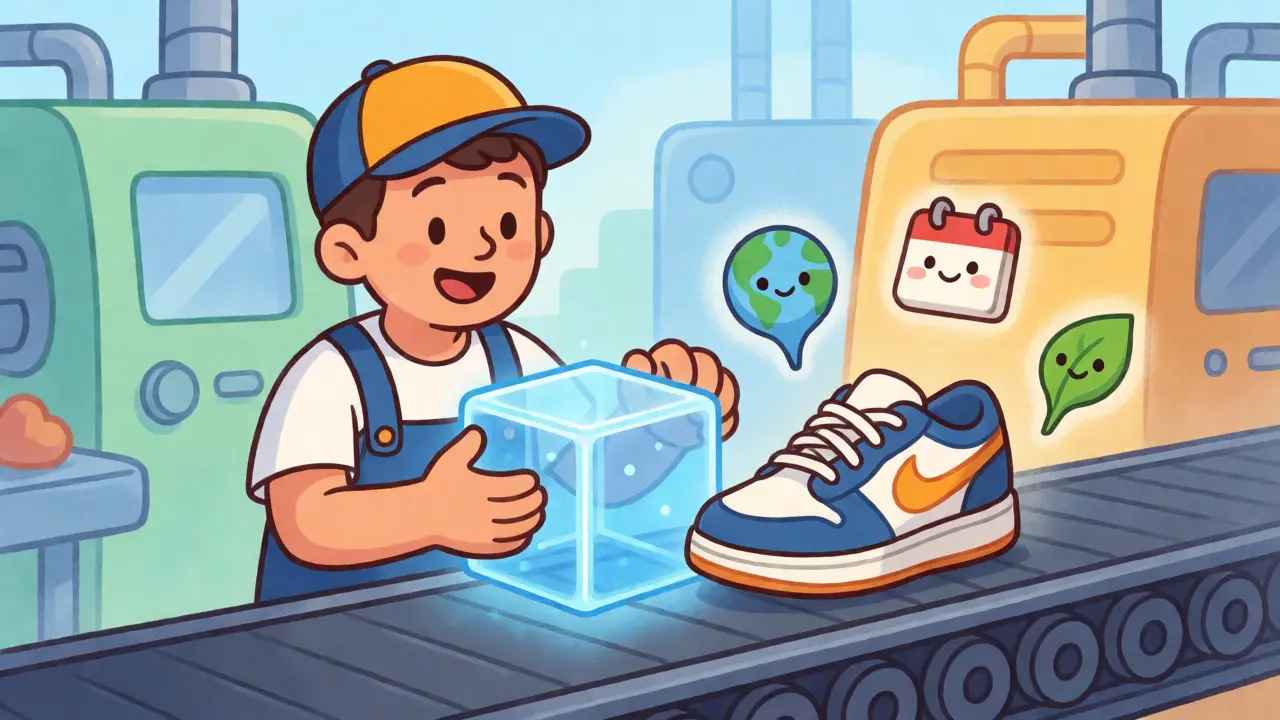
When a factory produces a sneaker, they mint an NFT linked to that specific pair. This token contains data points like:
- Origin: Where the raw materials came from.
- Manufacturing Date: Exact time and location of assembly.
- Components: Specific batches of leather or fabric used.
- Certifications: Proof of ethical labor practices or organic status.
This data lives on a decentralized ledger, often supported by systems like the InterPlanetary File System (IPFS) to store heavy files securely. Because the blockchain is immutable, no one can secretly alter the history of that sneaker after the fact. If the record says it was made in Vietnam on June 1st, that truth is locked in forever.
Killing Counterfeiting with Verifiable Provenance
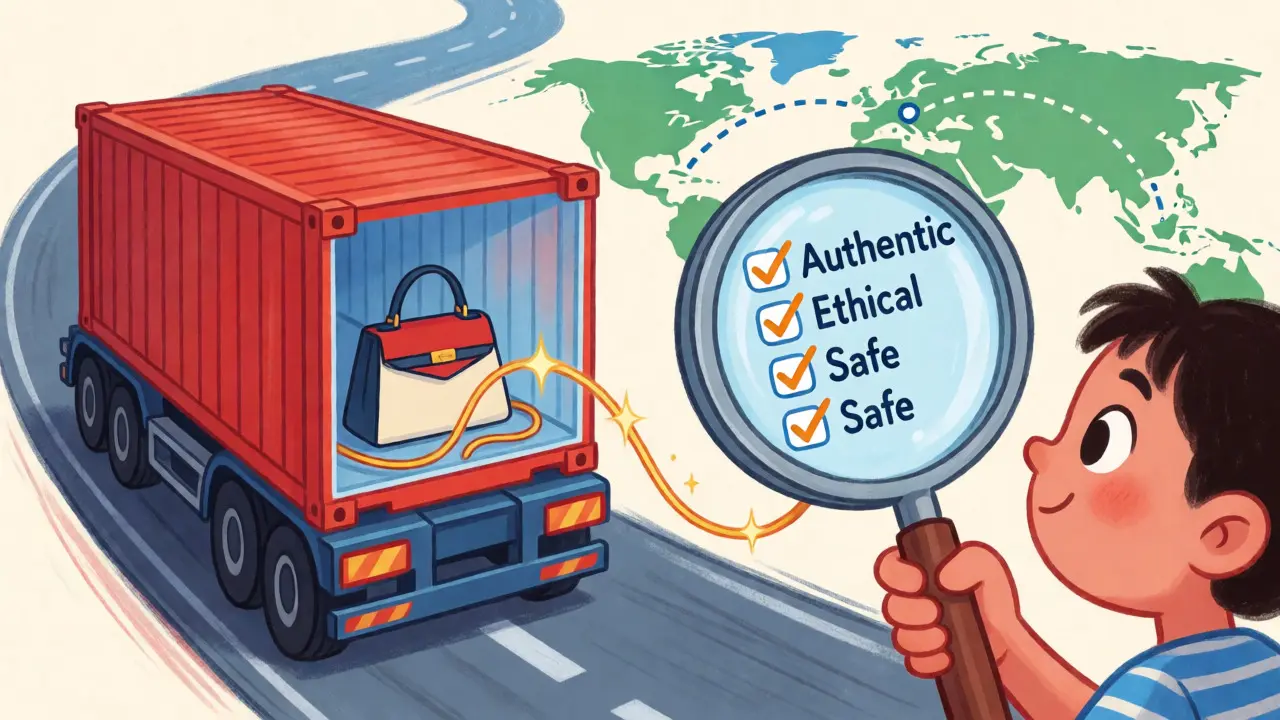
Counterfeiting thrives on ambiguity. Scammers rely on the fact that verifying a product’s true origin is difficult and slow. NFTs flip this dynamic. By scanning a QR code on the product, a consumer can instantly access the NFT’s blockchain record. They see the entire journey from raw material to retail shelf.
This creates an unforgeable certificate of authenticity. A fake product might have a similar-looking QR code, but it won’t link to a valid, verified NFT on the mainnet. Or worse, it will link to an NFT that shows a broken chain of custody-perhaps the product skipped a required inspection step. For brands like LVMH or Nike, this capability protects brand equity and customer trust simultaneously.
| Feature | Traditional Database | NFT-Enabled Blockchain |
|---|---|---|
| Data Integrity | Centralized; admin can edit records | Immutable; cryptographically secured |
| Accessibility | Siloed; limited to authorized partners | Transparent; accessible to all stakeholders |
| Verification Speed | Days or weeks via manual checks | Seconds via smart contract query |
| Interoperability | Low; requires custom integrations | High; standard token protocols |
Digital Product Passports and Regulatory Compliance
Governments are catching up. The European Union is rolling out mandatory Digital Product Passports for sectors like textiles, batteries, and electronics. These passports must contain detailed information about environmental impact, repairability, and end-of-life recyclability.
NFTs provide a scalable foundation for these passports. Instead of maintaining separate databases for each regulatory requirement, companies can attach compliance data directly to the product’s NFT. As the product moves through the supply chain, new data-like carbon footprint calculations or recycling instructions-is added to the token’s metadata. This ensures that when the product reaches the consumer or the recycler, all necessary regulatory info travels with it automatically.
Automating Payments and Settlement
Supply chains are notorious for slow payments. Suppliers wait months to get paid because retailers need time to verify delivery and quality. Smart contracts tied to NFTs can automate this process.
Imagine a scenario where a shipment arrives at a warehouse. IoT sensors confirm the temperature and location. This data updates the NFT’s state. Once the NFT confirms "delivered and compliant," a smart contract automatically releases payment from the buyer’s wallet to the supplier’s wallet. No invoices, no disputes, no waiting. This instant settlement improves cash flow for suppliers and reduces administrative overhead for finance teams.
Enhancing Quality Assurance and Recalls
Quality issues don’t happen in a vacuum. If a batch of pharmaceuticals fails a test, traditional tracking might take weeks to identify which specific units were affected. With NFTs, every unit has its own digital record including inspection logs.
If a defect is found, manufacturers can query the blockchain to find all products sharing the same component batch ID. This allows for surgical recalls rather than blanket ones. You only recall the bad units, saving millions in unnecessary returns. Furthermore, consumers can check the service history of a used car or appliance by looking at its NFT, seeing exactly when maintenance occurred and who performed it.
Ethical Sourcing and Consumer Trust
Modern consumers care about more than price. They want to know if their coffee was fair-trade or if their gold was mined responsibly. Greenwashing-where companies claim sustainability without proof-is rampant. NFTs combat this by providing evidence.
Suppliers can upload audits and certifications to the NFT as the product moves along the chain. A retailer can prove that the cotton in a t-shirt came from a farm that pays living wages. This transparency builds brand loyalty. It turns abstract ethical claims into verifiable facts that shoppers can check on their phones while standing in the aisle.
Challenges to Adoption
It’s not all smooth sailing. Implementing NFTs in supply chains requires technical integration across many partners. Not every logistics provider uses blockchain-compatible systems yet. There’s also the issue of education. Many policymakers still view NFTs solely as speculative assets, missing their utility as data containers.
Additionally, the "garbage in, garbage out" problem remains. If a worker lies about entering data into the system, the blockchain will immutably record that lie. Therefore, combining NFTs with IoT sensors and automated data capture is crucial for true integrity.
The Future Value of Secondary Markets
Finally, NFTs unlock value in resale markets. When you sell a used luxury watch, having its complete provenance documented on-chain increases its resale value. Buyers pay more for certainty. Sellers command higher prices for well-documented items. This supports a circular economy, where products retain value longer because their history is transparent and trustworthy.
Are NFTs in supply chains the same as NFTs in gaming?
Technically, yes-they use the same underlying technology (unique tokens on a blockchain). However, their purpose differs. Gaming NFTs represent virtual assets, while supply chain NFTs represent physical goods and act as digital certificates of authenticity and provenance.
Do I need crypto knowledge to use NFT supply chain solutions?
No. Most enterprise solutions hide the complexity behind user-friendly interfaces. Managers interact with dashboards that show product locations and status, while the blockchain transactions happen in the background automatically.
How do NFTs prevent data tampering?
Blockchain technology uses cryptographic hashing. Once data is written to the block, changing it would require recalculating hashes for all subsequent blocks, which is computationally impractical. This ensures the history recorded in the NFT remains unchanged.
Can small businesses benefit from NFT supply chains?
Yes. While large enterprises lead adoption, platforms are emerging that allow smaller brands to mint product NFTs at low cost. This helps them compete on transparency and trust against larger competitors.
What happens if the physical product is damaged?
The NFT can be updated to reflect the damage. Some systems allow for "burning" the original NFT and minting a new one for a repaired item, or adding a damage report to the existing token's metadata, preserving the history while acknowledging the current state.