Imagine buying a digital collectible for five figures, only to find out its image disappears because the creator’s website went offline. This isn’t a hypothetical nightmare; it happened to thousands of NFT holders in late 2023 when a popular project’s HTTP server crashed, wiping out the visual proof of ownership for nearly half the collection. The culprit? Poorly structured or centrally hosted NFT metadata. While the blockchain guarantees you own the token ID, it doesn’t guarantee you can see what you bought unless the metadata is built right.
Most beginners think an NFT is just the picture itself. It’s not. The picture is usually stored somewhere else-like a cloud server or decentralized storage-and the NFT on the blockchain is just a pointer to that location. Understanding how this pointer works, what data it points to, and which standards govern it is the difference between a robust asset and a broken link. Let’s break down exactly how NFT metadata works, why standards matter, and how to avoid the pitfalls that cost developers millions.
What Exactly Is NFT Metadata?
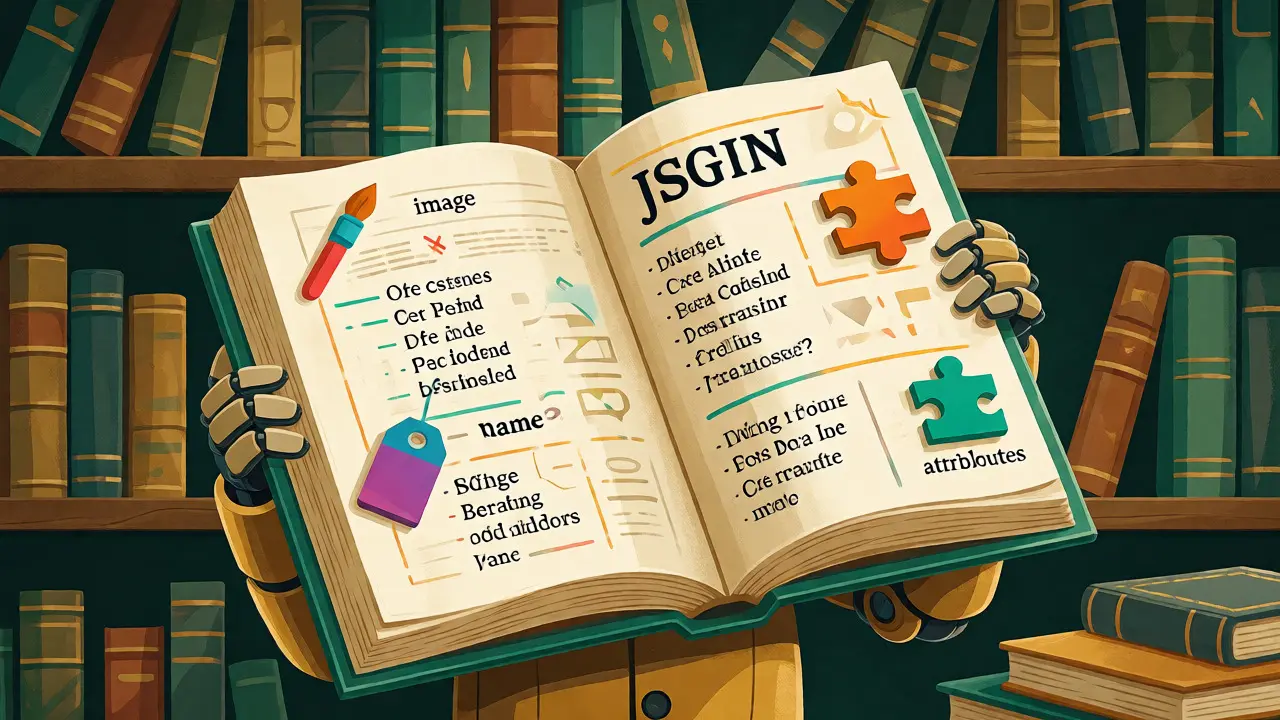
Think of metadata as "data about data." If the NFT is a library book, the metadata is the card catalog entry describing the title, author, cover art, and summary. In technical terms, it’s a JSON (JavaScript Object Notation) file that describes the attributes of your non-fungible token. This file typically lives off-chain (outside the blockchain) to save on gas fees, while a Uniform Resource Identifier (URI) pointing to that file lives on-chain.
The core purpose here is interoperability. Without a standard format, every marketplace would need custom code to display every new NFT collection. By adhering to standards like ERC-721, marketplaces like OpenSea or Rarible know exactly where to look for the name, description, and image URL. According to platform analytics from OpenSea, properly structured metadata increases discoverability by nearly 47%. That’s huge. If your metadata is messy, your NFT is invisible to search algorithms and filters.
The Anatomy of a Standard NFT JSON File
If you open up a raw NFT metadata file, you’ll see a specific structure. While creators can add custom fields, most marketplaces rely on a set of recommended keys defined largely by OpenSea’s implementation guidelines. Ignoring these leads to poor rendering on major platforms.
- Name: A string identifying the token (e.g., "Bored Ape #1234"). Keep it under 50 characters for best display results.
- Description: A text field supporting Markdown. This is crucial for SEO and user engagement.
- Image: The most critical field. It must be a full URL (absolute path), not a relative one. Common formats are PNG, GIF, or SVG. Note that some platforms prefer static images over animated ones for thumbnails.
- External URL: A link to the project’s website or a specific landing page for that token.
- Attributes: An array of trait objects. This is where the magic happens for gaming and rarity scoring.
Each attribute object inside the `attributes` array needs three things: `trait_type` (the category, like "Background"), `value` (the specific trait, like "Blue Sky"), and optionally `display_type` (how to render it, such as a percentage or date). Gaming NFTs often average 5.8 attributes per token, compared to 3.2 for art projects, because they need more granular data for gameplay mechanics.
On-Chain vs. Off-Chain Storage: The Cost-Benefit Analysis
This is the biggest decision any NFT developer faces. Do you store the actual JSON file on the blockchain, or do you store it elsewhere and just keep the link on-chain?
Storing everything on-chain is secure but expensive. On Ethereum, writing data to the chain costs significant gas. For a simple collection, this might mean paying $1.20 to $5.00 per transaction during congestion. Solana offers a middle ground with its Metaplex program, allowing more metadata to sit on-chain at a fraction of the cost ($0.00025 average transaction fee).
Off-chain storage is cheaper and faster but introduces risk. Here’s how the landscape breaks down based on recent industry data:
| Storage Type | Prevalence | Cost Model | Risk Factor |
|---|---|---|---|
| IPFS (InterPlanetary File System) | ~59% | Pinning services (e.g., Pinata) | Low (if pinned correctly) |
| HTTP/S3 Centralized Hosting | ~38% | Cloud hosting fees (~$0.02/GB/mo) | High (link rot potential) |
| Arweave / On-Chain | ~3% | One-time permanent storage fee | Very Low |
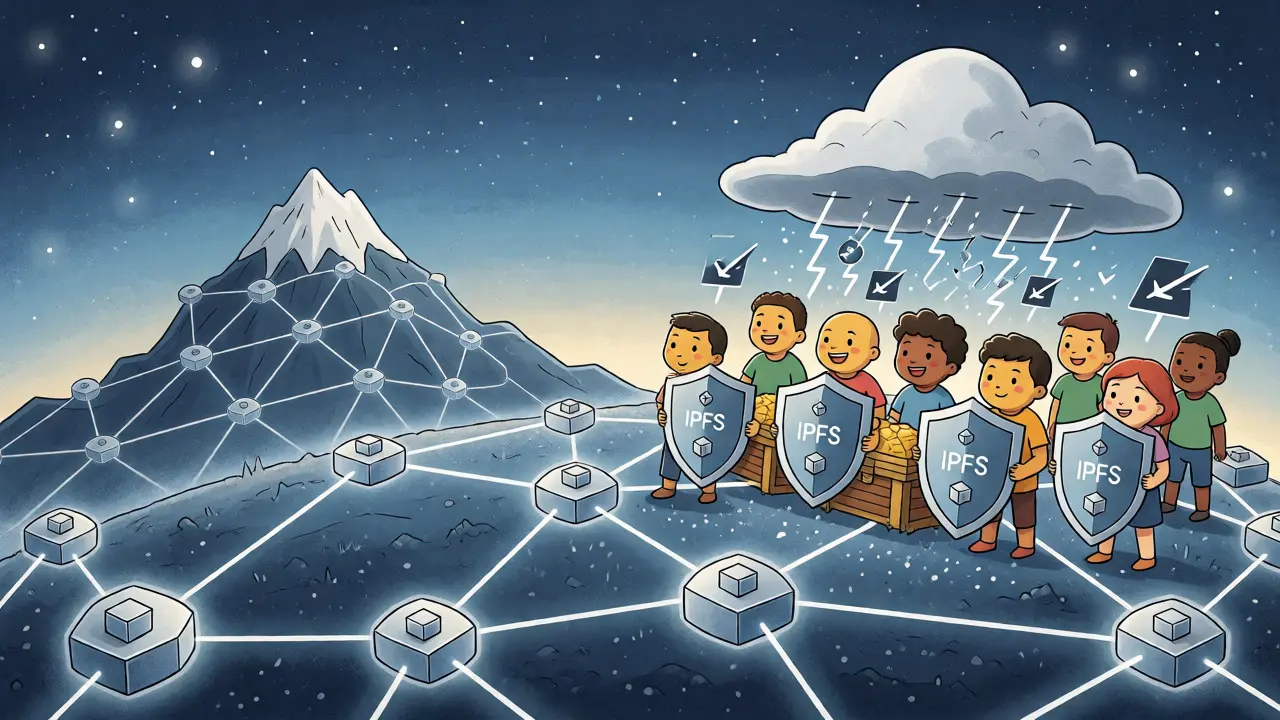
Notice that centralized HTTP hosting still accounts for nearly 40% of NFTs. This is alarming. If the company hosting your AWS S3 bucket goes bankrupt or changes their API, your NFT becomes a blank square. IPFS solves this by using content-addressed hashing. Even if one node goes down, others have copies. However, IPFS requires "pinning"-paying a service to keep your files available. If you stop paying Pinata, your file might eventually disappear from public nodes.
Cross-Platform Standards: Ethereum, Solana, and Beyond
Not all blockchains speak the same language. While Ethereum’s ERC-721 is the grandfather of standards, other chains have adapted it for their specific needs.
Solana’s approach is distinct. Because Solana transactions are cheap, Metaplex encourages storing more data directly on the ledger. This includes fields like `animation_url` for dynamic media and `properties` for detailed file specs. This reduces the "rug pull" risk where developers change the metadata after selling the NFTs. On Ethereum, changing metadata is easy and common; on Solana, it’s harder and more transparent.
Binance Smart Chain (now BNB Chain) uses BEP-721, which is nearly identical to ERC-721 but optimized for lower fees. Ronin Network, home to Axie Infinity, supports both ERC-721 and Enjin’s standards, focusing heavily on gaming-specific attributes. If you’re building cross-chain, you need to ensure your metadata schema maps correctly across these variations. The newly formed NFT Metadata Alliance is working on unifying these, but for now, fragmentation remains a challenge.
Common Pitfalls and How to Avoid Them
Technical errors kill more NFT projects than bad art does. Here are the most frequent issues found in audits:
- Relative Paths: Using `/images/ape.png` instead of `https://ipfs.io/ipfs/Qm.../ape.png`. Marketplaces don’t know where the root directory is. Always use absolute URIs.
- Broken CORS Headers: If you host on AWS or a private server, you must configure Cross-Origin Resource Sharing. Without it, browsers block the image load due to security policies. This affects nearly 29% of HTTP-hosted metadata.
- JSON Syntax Errors: A missing comma or quote invalidates the entire file. Use a validator before minting.
- Mutable Metadata Risks: If you haven’t locked your contract, you can change the URI later. Some buyers hate this because it allows for bait-and-switch tactics. Consider freezing the metadata post-mint if you want trust.
A notable failure case involved the project "DigitalDreams," which lost 92% of its value after its HTTP server went offline in November 2023. Four thousand tokens effectively became worthless JPEGs overnight. Contrast this with Bored Ape Yacht Club, which used robust IPFS pinning and comprehensive attributes, maintaining high liquidity even during market downturns.
Best Practices for Developers and Creators
If you’re launching a project, follow this checklist to bulletproof your metadata:
- Validate Early: Use tools like OpenSea’s Metadata Validator or Etherscan’s checker before deploying. Catching a typo in production is painful and expensive.
- Use Decentralized Storage: IPFS is the industry standard for a reason. Pair it with a reliable pinning service like Pinata or nft.storage. Don’t rely solely on your own web server.
- Standardize Attributes: Stick to the OpenSea-compliant schema. If you invent custom fields, ensure they don’t conflict with reserved keywords.
- Test Across Platforms: Check how your NFT looks on OpenSea, Blur, LooksRare, and mobile wallets. Rendering engines differ.
- Document Your Schema: Provide a JSON schema file alongside your metadata. This helps other developers integrate your NFTs into games or apps.
Remember, metadata is living documentation. As standards evolve-like the upcoming EU MiCA regulations requiring creator identification-your infrastructure needs to adapt. Staying updated with proposals like EIP-6453 for self-healing metadata systems will keep your assets future-proof.
Can I change my NFT metadata after minting?
Yes, but it depends on your smart contract design. Most ERC-721 contracts allow the owner (usually the developer) to update the `tokenURI`. However, many buyers prefer immutable metadata. To signal permanence, developers often "freeze" the metadata base URI after the sale ends, preventing further changes.
Why is my NFT image not showing up on OpenSea?
This is usually caused by one of three issues: incorrect CORS headers on your server, a relative rather than absolute URL in the `image` field, or the IPFS file not being pinned. Ensure your URL starts with `http://` or `https://` and that the file is accessible via a direct browser test.
What is the difference between ERC-721 and ERC-1155 metadata?
ERC-721 handles unique tokens, so each token has its own distinct metadata URI. ERC-1155 is a multi-token standard that can handle fungible and non-fungible items in one contract. Its metadata structure often uses a single URI template with a `{id}` placeholder, allowing efficient batch management for large collections like game items.
Is IPFS completely safe for NFT storage?
IPFS is decentralized, but it is not infinite memory. Files are removed if no nodes "pin" them. To ensure safety, use a professional pinning service that replicates your data across multiple geographic locations. Alternatively, consider Arweave for permanent, pay-once storage, though it is currently less common due to higher upfront costs.
Do I need to include all 12 fields in my metadata?
No, but it is highly recommended. Only `name` and `description` are strictly required by the ERC-721 standard. However, omitting fields like `image`, `external_url`, and `attributes` significantly hurts discoverability and resale value. Treat the OpenSea specification as the de facto minimum viable product for any serious project.