
Want to earn passive income with your crypto but don't know where to start? The biggest hurdle isn't the technology-it's figuring out how much money you actually need to put on the line. In the world of Proof of Stake is a consensus mechanism where token holders lock assets to validate transactions and secure the network., every blockchain sets its own rules. Some let you in for the price of a coffee; others demand thousands of dollars just to join the party.
I’ve spent years tracking these changes, living in Austin’s tech hub, and I’ve seen the landscape shift dramatically since the big moves in 2022 and 2023. Today, in 2026, the options are clearer than ever, but the numbers still vary wildly. This guide breaks down exactly what you need to stake on the major networks, whether you’re running your own node or using a simple exchange app.
The High Barrier: Solo Staking on Ethereum
If you are looking at Ethereum is the second-largest cryptocurrency network that transitioned to Proof of Stake in September 2022 via The Merge., you have two main paths: going it alone or joining a pool. Let’s talk about going it alone first, because this is the "gold standard" for decentralization.
To become a solo validator on Ethereum, you must deposit exactly 32 ETH. There is no wiggle room here. You cannot stake 31.9 ETH. You cannot stake 33 ETH (you’d just be running one validator with extra funds sitting idle). As of May 2026, with ETH prices fluctuating, this requirement represents a significant financial commitment-often tens of thousands of dollars depending on the market day.
Why so high? It’s about security. If a validator acts maliciously, they face "slashing," where part of their stake is burned. A high minimum ensures that validators have enough skin in the game to behave honestly. Running a solo node also means you need reliable hardware: a computer that stays online 24/7, fast internet, and storage capacity. It’s not just money; it’s effort.
- Minimum Stake: 32 ETH
- Hardware Needed: Dedicated PC or VPS with consistent uptime
- Risk Level: High (Slashing penalties apply)
- Reward Potential: Full protocol rewards (no middleman fees)
This path is best for enthusiasts who want full control and believe in strengthening the network’s independence. But for most people, 32 ETH is simply too steep a hill to climb alone.
Low-Entry Options: Pooled and Liquid Staking
What if you only have $10 or $100 of Ethereum? You aren’t locked out. The ecosystem has evolved to include pooled staking and liquid staking derivatives, which allow you to participate with tiny amounts.
Platforms like Robinhood is a financial services platform that allows users to stake cryptocurrencies with minimums as low as $1. or Blockchain.com is a digital asset management platform offering staking rewards accounts with a $1 USD entry point. make this incredibly easy. On Robinhood, you can stake ETH with as little as $1. They collect batches of ETH from many users to hit the 32 ETH threshold needed to activate a validator. You get a share of the rewards proportional to your contribution.
Here is the trade-off: you trust a third party. When you stake through an exchange or a pooled service, you are relying on them to manage the nodes and distribute the profits fairly. However, the convenience is hard to beat. For small holders, this is the only way to earn yield without becoming a sysadmin.
| Method | Minimum Entry | Control Level | Best For |
|---|---|---|---|
| Solo Validator | 32 ETH | Full Control | Tech-savvy users, maximalists |
| Exchange Pooled (e.g., Robinhood) | $1 - 0.1 ETH | None (Custodial) | Beginners, small holders |
| Liquid Staking (e.g., Lido, Rocket Pool) | ~0.01 ETH | Partial (Receive Token) | DeFi users wanting liquidity |

Polkadot: The Nominator Threshold
Moving away from Ethereum, let’s look at Polkadot is a multi-chain protocol that connects different blockchains, requiring nominators to stake DOT tokens.. Polkadot uses a unique model called Nominated Proof of Stake. Here, you don’t run a validator yourself unless you have serious resources. Instead, you become a "Nominator."
To be a Nominator, you must stake a minimum of 502 DOT. This number isn’t arbitrary; it’s designed to ensure that nominators have enough at stake to carefully vet the validators they support. If a validator misbehaves, the nominators who backed them also lose some of their stake. This aligns incentives perfectly.
In 2026, with DOT prices varying, 502 DOT might represent a few hundred to a few thousand dollars. It’s lower than Ethereum’s solo barrier but higher than the penny-staking options on exchanges. Polkadot’s system encourages active participation-you need to research which validators are honest and efficient before locking up your tokens.
Tezos: Baking and Delegation
Tezos is a self-amending blockchain platform that uses a Proof of Stake model where participants are called bakers. takes a different approach. To become a "Baker" (their term for a validator), you technically need to hold 8,000 XTZ and run a node. That sounds expensive, right?
But here’s the trick: you don’t have to do it alone. Tezos has a robust delegation system. If you have fewer than 8,000 XTZ, you can delegate your tokens to an existing Baker. You keep ownership of your coins, and you receive a share of the baking rewards. The Baker takes a small commission fee, but you get access to the ~5-6% APY that Tezos typically offers.
This model lowers the barrier to entry significantly while keeping the technical requirements for actual validation high. It’s a balanced approach that protects the network from spammy validators while allowing everyday holders to earn yields.
Why Minimums Matter: Security vs. Accessibility
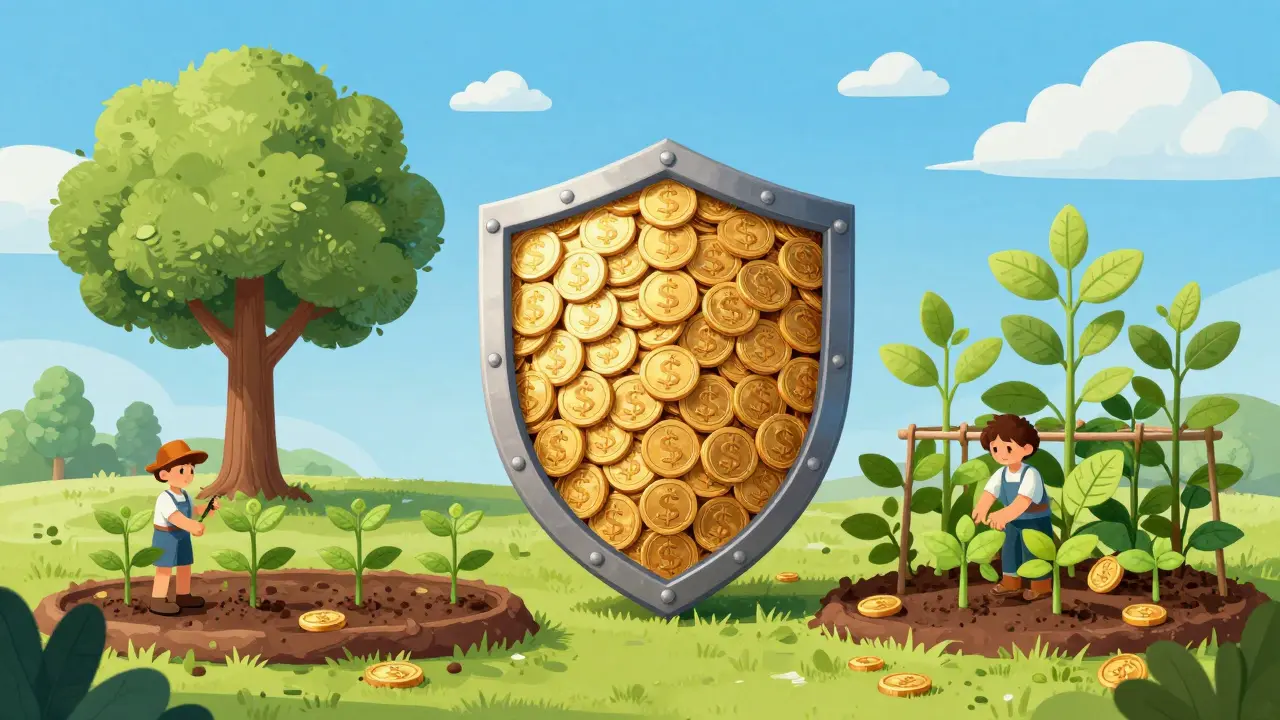
You might wonder why these minimums exist at all. Why not let everyone stake 1 coin? It comes down to economics and security.
Blockchains use "slashing" to punish bad behavior. If a validator tries to double-spend or go offline maliciously, they lose part of their stake. If the minimum stake was zero or near-zero, there would be no financial penalty for attacking the network. High minimums create a cost of attack that makes it economically unfeasible for bad actors to corrupt the chain.
However, high barriers can hurt decentralization. If only rich entities can afford to stake, power concentrates in few hands. This is why we see the rise of pooled staking and delegation. These mechanisms try to have it both ways: high economic security for the network, but low financial barriers for the individual user.
How to Choose Your Path
So, which route should you take? It depends on your goals and your tech comfort level.
- The Hands-Off Investor: Use an exchange like Coinbase, Binance, or Robinhood. Stake whatever amount you have ($1+). Accept that you are trusting the exchange. Good for simplicity.
- The DeFi Enthusiast: Use liquid staking protocols. You get a receipt token (like stETH) that you can use in other apps while earning staking rewards. Good for maximizing capital efficiency.
- The Network Guardian: Run a solo node if you meet the 32 ETH (Ethereum) or equivalent thresholds. Do this if you care deeply about decentralization and have the technical skills. Good for ideology and maximum rewards.
- The Active Delegator: Delegate on Polkadot or Tezos. Spend time researching validators. Good for those who want more involvement than an exchange but less hassle than a solo node.
Remember, staking is not risk-free. Prices can drop, smart contracts can have bugs, and validators can get slashed. Always do your own research before locking up your assets.
What is the absolute minimum amount to stake Ethereum?
If you are using a centralized exchange like Robinhood or Blockchain.com, you can start with as little as $1 USD worth of ETH. However, to run your own independent validator node, you must stake exactly 32 ETH.
Can I unstake my crypto anytime?
It depends on the platform and the blockchain. On exchanges, you can often unstake quickly, though there may be a waiting period. For solo Ethereum validators, exiting the queue can take weeks or even months depending on network congestion. Always check the specific exit policies before staking.
What happens if my validator gets slashed?
Slashing is a penalty where a portion of your staked tokens is destroyed. This happens if you act maliciously or fail critical duties (like being offline for too long in some protocols). Solo validators bear the full risk. Pooled staking spreads this risk across many users, reducing individual impact.
Is staking taxable?
In many jurisdictions, including the US, staking rewards are considered taxable income at the fair market value when received. Consult a tax professional for advice specific to your situation and local laws.
Which blockchain has the lowest staking requirement?
Many modern platforms and exchanges allow staking with amounts as low as $1. Among native protocols, Cosmos (ATOM) and Solana (SOL) allow delegation with very small amounts, often just 1 token or less, making them highly accessible for beginners.