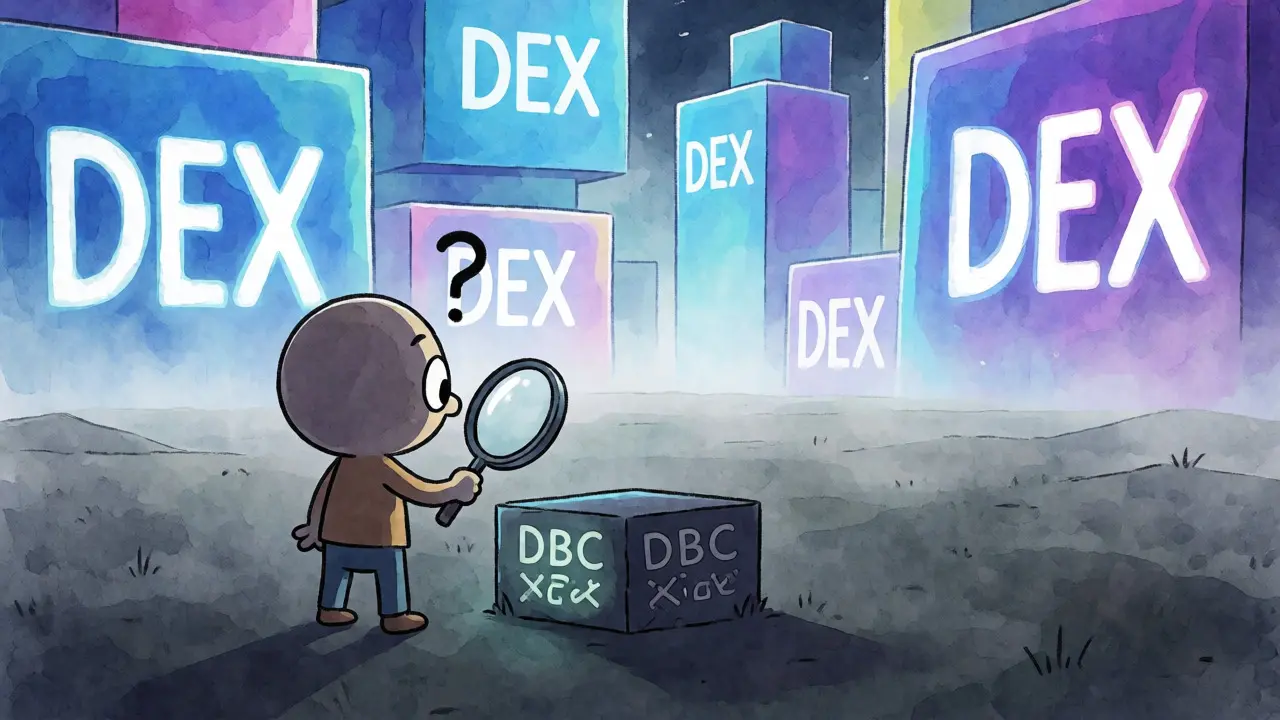
Ever feel like you're shouting into the void when you search for a new crypto exchange? You type in "Meteora DBC", hit enter, and get... crickets? Or worse, a bunch of confusing results that mix it up with its bigger sibling, Meteora DEX. It’s frustrating. You want to know if this platform is legit, if your money is safe, and if it actually offers something different from the hundreds of other exchanges out there. Here’s the hard truth: as of late 2026, Meteora DBC is a ghost in the machine compared to the massive liquidity hubs on Solana. But that doesn’t mean it’s worthless. In fact, understanding why it’s so quiet might save you from making a costly mistake.
The Big Mix-Up: DBC vs. DEX
Before we go any further, let’s clear the air. Most people searching for "Meteora" are actually looking for Meteora DEX, which is a heavyweight player in the Solana ecosystem. Meteora DEX isn't just an exchange; it's a liquidity layer. Think of it as the engine room that powers many other apps. It handles over $200 million in daily swaps and has nearly $800 million locked in its vaults. That’s serious muscle.
Then there’s Meteora DBC. The data suggests it exists-there’s a recorded 24-hour trading volume hovering around $11 million and about 141,000 weekly visits. But here’s the kicker: there is almost no public documentation, no whitepaper deep-dive, and no major news coverage specifically detailing its unique tech stack. Is it a centralized exchange (CEX) wrapper? A niche decentralized interface? Or perhaps a rebranding or a smaller fork that hasn’t gained traction? Without concrete technical specs, you’re walking in blind. This lack of transparency is the first red flag you need to wave at yourself before depositing a single dollar.
Why Liquidity Matters More Than Hype
You might think, "Who cares about the name? If the volume is $11 million, surely I can trade." Let’s break down what that number actually means. In the crypto world, $11 million in daily volume is tiny. For context, major players like Binance or even mid-tier CEXs handle billions. Even on Solana, platforms like Raydium or Jupiter often see volumes that dwarf this figure by orders of magnitude.
Low volume creates two specific problems for you as a trader:
- Slippage: If you try to buy or sell a decent amount of tokens, the price will move against you because there aren’t enough buyers or sellers at the current price point. You might end up paying 2-3% more than the market rate just to get your order filled.
- Spread: The gap between the highest bid and the lowest ask tends to be wider on low-volume exchanges. You lose money the moment you open a position because you have to cross that spread to close it.
If you’re a whale moving six figures, Meteora DBC might eat your profits alive. If you’re a small retail trader swapping $50 worth of memecoins, it might not matter as much. But you need to know where you stand.
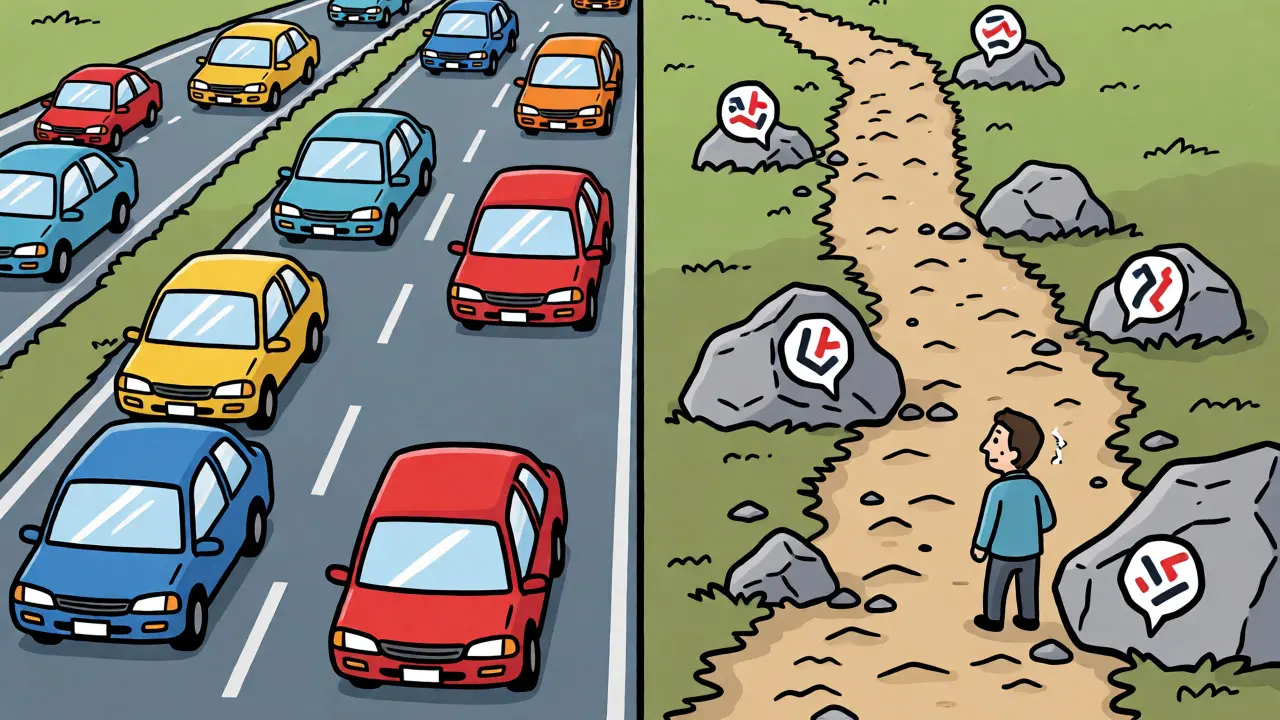
Security and Trust: The Missing Pieces
In crypto, trust is everything. With Meteora DEX, you can look at audits, check the team’s reputation, and see how long they’ve been operating. They have a track record. With Meteora DBC? We’re flying blind. There are no prominent security audits linked to a specific "DBC" entity in mainstream aggregators. No known bug bounties. No clear history of uptime incidents.
This raises a critical question: Where are your funds held? If Meteora DBC is a centralized exchange, who holds the private keys? Are they insured? If it’s a decentralized front-end interacting with smart contracts, which contracts are they using? Without this info, you’re essentially trusting a black box. Compare this to established protocols where every line of code is scrutinized by thousands of eyes. When you don’t know the architecture, you can’t assess the risk.
User Experience and Community Pulse
One of the few tangible signs of life is their Discord community. A quick glance shows activity, but it’s hard to gauge sentiment without diving into the chat logs yourself. Usually, healthy exchanges have active support channels, regular AMAs (Ask Me Anything), and transparent incident reports. If the Discord feels quiet or if support tickets take days to resolve, that’s a bad sign.
We also looked at user reviews. Unlike Binance or Coinbase, which have thousands of verified reviews on Trustpilot or Reddit, Meteora DBC has virtually zero footprint in these spaces. This absence of feedback is suspicious. Either the user base is too small to generate noise, or the experience is so unremarkable that no one bothers to talk about it. In crypto, silence usually isn’t golden-it’s risky.

How It Stacks Up Against the Competition
To help you decide, let’s put Meteora DBC in a realistic context. We’ll compare it to the actual leader, Meteora DEX, and a traditional competitor.
| Feature | Meteora DBC | Meteora DEX | Raydium |
|---|---|---|---|
| Platform Type | Unclear / Niche | Liquidity Protocol / DEX | DEX / Launchpad |
| Daily Volume (Est.) | $11 Million | $200+ Million | $100+ Million |
| Transparency | Low | High (Open Source) | High (Open Source) |
| Main Use Case | Unknown / Speculative | Advanced LPing & Swaps | Broad Trading & Farming |
| Risk Level | High (Info Gap) | Medium (Smart Contract Risk) | Medium (Smart Contract Risk) |
Notice the pattern? Meteora DBC lacks the defining attributes that make the others trustworthy. It’s not necessarily "bad," but it’s undefined. And in finance, undefined equals dangerous.
Should You Trade on Meteora DBC?
So, should you use it? Here’s my honest take. If you are a beginner, skip it. Go with a platform that has years of proven reliability, clear fee structures, and responsive customer service. You don’t need to hunt for obscure exchanges to find good prices anymore; aggregator tools like Jupiter route you to the best rates across multiple pools anyway.
If you are an advanced trader hunting for alpha, maybe Meteora DBC has some exclusive pairs or lower fees that aren’t listed elsewhere. But do a test run. Deposit a small amount-like $50-and try to withdraw it immediately. Check the confirmation times. Look for hidden withdrawal fees. If anything feels off, pull your money out. Never let curiosity outweigh caution when dealing with unknown entities in crypto.
The bottom line? Meteora DBC is currently a mystery box. Until they publish better documentation, undergo third-party audits, and grow their volume to competitive levels, treat them as experimental. Don’t park your savings there. Treat it like a speculative venture, not a banking solution.
Is Meteora DBC the same as Meteora DEX?
No, they appear to be distinct entities. Meteora DEX is a well-known, high-volume liquidity protocol on Solana with significant TVL and daily swap volumes. Meteora DBC is a separate platform with significantly lower volume and less public information available regarding its technology and team.
Is Meteora DBC safe to use?
Safety is difficult to verify due to a lack of public audits and detailed operational history. While it has active trading volume, the absence of widespread user reviews and technical documentation increases the risk compared to established exchanges like Binance or Coinbase, or even top-tier DEXs like Raydium.
What are the fees on Meteora DBC?
Specific fee structures are not widely documented in public sources. Users typically report standard blockchain transaction fees plus potential platform spreads. Always check the interface for exact maker/taker fees before executing large trades, as low-volume exchanges often have higher spreads.
Does Meteora DBC require KYC?
Information on KYC (Know Your Customer) requirements is scarce. Given its likely positioning within the broader Meteora ecosystem or as a niche CEX, it may have lighter KYC requirements than major fiat-on-ramps, but you should verify this directly on their site before attempting a withdrawal.
Which cryptocurrencies are supported on Meteora DBC?
The list of supported assets is not comprehensively published in major aggregators. However, given its connection to the Solana ecosystem, it likely supports SOL, USDC, and popular SPL tokens. Check their live order book for the most accurate and up-to-date list of tradable pairs.

Ankush Goyal
October 27 2026I am absolutely furious that people are still putting their hard earned money into unverified platforms like this. It is simply irresponsible to ignore the lack of audits. The moral obligation here is to protect your capital from fraud and incompetence. You must read every line of code before trusting a single cent to an unknown entity. If you don't care about security then you don't care about financial freedom. This platform is a trap for the lazy investor who wants easy gains without doing homework. I have seen too many friends lose everything because they didn't check the whitepaper. We need to be stricter with these new exchanges entering the market. Transparency is not optional it is mandatory for any serious financial institution. Please stop supporting ghost projects that offer no real value or utility. Your wallet deserves better than a mystery box experiment. Do not let greed blind you to the obvious red flags staring you in the face.