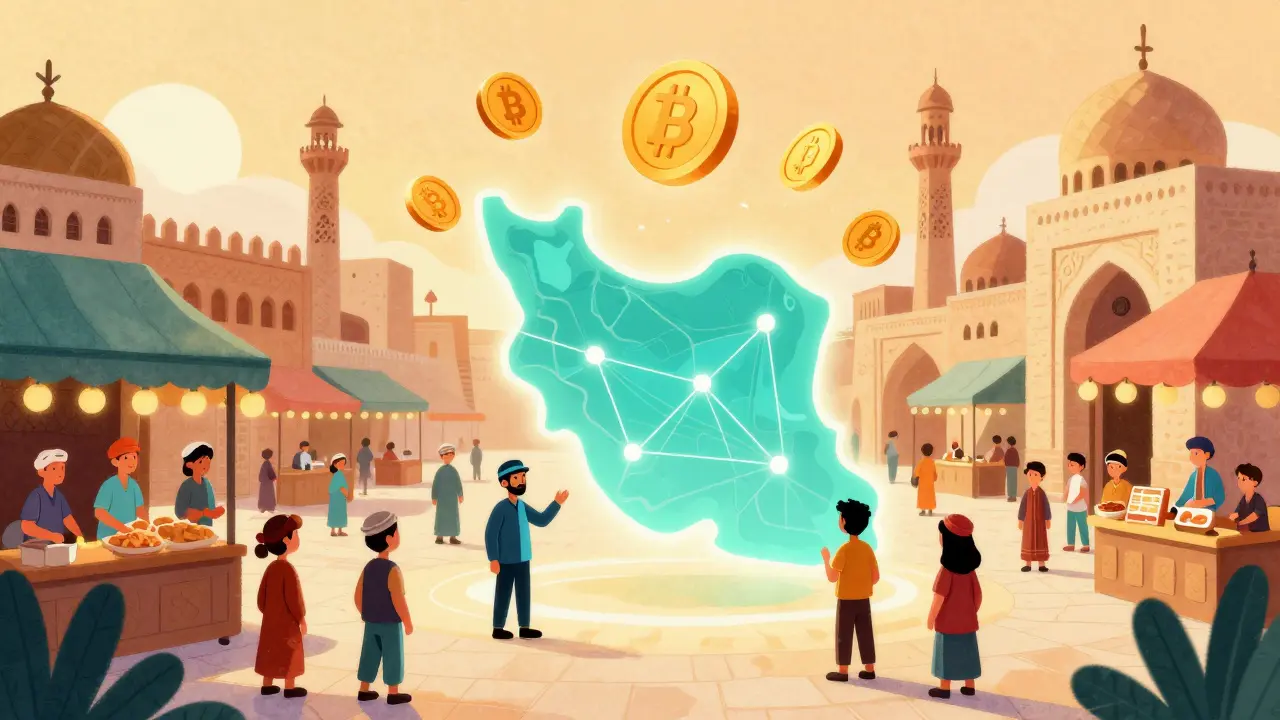
Cryptocurrency in Iran isn't just a financial tool; it's a lifeline. With sanctions tightening the economic noose, many citizens rely on digital assets to save their purchasing power against inflation. But navigating the rules here is tricky. As we stand in late March 2026, looking back at the whirlwind changes of 2025, the landscape has shifted dramatically from total ambiguity to strict government oversight.
The core question remains: is crypto legal in Iran? The short answer is yes, but with heavy caveats. You can mine and trade, but only if you follow the book. That book was rewritten significantly early this year. In January 2025, the Central Bank of Iran took control, establishing itself as the sole authority over what they call "ramzpol" or digital currencies. Before then, regulations were fragmented across different ministries. Now, there is a single chain of command that demands transparency.
The Regulatory Backbone: Who Controls What?
To understand the environment, you have to know who pulls the strings. The Central Bank of Iran (CBI) holds the master key. Under a major directive issued by President Masoud Pezeshkian in January 2025, the CBI became responsible for licensing every player in the market. This isn't just about setting up shop; it's about monitoring every transaction.
If you want to run a crypto business, you deal directly with the CBI. They demand access to all your data, statistics, and records. There are no shadows allowed. This centralization was designed to stop money laundering and prevent people from using crypto to bypass international sanctions. While this makes compliance heavy, it also creates a defined path for legitimate operators. The ministry of Justice and the Securities and Exchange Organization play supporting roles, but the real power lies with the Central Bank.
Another critical entity in this mix is the National Iranian Money Changer Association, often referred to as NIMA. If you are a miner and legally sell your coins, this is where the funds go. The system requires miners to offload their earnings through designated channels to ensure the state captures revenue. It turns crypto into a foreign exchange mechanism rather than just private savings.
Mining Regulations: Power Grid Protection
Mining is huge in Iran because electricity used to be incredibly cheap. However, that era ended years ago due to massive strain on the national power grid. By 2019, the government had already legalized mining to bring operations above ground, but enforcement remained patchy until recently.
Under the current rules effective through 2025, you cannot simply plug machines into the wall. The Ministry of Energy sets strict consumption limits. Legal miners must pay export-level tariffs. This is a major cost difference. Instead of subsidized domestic rates, you are paying industrial prices pegged to international exports. It kills the profit margins for small-scale basement miners but protects the grid from collapse.
Licensing comes from the Ministry of Industry, Mine and Trade. By mid-2025, over 1,000 licenses had been issued, yet enforcement shows that around 95% of mining activity still happened illegally according to industry estimates. The government launched a crackdown in August 2025, encouraging citizens to report illegal farms. They dismantled hundreds of unauthorized setups and seized quarter-million devices. If you are mining without a license today, the risk of losing hardware is severe.

Taxation and Capital Gains Changes
For a long time, the tax picture was fuzzy. That changed completely when the Law on Taxation of Speculation and Profiteering was enacted in August 2025. This legislation formally classified cryptocurrency alongside gold and forex as speculative assets.
This means capital gains tax is now a reality. If you trade coins for profit, those profits are taxable. The implementation started in the third quarter of 2025, giving exchanges a few months to integrate reporting tools. The logic behind this was simple: treat digital assets like any other investment vehicle. You can't buy and sell freely without declaring income. Economic Affairs Minister Hemmati supported this move, arguing it organized the market rather than punishing users.
Compliance involves strict Know Your Customer (KYC) protocols. Every exchange, broker, or platform operating within the country must verify identities thoroughly. Brokers conducting rial transactions must use transparent accounts approved by the central bank. There is no anonymity in legal trading anymore. This aligns with global Anti-Money Laundering standards, even if the rest of the world views the region differently due to sanctions.
Market Dynamics: Exchanges and Stablecoins
How does this affect the average trader? The domestic market relies heavily on a few major players. Nobitex dominates the scene, processing the vast majority of local volume. Even with overall crypto flows dipping by 11% in the first half of 2025, Nobitex held onto its lead position. Trust in regulated platforms surged when external pressure mounted on stablecoin issuers.
We saw a major shift in July 2025 regarding USDT. When Tether froze addresses suspected of having Iranian exposure, it spooked the market. Almost overnight, exchanges and influencers urged users to swap their holdings into DAI. To make this work, the ecosystem migrated toward the Polygon network. This wasn't just speculation; it was a survival tactic. DAI offered liquid stability without the same immediate compliance risks as USDT under the new scrutiny.
These moves highlight how resilient the market is. Despite geopolitical headwinds, Iranians found ways to keep transacting. The drop in total volume-reaching roughly $3.7 billion in flows by mid-2025-shows caution, but it doesn't indicate abandonment. People still need a hedge against inflation rates that regularly double-digit. Crypto remains the most accessible asset class for that purpose.

Geopolitics and International Settlements
You cannot talk about Iranian crypto without mentioning sanctions. The government uses digital assets not just for internal finance but for international trade. Reports from early 2025 indicate discussions with Russia to create gold-backed stablecoins for cross-border payments. This strategy aims to bypass the SWIFT banking system entirely.
While some Western analysts focus on illicit procurement, the data suggests a different picture for regular citizens. According to analytics firm TRM Labs, illicit transactions made up less than 1% of total activity in 2025. Most users were ordinary people protecting savings. The narrative is complex: the technology serves sanctioned entities seeking imports, but simultaneously, it empowers families trying to keep rent affordable.
The relationship between regulators and the community is evolving too. Earlier fears of a total ban subsided after the formalization of the 2025 framework. Instead of destroying the industry, Tehran chose to regulate it. This allows them to track the flow of money while keeping the economic valve open during periods of instability.
Practical Advice for Users
If you live in Iran or operate with Iranian counterparts, here is what you need to do immediately. First, avoid unlicensed mining hardware unless you are prepared to lose it. The raids in August 2025 proved authorities will confiscate gear. Second, ensure your trades go through licensed exchanges like Nobitex or others with CBI approval. Using P2P markets is technically possible but carries higher risk if you need to cash out for fiat Rials.
Be aware of the stablecoin volatility. Just because you hold a coin doesn't mean you can withdraw it easily. Keep liquidity options like DAI handy rather than relying solely on Tether. Finally, prepare for tax filings. The August 2025 law means keeping detailed records is mandatory, not optional. The Ministry of Finance is actively tracking these transactions through the centralized ledger systems connected to the banks.
Is mining cryptocurrency legal in Iran?
Yes, mining is legal but strictly regulated. You need a license from the Ministry of Industry, Mine and Trade. Unauthorized mining farms face seizure of equipment and significant fines under current energy laws.
What taxes apply to crypto in 2025?
The Law on Taxation of Speculation introduced capital gains tax on crypto trading in August 2025. Crypto is treated similarly to gold and forex for tax purposes, requiring declared profits to be paid to the state.
Which stablecoins should I use in Iran?
Due to restrictions on USDT, DAI on the Polygon network is recommended for better accessibility and lower compliance friction. However, always check current exchange listings as regulations change frequently.
Who regulates the cryptocurrency market?
The Central Bank of Iran (CBI) is the primary regulator since early 2025. They oversee licensing, AML compliance, and maintain direct access to transaction data for all registered entities.
Can I trade on P2P platforms?
P2P trading is risky and often unregulated. Legitimate rials transactions must occur through approved CBI channels to ensure legal protection and compliance with money laundering laws.


Zackary Hogeboom
April 1 2026This update on the Central Bank taking over really changes the game for everyone holding bags. It feels like they finally want to stop hiding everything behind closed doors. Seeing the shift to DAI instead of Tether is smart because the sanctions are actually biting hard out there. I know a lot of miners just wanted to plug in and run without asking permission though. The cost difference on electricity sounds brutal for anyone trying to do it small scale. Honestly hoping the new tax rules dont cause a total panic sell off across the board. Transparency is good but privacy was kind of the selling point originally. It is interesting that they are trying to legitimize it instead of banning it outright like other places did. Maybe they see the potential revenue stream too well to let it slide. We will see how the exchanges handle the KYC requirements coming next month.