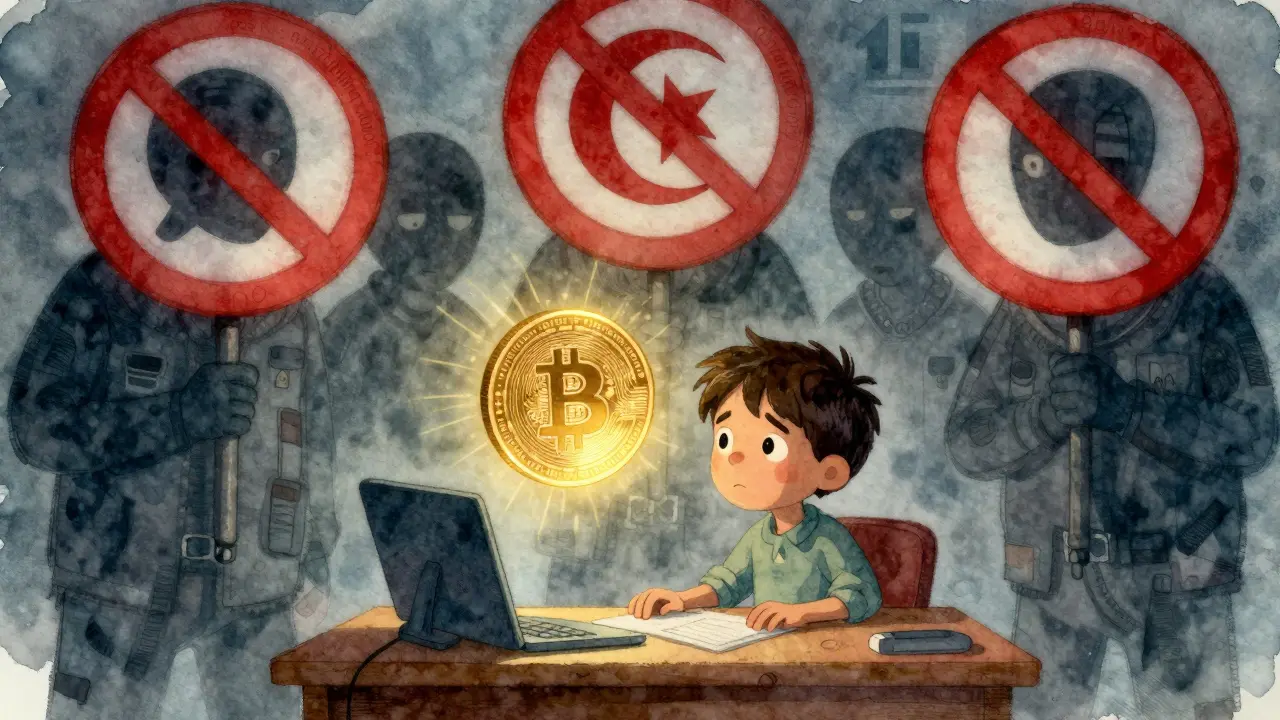
Buying Bitcoin or mining Ethereum in Tunisia isn't just a financial risk-it's a criminal offense. If you are holding digital assets or planning to trade them while living in Tunisia, you are operating outside the law. The Central Bank of Tunisia (BCT) has enforced a strict prohibition on all cryptocurrency activities since 2018, making it one of the most restrictive jurisdictions in the world. For many users, the appeal of decentralized finance outweighs the fear of legal consequences, but the penalties here are real: fines, asset seizure, and up to five years in prison.
This guide breaks down exactly what is illegal, how the government enforces these rules, and what happens if you get caught. Whether you are a casual trader, a miner, or a business owner looking to accept crypto payments, understanding the legal landscape is critical to protecting yourself.
The Legal Framework: Why Crypto Is Banned in Tunisia
To understand the risks, you first need to know why the ban exists. The Central Bank of Tunisia (BCT) issued a directive in 2018 that explicitly prohibits the use of virtual currencies. This wasn't just a warning; it was a comprehensive legal barrier designed to protect the national currency, the Tunisian Dinar, from volatility and capital flight.
The ban covers every aspect of the crypto ecosystem:
- Trading: You cannot buy, sell, or exchange cryptocurrencies through any platform.
- Mining: Operating mining hardware or importing ASIC rigs is prohibited.
- Payments: Merchants cannot accept crypto for goods or services.
- Financial Services: Banks and payment processors are forbidden from facilitating crypto transactions.
The logic behind this is straightforward for the regulators: they want to maintain strict control over monetary policy. By banning crypto, they prevent citizens from bypassing foreign exchange controls. However, for the average user, this means there is no legal pathway to participate in the global crypto market from within Tunisia.
Who Enforces the Ban? Key Regulatory Bodies
You aren't just dealing with one agency. Three main entities work together to enforce these restrictions, creating a multi-layered surveillance net.
First, the Central Bank of Tunisia sets the policy. They monitor the banking sector to ensure no money flows into or out of crypto exchanges. Second, the Financial Market Council (CMF) oversees capital markets. While they don't regulate crypto directly because it's banned, they would handle any future security tokens if regulations ever change. Third, the National Anti-Money-Laundering Commission (CTAF) is perhaps the most dangerous entity for traders. They track suspicious financial activities. If your bank account shows unusual patterns-like frequent transfers to offshore accounts-they report it to CTAF, which can trigger an investigation.
Customs authorities also play a role. They actively scan imports for mining equipment. If you try to bring in high-end GPUs or ASIC miners under the guise of computer parts, they have the legal authority to seize the equipment immediately.
Penalties: Fines, Seizure, and Prison Time
Let’s talk about the consequences. Ignoring the ban isn’t a minor infraction like speeding. Under Tunisia’s currency control code, violations carry severe penalties.
If authorities catch you trading, mining, or using crypto for payments, you face:
- Imprisonment: Up to five years in jail for serious violations.
- Fines: Significant financial penalties based on the volume of transactions.
- Asset Seizure: Any profits made from illegal crypto activities are considered illicit gains. The state will seize them without compensation.
For businesses, the risks are even higher. Companies are legally prohibited from recording crypto assets on their local accounting books. If you run a business and secretly accept Bitcoin, you not only risk prison time but also destroy your company’s legal standing. Operating an exchange or marketing tokens carries the same maximum penalty as individual trading: five years plus fines.
Banking Barriers: The Financial Firewall
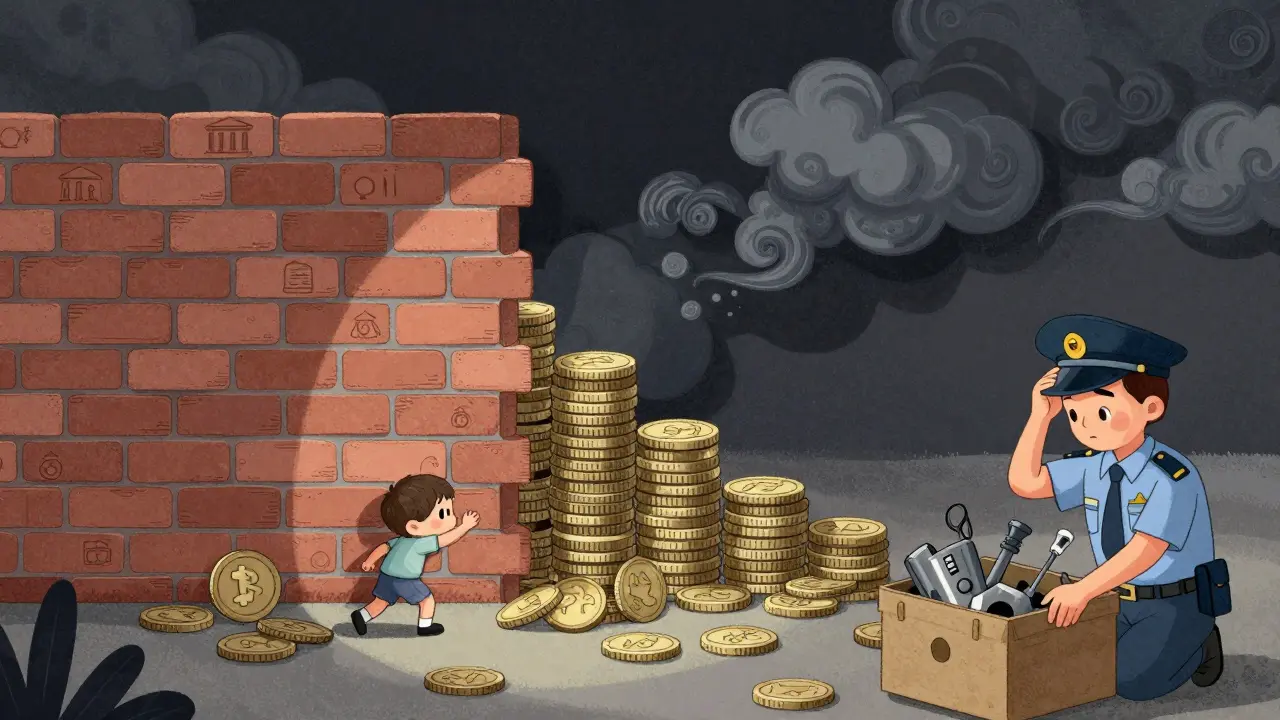
One of the biggest hurdles for Tunisian crypto users is the banking system. All banks operating in Tunisia are legally required to deny any crypto-related transfers. This creates a complete infrastructure barrier.
Here is how it works in practice: You cannot simply wire money to Binance or Coinbase. If you try to send funds to an international exchange, your bank will likely block the transaction. Even if you use a peer-to-peer (P2P) method where someone sends you cash locally and you transfer USDT digitally, the digital side still triggers alerts. Banks must report suspicious transactions to the CTAF. Frequent deposits from unknown sources followed by withdrawals to foreign accounts look exactly like money laundering to an algorithm.
Many Tunisians have experienced sudden account freezes. These aren't always permanent, but they disrupt your daily life. You lose access to your salary, savings, and ability to pay bills until the investigation concludes. For students or freelancers relying on crypto for income, this can be devastating.
The Sandbox Exception: What Is Allowed?
Is there any legal way to use blockchain technology in Tunisia? Yes, but it’s highly restricted. The BCT operates a Regulatory Sandbox for fintech startups. This program allows selected companies to test blockchain applications under strict supervision.
Startups like VFunder (crowdfunding), Hydro E-Blocks (carbon tracking), and No Phobos (AI-generated NFTs) have operated within this sandbox. However, note that these projects typically host their infrastructure offshore to maintain compliance. The sandbox does not allow public trading of cryptocurrencies. It is focused on utility-using blockchain for supply chain transparency or record-keeping on permissioned ledgers controlled by the government.
Individuals cannot apply for the sandbox. It is exclusively for vetted businesses working on specific non-financial blockchain use cases. If you are an individual trader, this exception does not apply to you.

Real-World Risks for Traders and Miners
Despite the ban, demand for crypto in Tunisia remains high. Many citizens turn to informal networks to buy and sell digital assets. Here is what that looks like and why it’s risky.
Peer-to-Peer (P2P) Trading: Many users rely on encrypted messaging apps and in-person cash meetings to trade. While this avoids direct bank transfers, it exposes you to scams and theft. More importantly, if you are carrying large amounts of cash for crypto purchases, you attract attention. Police raids on known crypto hubs have occurred, leading to arrests.
Mining Operations: Some enthusiasts attempt to mine at home using hidden setups. The electricity costs in Tunisia are subsidized, which makes mining attractive, but the risk is disproportionate. Customs agents inspect shipments closely. If you order mining rigs online, they may be seized at the border. Additionally, running high-power hardware draws significant electricity, which can flag your address with utility providers if consumption spikes abnormally.
Using VPNs and Offshore Accounts: Many Tunisians use Virtual Private Networks (VPNs) to access blocked exchanges and open accounts with foreign brokers. While technically difficult to trace for small amounts, this activity is still illegal. If your IP address is linked to a financial transaction that violates the 2018 directive, you are liable. There have been documented cases of individuals facing legal action after their offshore activities were discovered through international cooperation between financial intelligence units.
| Activity | Legal Status | Primary Risk |
|---|---|---|
| Buying/Selling Crypto | Illegal | Account freeze, fines, imprisonment |
| Crypto Mining | Illegal | Equipment seizure, customs violation |
| Accepting Crypto Payments | Illegal | Business closure, criminal charges |
| Blockchain Development (Sandbox) | Limited Legal | Compliance failure, project shutdown |
| Offshore Trading via P2P | Illegal | AML investigation, asset seizure |
Future Outlook: Will the Ban Lift?
As of 2026, there is no sign of a full legalization of cryptocurrency in Tunisia. However, the regulatory landscape is slowly evolving. Parliament has discussed classifying cryptocurrencies as "virtual assets" subject to stricter licensing requirements aligned with FATF (Financial Action Task Force) travel rules. This suggests a move toward regulation rather than outright abolition, but such a shift is years away.
The brain drain effect is already visible. Many Tunisian tech entrepreneurs and developers are relocating to countries with clearer crypto frameworks, such as Canada, Switzerland, or nearby European nations. This deprives the local economy of innovation and talent. Until the BCT changes its stance, the risk-reward ratio for Tunisian crypto users remains heavily skewed toward risk.
Practical Advice for Navigating the Landscape
If you are currently engaged in crypto activities in Tunisia, consider these steps to mitigate immediate danger, though none eliminate legal liability:
- Avoid Large Transactions: Small, occasional trades are less likely to trigger AML alerts than frequent, high-volume movements.
- Do Not Use Local Banks for Crypto: Never link your primary Tunisian bank account to any exchange, even indirectly. Use separate, isolated methods if you proceed illegally.
- Stay Informed on Sandbox Updates: If you are a developer, focus on blockchain utility projects that might qualify for the BCT sandbox. This is the only legal avenue for professional engagement.
- Consult a Lawyer: Before taking any action, speak with a legal expert specializing in Tunisian financial law. The boundaries can be ambiguous, and professional advice is crucial.
Remember, the goal of this article is to inform you of the risks. The safest course of action under current law is complete avoidance of cryptocurrency activities. The potential loss of freedom and assets far outweighs the gains from trading in a hostile regulatory environment.
Is it legal to own Bitcoin in Tunisia?
No. The Central Bank of Tunisia (BCT) prohibits all forms of cryptocurrency ownership, trading, and usage. Holding crypto is considered a violation of the 2018 directive and can lead to legal action, including fines and imprisonment.
What happens if I get caught mining crypto in Tunisia?
If caught mining, your equipment can be seized by customs or police. You may also face fines and up to five years in prison under the currency control code. Importing mining hardware is specifically targeted by authorities.
Can Tunisian banks process crypto transactions?
No. Tunisian banks are legally required to block any transactions related to cryptocurrencies. Attempting to send money to a crypto exchange will likely result in the transaction being denied and reported to anti-money laundering authorities.
Are there any legal exceptions for blockchain technology?
Yes, but only for approved startups in the BCT's regulatory sandbox. These projects focus on utility applications like supply chain tracking, not financial trading. Individuals cannot participate in the sandbox.
Will Tunisia legalize cryptocurrency in the near future?
As of 2026, there is no immediate plan to fully legalize crypto. Discussions are ongoing regarding stricter regulation of virtual assets, but the current ban remains in force. Full legalization is unlikely in the short term.


dan kaffeman
June 7 2026It is absolutely pathetic that people in Tunisia are still trying to play with fire while their own government tells them exactly where the line is. You don't get to complain about the rules when you live in a country that explicitly bans this stuff. The Central Bank isn't out to get you; they are protecting the national currency from your greed and stupidity. If you can't handle the basic legal framework of your own nation, maybe you shouldn't be trading Bitcoin. It's not a victimhood issue, it's a compliance issue. Stop whining about 'decentralized finance' and start respecting the sovereignty of the state. This ban exists for a reason, and if you think you're smarter than the law, you're just setting yourself up for a prison cell. Wake up.