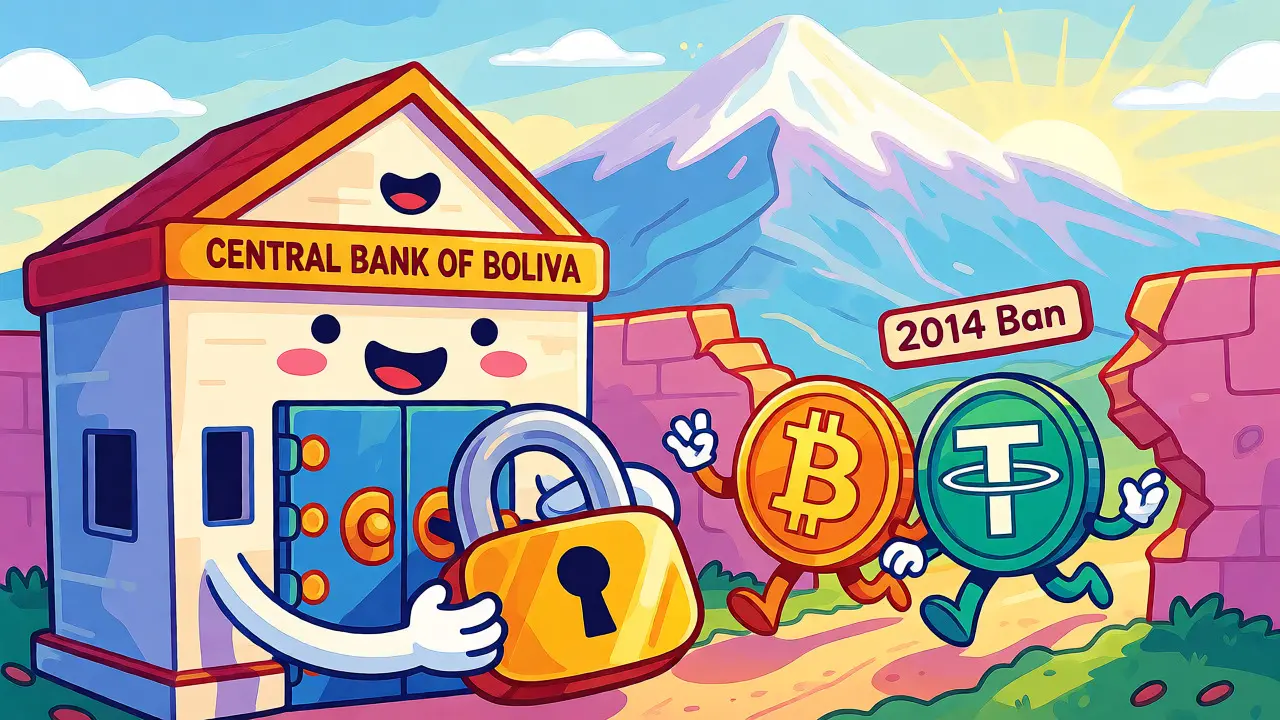
Did you know that just two years ago, trading Bitcoin in Bolivia could get you flagged by the central bank as a financial rebel? For a decade, Bolivia maintained one of the strictest crypto prohibitions in Latin America. But in June 2024, everything changed. The Central Bank of Bolivia (BCB) officially lifted the ban, opening the door for regulated digital asset transactions. Yet, this isn't a free-for-all. If you're thinking about buying, selling, or holding cryptocurrency in Bolivia today, you need to understand exactly what triggers legal trouble.
The shift from total prohibition to regulated acceptance created a complex landscape. While owning crypto is now legal, doing it "wrong" can still land you in hot water with regulators. This guide breaks down the current legal penalties, who enforces them, and how to stay compliant in 2026.
The Shift From Prohibition to Regulation
To understand the penalties, you have to look at where Bolivia came from. Since 2014, the BCB had declared cryptocurrencies illegal for use within the country's payment system. Any attempt to trade or use digital assets was technically an offense against monetary sovereignty. There were no specific fine amounts published because the activity itself was banned outright.
That era ended with Board Resolution N°082/2024. This document repealed the old prohibitions and introduced the concept of Electronic Payment Instruments (EPI) for virtual assets. Suddenly, Bitcoin and stablecoins like USDT weren't contraband; they were regulated commodities. However, the government didn't hand over the keys to the vault without checks. They established a framework where all transactions must flow through authorized channels. Violating these channel requirements is where the modern penalty structure kicks in.
Who Watches the Watchers? Regulatory Bodies Involved
You might think one agency handles all crypto issues, but Bolivia uses a multi-agency approach. Knowing which body has jurisdiction helps you anticipate enforcement risks.
- Central Bank of Bolivia (BCB): The primary regulator. They set the rules for monetary policy and define what constitutes a valid electronic payment instrument.
- Financial System Supervisory Authority (ASFI): ASFI oversees the banks and financial institutions that process crypto transactions. If your bank freezes your account due to suspicious crypto activity, ASFI is likely involved in the background review.
- Financial Investigations Unit (UIF): This unit focuses on anti-money laundering (AML). They monitor large or irregular transfers to ensure crypto isn't being used to hide illicit funds.
These bodies don't work in silos. Banks are required to report daily transaction data to the BCB and cross-reference it against international sanctions lists. If you try to move money through a non-compliant route, you trigger alerts across all three agencies.
Current Legal Penalties for Non-Compliance
So, what actually happens if you break the rules? Unlike some countries with fixed fines for minor infractions, Bolivia’s current enforcement model is discretionary and case-by-case. There is no public schedule of flat fees for, say, using a decentralized exchange (DEX) directly from your wallet without a licensed intermediary.
Instead, penalties focus on unauthorized off-exchange transfers. If you bypass licensed banks or authorized electronic payment channels, you risk regulatory enforcement actions. These can include:
- Account Freezes: Banks may freeze accounts linked to unverified crypto inflows until the source of funds is proven legitimate.
- Transaction Reversals: In extreme cases, transactions deemed non-compliant with EPI regulations can be challenged or reversed.
- Administrative Sanctions: Businesses operating without proper registration face fines and potential shutdowns. For individuals, repeated violations can lead to closer scrutiny of all financial activities.
It’s crucial to note that simply owning crypto is not penalized. The penalty arises from how you transact. Using a peer-to-peer (P2P) method that doesn’t leave a clear audit trail through a licensed entity is the highest-risk behavior right now.

Tax Implications: Where Money Changes Hands
Penalties aren’t just about breaking banking rules; they’re also about tax compliance. Bolivia’s tax code treats individual traders differently than businesses.
| Activity Type | Tax Treatment | Risk of Penalty |
|---|---|---|
| Individual Trading (Buy/Sell) | No specific capital gains tax currently enforced on personal profits. | Low, provided funds enter via authorized channels. |
| Business Operations (Mining/Staking) | Subject to 25% Corporate Income Tax (CIT). | High if profits are underreported or hidden. |
| Salary/Payroll Settlement | Allowed via stablecoins (USDC/USDT) through licensed banks. | Medium if processed outside authorized institutions. |
For individuals, the absence of a specific capital gains tax is a huge benefit. You keep more of your profit compared to neighbors like Argentina or Brazil. However, if you run a business-say, a mining farm or a staking service-you owe 25% CIT on those earnings. Failing to declare this income exposes you to standard Bolivian tax evasion penalties, which can include back-taxes plus interest and fines.
Authorized Channels vs. Gray Markets
The core of Bolivia’s new strategy is control through intermediaries. You cannot just open an app and buy crypto anonymously. All transactions must go through licensed banks or authorized electronic payment providers.
Major local banks have adapted quickly. Banco Bisa, for instance, launched a stablecoin custody service in late 2024, focusing on Tether (USDT). This means if you want to convert Bolivianos (BOB) to USDT legally, you do it through Banco Bisa or similar licensed entities. The bank reports this transaction to the BCB. This transparency protects you from suspicion.
What about global exchanges like Binance? While many Bolivians use Binance P2P, the legal safety net depends on the settlement leg. If you send BOB from a licensed bank account to a seller and receive USDT into a verified wallet, you are generally safe. If you use cash or unregistered third-party processors, you step into a gray zone where enforcement discretion applies.
Real-World Enforcement Trends in 2026
Since the ban lift, crypto adoption has exploded. The BCB reported a 630% increase in transactions within a year, jumping from $46.5 million to $294 million in early 2025. Most users (86%) are individuals, primarily men using stablecoins for savings and remittances.
Enforcement has focused less on punishing small traders and more on systemic integrity. The government launched public awareness campaigns to warn citizens about scams rather than threatening jail time for buyers. This suggests a consumer-protection-first mindset. However, for large-scale operators or those moving significant volume, the Financial Investigations Unit remains active. They look for patterns that suggest money laundering, such as rapid layering of funds across multiple wallets without economic justification.
Bolivia is also cooperating internationally. A Memorandum of Understanding with El Salvador’s National Commission for Digital Assets (CNAD) allows for shared regulatory expertise. This means Bolivia is learning from its neighbor’s Bitcoin City experiment while tightening its own oversight mechanisms.
How to Stay Compliant: A Checklist
If you want to trade crypto in Bolivia without looking over your shoulder, follow these practical steps:
- Use Licensed Intermediaries: Always fund your purchases through a Bolivian bank account recognized by the BCB. Avoid direct cash deposits into exchange accounts if possible.
- Stick to Stablecoins for Business: If you pay employees or settle invoices, use USDT or USDC through authorized channels. Do not attempt to pay suppliers directly in volatile assets like Bitcoin unless explicitly agreed upon and documented.
- Keep Detailed Records: Save screenshots of every transfer, including bank references and wallet addresses. If ASFI or UIF asks questions, you need to prove the source of funds.
- Register Your Business: If you mine or stake professionally, register with the relevant financial authorities. Pay your 25% CIT accurately.
- Avoid Off-Ramp Chaos: When converting back to BOB, use the same authorized path. Rapid conversions between different unregulated platforms can trigger flags.
Frequently Asked Questions
Is Bitcoin legal tender in Bolivia?
No. The Boliviano remains the sole legal tender. Cryptocurrencies are recognized as electronic payment instruments but cannot be forced upon merchants as a mandatory form of payment like legal currency.
Do I have to pay taxes on my crypto profits?
Currently, there is no specific capital gains tax for individual traders. However, if you operate a business related to crypto (like mining), you are subject to the standard 25% Corporate Income Tax on profits.
Can I use any exchange I want?
You can access global exchanges, but the funding and withdrawal legs should ideally involve licensed Bolivian banks or authorized electronic payment providers to ensure compliance with BCB reporting requirements.
What happens if I trade off-exchange?
Trading outside authorized channels carries enforcement risk. While specific fines vary, you may face account freezes, requests for proof of funds, or administrative sanctions if the activity appears to circumvent monetary controls.
Is mining legal in Bolivia?
Yes, mining is permitted. However, it is treated as a commercial activity. Miners must register their operations and pay corporate income tax on their earnings.