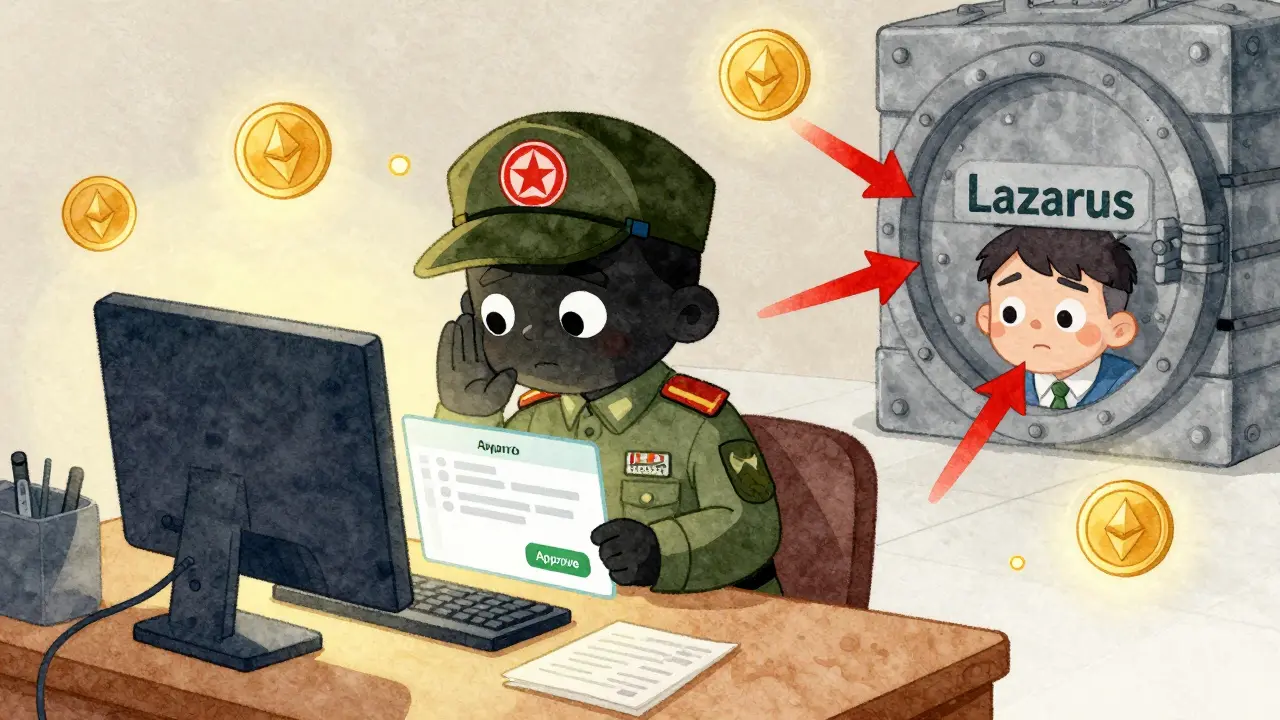
Lazarus Group isn't your typical hacker crew. They don't work for ransomware gangs or underground forums. They're a state-backed cyberwarfare unit from North Korea, and their main job is stealing cryptocurrency to fund nuclear weapons. In February 2025, they pulled off the biggest crypto heist in history-$1.5 billion from Bybit. That’s not a typo. One attack. One day. Over a billion dollars vanished into digital shadows.
How the Bybit Heist Actually Happened
Most people think hackers break into servers. Lazarus doesn’t need to. They break into people. The attack started with a simple email. Not a phishing link, not a fake invoice. A carefully crafted message sent to a Bybit employee who handled wallet approvals. The email looked real. It came from a trusted internal domain. The target clicked. That’s all it took. From there, the attackers moved slowly. They studied how Bybit’s multi-signature cold wallet system worked. They waited. They watched. They learned when the CEO, Ben Zhou, would normally approve transfers. Then they struck. Here’s the twist: they didn’t touch the wallet keys. They didn’t brute-force anything. Instead, they hacked the frontend-the web interface Ben Zhou used to sign off on transactions. They slipped in malicious code that made the transaction look normal on screen. When Ben approved what he thought was a $10 million transfer to a legitimate partner, the code silently redirected 401,000 Ethereum-worth $1.46 billion-to a wallet controlled by Lazarus. The system didn’t fail. The person did. And that’s the scary part. Multi-signature wallets are supposed to be unhackable. They require multiple approvals. But if you trick the person giving the approval, the whole system collapses.The Pattern: It’s Not One Attack. It’s a Factory
The Bybit heist wasn’t a fluke. It was part of a factory line. Between June and September 2025 alone, Lazarus hit five major exchanges:- $100 million from Atomic Wallet
- $37.3 million from CoinsPaid
- $60 million from Alphapo
- $41 million from Stake.com
- And nearly $54 million from CoinEx, likely linked to the same group
How They Hack: Beyond Phishing
Lazarus doesn’t rely on old-school phishing anymore. They’ve upgraded. Their TraderTraitor team targets developers and traders with fake trading apps. These apps look legitimate. They have clean interfaces, real features, even user reviews. But buried inside is a hidden update mechanism. When you install an “update,” it drops a remote access trojan called MANUSCRYPT. This malware doesn’t just steal passwords. It hunts for wallet seed phrases, browser extensions, and even clipboard data. They’ve also turned LinkedIn into a hunting ground. Instead of spamming emails, they send personalized connection requests to security engineers and blockchain devs. They build trust. Ask about projects. Share articles. Then, months later, they send a “job opportunity” with a malicious PDF or a fake login page disguised as a company portal. This isn’t random. It’s psychological warfare. They know people trust people. And they exploit that better than any algorithm.
They’ve Done This Before
The Bybit hack was big, but it wasn’t their first. In 2022, they stole $620 million from Ronin Network-the blockchain behind Axie Infinity. How? A fake job offer PDF. A developer downloaded it. The malware installed. They got access to the validator keys. Done. Back in 2017-2018, they targeted South Korean Bitcoin users with malware that stole private keys from wallets on Windows machines. In 2020, they used AppleJeus-malware disguised as legitimate crypto trading software-to infiltrate multiple exchanges. Each attack gets smarter. Each tool gets more precise. They don’t just copy what others do. They improve on it. And they have one advantage no private hacker has: unlimited funding from a government that doesn’t care about laws.Why Exchanges Keep Getting Hacked
You’d think after $2 billion stolen in two years, exchanges would fix this. But they haven’t. Most still rely on the same old model: cold wallets for storage, hot wallets for daily trading. The problem? The handoff between them is a blind spot. When funds move from cold to hot, someone has to approve it. And that someone is human. Lazarus doesn’t attack the blockchain. They attack the interface. They attack the person clicking the button. Even multi-signature systems fail when the signers are tricked. A wallet that needs 3 of 5 approvals is useless if all 5 signers are compromised-or if one of them is manipulated into signing a fake transaction. Bybit did recover $40 million after working with blockchain analysts. But that’s less than 3% of what was stolen. The rest? Gone. Or hidden in decentralized exchanges, mixed through privacy coins, or waiting for the heat to die down.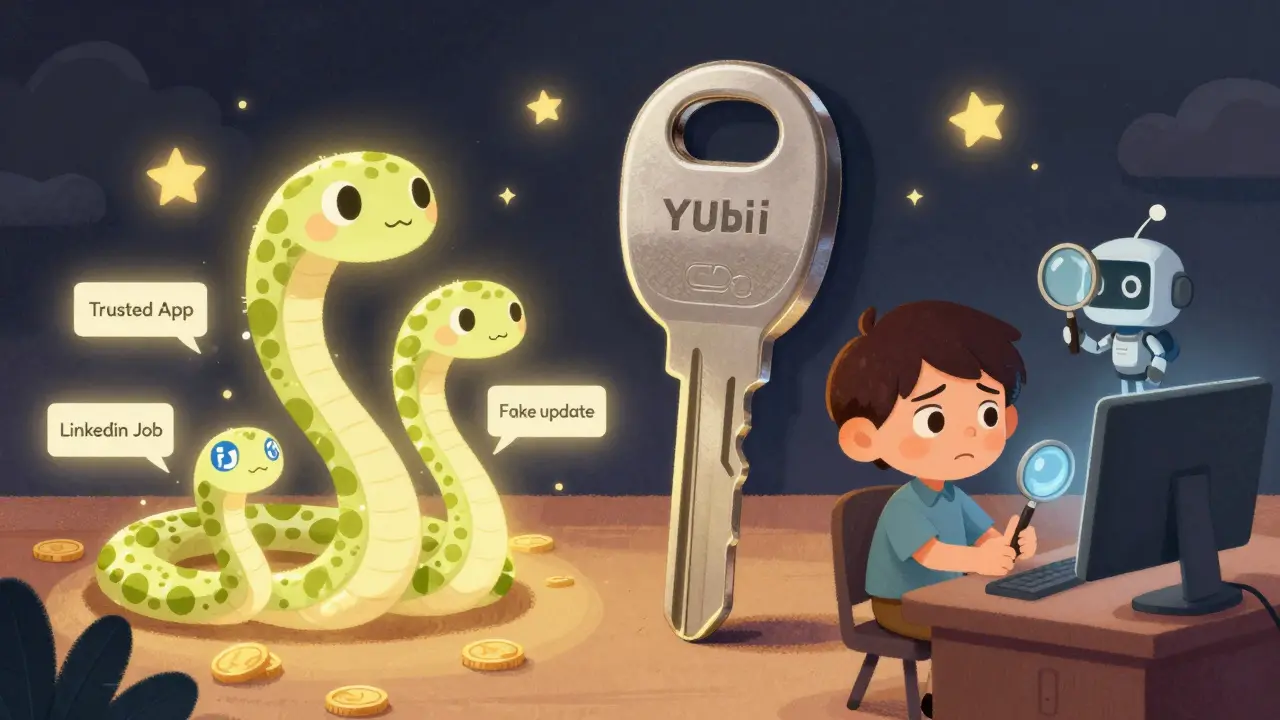
What Can Be Done?
There’s no magic bullet. But here’s what actually works:- Behavioral monitoring: Don’t just check if a transaction is valid. Check if the person approving it is acting normally. Did they log in from a new device? Did they approve 10 transfers in 5 minutes? Flag it.
- Hardware-based approvals: Require physical security keys (like YubiKeys) for every transaction. No software-only approvals.
- Decentralized approval workflows: Instead of one CEO approving, spread approvals across geographically separated teams. If one person is compromised, the others can’t be.
- Employee training that’s real: No more boring PowerPoint slides. Simulate attacks. Run red-team exercises. Make employees feel the pressure. Train them to question everything-even if it looks like it came from the CEO.
- Real-time fund tracing: Use blockchain analytics tools that flag suspicious wallet movements the moment they happen-not after the money’s gone.


Brooklyn Servin
December 28 2025Lazarus isn't hacking code-they're hacking *trust*. And honestly? That's scarier than any zero-day. I've seen so many 'secure' systems collapse because someone clicked 'approve' on a Slack DM that looked like it came from their boss. 🤯 This isn't tech failure. It's human failure. And we're all just one overworked Tuesday away from being the next victim.