
Imagine you find a new token on the LaserSwap platform that’s about to explode in value. You hit "swap," your wallet pops up, and two seconds later, it’s done for five cents in gas fees. Sounds great, right? But what if that same swap slips 1% against you because liquidity is thin? That’s the reality of using niche decentralized exchanges (DEXs) on the Base network.
If you’re hunting for early-stage tokens on Coinbase’s Layer 2 solution, you’ve probably stumbled upon LaserSwap. It’s not the giant everyone talks about like Uniswap, but it has carved out a specific spot in the ecosystem. This review cuts through the noise to tell you exactly where LaserSwap shines, where it stumbles, and whether it deserves a place in your DeFi portfolio as of late 2026.
What Exactly Is LaserSwap?
LaserSwap is a decentralized automated market maker (AMM) operating exclusively on the Base blockchain. Unlike centralized exchanges such as Coinbase or Binance, LaserSwap doesn’t hold your money. You keep control of your private keys, and trades happen directly between users via smart contracts.
Launched in 2024, it functions as a non-custodial platform. This means when you trade, you aren’t trusting a company with your funds; you’re trusting code. The platform uses standard AMM architecture, where users provide liquidity to pools to earn trading fees. It’s a classic model, but its focus on the Base network gives it a distinct edge for certain traders.
| Feature | LaserSwap | Aerodrome Finance | Uniswap V3 |
|---|---|---|---|
| Daily Volume (Est.) | $8.7 Million | $150+ Million | $1.2 Billion+ |
| Primary Network | Base L2 | Base L2 | Ethereum/L2s |
| Fee Structure | 0.3% | Variable | 0.05%-1.0% |
| Best For | Early Base Tokens | High Liquidity Swaps | Major Pairs |
The User Experience: Fast Fees, Thin Liquidity
Let’s talk about why people actually use this thing. The biggest draw is cost. Trading on Ethereum mainnet can still sting during congestion, costing $1.50 to $3.00 per transaction. On Base, thanks to LaserSwap’s integration, those costs drop to pennies-typically between $0.01 and $0.05. If you’re making small trades or experimenting with new strategies, this affordability is a game-changer.
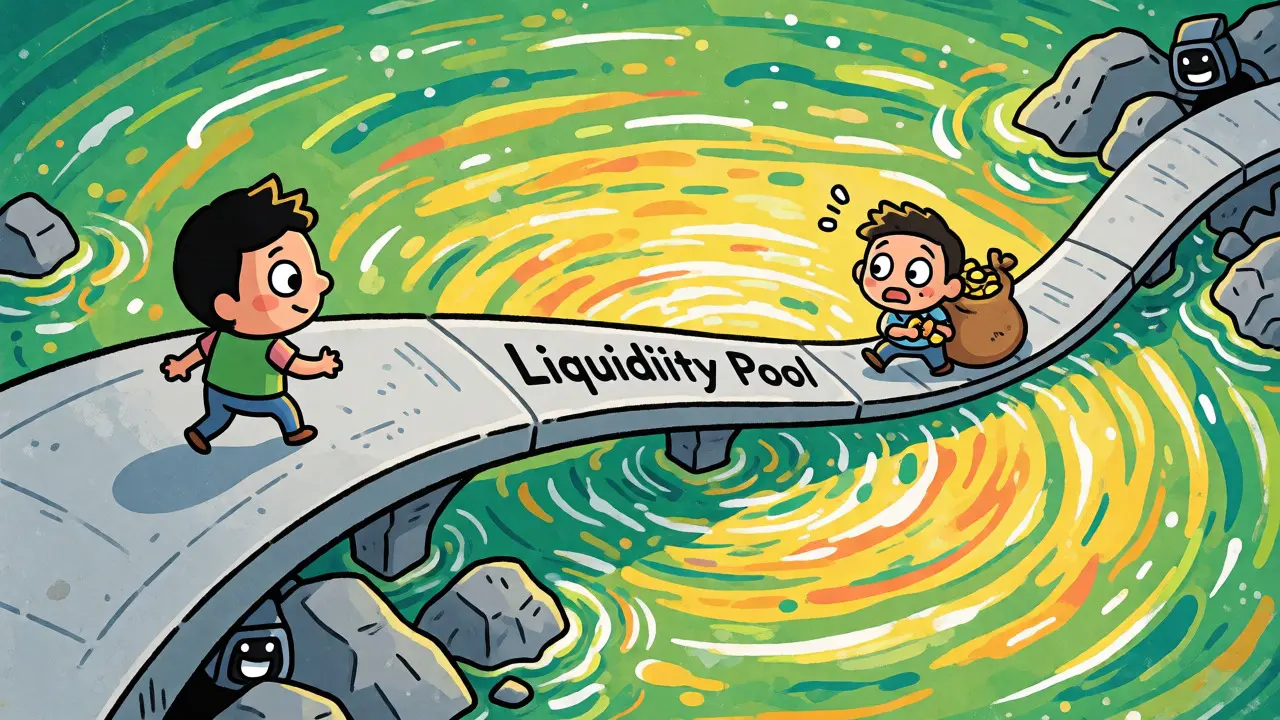
But there’s a catch. Speed and low fees come at the price of liquidity depth. Because LaserSwap is a niche player, holding roughly 4.3% of the Base DEX market share, large trades suffer from slippage. A $10,000 swap might see 1.2% slippage here, whereas on a deeper pool like Aerodrome, you might only lose 0.4%. If you’re moving significant capital, you need to watch those numbers closely.
The interface follows standard DEX conventions. You’ll see tabs for Swap, Pool, and Earn. It’s intuitive enough for anyone who has used MetaMask before, but beginners often report a steep learning curve regarding concepts like impermanent loss. Community surveys suggest it takes most new users 2-3 hours to feel comfortable completing their first successful swap.
Security and Trust: Who Audited the Code?
Security is the elephant in the room for any DEX. LaserSwap’s smart contracts underwent an audit by BlockSec in March 2025. While passing an audit is good, it’s not the gold standard. Top-tier protocols like Curve Finance undergo multiple audits from firms like OpenZeppelin and Trail of Bits. LaserSwap has one primary audit, which raises some eyebrows for risk-averse investors.
There have been hiccups. In August 2025, the team patched a front-running vulnerability-a type of attack where bots jump ahead of your transaction to profit at your expense. As of November 2025, GitHub tracking shows 127 open issues, with 43 marked as critical bugs in the last six months. This isn’t unusual for a young protocol, but it demands vigilance. Always check the latest community updates on Discord before depositing large sums.
On the positive side, platforms like CryptoScamDB show no reported scams specifically targeting LaserSwap users. The team maintains an active presence, with 47 developers committing code weekly. It’s not abandoned, but it’s not bulletproof either.
Who Should Use LaserSwap?
You shouldn’t treat every DEX the same. LaserSwap isn’t for everyone. Here is how to decide if it fits your strategy:
- Use it if: You are hunting for early-stage Base-native tokens that haven’t listed on larger exchanges yet. Many projects launch here first. If you want to get in on the ground floor of a new meme coin or utility token on Base, this is often the first stop.
- Skip it if: You are trading major pairs like ETH/USDC with large volumes. The slippage will eat your profits compared to Aerodrome or Uniswap.
- Be careful if: You are providing liquidity in volatile pairs. Impermanent loss documentation is rated poorly by users (3.2/5), so do your own research before locking up funds.
Data shows that 87% of LaserSwap users trade less than $10,000 monthly. This confirms its role as a playground for retail traders rather than institutional whales. If you’re looking for professional charting tools or advanced order types, look elsewhere. LaserSwap keeps things simple.

Pros and Cons at a Glance
To make this decision easier, let’s break down the key takeaways based on current performance metrics and user feedback.
| Pros | Cons |
|---|---|
| Extremely low gas fees ($0.01-$0.05) | Lower liquidity leads to higher slippage |
| Early access to new Base tokens | No fiat on-ramps (must buy crypto elsewhere) |
| Non-custodial security model | Limited customer support (Discord only) |
| Active development team | Single audit history vs. multi-audit standards |
Final Verdict: Niche Player with Potential
LaserSwap occupies a specific corner of the decentralized finance world. It won’t replace Coinbase for buying Bitcoin, nor will it beat Uniswap for swapping ETH for USDC efficiently. Its value lies in specialization. It serves the growing Base ecosystem-which now boasts 3.2 million monthly active users-by providing a low-cost venue for emerging assets.
Messari analysts predict that only 3-4 specialized DEXs will survive per major Layer 2 ecosystem by 2027. LaserSwap is fighting for that spot. With a planned v2 upgrade featuring concentrated liquidity in Q1 2026, it aims to compete more effectively on efficiency. For now, it remains a useful tool for the savvy Base trader who understands the risks of thin liquidity and wants early exposure to new projects.
Is LaserSwap safe to use?
LaserSwap is generally considered safe for moderate amounts, having passed a security audit by BlockSec. However, it lacks the multiple-audit verification of top-tier DEXs. Users should be aware of past vulnerabilities, such as the front-running bug patched in August 2025, and always interact with the official URL to avoid phishing sites.
Does LaserSwap require KYC?
No, LaserSwap is a non-custodial decentralized exchange. You connect a Web3 wallet like MetaMask or Coinbase Wallet to trade. There is no identity verification process required to start swapping tokens, aligning with the privacy-focused nature of most DEXs.
What are the fees on LaserSwap?
The standard trading fee is 0.3%, with 0.25% going to liquidity providers and 0.05% to the protocol treasury. Additionally, you pay network gas fees on the Base blockchain, which typically range from $0.01 to $0.05 per transaction, significantly lower than Ethereum mainnet costs.
Can I buy crypto with a credit card on LaserSwap?
No, LaserSwap does not have built-in fiat on-ramps. You must acquire cryptocurrency (such as ETH or USDC) on a centralized exchange like Coinbase or Kraken, withdraw it to the Base network, and then bridge or transfer it to your wallet to use on LaserSwap.
How does LaserSwap compare to Aerodrome?
Aerodrome Finance currently holds a dominant 62.1% market share on Base with much deeper liquidity, resulting in lower slippage for large trades. LaserSwap holds about 4.3% share and is better suited for finding early-stage tokens that may not yet be listed on Aerodrome, though at the cost of higher slippage.