
If you're in Turkey and want to buy Bitcoin or Ethereum without dealing with foreign currencies or complicated international platforms, Koinim might seem like the obvious choice. It’s been around since 2013, supports Turkish Lira (TRY), and speaks your language. But is it actually safe, reliable, and worth your money in 2026? Let’s cut through the noise.
What Koinim Actually Offers
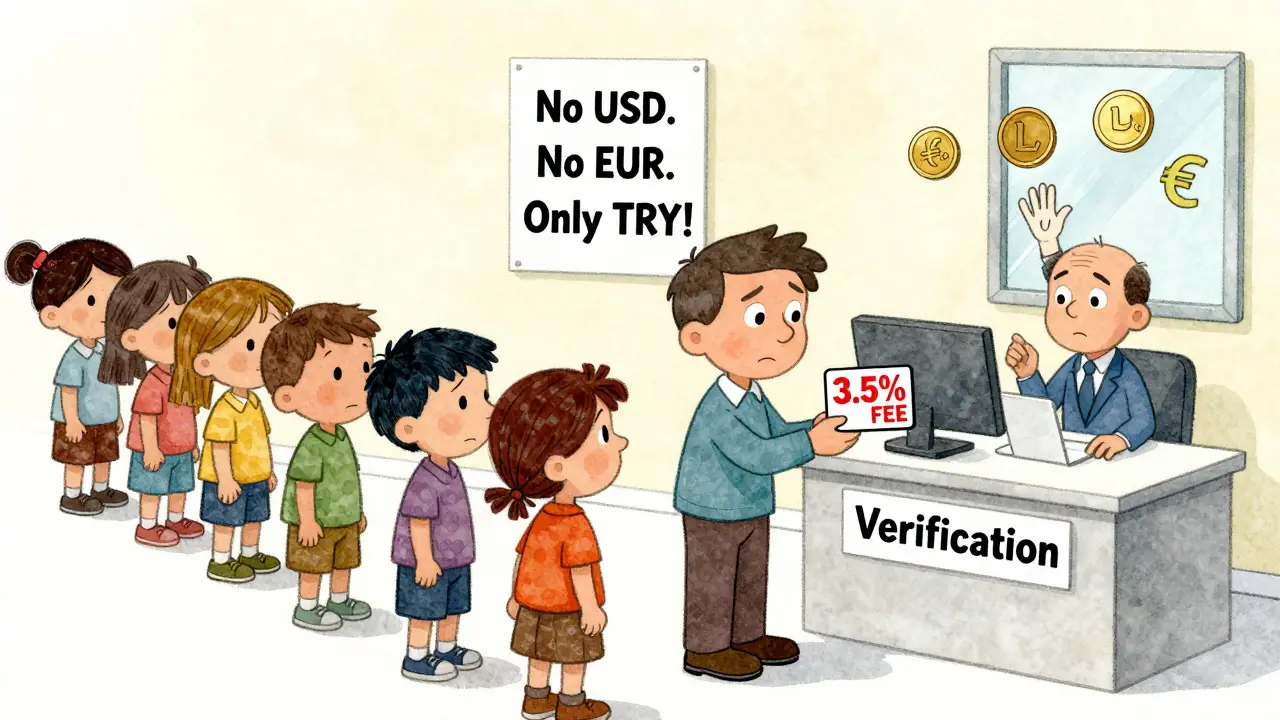
Koinim isn’t trying to be the next Binance or Coinbase. It doesn’t offer hundreds of coins, margin trading, or futures. Instead, it does one thing well: lets Turkish users buy and sell crypto using Turkish Lira. The platform supports only seven cryptocurrencies: Bitcoin (BTC), Ethereum (ETH), Litecoin (LTC), Bitcoin Cash (BCH), Ripple (XRP), Cardano (ADA), and Dogecoin (DOGE). That’s it. No Solana, no Polkadot, no Shiba Inu. If you’re looking to diversify beyond the big names, you’ll need another exchange.The trading pairs are simple: BTC/TRY, ETH/TRY, LTC/TRY, and a few others-all in Turkish Lira. No USD, no EUR, no USDT. You deposit and withdraw in TRY only. That’s great if you live in Turkey and have a local bank account. It’s a nightmare if you don’t.
There’s no leverage. No shorting. No staking. No API for automated trading. This isn’t a platform for day traders or institutional investors. It’s built for everyday people who want to buy Bitcoin with their salary and hold it. The interface is clean, built with Angular and jQuery, and designed to be easy to use-even if you’ve never traded before. But here’s the catch: everything is in Turkish.
How It Works: From Sign-Up to Trade
Getting started is straightforward, but not fast. First, you sign up with your email and phone number. Then comes the hard part: identity verification. You need to upload your Turkish ID card, a selfie holding it, and sometimes proof of address. This isn’t optional. You can’t trade until it’s approved. The process can take anywhere from a few hours to two days, depending on how busy their team is.Once verified, you can deposit TRY using bank transfer (Havale/EFT), credit card, or debit card. Credit card deposits are available, contrary to some outdated reviews, but they come with higher fees. Bank transfers are free but take 1-2 business days to clear. Instant deposits? Not here. You can’t fund your account with PayPal, Apple Pay, or crypto from another wallet. It’s a closed loop: TRY in, crypto out.
Trading is spot-only. You pick a coin, enter the amount in TRY, and click buy. The price updates in real time. There are no limit orders or stop-losses. You can’t set price alerts. The platform is built for simple, direct purchases-not advanced strategies. If you’re used to trading on Binance or Kraken, this will feel limiting. But if you just want to buy Bitcoin once a month and forget about it, it works.
Fees: What You Actually Pay
Koinim doesn’t publish a detailed fee schedule, but user reports and transaction logs show a consistent pattern. Trading fees are flat at 0.3% per trade, whether you’re buying $100 or $10,000 worth of Bitcoin. That’s higher than Binance’s 0.1% for spot trades, but lower than some local Turkish exchanges that charge up to 0.5%.Withdrawal fees vary by coin. Bitcoin withdrawals cost 0.0005 BTC (about $30-$40 depending on price). Ethereum withdrawals are 0.01 ETH (roughly $25-$35). Litecoin and Bitcoin Cash are cheaper, around 0.01 LTC or 0.001 BCH. These are standard for small exchanges but expensive if you’re withdrawing small amounts.
Deposit fees are trickier. Bank transfers are free. Credit card deposits carry a 3.5%-4.5% fee. That’s steep. If you’re depositing $500 via card, you’re paying $17-$22 just to get started. Most users avoid this and stick to bank transfers, even if it takes longer.
Security: Is Your Money Safe?
This is the biggest concern. Koinim is not regulated by any financial authority in Turkey or abroad. It doesn’t hold a license from the Capital Markets Board of Turkey (SPK) or any international regulator. That means there’s no government backup if something goes wrong. No insurance fund. No audit reports published publicly. No transparency.The platform uses standard security practices: two-factor authentication (2FA), SSL encryption, cold storage for most assets, and regular penetration testing. According to STX Next, the development team behind its infrastructure, the platform has never suffered a major breach since its 2013 launch. That’s impressive-but not enough. In 2022, a Turkish exchange called Paribu was hacked, and users lost millions. Koinim has no public record of similar incidents, but without oversight, you’re trusting them entirely.
There’s no proof of reserves. You can’t verify that they actually hold the Bitcoin they claim to. That’s a red flag for anyone serious about crypto. If you’re putting in a few hundred dollars, the risk might be acceptable. If you’re investing thousands, you should think twice.
Customer Support: 24/7, But Is It Helpful?
One thing users consistently praise is customer support. Koinim offers 24/7 live chat and email support-in Turkish. The response time is usually under 30 minutes during business hours and under 2 hours at night. Agents are polite and knowledgeable. They can help with login issues, deposit delays, and withdrawal problems.But here’s the problem: if you don’t speak Turkish, you’re stuck. The entire website, app, help center, and support team are in Turkish. Google Translate won’t save you. The interface isn’t translated. The FAQs aren’t available in English. There’s no multilingual option. If you’re a foreigner living in Turkey or a Turkish expat trying to use Koinim from abroad, you’re out of luck.

Who Is Koinim Really For?
Koinim isn’t for everyone. It’s not for crypto enthusiasts who want to trade altcoins. It’s not for international users. It’s not for people who value regulatory oversight. It’s not for those who need advanced tools.It is for:
- Turkish citizens who want to buy Bitcoin or Ethereum with their Turkish bank account
- People who prefer a simple, no-frills interface
- Those who don’t need more than 7 coins and don’t trade frequently
- Users who value local customer support and don’t mind the language barrier
If you’re a Turkish student, freelancer, or small business owner looking to hold crypto as a savings tool, Koinim works. It’s reliable for basic use. But if you’re planning to build a portfolio, trade regularly, or use crypto as a hedge against inflation beyond Bitcoin, you’ll quickly outgrow it.
Alternatives for Turkish Users
If Koinim feels too limited, here are other options:- Binance TR: The Turkish branch of Binance. Supports TRY, has 50+ coins, lower fees, and a better interface. Still no regulation, but bigger and more trusted.
- Paribu: One of Turkey’s oldest exchanges. More coins than Koinim, mobile app, and better liquidity. Also unregulated.
- Bitexen: Offers TRY trading, margin options, and a more professional platform. Better for active traders.
All of these are unregulated too. But they offer more features, more coins, and better liquidity. Koinim’s only real advantage is its simplicity. If you want to buy Bitcoin and leave it alone, Koinim does that cleanly. If you want to do anything else, look elsewhere.
The Bottom Line
Koinim is a niche platform built for a specific audience: Turkish speakers who want to buy crypto with Turkish Lira and don’t care about advanced features. It’s not the best exchange in Turkey. It’s not the safest. But for its target users, it’s functional, stable, and easy to use.Pros:
- Simple, clean interface designed for beginners
- 24/7 Turkish-language customer support
- Fast bank transfers and credit card deposits
- Proven uptime and no major breaches since 2013
Cons:
- No regulation or insurance
- Only 7 cryptocurrencies
- Only Turkish language support
- No advanced trading tools
- High withdrawal fees for small amounts
If you’re in Turkey and just want to buy Bitcoin without overcomplicating things, Koinim gets the job done. But if you’re serious about crypto, treat it as a starter platform-then move to something with more options once you’re comfortable.
Is Koinim regulated by any government agency?
No, Koinim is not regulated by the Capital Markets Board of Turkey (SPK) or any international financial authority. It operates without official oversight, meaning there’s no legal protection for users if the platform fails or gets hacked. This is common among Turkish crypto exchanges, but it increases risk.
Can I use Koinim if I don’t speak Turkish?
Not practically. The entire platform-including the website, app, help center, and customer support-is in Turkish. Even if you understand basic Turkish, you’ll struggle with complex issues like withdrawals or verification. There is no English option, and Google Translate doesn’t work reliably on the trading interface.
Does Koinim support credit card deposits?
Yes, Koinim accepts credit and debit card deposits, but they come with a fee of 3.5% to 4.5%. Bank transfers are free but take 1-2 business days. Most users avoid cards due to the high cost and stick to direct bank transfers instead.
What cryptocurrencies can I trade on Koinim?
Koinim supports only seven cryptocurrencies: Bitcoin (BTC), Ethereum (ETH), Litecoin (LTC), Bitcoin Cash (BCH), Ripple (XRP), Cardano (ADA), and Dogecoin (DOGE). There are no altcoins beyond these, and no staking or lending features.
Are there any hidden fees on Koinim?
Koinim doesn’t charge hidden fees, but some costs aren’t obvious. Withdrawal fees for Bitcoin and Ethereum are relatively high compared to larger exchanges. Credit card deposits carry a steep fee. There’s also a small network fee built into every withdrawal, which varies based on blockchain congestion. Always check the final amount before confirming a withdrawal.
Can I withdraw my crypto to an external wallet?
Yes, you can withdraw any supported cryptocurrency to an external wallet. You’ll need to enter the correct wallet address and pay the network fee. Koinim doesn’t restrict withdrawals, but it does require you to complete full identity verification first. Withdrawals are processed within 1-4 hours during business hours.
Is Koinim better than Binance TR for Turkish users?
Binance TR is better for most users. It offers more coins, lower fees, a more advanced interface, and better liquidity. Koinim’s only advantage is its simplicity and dedicated Turkish support. If you’re a beginner and want the easiest path to Bitcoin, Koinim works. If you want to trade more, grow your portfolio, or use advanced tools, Binance TR is the clear choice.


greg greg
January 6 2026Koinim’s whole model is fascinating if you think about it as a cultural artifact rather than a financial tool. It’s like a digital version of that one uncle who still uses a flip phone because ‘it just works.’ No altcoins? Fine. No staking? Whatever. But the fact that it’s built entirely around Turkish Lira and Turkish language speaks to a deeper truth: crypto adoption isn’t just about technology-it’s about identity. People in Turkey aren’t just buying Bitcoin to get rich; they’re buying it to preserve autonomy in an economy that’s been hammered by inflation and distrust. Koinim doesn’t need to be Binance because it’s not trying to compete with global markets. It’s a local lifeline. The lack of regulation? Yeah, that’s scary. But when your government can’t even keep the lira stable, who’s gonna trust a regulator anyway? The real question isn’t whether Koinim is safe-it’s whether it’s necessary. And for millions of Turks, it absolutely is.
Also, the withdrawal fees are brutal if you’re moving small amounts, but that’s just the cost of doing business on a platform that doesn’t have economies of scale. You don’t get Coinbase-level efficiency when you’re serving one country with one currency and zero international partnerships. It’s clunky, yes-but it’s honest. And in crypto, honesty is rarer than a functioning exit strategy.
They’re not hiding anything. No whitepapers, no audits, no fancy marketing. Just a clean interface, a verified ID process, and a 24/7 chat in Turkish. That’s not incompetence. That’s focus. And maybe that’s the real lesson here: sometimes, doing one thing well is more valuable than doing ten things mediocrely.
Would I use it? Only if I lived in Turkey and wanted to buy BTC without getting lost in a sea of trading pairs and leverage options. Otherwise? Nah. But I respect it.
Also, credit card fees at 4.5%? That’s highway robbery. But again-bank transfer is free. So don’t be an idiot and use the card. Just sayin’.