
You might have come across a site promising a Steam crypto exchange, or maybe you're just wondering if you can trade Bitcoin to buy your favorite games. Here is the bottom line: there is no such thing as a Steam cryptocurrency exchange. If you find a platform claiming to be an official exchange run by Valve, get out of there immediately. You are likely looking at a phishing site designed to steal your funds.
The Big Misconception: Steam is Not an Exchange
To clear things up, Steam is a digital distribution platform for video games and software developed by Valve Corporation. It isn't a financial institution or a trading hub. While it is the world's largest PC gaming platform-boasting over 132 million monthly active users-its core business is selling software, not swapping digital assets.
People often confuse "accepting a payment method" with "being an exchange." A Cryptocurrency Exchange is a platform where you trade one coin for another or for fiat currency. Steam has never offered these services. You cannot deposit Bitcoin to trade it for Ethereum, nor can you earn interest on your coins through Valve. Their role has always been as a merchant, not a broker.
Why You Might Be Confused: The Bitcoin Experiment
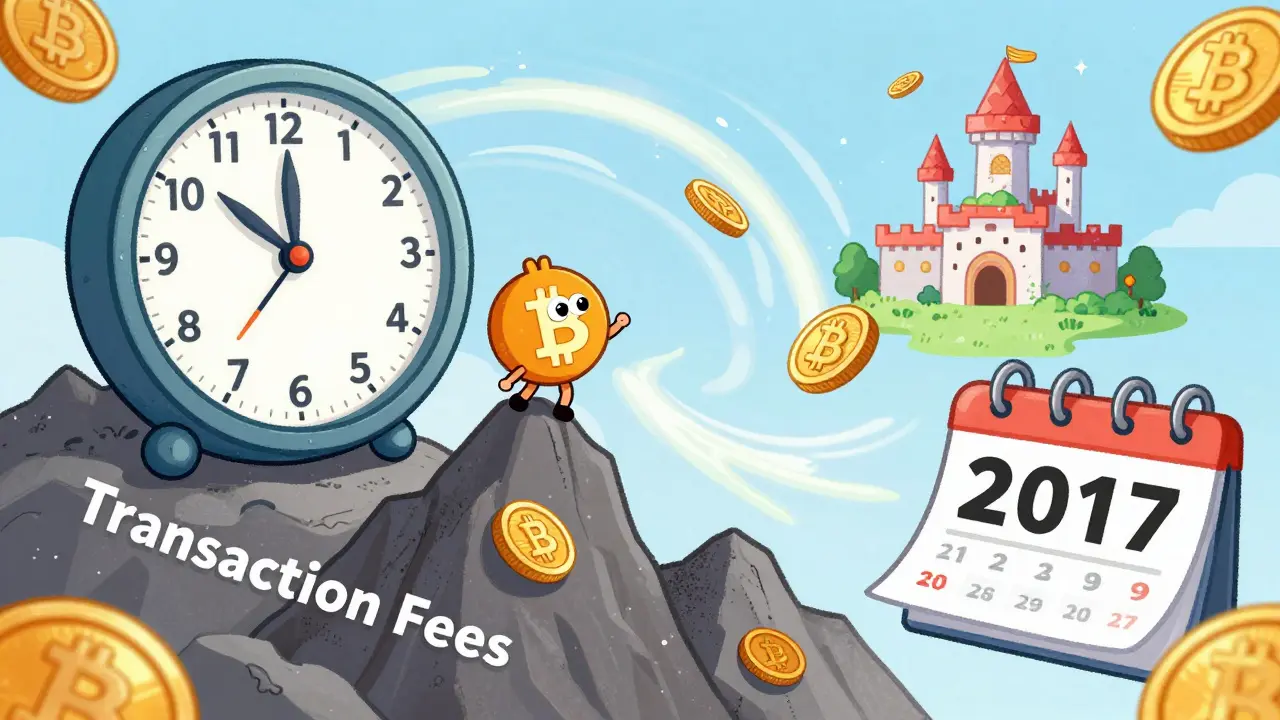
The confusion usually stems from a brief window of time between February 2016 and July 2017. During this period, Valve actually allowed users to pay for games using Bitcoin. For about 17 months, it seemed like the future of gaming payments. However, the experiment ended abruptly on July 3, 2017.
Why did they stop? The answer is volatility. During peak Bitcoin spikes in 2017, transaction fees became a nightmare. Some users reported losing nearly half the value of their purchase just to network fees. Imagine trying to buy a $60 game and paying $47 in fees just to send the transaction. Valve realized this was a terrible user experience and pulled the plug. As Tom Bui, a security engineer at Valve, later clarified, they never even stored user cryptocurrency; they used a third-party processor called BitPay to instantly convert crypto into traditional cash.
Comparing Steam's Past to Real Crypto Exchanges
To understand why Steam isn't an exchange, it helps to look at what a real exchange actually does. Platforms like Binance, Coinbase, or Kraken are built for liquidity and custody. They hold your assets in cold storage (often 95-98% offline) and provide an order book for trading. Steam's setup was purely a checkout gate.
| Feature | Steam (Historical) | Actual Crypto Exchange |
|---|---|---|
| Trading Capability | None (Payment only) | Full (Buy/Sell/Trade) |
| Asset Custody | No storage of coins | Cold/Hot Wallet Storage |
| Liquidity Pools | Not applicable | High (Billions in volume) |
| Purpose | Buying Video Games | Investing & Speculation |
The Danger of "Steam Crypto" Scams
Because there is a lingering belief that Steam might return to crypto, scammers have a field day. Cybersecurity firms like Kaspersky have flagged over a thousand phishing sites that impersonate non-existent "Steam Crypto Services." These sites often promise high returns or a way to "convert Steam Wallet funds to Bitcoin."
Here is a hard truth: Steam Wallet funds are locked. According to Valve's Terms of Service, these funds can only be used for content on the platform. They cannot be transferred to an external wallet or redeemed for cryptocurrency. Any site claiming they can "unlock" your Steam Wallet funds for crypto is a scam. Period.

How to Actually Use Crypto for Steam Games Today
If you have Bitcoin and you really want a new game, you can't do it directly through the Steam checkout. However, there are workarounds using third-party gift card services. For example, Bitrefill allows users to buy Steam gift cards using various cryptocurrencies. You pay them in crypto, they give you a digital gift card code, and you redeem that code in your Steam account.
This is the only legitimate way to bridge the gap. It's a simple exchange of crypto for a voucher, not a financial trading platform. It's a convenient tool, but it doesn't make Steam a crypto exchange.
Will Valve Ever Bring Back Crypto Payments?
As of early 2026, there are no signs that cryptocurrency is coming back to the official Steam checkout. Valve's recent roadmaps focus on improving regional payment options, but crypto isn't on the list. Industry analysts point to regulatory uncertainty and the instability of payment networks as the main reasons why Valve is staying away.
For now, the company is focusing its security efforts on the Steamworks API and developer authentication to stop malware, rather than tinkering with payment gateways. If you're waiting for an official "Steam Coin" or a built-in wallet, you're likely going to be waiting a long time.
Can I trade Bitcoin directly on Steam?
No. Steam is a gaming platform, not a cryptocurrency exchange. It has no functionality for trading, swapping, or holding digital assets.
Does Steam accept Bitcoin payments in 2026?
No. Steam stopped accepting cryptocurrency payments in July 2017 due to high transaction fees and price volatility.
How can I buy Steam games with crypto?
The most reliable method is using a third-party service like Bitrefill to purchase Steam gift cards with your cryptocurrency and then redeeming those cards on your account.
Can I convert Steam Wallet funds into Bitcoin?
No. Valve's terms of service explicitly state that Steam Wallet funds cannot be transferred to external wallets or redeemed for cryptocurrency.
Is there an official Steam crypto wallet?
No. Any site or app claiming to be an official Steam crypto wallet is a scam designed to steal your private keys or login credentials.


Noel Mandotah
April 30 2026Imagine actually needing a guide to tell you Steam isn't a crypto exchange. Absolute comedy gold.