
Imagine producing a single Bitcoin for just $1,300 while the global market price hovers around $60,000. That is not a hypothetical scenario; it is the current reality for miners operating within Iran's unique economic landscape. While most of the world struggles with rising energy costs and regulatory crackdowns, Iran has carved out a niche as one of the cheapest places on Earth to mine cryptocurrency. But this advantage comes at a steep price: severe power shortages that leave ordinary citizens in the dark for hours each day.
The core of this issue lies in Iran's heavily subsidized energy sector. The government provides electricity at rates ranging from $0.01 to $0.05 per kilowatt-hour (kWh) for certain users, creating an environment where mining profitability margins can reach 20 to 30 times the production cost. This setup isn't accidental. It represents a complex intersection of economic strategy, sanctions evasion, and political control. For international observers, it raises a critical question: Is Iran using its natural resources to fuel a digital gold rush, or is it cannibalizing its own infrastructure to keep the lights on for the elite?
The Economics of Cheap Power
To understand why Iran attracts so much mining activity, you have to look at the numbers. In July 2025, The Economic Times reported that mining a Bitcoin in Iran costs approximately $1,300. Compare that to Italy, where the same process costs roughly $306,000 due to high industrial energy prices, and the disparity becomes staggering. This 235-fold difference makes Iran exceptionally competitive globally, despite the logistical nightmares involved in operating there.
The subsidy structure is the primary driver. Licensed miners pay industrial tariffs between $0.04 and $0.07 per kWh. While this is higher than the household rate of $0.01-$0.02, it remains significantly below global averages. This pricing model encourages massive consumption. A single Bitcoin requires over 300 megawatt-hours (MWh) of electricity. To put that in perspective, that amount of power could supply the daily needs of about 35,000 Iranian households. When you scale this up to the estimated 3.5 to 4.2 million ASIC devices active in the country, the strain on the grid becomes obvious.
| Region | Cost Per Bitcoin | Electricity Rate (USD/kWh) | Primary Constraint |
|---|---|---|---|
| Iran | $1,300 | $0.01 - $0.05 | Grid Instability & Sanctions |
| Kazakhstan | $5,000 | $0.03 - $0.06 | Regulatory Volatility |
| USA (Texas) | $18,000+ | $0.05 - $0.09 | Grid Curtailment Events |
| Italy | $306,000 | $0.20+ | High Industrial Tariffs |
The Grid Strain and Public Backlash
Cheap electricity does not come free. The cost is paid by the national grid and, increasingly, by the public patience. According to Mohammad Allahdad, deputy director at Tavanir, Iran's power company, cryptocurrency mining consumes nearly 2,000 MW of electricity. This accounts for only 5% of total consumption but drives 15-20% of the country's electricity imbalance. During peak summer months, when air conditioning demand surges by 30-40%, the system buckles under the load.
The impact on daily life is tangible. Residents in Tehran and other major cities report blackouts lasting 8 to 12 hours during heatwaves. Social media sentiment reflects deep frustration. On X (formerly Twitter), users have labeled the situation "economic terrorism," pointing out that while homes go dark, large-scale mining farms-often located in repurposed stadiums or warehouses-run 24/7. A sentiment analysis by the Mackenzie Institute found that 92% of comments blaming outages pointed directly to mining operations. When Bitcoin prices surge, blackout durations often increase by 30-40% within 48 hours, suggesting a direct correlation between market incentives and local suffering.

The Role of the IRGC and Illegal Operations
Not all mining in Iran is legal, and not all legal mining is transparent. The Islamic Revolutionary Guard Corps (IRGC) plays a dominant role in the sector. Estimates suggest the IRGC controls 55-65% of all mining operations, either directly or through affiliated front companies. This concentration of power allows the state to capture significant foreign exchange revenue, estimated at $400-500 million annually, which helps bypass international sanctions.
However, the line between legal and illegal is blurry. The Iranian Energy Ministry estimates that illegal miners consume up to two gigawatts of power daily-the equivalent of the entire capital city's usage. These operators exploit subsidized household rates, paying fractions of what licensed industrial users pay. The government has responded with aggressive crackdowns. In early 2025 alone, authorities received 8,432 reports of illegal mining and shut down 2,157 sites. Citizens are even incentivized to report neighbors, receiving 10% of recovered electricity costs as rewards. Yet, enforcement remains inconsistent, partly because the very entities enforcing the rules are often those benefiting from the loopholes.
Regulatory Framework and Licensing Challenges
For those attempting to operate legally, the path is fraught with bureaucratic hurdles. Miners must navigate a multi-agency approval process involving the Ministry of Industry, Tavanir, and the Central Bank of Iran (CBI). The process typically takes 3 to 6 months, with approval rates hovering below 40%. Once approved, miners face strict conditions:
- Export Mandate: Mined coins must be sold for foreign currency imports, not used for domestic payments.
- Smart Metering: Real-time monitoring of electricity usage is mandatory to prevent quota violations.
- State Pools: Many miners are required to use state-approved mining pools, which charge commissions of 15-20%.
These regulations aim to ensure that cryptocurrency serves the national interest by generating hard currency. However, they also create friction. Equipment imports face 4-6 month lead times due to sanctions-related banking restrictions. Furthermore, the CBI prohibits domestic cryptocurrency payments, creating a black market premium of 25-35% for Bitcoin transactions within Iran. This dual system-strict export controls paired with loose domestic adoption-keeps the sector isolated from the broader Iranian economy.
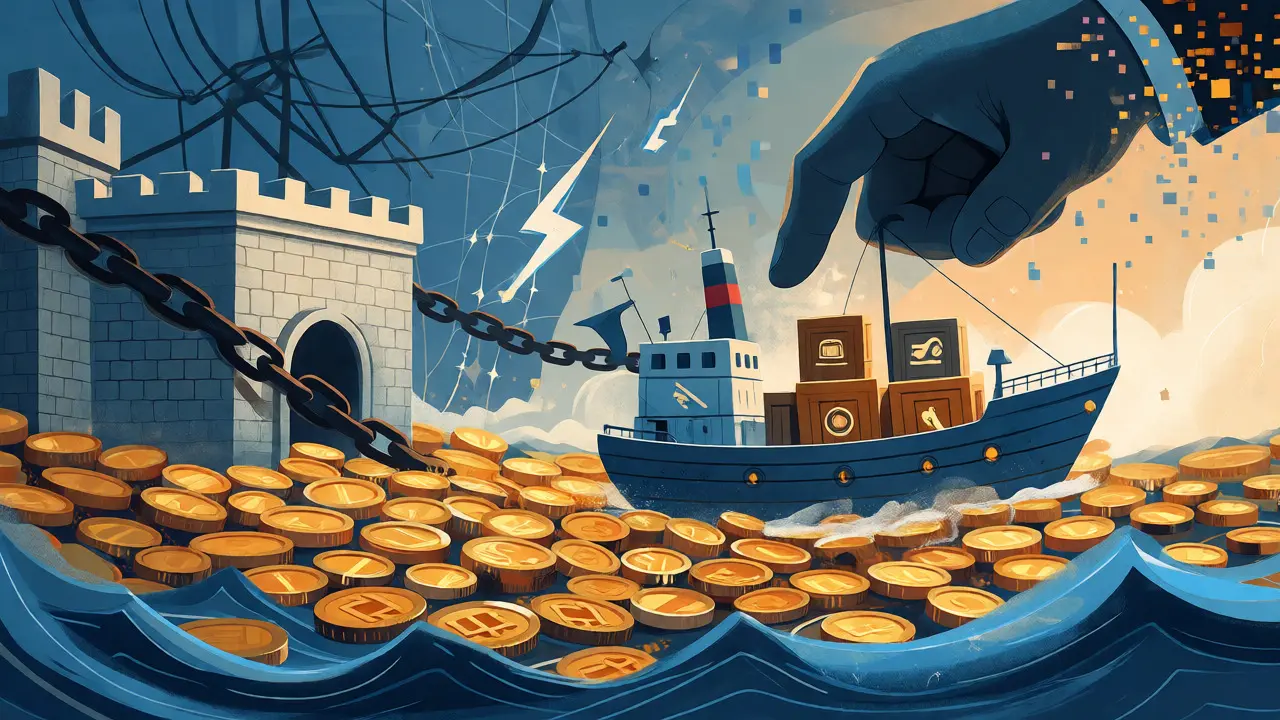
Strategic Value vs. Infrastructure Risk
Why does Iran continue this policy despite the backlash? The answer lies in sanctions evasion. With traditional banking channels restricted, cryptocurrency offers a lifeline for cross-border trade. In 2024, approximately $700 million worth of goods were settled using cryptocurrency, allowing Iran to import essential commodities without relying on the US dollar. Energy Minister Ali Akbar Mehrabian defended the policy in June 2025, arguing that the $800 million annual foreign exchange gain outweighs the energy costs.
Yet, the long-term sustainability is questionable. Iran's power grid operates at only 60-70% of its required capacity due to decades of underinvestment. The International Energy Agency predicts that without significant upgrades, power shortages could worsen by 25-30% by 2027. The Carnegie Endowment notes that this dilemma mirrors broader energy policy challenges: short-term economic gains versus long-term infrastructure stability. If the grid collapses entirely, the mining advantage evaporates, taking the foreign exchange benefits with it.
Key Takeaways
- Unmatched Profitability: Producing Bitcoin in Iran costs ~$1,300, compared to $306,000 in Italy, driven by subsidized electricity ($0.01-$0.05/kWh).
- Grid Impact: Mining consumes ~2,000 MW, causing 15-20% of electricity imbalances and leading to frequent blackouts for residents.
- State Control: The IRGC controls 55-65% of mining operations, using the sector to generate $400-500 million annually in foreign exchange.
- Regulatory Tightening: New laws require smart meters and real-time monitoring, with illegal operations facing heavy fines and shutdowns.
- Sanctions Workaround: Cryptocurrency facilitates ~$700 million in cross-border trade annually, bypassing traditional SWIFT restrictions.
How much does it cost to mine Bitcoin in Iran?
As of 2025, the estimated cost to mine a single Bitcoin in Iran is approximately $1,300. This is significantly lower than the global average due to heavily subsidized electricity rates, which range from $0.01 to $0.05 per kilowatt-hour for certain categories of users.
Is cryptocurrency mining legal in Iran?
Yes, cryptocurrency mining is legal in Iran, but it is strictly regulated. Miners must obtain licenses from the Ministry of Industry and the Central Bank of Iran. They are required to sell mined cryptocurrencies for foreign currency imports and cannot use them for domestic payments. Illegal mining, which exploits household electricity subsidies, is actively cracked down upon.
Why does Iran allow crypto mining if it causes blackouts?
The Iranian government views cryptocurrency mining as a strategic tool for sanctions evasion. By converting excess electricity into Bitcoin, the country generates hard currency for imports without relying on the US dollar-dominated banking system. The state argues that the foreign exchange earnings offset the costs of power shortages, although this trade-off remains controversial among the general public.
What role does the IRGC play in Iranian crypto mining?
The Islamic Revolutionary Guard Corps (IRGC) dominates the sector, controlling an estimated 55-65% of all mining operations through direct ownership or affiliated front companies. This allows the state to capture the majority of profits and ensures that cryptocurrency revenues flow into state-controlled channels, reinforcing the regime's economic resilience against sanctions.
How do electricity subsidies affect mining profitability?
Subsidies dramatically boost profitability by lowering operational costs. While licensed miners pay industrial rates ($0.04-$0.07/kWh), illegal miners often pay household rates ($0.01-$0.02/kWh). Even at industrial rates, these costs are far below global averages, allowing Iranian miners to maintain healthy profit margins even when Bitcoin prices fluctuate, provided they avoid seasonal shutdowns imposed by the government.