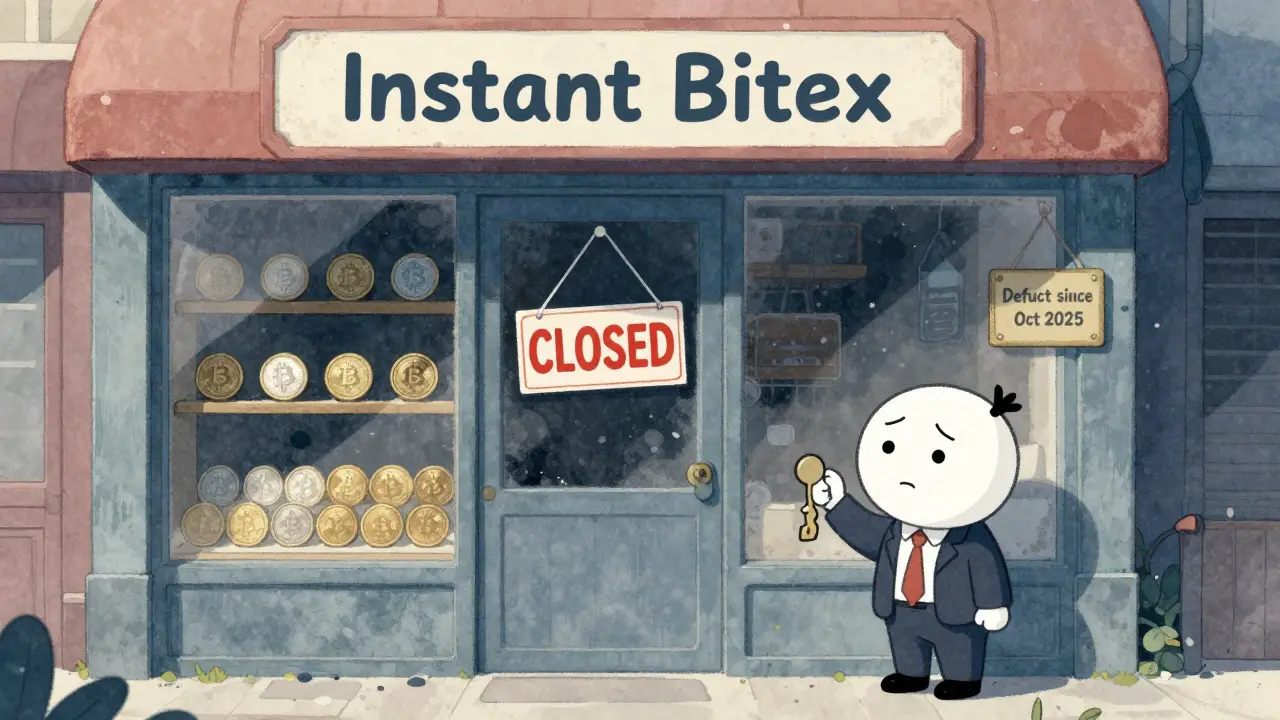
You might be looking for Instant Bitex, a platform that once promised lightning-fast trades and rock-bottom fees. But here is the hard truth you need to know right now: Instant Bitex is no longer operational.
If you are trying to log in, deposit funds, or sign up for an account, stop. The doors are closed. As of October 2025, major tracking sites like CoinCodex have officially flagged the exchange as defunct. This isn't just a temporary maintenance issue; it's a permanent shutdown. Understanding why this happened-and where you should go instead-is critical for keeping your digital assets safe in 2026.
The Quick Facts: What Happened to Instant Bitex?
Let’s get the history straight so you aren’t left guessing. Instant Bitex was founded in 2018 by a team of trading experts based in the UK. Their mission sounded ambitious: they wanted to advance the blockchain industry by incubating new tech and offering what they called "industry-leading security." For about seven years, they operated as a hybrid platform, mixing centralized exchange features with some decentralized elements.
However, the landscape changed. By late 2025, the platform ceased all operations. Data aggregators like AffGadgets now label their pages as "archival only," meaning the support team is gone, the servers are likely offline, and any remaining user data is inaccessible. If you had funds there, you need to check your email archives immediately for any final closure notices from their former support channels, though chances of recovery are slim without prior withdrawal.
What Made Instant Bitex Popular Before It Closed?
To understand why people used it, we have to look at its selling points during its active life. Instant Bitex wasn't the biggest player-it ranked around #141 globally-but it had specific advantages that attracted certain types of traders.
| Feature | Details | Industry Context |
|---|---|---|
| Trading Fees | Flat 0.10% for makers and takers | Better than the ~0.25% average |
| Withdrawal Fees | 0.0005 BTC for Bitcoin | Below industry average |
| Fiat Support | None (Crypto-only deposits) | Major barrier for beginners |
| Security | SSL (Let's Encrypt), Multi-Factor Auth | Standard, but not top-tier regulated |
| Tools | API access, OTC desk, Mobile App | Good for advanced users |
The fee structure was genuinely competitive. Charging a flat 0.10% regardless of whether you were providing liquidity (maker) or taking it (taker) was rare. Most exchanges charge higher rates for takers. Plus, their Bitcoin withdrawal fee of 0.0005 BTC was cheap compared to competitors who often charged more to cover network congestion costs.
But there was a huge catch. You couldn't buy crypto with dollars or pounds on Instant Bitex. They did not accept fiat currency deposits. This meant you had to already own cryptocurrency elsewhere, transfer it to Instant Bitex, and then trade. This excluded 90% of new investors who just want to buy Bitcoin with a credit card or bank transfer. It was built for veterans, not newcomers.
Why Did Instant Bitex Shut Down?
No official press release details the exact cause, but the pattern is familiar in the crypto world. Here are the most likely reasons, based on industry trends between 2018 and 2025:
- Regulatory Pressure: Operating without fiat gates helped them avoid some banking regulations, but as governments tightened rules on KYC (Know Your Customer) and AML (Anti-Money Laundering), unregulated or lightly regulated exchanges found it harder to operate legally. Without a clear regulatory license in major jurisdictions, staying open became risky.
- Lack of Fiat Onboarding: By refusing to accept bank transfers or credit cards, Instant Bitex capped its growth. New money flows into crypto through fiat gateways. Without that entry point, they relied entirely on existing holders moving funds in, which limits volume and revenue.
- Market Consolidation: The crypto exchange market is brutal. Big players like Binance, Coinbase, and Kraken dominate because they offer everything: low fees, high liquidity, fiat support, and staking. Smaller niche exchanges often can't compete on liquidity. If your order book is thin, slippage kills your profits, and users leave.
The lack of top-tier financial regulation was also a red flag for many institutional users. While they used SSL encryption and multi-factor authentication, they didn't have the same level of oversight as banks or licensed brokers. In an era where regulators are cracking down on unlicensed platforms, this made them vulnerable.
Is Your Money Safe Now?
If you still have funds in an Instant Bitex wallet, I have bad news. Since the exchange is marked as "no longer operational" by CoinCodex and other trackers, the infrastructure is likely gone. There is no customer support to contact, no login portal that works, and no way to initiate a withdrawal.
Here is what you should do immediately:
- Check your email: Search for any messages from Instant Bitex sent before October 2025. Look for keywords like "closure," "migration," or "final withdrawal." Sometimes exchanges give a window to move funds before shutting down completely.
- Do not send more funds: If you see a website claiming to be Instant Bitex that is still accepting deposits, it is a scam. The real company is closed. Do not connect your wallet or enter your seed phrase anywhere.
- Accept the loss if necessary: If you cannot find a migration path, those funds are likely lost. Treat this as a lesson in self-custody. Never leave large amounts on exchanges, especially smaller ones without strong regulatory backing.
Where Should You Go Instead? (Safe Alternatives)
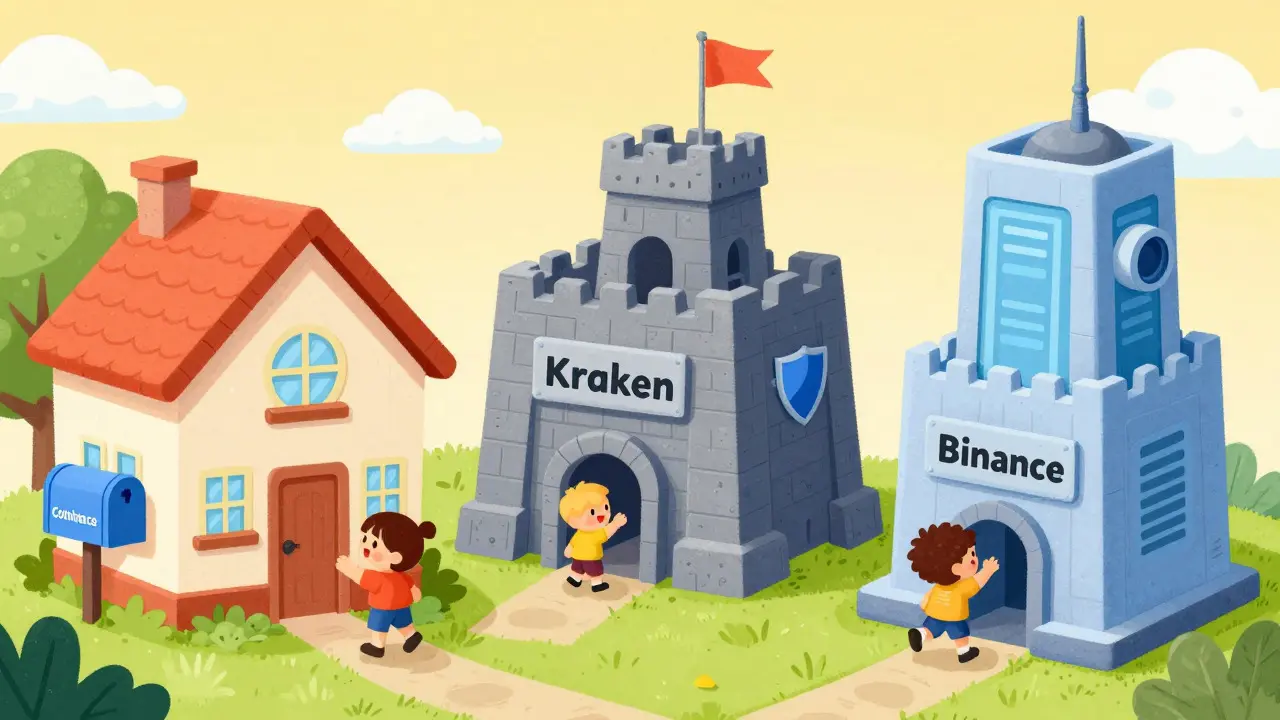
You need a replacement. But don't just pick another small exchange. Look for platforms that are regulated, have deep liquidity, and offer fiat onboarding so you aren't stuck in the crypto-only loop again.
Here are three solid alternatives depending on your needs:
1. For Beginners: Coinbase
Coinbase is public-traded and heavily regulated in the US and Europe. It’s easy to use, accepts bank transfers and credit cards, and has excellent security. The fees are higher than Instant Bitex was, but you are paying for safety and ease of use. If you are new, start here.
2. For Traders: Kraken
Kraken has been around since 2011. It offers low fees (similar to what Instant Bitex offered), high security, and supports both fiat and crypto deposits. They have a professional trading interface but also a simple app for casual users. They are known for never being hacked, which is a big deal.
3. For Advanced Users: Binance
If you liked Instant Bitex for its API access and OTC services, Binance is the giant in that space. It has the deepest liquidity, meaning you can trade large amounts without moving the price much. It supports hundreds of coins and has very low fees. Just note that regulatory access varies by country, so check if it’s available in your region.
| Platform | Status | Fiat Deposit | Regulation | Best For |
|---|---|---|---|---|
| Instant Bitex | Closed | No | Unclear/Limited | N/A |
| Coinbase | Active | Yes | High (US/EU) | Beginners |
| Kraken | Active | Yes | High (Global) | Security & Trading |
| Binance | Active | Yes (varies) | Moderate | Advanced Features |

How to Avoid Closed Exchanges in the Future
The crypto industry moves fast. Exchanges open, grow, and sometimes disappear overnight. Here is how to protect yourself:
- Check Regulatory Status: Always verify if an exchange is licensed in your country. A quick search for "[Exchange Name] regulatory status" can save you thousands.
- Use Self-Custody Wallets: For long-term holdings, move your crypto off the exchange. Use a hardware wallet like Ledger or Trezor. If the exchange goes bust, your coins are still safe in your private wallet.
- Diversify Platforms: Don’t keep all your eggs in one basket. Split your funds across two or three reputable exchanges. If one has issues, you aren’t locked out of everything.
- Watch for Red Flags: If an exchange stops updating its website, ignores support tickets, or suddenly changes its terms of service, withdraw your funds immediately.
Final Thoughts on Instant Bitex
Instant Bitex served its niche for seven years. It offered low fees and decent tools for crypto natives who already held assets. But its inability to adapt to regulatory demands and onboard new users via fiat likely sealed its fate. Its closure in 2025 is a reminder that in crypto, convenience and low fees mean nothing if the platform isn't sustainable.
Don't waste time trying to revive an old account. Move forward with a secure, regulated alternative. Your peace of mind is worth more than saving 0.15% on trading fees.
Is Instant Bitex still working in 2026?
No, Instant Bitex is no longer operational. It ceased operations in October 2025. Any website claiming to be Instant Bitex is likely a scam.
Can I recover my funds from Instant Bitex?
It is highly unlikely. Since the exchange is closed and support has ended, there is no mechanism to process withdrawals. Check your email for any final migration notices, but assume the funds are lost if you haven't withdrawn them already.
Why did Instant Bitex shut down?
While no official reason was given, factors likely included increasing regulatory pressure, the difficulty of operating without fiat onboarding capabilities, and competition from larger, more compliant exchanges.
What are the best alternatives to Instant Bitex?
For beginners, Coinbase is recommended due to its ease of use and regulation. For traders seeking low fees and security, Kraken is a strong choice. For advanced features and high liquidity, Binance remains a top option.
Did Instant Bitex accept fiat currency deposits?
No, Instant Bitex did not accept fiat currency deposits like USD or EUR. Users had to transfer cryptocurrency from other wallets to trade on the platform.
Was Instant Bitex regulated?
Instant Bitex was not regulated by top-tier financial authorities like the SEC or FCA. It operated with basic security measures like SSL encryption and 2FA, but lacked the robust regulatory oversight of major exchanges.


Heather Austin
July 17 2026hey everyone just wanted to drop a quick note about this because i see so many people still trying to log in and getting scammed
i worked in crypto compliance for a bit before switching industries and the thing with instant bitex was always that they had no fiat rails which is basically a death sentence in this market cycle you cant grow without onboarding new money from traditional finance sources and once the regulators started cracking down on kycaml requirements those small unlicensed platforms were sitting ducks
what most people dont realize is that when an exchange shuts down like this it is rarely just one factor it is usually a combination of liquidity drying up because big players like binance and kraken offer better spreads and then the regulatory hammer coming down on their head for not having proper licenses in major jurisdictions like the us or eu
if you are looking for alternatives i would strongly suggest looking at kraken if you care about security and lower fees or coinbase if you are newer to all this and want something super easy to use with bank transfers
also please for the love of god do not trust any website claiming to be instant bitex right now there are several phishing sites popping up that look exactly like the old interface trying to steal your seed phrases or private keys so be very careful out there