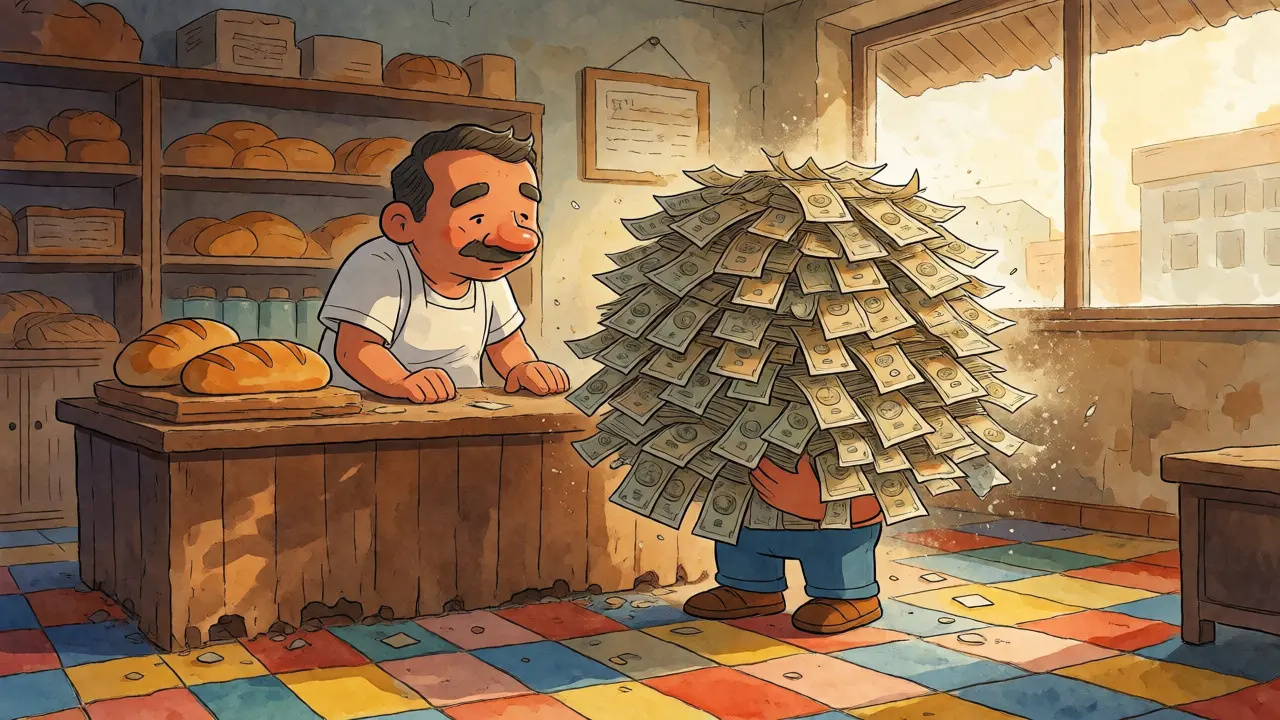
Imagine walking into a bakery in Caracas. You hand over a stack of bollars, the local currency, and the baker looks at you with pity. Not because you're short on cash, but because by the time he exchanges it, those bills will be worth less than the paper they're printed on. In Venezuela, this isn't a hypothetical scenario; it's Tuesday morning. While most of the world treats cryptocurrency as a speculative asset class or a tech experiment, for millions of Venezuelans, it is a basic survival tool. The country has endured economic chaos so severe that traditional banking has collapsed under the weight of political instability and sanctions. So, how exactly do people keep their money from evaporating? They don't just buy Bitcoin; they live in stablecoins.
| Factor | Traditional Bolívar | US Dollar (Cash) | USDT (Stablecoin) |
|---|---|---|---|
| Value Stability | High volatility; loses ~70% value annually | Stable, but scarce due to import restrictions | Pegged 1:1 to USD; highly stable |
| Accessibility | Widely available but worthless | Hard to obtain; requires physical travel | Available via smartphone apps 24/7 |
| Transaction Speed | Slow bank transfers; high fees | N/A (physical handling only) | Seconds via TRC-20 network |
| Fees | Variable bank charges | Exchange spreads can be high | Minimal (often <$1 per transfer) |
The Rise of the "Binance Dollar"
You might think Bitcoin is the hero here, but the real workhorse is Tether, known as USDT. Why? Because nobody wants to pay for groceries with an asset that might swing 5% in price while you're waiting in line. Stablecoins offer the stability of the US dollar without the hassle of physically carrying cash, which is often hard to find due to government restrictions on dollar imports. Locals have even coined a term for it: the "Binance Dollar." This reflects the dominance of the Binance platform, where peer-to-peer (P2P) trading happens. It’s not about fancy charts or day-trading strategies; it’s about converting your paycheck into something that won’t lose half its buying power before you reach the supermarket.
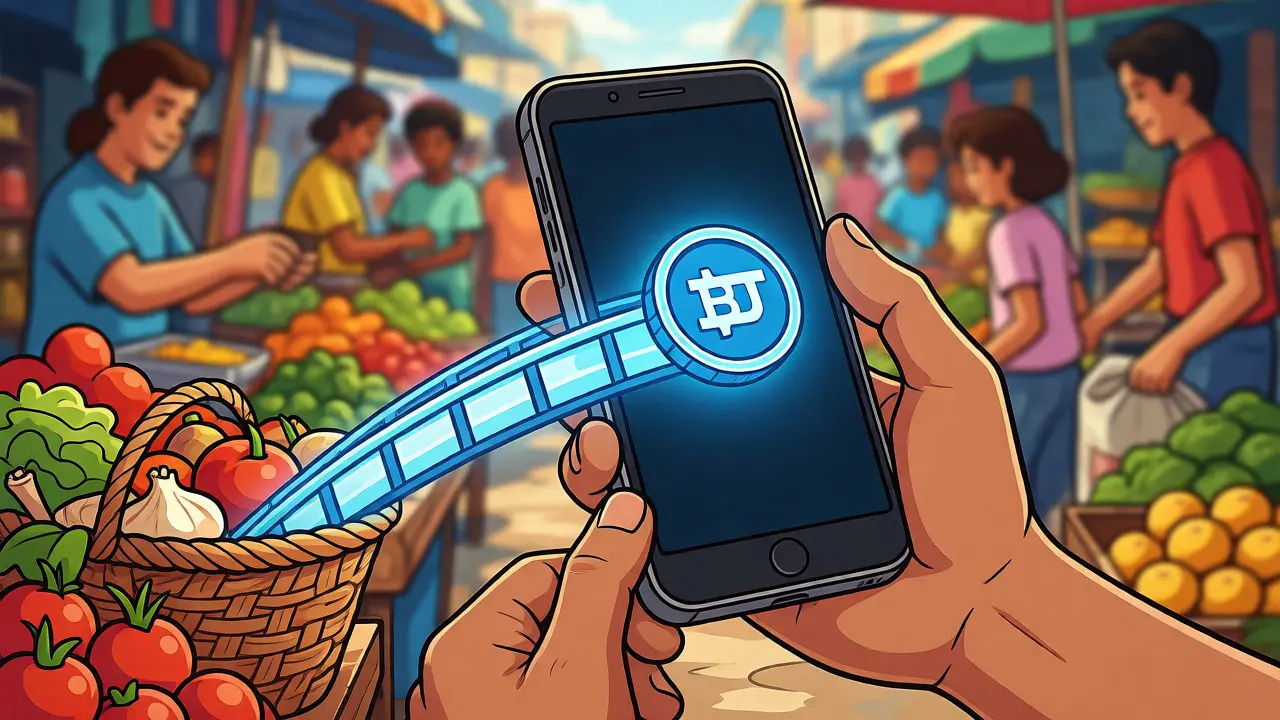
The mechanics are surprisingly simple once you get past the jargon. A worker receives their salary in bolívars. Immediately, they open their phone, go to a P2P marketplace, and sell those bolívars for USDT. The transaction usually happens on the TRC-20 network (built on Tron) because the fees are negligible-often just a few cents. Compare that to the high costs of wire transfers or the risk of holding physical dollars that could be stolen or confiscated. This digital layer allows commerce to continue even when the central banking system is paralyzed by bureaucracy and inflation.
Navigating Three Different Exchange Rates
If you’ve ever tried to understand Venezuelan economics, you know there isn’t just one exchange rate. There are three. First, there’s the official rate set by the Central Bank of Venezuela (BCV), which is often artificially low and disconnected from reality. Then there’s the "dólar negro" or black market rate, which fluctuates wildly based on supply and demand. Finally, there’s the USDT rate on platforms like Binance, which has become the de facto standard for pricing goods and services. Merchants in Caracas now frequently display prices in "Binance dollars" because it’s the most transparent and accessible benchmark for both buyers and sellers.
This tripartite system creates a weird arbitrage opportunity. Savvy users monitor these rates closely. If the black market rate spikes, they might hold off on selling their USDT. If the BCV rate offers a better deal for specific government-linked transactions, they might use that instead. But for daily life-buying food, paying rent, sending money to family-the USDT rate rules. It provides a level of predictability that the bolívar simply cannot offer. When annual inflation hits 229%, as it did in May 2025, preserving purchasing power becomes more important than making a profit.
Remittances Without Banks
Venezuelan families are spread across the globe. Millions have left the country, creating a massive diaspora. Sending money back home used to mean expensive wire transfers through Western Union or banks that charge hefty fees and take days to process. Now, crypto remittances dominate. In 2023 alone, $5.4 billion flowed into Venezuela through remittance channels, with nearly 9% processed via cryptocurrency. This bypasses the restrictive banking infrastructure and avoids the heavy taxes and fees associated with traditional methods.
The process is straightforward. A relative in Madrid or Miami buys USDT with their local currency and sends it directly to the recipient’s wallet in Venezuela. The recipient then sells the USDT for bolívars if needed, or keeps it in digital form to protect against further depreciation. This speed and cost-efficiency have made crypto indispensable for household survival. It’s not just about convenience; for many families, it’s the difference between having enough money for medicine and going without.
Government Ambivalence and Sanctions
You’d think a government struggling with economic collapse would embrace any solution that brings liquidity. The reality is messier. President Nicolás Maduro’s administration launched its own state-backed cryptocurrency, the Petro, in 2018. It was intended to help the country bypass US sanctions and attract foreign investment. Spoiler alert: it failed. Low adoption rates and widespread distrust led to its discontinuation in 2024. People didn’t trust a coin controlled by the same entity that mismanaged the economy.
Meanwhile, the government maintains a contradictory stance on private crypto usage. On one hand, they tolerate the use of dollar-backed stablecoins because it keeps commerce moving. On the other hand, they periodically crack down on mining operations and impose regulations that create uncertainty. US sanctions complicate things further, limiting access to certain financial tools and forcing users to rely on decentralized exchanges rather than centralized ones tied to US banks. Despite this regulatory ambiguity, adoption continues to grow because the alternative-holding worthless bolívars-is worse.
Real Life: How It Works on the Street
Let’s look at Carlos, a resident of Caracas. He doesn’t care about blockchain technology or smart contracts. He cares about rent. "I use USDT for everything," he says. "Buying food, paying rent. It is much more reliable than the bolívar." His experience is typical. He earns in bolívars, converts immediately to USDT, and spends using QR codes generated from his mobile app. Local vendors accept this because they can also convert their earnings back into stable assets or use them to restock inventory from suppliers who also prefer digital dollars.
This ecosystem thrives despite infrastructure challenges. Power outages and internet connectivity issues are common, so users have developed workarounds. Many rely on prepaid data plans and lightweight apps that work on older smartphones. Security awareness is growing too. Early adopters lost funds to scams or poor key management, but community education has improved. People share tips in WhatsApp groups and Telegram channels, teaching each other how to verify addresses and avoid phishing links. It’s a grassroots financial revolution, driven by necessity rather than ideology.

Comparison: Crypto vs. Other Survival Strategies
| Strategy | Pros | Cons | Adoption Level |
|---|---|---|---|
| Holding Cash Dollars | Tangible; universally accepted | Risk of theft; hard to earn; limited supply | Moderate (declining) |
| Physical Assets (Gold/Jewelry) | Intrinsic value; no digital dependency | Low liquidity; difficult to divide for small purchases | Low |
| Crypto (USDT/BTC) | High liquidity; global access; low fees | Requires tech literacy; internet dependence | High (growing rapidly) |
| Bolívar Savings | No conversion effort | Rapid loss of value; negative real interest rates | Very Low |
The Future of Digital Dollarization
Is this trend reversible? Probably not. Once a population realizes that their national currency cannot store value, they rarely go back. The shift toward "digital dollarization" via stablecoins appears irreversible given the complete breakdown of confidence in traditional monetary systems. Even if political winds change, the infrastructure built around P2P crypto networks is robust. New generations are growing up understanding that money can exist purely as code, unbound by borders or bank hours.
While experts warn that crypto won’t fix structural issues like corruption or lack of production, it provides essential tactical stability. It allows businesses to plan, families to eat, and workers to save. For Venezuela, cryptocurrency isn’t about getting rich quick. It’s about staying afloat in a storm that shows no signs of ending soon. As long as inflation remains high and trust in institutions remains low, the "Binance Dollar" will remain the most trusted currency in the land of oil.
Why do Venezuelans prefer USDT over Bitcoin?
Venezuelans prefer USDT (Tether) because it is a stablecoin pegged to the US dollar. Unlike Bitcoin, which is volatile and can fluctuate significantly in price within a single day, USDT maintains a steady value. This makes it practical for daily transactions like buying groceries or paying rent, where price certainty is crucial.
What is the "Binance Dollar"?
The "Binance Dollar" is a colloquial term used in Venezuela to refer to USDT traded on the Binance peer-to-peer platform. Since Binance is the dominant exchange for P2P trades in the country, the USDT rate on Binance has become the reference price for many goods and services, effectively replacing the official bolívar rate in everyday commerce.
Is cryptocurrency legal in Venezuela?
The legal status is ambiguous. The government initially banned cryptocurrency payments but later softened its stance. Currently, while the state-backed Petro exists, private cryptocurrencies like Bitcoin and USDT are widely tolerated and used. However, the government occasionally imposes restrictions on mining or specific exchanges, creating a regulatory gray area rather than a clear ban or full legalization.
How do Venezuelans send money abroad using crypto?
They typically use peer-to-peer (P2P) platforms like Binance. A user in Venezuela sells their bolívars for USDT. They then send the USDT to a relative abroad, who sells the USDT for their local currency (like Euros or USD). This method is faster and cheaper than traditional bank wires, which are often slow, expensive, or blocked by sanctions.
What risks do Venezuelan crypto users face?
Users face several risks, including internet connectivity issues, power outages, and potential fraud on P2P platforms. Additionally, there is regulatory risk, as the government may impose new restrictions on exchanges or mining. Security is another concern; losing private keys means losing access to funds permanently, and many users are still learning best practices for digital wallet security.