
Have you ever watched a cryptocurrency price crash hard, only to see it rocket back up minutes later? You weren’t imagining things. That wasn’t random volatility; it was likely whale manipulation, a tactic where massive capital holders distort the market to trigger your stop-loss orders before moving the price in their favor. In the wild west of crypto markets, these "whales"-entities controlling vast amounts of Bitcoin or Ethereum-don’t just trade; they engineer outcomes. For retail traders, failing to recognize these patterns is often the difference between profit and ruin. Understanding how these giants move is no longer optional; it’s survival.
The Anatomy of Whale Manipulation
To spot the trap, you first need to understand the mechanism. Whales operate on a simple premise: use their size to create artificial supply or demand, forcing other traders to act against their interests. The most common technique is known as spoofing, which involves placing enormous buy or sell orders with no intention of executing them. Imagine seeing a massive "buy wall" at $60,000 for Bitcoin. Retail traders see this support, feel safe, and pile into long positions. Suddenly, the whale cancels that wall, the price drops, and those longs are liquidated. The whale then buys the dip at a discount. This cycle repeats constantly across major exchanges.
Another sophisticated method is the liquidity sweep, where prices temporarily breach key support or resistance levels to trigger clustered stop-loss orders. According to data from TradingView analysts, these sweeps are designed to hunt for liquidity. When enough stop-losses are triggered, it creates a cascade of market orders that provide the liquidity the whale needs to enter or exit large positions without significant slippage. It’s not just about moving the price; it’s about feeding off the panic of smaller players.
| Tactic | How It Works | Goal |
|---|---|---|
| Spoofing | Placing large fake orders to influence perception | Create false sense of support/resistance |
| Liquidity Sweep | Price briefly breaks a level to trigger stops | Accumulate assets at lower prices |
| Pump and Dump | Coordinated buying to inflate price, then selling | Exit positions at peak retail FOMO |
| Layering | Multiple small fake orders stacked above/below price | Mimic high volume to deceive algorithms |
Reading the Order Book: Signs of a Trap
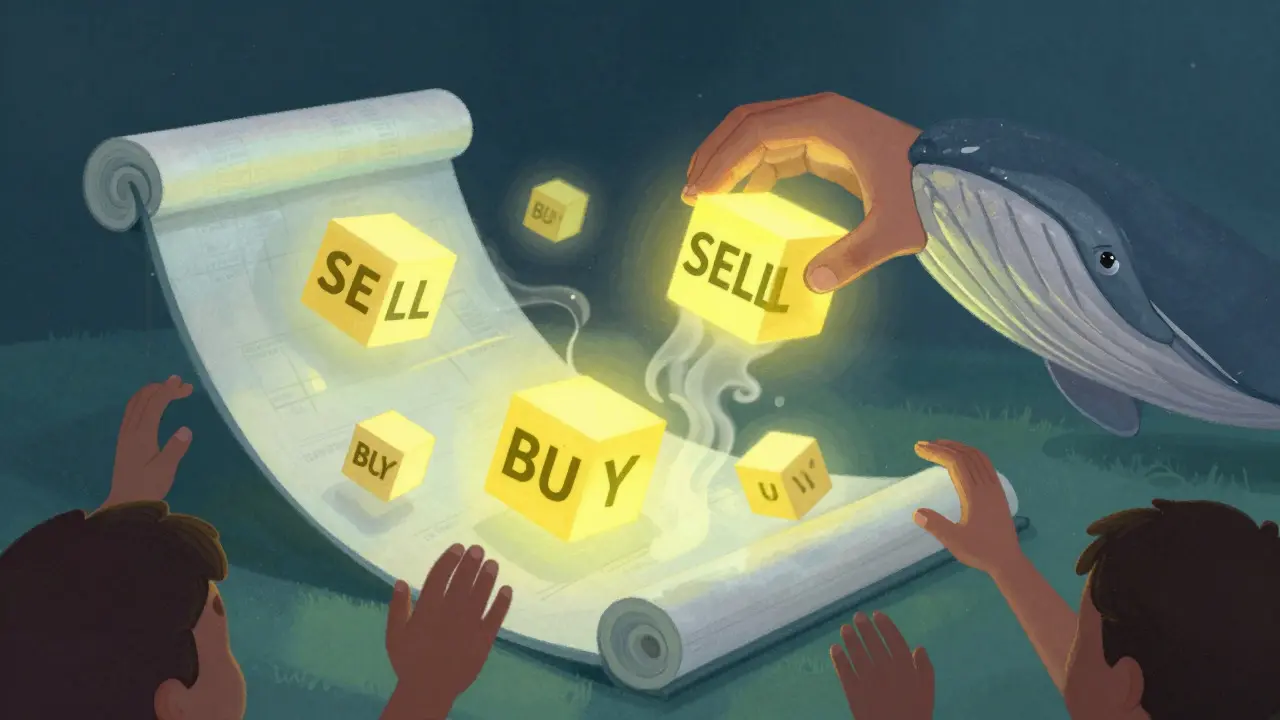
Your best defense is learning to read the order book like a pro. Most retail traders look at the chart; whales watch the depth. If you notice a massive sell wall appearing and disappearing repeatedly as the price approaches it, that’s a classic sign of order book spoofing. These walls are psychological tools. They’re meant to scare sellers into dumping their coins early or entice buyers to chase a breakout that never happens.
Pay close attention to volume delta divergence. This occurs when the price moves up, but the actual buying volume (aggressive buyers) is decreasing. If Bitcoin rises $1,000 but the volume profile shows weak buying pressure, it’s likely being pushed by a few large actors rather than organic market demand. This is often a precursor to a reversal. Professional traders spend 15-20 minutes daily analyzing cumulative delta and volume profiles to separate real moves from fake-outs.
Also, watch for block trades in the time and sales data. Large transactions executed away from the main order book can signal institutional accumulation or distribution. If you see huge blocks hitting during low-liquidity periods, such as the Asian session for crypto markets, be cautious. These are prime times for whales to move the needle with minimal capital expenditure.
The Four-Phase Manipulation Cycle
Whale activity isn’t random; it follows a predictable four-phase cycle documented by Binance Academy. Recognizing which phase you’re in can save you from getting caught on the wrong side of the trade.
- Accumulation: Whales quietly buy assets at low prices over weeks or months. The chart looks boring, with low volatility and narrow ranges. This is where patience pays off for those who can identify the bottom.
- Distribution: As prices rise, whales begin gradually selling to retail investors who are chasing gains. Volume remains high, but price momentum starts to stall.
- Dump: Buying pressure ceases entirely. Whales may even add short positions to accelerate the drop. Panic sets in among retail traders, leading to forced liquidations.
- Redistribute: During the panic, whales buy back assets at deeply discounted prices. This completes the cycle, setting the stage for the next accumulation phase.
Understanding this cycle helps you avoid buying at the top during distribution or selling at the bottom during redistribution. Instead of reacting to every price tick, focus on the broader structural context.
Tools and Techniques for Detection
You don’t need insider information to detect manipulation; you just need the right tools. Modern platforms offer features specifically designed to highlight abnormal activity. For instance, liquidation heatmaps visualize where stop-loss orders are clustered. If you see a bright red zone just below a support level, expect a sweep. Whales know exactly where retail stops are sitting because everyone uses the same technical analysis levels.
Another powerful tool is funding rate analysis. In perpetual futures markets, if the funding rate is extremely positive, it means most traders are long and paying shorts. This is a contrarian indicator. Whales love this setup because they can open short positions, collect funding fees, and benefit from any price correction. Conversely, negative funding rates suggest excessive shorting, making a squeeze upward more likely.
Social sentiment also plays a role. Monitor platforms like Twitter and Reddit for sudden spikes in hype around specific altcoins. Often, this noise precedes a pump-and-dump scheme. If influencers are all posting about the same coin simultaneously, check the on-chain data. Are new wallets accumulating, or are old wallets distributing? Tools like Chainalysis and Glassnode provide insights into wallet movements that reveal whether smart money is entering or exiting.
Protecting Your Portfolio from Whales
Knowing how to spot manipulation is half the battle; protecting yourself is the other. The first rule is to avoid using excessive leverage. High leverage amplifies liquidation cascades, making you an easy target for whales hunting stops. Stick to position sizes below 2% of your total capital per trade. This ensures that even if you get swept out, you can re-enter the market.
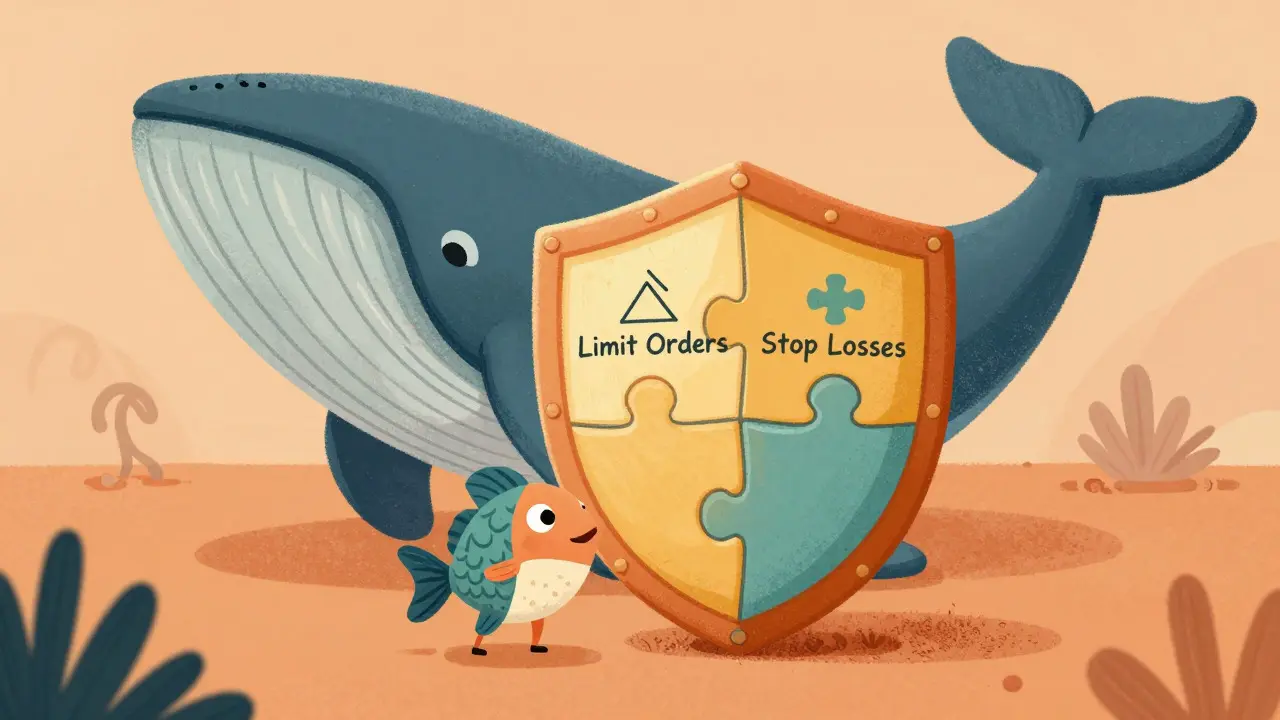
Use limit orders instead of market orders whenever possible. Market orders execute at the best available price, which can be manipulated through slippage. Limit orders give you control over your entry and exit prices, preventing you from buying the top or selling the bottom during volatile swings.
Finally, place your stop-losses strategically. Don’t put them exactly at obvious support or resistance levels. Place them slightly beyond these zones, accounting for potential wicks and sweeps. This extra buffer might mean a slightly larger loss if stopped out, but it significantly reduces the chance of being shaken out prematurely by whale tactics.
Regulatory Landscape and Future Trends
The regulatory environment is evolving. The U.S. Commodity Futures Trading Commission (CFTC) has increased enforcement actions against market manipulation, filing 17 cases in 2023 alone. Similarly, the European Union’s MiCA framework requires exchanges to implement real-time surveillance systems capable of identifying spoofing and layering activities. These measures aim to level the playing field, though enforcement remains challenging in decentralized markets.
Technology is also advancing. Exchanges like Binance have introduced anti-whale algorithms that automatically detect and neutralize suspicious orders. TradingView has integrated machine learning-based heatmaps to visualize abnormal order book concentrations. While these tools help, whales are becoming more sophisticated, using cross-exchange coordination to evade detection. Staying informed and adaptable is crucial for long-term success in crypto trading.
What is a whale in cryptocurrency?
A whale is an individual or entity holding a large amount of cryptocurrency, typically enough to influence market prices through their trading activities. For example, holding over 1,000 Bitcoin qualifies one as a whale due to the asset's limited supply.
How can I tell if a price move is manipulated?
Look for signs like sudden volume spikes without news, rapid reversals after breaking key levels, and discrepancies between price action and volume delta. Also, check if large orders appear and disappear quickly in the order book.
Is whale manipulation illegal?
In regulated traditional finance markets, yes, spoofing and manipulation are illegal. However, in many cryptocurrency jurisdictions, regulations are still developing, making enforcement difficult. Some exchanges now have internal rules against such practices.
What is the best way to protect against whale manipulation?
Use limit orders, avoid high leverage, place stop-losses outside obvious liquidity zones, and analyze order book depth and funding rates. Diversifying your portfolio and staying informed about market structure also help mitigate risks.
Do whales always manipulate the market?
Not always, but their large trades naturally impact prices. Manipulation refers to deliberate deceptive actions like spoofing. Organic whale trading can also cause volatility, especially in low-liquidity markets.