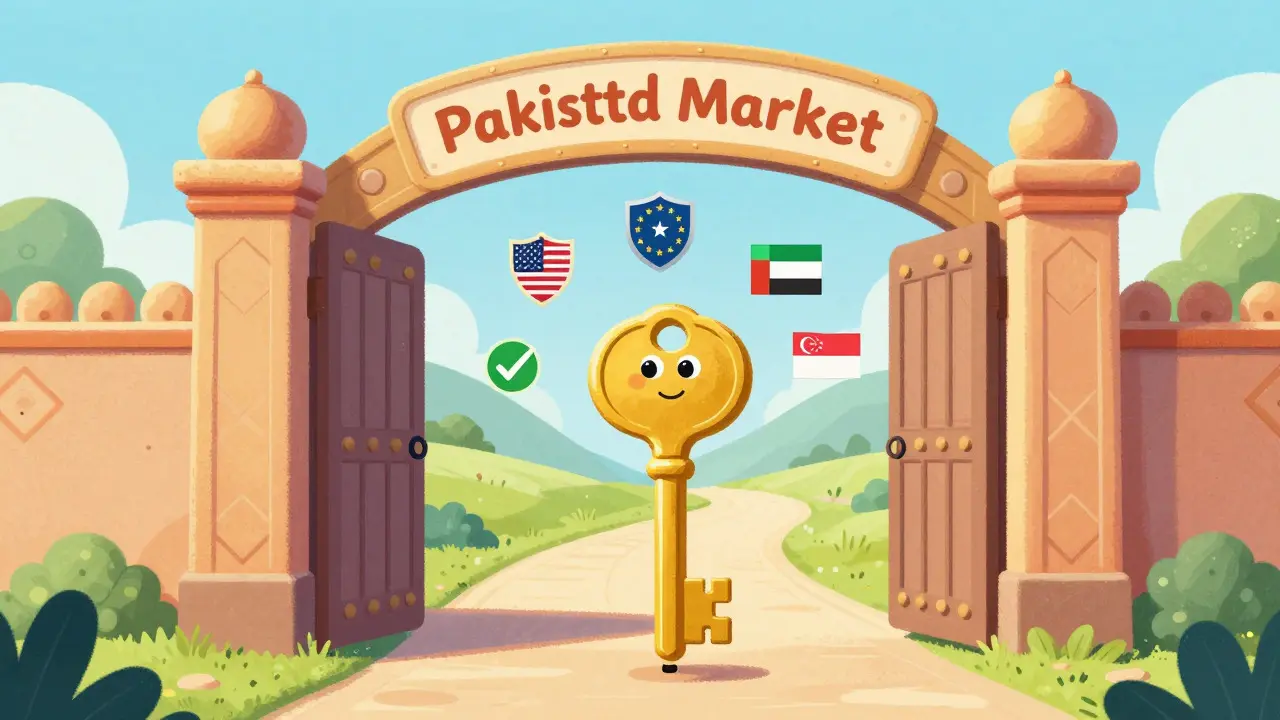
Getting a cryptocurrency exchange license in Pakistan is no longer a myth, but it isn't as simple as filling out a form online. If you are a global crypto firm looking to enter the Pakistani market, the rules changed drastically in mid-2025. The government established the Pakistan Virtual Asset Regulatory Authority (PVARA) under the Virtual Assets Ordinance 2025. This new body replaced the previous confusing mix of restrictions with a structured, albeit strict, licensing path for Virtual Asset Service Providers (VASPs).
However, there is a catch. You cannot just start from scratch. The door is open only if you already have credibility elsewhere. If your company is a local startup with no international backing, this guide might not be for you yet. But if you are an established player licensed by major global regulators, Pakistan is now actively inviting you to apply. Here is exactly what you need to know about the requirements, the paperwork, and the timeline.
Who Can Actually Apply? The Eligibility Filter
The first hurdle is eligibility. PVARA did not open the floodgates to everyone. They want quality over quantity. To submit an Expression of Interest (EoI), your firm must already hold a valid license from a recognized international regulator. This is the most critical filter in the entire process.
Your existing license must come from one of these specific jurisdictions:
- United States: Licensed by the Securities and Exchange Commission (SEC).
- United Kingdom: Authorized by the Financial Conduct Authority (FCA).
- European Union: Compliant with the EU’s VASP framework.
- United Arab Emirates: Licensed by the Virtual Assets Regulatory Authority (VARA).
- Singapore: Regulated by the Monetary Authority of Singapore (MAS).
If you do not have a license from one of these bodies, your application will likely be rejected before it even gets reviewed. This strategy ensures that Pakistan attracts established, compliant operators rather than risky newcomers. It reflects a cautious approach where the country leverages the due diligence already performed by trusted Western and Asian regulators.
What You Need to Submit: The Documentation Checklist
Once you confirm your eligibility, you need to prepare a comprehensive Expression of Interest. PVARA processes applications on a rolling basis, meaning they evaluate them as they come in, not in large batches. This allows for faster feedback but requires your submission to be perfect from day one.
You must compile all documents into a single PDF file. The email subject line must strictly follow this format: 'EoI VASP Licensing [Your Company Name]'. Send this to the designated PVARA email address provided in their official portal.
Here is the detailed breakdown of what must be included in that PDF:
- Complete Company Profile: A thorough overview of your corporate structure, history, and leadership team.
- Proof of Existing Licenses: Copies of your current licenses along with the names of the regulatory authorities that issued them and the jurisdictions where they are valid.
- Detailed Service Offerings: Clearly define what you will offer in Pakistan. Will you provide spot trading? Custody services? Payment processing? Tokenization? Be specific.
- Technology and Security Standards: Documentation proving your infrastructure is secure. Include details on cybersecurity protocols, data protection measures, and system redundancy.
- Financial Data: Current assets under management (AUM) figures and recent revenue data. PVARA wants to see financial stability.
- Compliance Track Record: Evidence of your history with Anti-Money Laundering (AML) and Combating the Financing of Terrorism (CFT) regulations. Any past violations or fines must be disclosed.
- Know Your Customer (KYC) Procedures: A detailed explanation of how you verify users. This must meet international standards.
- Pakistan-Specific Business Model: How will you operate locally? Do you have plans for local partnerships, customer support structures, or localized features?
Missing any of these elements can delay your review significantly. The goal is to show that you are ready to plug into the Pakistani market without creating regulatory headaches.
The Timeline: How Long Does It Take?
Patience is required here. According to Finance Ministry officials, the complete licensing process takes at least three months from the time of submission to the final issuance of the license. This is a minimum estimate, not a guarantee.
Why so long? PVARA is prioritizing thorough due diligence. Given Pakistan’s previous designation by the Financial Action Task Force (FATF) for anti-money laundering deficiencies, the new authority is moving carefully. They want to build credibility with international partners like the IMF and World Bank. Rushing approvals could jeopardize that trust.
The rolling application process helps manage the workload, but it also means you don’t have a fixed deadline for when your batch will be processed. Expect regular communication with PVARA during this period as they may request additional information or clarifications.

The Legal Grey Area: PVARA vs. State Bank of Pakistan
This is the most confusing part for many applicants. While PVARA is actively issuing licenses and promoting crypto adoption, the State Bank of Pakistan (SBP) maintains a different stance. Under current banking laws, the SBP reiterates that cryptocurrencies remain illegal for traditional financial institutions.
So, you have a paradox: One federal agency invites you to build a business, while another tells banks not to touch digital currencies. Cryptocurrencies are not recognized as legal tender in Pakistan. This creates a "legal grey area" where exchanges can operate under PVARA supervision, but integrating with the traditional banking system remains difficult.
As of August 2026, this contradiction has not been fully resolved. Senate committees have proposed amendments to clarify the framework, and there were discussions in late 2025 about moving the Pakistan Crypto Council to the Ministry of Information Technology to better align digital assets with tech policy. Until then, operators must navigate this dual reality carefully.
Strategic Context: Why Pakistan Is Doing This
Understanding the 'why' helps you position your application. Pakistan isn't just regulating crypto randomly; it's part of a broader economic strategy. At the Bitcoin Vegas 2025 conference, the government announced ambitious plans, including a Strategic Bitcoin Reserve and allocating 2,000 MW of electricity for Bitcoin mining and AI data centers.
While the International Monetary Fund (IMF) raised objections to the mining proposal due to concerns about subsidized tariffs and grid strain, the push for regulation remains strong. PVARA aims to curb illicit finance while unlocking opportunities in fintech, remittances, and tokenization.
A unique angle for Pakistan is its focus on Islamic finance. PVARA has introduced regulatory sandboxes specifically designed for Shariah-compliant crypto products. If your exchange offers halal investment options or complies with Islamic financial principles, highlight this in your application. It positions you favorably in a country with a significant Muslim population.

Comparison: Global Standards vs. Pakistani Requirements
| Criteria | PVARA (Pakistan) | General Global Standard (e.g., EU MiCA) |
|---|---|---|
| Prerequisite License | Required from specific top-tier regulators (SEC, FCA, etc.) | Local application often sufficient for new entrants |
| Processing Time | Minimum 3 months | Varies widely (3-12 months depending on jurisdiction) |
| Regulatory Body | PVARA (Independent Federal Authority) | Often Central Banks or Financial Ministries |
| Banking Integration | Restricted by State Bank of Pakistan | Generally integrated with local banking systems |
| Islamic Finance Focus | High (Shariah-compliant sandboxes available) | Low to Moderate |
Next Steps for Applicants
If you meet the eligibility criteria, start gathering your documentation immediately. Focus heavily on your AML/CFT track record and security standards, as these are PVARA’s primary concerns. Draft your Pakistan-specific business model with care, considering the banking restrictions and the potential for Islamic finance products.
Keep an eye on legislative updates. The Senate’s ongoing work to clarify the conflict between PVARA and the State Bank of Pakistan could change the operational landscape. Being proactive and maintaining open lines of communication with PVARA during the three-month review period will serve you well.
The window is open, but it is narrow. Only the most prepared and compliant firms will walk through it successfully.
Can a local Pakistani startup get a crypto exchange license?
Currently, no. The initial phase of PVARA licensing is restricted to firms that already hold licenses from recognized international regulators like the SEC, FCA, or MAS. Local startups without this prior international validation are not eligible to submit an Expression of Interest at this stage.
How long does the PVARA licensing process take?
The process takes a minimum of three months from submission to license issuance. Applications are processed on a rolling basis, so timelines can vary depending on the completeness of your documentation and the volume of applications received.
Is cryptocurrency legal in Pakistan?
It is complicated. PVARA regulates virtual asset service providers, making it legal for licensed exchanges to operate. However, the State Bank of Pakistan still considers crypto illegal for traditional banking transactions, and it is not legal tender. This creates a regulatory grey area that operators must navigate carefully.
What documents are required for the EoI submission?
You need a comprehensive PDF including your company profile, proof of international licenses, service offerings, technology/security standards, financial data (AUM/revenue), compliance track records (AML/KYC), and a Pakistan-specific business model.
Does PVARA support Islamic finance products?
Yes. PVARA has established regulatory sandboxes specifically for Shariah-compliant crypto products. If your exchange offers halal investment options, highlighting this can strengthen your application given Pakistan's demographic context.
Which international licenses are accepted by PVARA?
PVARA accepts licenses from the US SEC, UK FCA, EU VASP framework, UAE VARA, and Singapore MAS. Having a license from one of these five jurisdictions is a strict prerequisite for eligibility.
Will the State Bank of Pakistan allow bank transfers for crypto?
As of August 2026, the State Bank of Pakistan continues to prohibit financial institutions from dealing directly in digital currencies. While PVARA licenses exchanges, integrating with the traditional banking system remains challenging due to these conflicting regulations.
What is the role of the Pakistan Crypto Council?
The Pakistan Crypto Council (PCC) was involved in announcing national strategies, such as the Strategic Bitcoin Reserve. In late 2025, a Senate committee recommended moving the PCC to the Ministry of Information Technology to better align its mandate with the tech sector, though implementation details are still evolving.