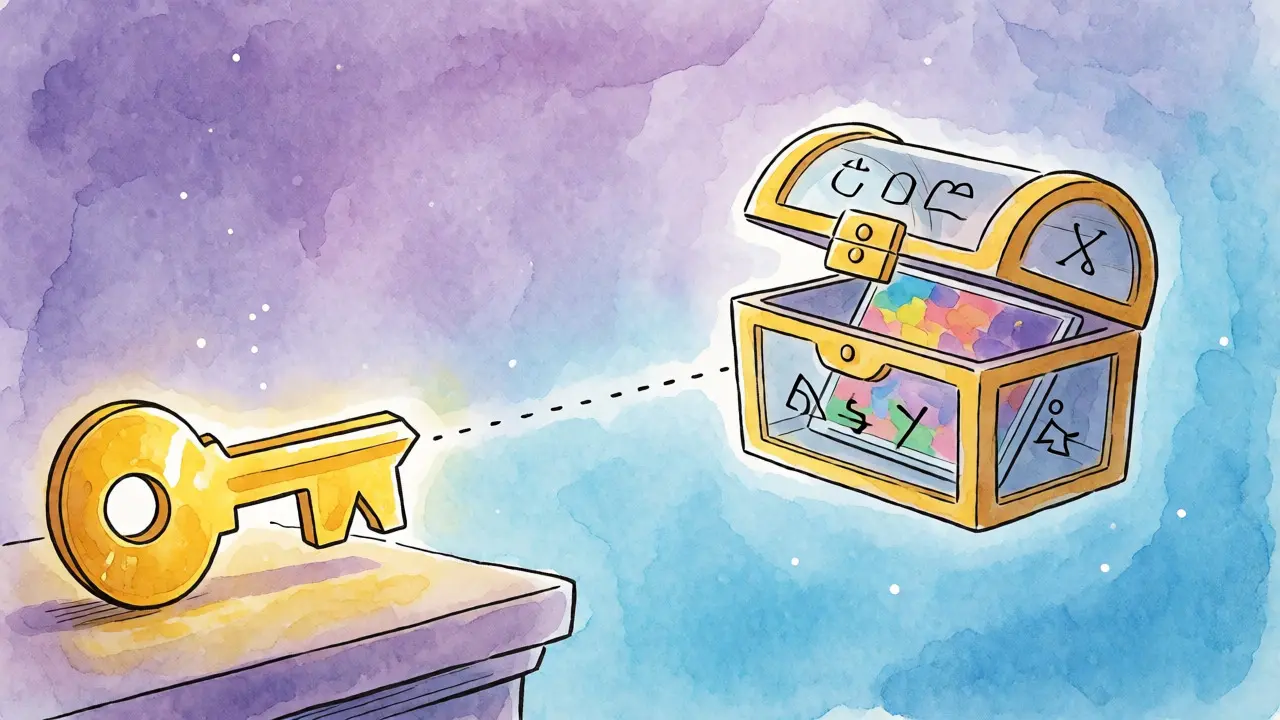
You bought a digital artwork for five figures. The blockchain says you own it. But if the link to the image breaks next year, do you really still own it? This isn't just a philosophical puzzle; it's a technical reality affecting millions of collectors. NFT metadata is the critical bridge between your wallet address and the actual digital asset. It’s where the story of ownership lives. Without robust metadata, an NFT is just a receipt pointing to a potentially empty room. Understanding how this data stores provenance-the history of who owned what and when-is essential for anyone serious about digital assets in 2026.
The Anatomy of Digital Proof
Think of an NFT like a house deed. The deed (the token on the blockchain) proves you own the property, but it doesn’t contain the blueprints or the photos of the house. That’s where metadata comes in. Typically structured as JSON files, metadata holds the descriptive information that gives the token its value. According to the Hedera Improvement Proposal HIP-412, this data tracks "ownership history... authenticity and origin." It’s not just about pretty pictures; it’s about verifiable truth.
The standard most people know is ERC-721, formalized back in January 2018. It introduced the `tokenURI` function, a simple pointer that directs users to a file containing all the details. But here’s the catch: most of these files don’t live on the blockchain. Why? Cost. Storing one megabyte of data on Ethereum can cost around $1,200. Compare that to traditional cloud storage, which costs fractions of a cent, and the choice seems obvious. Yet, this convenience introduces risk. If the server hosting that JSON file goes down, your provenance trail vanishes.
Where Does the Data Actually Live?
Most NFTs use a two-layer architecture. The blockchain holds a permanent, immutable link (a URI). That link points to a JSON file stored elsewhere. Inside that JSON file is another link, usually pointing to the actual image or video. This separation allows for flexibility but creates a dependency chain. If any link in that chain breaks, the connection to the asset is severed.
So, where are these files going? The vast majority-about 92.7% according to recent industry guides-rely on off-chain solutions. The most popular decentralized option is IPFS (InterPlanetary File System). Unlike regular servers, IPFS uses Content Identifiers (CIDs). These CIDs are cryptographic hashes. If you change even one pixel of the image, the CID changes. This makes tampering with provenance nearly impossible without detection.
However, IPFS isn't magic. It requires "pinning"-actively keeping the data alive on nodes. A study by Protocol Labs found that unpinned content has a 47% chance of disappearing within six months. Services like Pinata or NFT.Storage handle this pinning for a fee, offering a middle ground between decentralization and reliability. For those willing to pay more for permanence, Arweave offers a "pay once, store forever" model. It’s expensive upfront (around $0.03 per MB) but eliminates the risk of future hosting fees or service shutdowns.
Centralized vs. Decentralized: The Risk Factor
Not all projects take the decentralized route. About 63% of NFT projects still use centralized servers, like Amazon S3 or Cloudflare. This is easier for developers but risky for collectors. Remember the Nike CloneX incident? When Cloudflare restricted access due to a Terms of Service violation, the associated art temporarily vanished from view, even though the blockchain records remained intact. Your ownership didn’t disappear, but your ability to verify or display it did.
| Storage Type | Cost Estimate | Provenance Integrity | Risk Level |
|---|---|---|---|
| On-Chain | ~$1,200 / MB | Maximum (Immutable) | Low (Size limited) |
| IPFS (Pinned) | ~$0.15 / GB / mo | High (Content-addressed) | Medium (Requires pinning) |
| Arweave | ~$0.03 / MB (One-time) | High (Permanent) | Low (Limited ecosystem) |
| Centralized Server | ~$0.0000000001 / MB | Low (Mutable) | High (Service shutdown) |
This table highlights a stark trade-off. Centralized storage is cheap and easy, but it puts your provenance at the mercy of corporate decisions. On-chain storage is bulletproof but often too small for high-resolution media. IPFS and Arweave strike a balance, but they require active management or higher upfront costs.
The Mutable Metadata Problem
Here’s a scenario that keeps collectors up at night: You buy an NFT. Six months later, the creator updates the metadata. Suddenly, the "Rare" trait becomes "Common," or worse, the image changes entirely. This is called mutable metadata, and it affects roughly 41% of collections. While some updates are necessary bug fixes, others are sneaky attempts to alter perceived value after the sale.
True provenance requires immutability. If the metadata can be changed, the historical record is compromised. Experts like Vitalik Buterin have warned that NFTs without persistent metadata are merely "pointers to potentially ephemeral content." To combat this, newer standards are emerging. The ENS Provenance Protocol, launched in mid-2024, embeds immutable records directly into metadata with cryptographic verification. This means any change leaves a visible, auditable trace on the blockchain.
Verifying Authenticity Yourself
Don’t just trust the marketplace interface. You can verify provenance yourself. Most wallets and explorers allow you to inspect the raw JSON data. Look for the `image` field. Is it an IPFS CID (starting with `ipfs://`) or an HTTP link? An IPFS link is generally safer because it’s content-addressed. If it’s an HTTP link, check if the domain looks stable. Is it a personal website that might expire? Or a major provider like AWS?
For advanced users, comparing hashes is key. In projects like 0N1 Force, the hash string in the metadata matches the entry in the smart contract mapping. This allows you to programmatically verify that the file you’re viewing is exactly the file that was minted. Tools exist now that automate this check, flagging collections with broken links or mutable attributes.
The Future of Digital Provenance
The market knows this is a problem. The NFT storage sector is projected to hit $1.2 billion by 2027, driven largely by these provenance concerns. We are seeing a shift toward hybrid models. Projects are increasingly storing a cryptographic hash of their metadata on-chain while keeping the bulk data off-chain. This anchors the provenance to the blockchain permanently, even if the off-chain storage provider fails.
Regulators are also paying attention. While the SEC hasn’t issued specific guidance on metadata standards yet, the pressure is mounting for transparency. Enterprise adoption, particularly in gaming, is accelerating this trend. Gamers need to know that their rare sword exists and has a clear history of ownership across different platforms. As we move further into 2026, expect stricter standards. The days of "trust me, bro" regarding digital ownership are ending. Verify the metadata, check the storage method, and ensure your provenance is built to last.
What happens if my NFT's metadata disappears?
If the metadata link breaks, you still technically own the token on the blockchain, but you lose access to the visual representation and descriptive data. This significantly impacts resale value and utility. Marketplaces may stop displaying the NFT, making it harder to sell. This is why checking the storage solution (IPFS vs. Centralized) before buying is crucial.
Is IPFS storage completely safe for NFTs?
IPFS is highly secure because it uses content addressing, meaning the file cannot be altered without changing its ID. However, it is not automatically permanent. Files must be "pinned" to nodes to remain accessible. If no one pins your file, it can eventually disappear from the network. Using paid pinning services like Pinata or NFT.Storage mitigates this risk.
Why don't all NFTs store data on the blockchain?
Cost and size limitations. Storing large images or videos directly on the Ethereum blockchain is prohibitively expensive (approx. $1,200 per MB) and limited by block size. Most NFTs therefore store only a small link (URI) on-chain, pointing to data stored off-chain on systems like IPFS or Arweave.
Can creators change NFT metadata after minting?
Yes, if the metadata is stored on a centralized server or if the smart contract allows updates. This is known as "mutable metadata." Approximately 41% of collections allow this. It poses a risk to provenance because the original state of the asset can be altered post-purchase. Immutable metadata, often achieved via IPFS CIDs, prevents unauthorized changes.
How does provenance tracking work in NFTs?
Provenance is tracked through a combination of blockchain transaction history and metadata fields. The blockchain records every transfer of the token ID. The metadata contains static information about the asset's creation and dynamic fields (in some standards) that log ownership history. Cryptographic hashes in the metadata ensure that the asset linked to the token hasn't been swapped out.