
Imagine voting from your phone while stationed overseas, knowing your ballot can’t be lost, altered, or stolen. That’s the promise of blockchain voting. Governments around the world have spent years testing it - from military bases in West Virginia to town halls in Utah. But as of 2025, no country has rolled it out for a full national election. Why? Because the tech works in small tests… but breaks under real pressure.
How Blockchain Voting Actually Works (Not Like You Think)
Most people picture blockchain voting like Bitcoin - public, open, and anonymous. But that’s not how governments use it. Real-world pilots use permissioned blockchains, meaning only authorized nodes (servers) can validate votes. Think of it like a private ledger locked behind digital keys, not a public board everyone can see.
Here’s how it flows:
- You log in using a verified digital ID - maybe a fingerprint, government-issued token, or two-factor auth.
- Your vote is encrypted and written to a blockchain node.
- The system anonymizes your identity so no one can link your name to your choice.
- You get a unique code to verify later that your vote was counted - without seeing who you voted for.
- Election auditors check the chain for tampering using cryptographic proofs.
Platforms like Voatz and Horizon State handle this. Voatz, used in the first-ever U.S. federal mobile voting pilot, layers biometrics, end-to-end encryption, and distributed storage across multiple servers. It’s not magic. It’s code - and code can be hacked.
Pilots That Tried (And What Went Wrong)
West Virginia ran the most famous pilot in 2018. About 150 overseas military voters used a mobile app to cast ballots. The state called it a success - no lost ballots, no delays. But security researchers found serious flaws: the app could be intercepted, and some users couldn’t verify their votes properly. It was discontinued for wider use.
Utah County tested it in 2019 for 1,000+ voters across three local elections. The system processed votes in under 3 seconds. Sounds fast? Good. But later audits by independent teams found vulnerabilities in the app’s architecture. The system didn’t just have bugs - it had blind spots that could let someone manipulate votes without detection.
Switzerland’s SwissPost trial got shut down in 2023. Why? Transparency concerns. Voters couldn’t easily verify their votes without trusting the software. And if you can’t trust the software, you can’t trust the result.
Sierra Leone tried blockchain in its 2018 national election - the first country to do so. The goal? To build trust after past election disputes. But no independent audit confirmed whether the blockchain actually improved integrity. The results stood - but the controversy didn’t go away.
Why It’s Not Ready for National Elections
Blockchain solves some problems - like lost mail-in ballots or slow counting. But it creates new ones.
- Scalability: Public blockchains like Ethereum can’t handle millions of votes in hours. Permissioned ones can, but they’re centralized - which defeats the point of decentralization.
- Ballot secrecy: You want to verify your vote was counted. But if you can verify it, someone else might figure out who you voted for. It’s a tightrope walk.
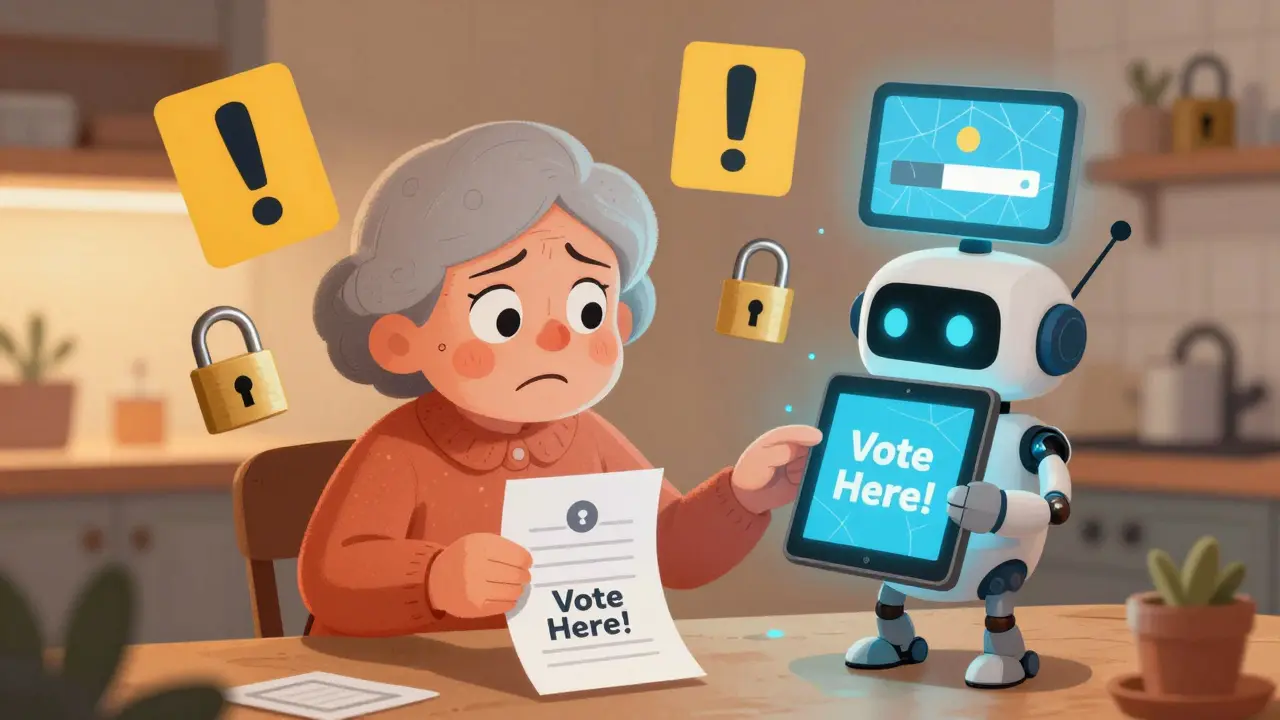
- Access: Older voters, people without smartphones, or those with limited tech skills can’t use these systems. That’s not inclusion - it’s exclusion.
- Cyber risk: NIST warned in 2018 that internet voting is inherently risky. Even with blockchain, the voting app on your phone is still a target. Hackers don’t need to break the blockchain - they just need to compromise your device.
And then there’s the human factor. Election officials need 80-100 hours of training just to run these systems. Most counties don’t have the budget - or the staff - to do it right.
Who’s Still Betting on It?
Despite the setbacks, interest hasn’t died. The Government Blockchain Association (GBA) still uses Voatz to run its own annual awards vote. That’s not a national election - it’s a low-stakes test. And that’s exactly where blockchain voting shines.
Private companies are using it for shareholder votes. Universities use it for student government elections. Local nonprofits use it for board elections. These aren’t high-risk scenarios. Mistakes here don’t change governments. That’s why they work.
Even Estonia, often cited as a blockchain voting leader, doesn’t use pure blockchain. Its i-Voting system uses digital IDs and encryption - but stores votes on traditional servers. It’s not blockchain. It’s just secure digital voting. And it works - 51% of Estonians voted online in 2023.
The Real Future: Hybrid Systems
The smartest path forward isn’t replacing paper with blockchain. It’s adding blockchain to paper.
Picture this: You vote on paper. Then, a scanner reads your ballot and writes a cryptographic hash - a digital fingerprint - to a blockchain. You get a receipt with a code. Later, you can check online that your ballot’s hash was included in the official tally. No one can change your vote. No one can fake your ballot. And if the system fails, you still have the paper.
This is what experts like Digitap call the “hybrid approach.” It keeps the security of physical ballots while adding blockchain’s transparency. No single point of failure. No need to trust an app. Just trust the paper - and verify it digitally.
Some U.S. states are already testing this. Colorado and Utah are piloting blockchain-based ballot auditing. It’s not voting yet - but it’s a step toward trust.
Why Politicians Resist
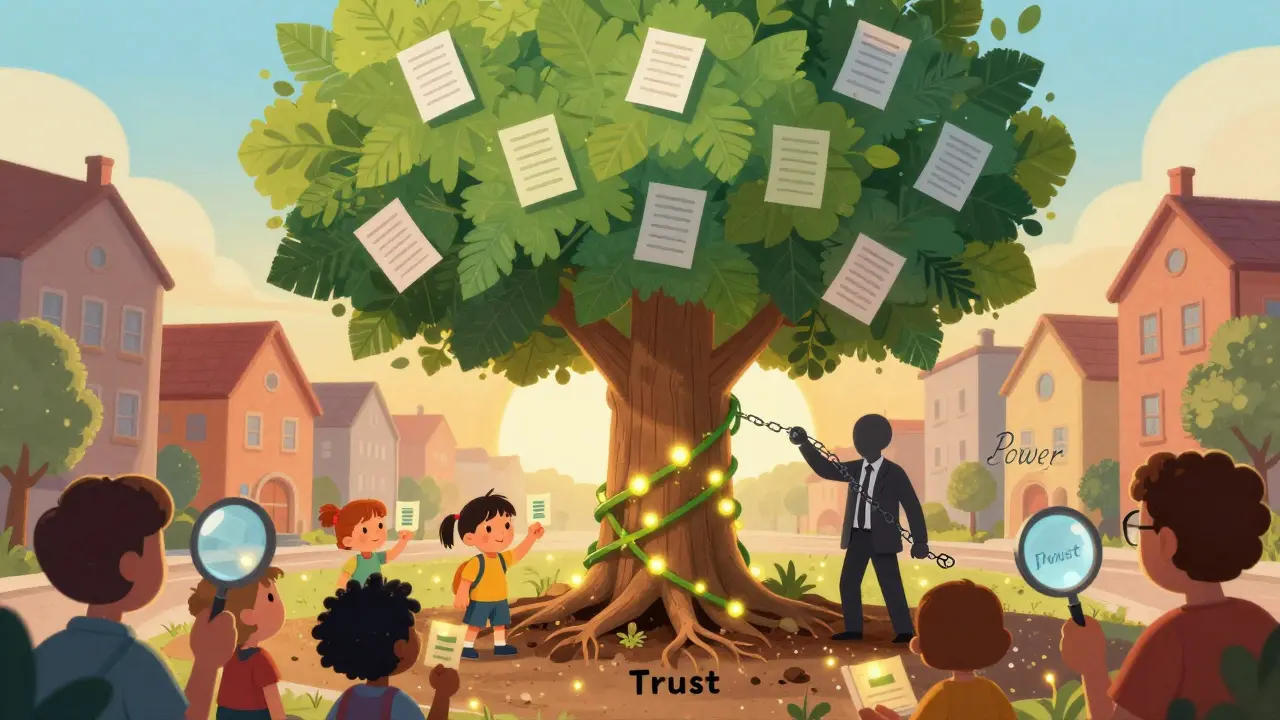
It’s not just about tech. It’s about power.
Blockchain voting makes elections more transparent. That means less room for manipulation. And that scares people who benefit from the current system - whether it’s local officials who control mail-in ballot distribution, or parties that rely on voter suppression tactics.
Rapid Innovation’s 2025 report says some political figures resist blockchain because it “can disrupt traditional power structures.” Translation: if everyone can verify their vote, it’s harder to rig the outcome.
That’s why legal backing is missing. No country has passed laws allowing blockchain voting for national elections. Not because the tech isn’t ready - but because the people in charge aren’t ready to give up control.
What You Can Do Right Now
If you care about election integrity, here’s what matters:
- Support paper ballots with digital audits - not fully digital voting.
- Ask your local election office if they use blockchain for ballot verification.
- Push for public audits of any voting tech used in your area.
- Don’t confuse convenience with security. A fast vote on your phone isn’t safer than a vote at a polling place.
Blockchain isn’t the villain. But pretending it’s a magic fix for democracy is dangerous. Real security comes from transparency, oversight, and paper trails - not just fancy code.
Has any country ever used blockchain voting for a national election?
No. As of 2025, no country has implemented blockchain voting for a full national election. Sierra Leone tested it in 2018, but the system was limited in scope and never independently verified. West Virginia, Utah, and Colorado ran small pilots for military or local voters - but none scaled to a national level.
Is blockchain voting more secure than paper ballots?
Not necessarily. Paper ballots are physical, visible, and can be recounted. Blockchain voting relies on software that can be hacked, misconfigured, or manipulated. While blockchain prevents tampering after a vote is cast, it doesn’t protect the vote before it’s submitted - like if your phone is infected with malware. Experts agree: paper with digital verification is safer than fully digital voting.
Why do governments keep testing blockchain voting if it’s risky?
Because the potential benefits are huge - especially for overseas voters, people with disabilities, or those in remote areas. Blockchain can make voting faster, more accessible, and verifiable. Governments are testing it to see if the risks can be managed. But so far, the risks have outweighed the rewards in large-scale elections.
Can I verify my vote if I use a blockchain voting app?
Yes - in most pilots, you get a unique code after voting. You can later check a public ledger to confirm your vote was recorded. But you can’t see who you voted for - that’s kept secret. The problem? Many voters don’t understand how to use the verification tool, and some apps make it confusing or unreliable.
What’s the biggest threat to blockchain voting systems?
The voting app on your personal device. Even if the blockchain is secure, your phone, tablet, or computer can be compromised by malware, phishing, or spyware. Once someone controls your device, they can change your vote before it even reaches the blockchain. That’s why NIST and other security agencies warn that internet voting - even with blockchain - remains too risky for high-stakes elections.
Is blockchain voting cheaper than traditional voting?
Not yet. While blockchain reduces printing and mailing costs, the setup is expensive. You need secure servers, digital ID systems, cybersecurity teams, training for staff, and public education campaigns. For small elections, it’s not cost-effective. For large ones, the risk of failure makes it financially dangerous. Most experts say it’s only worth it for niche cases - like overseas military voting - not mass elections.


Amit Kumar
December 22 2025Bro, blockchain voting is just tech bro fantasy wrapped in buzzwords. I’ve seen this shit in India with e-voting machines - ‘secure’ my ass. Hackers don’t need to break the chain, they just need to hack the guy holding the phone while he’s scrolling TikTok at 2am. And don’t even get me started on elderly folks who still think ‘clicking OK’ means they’re signing a lease. This ain’t progress, it’s a phishing playground with a fancy name.