When the Genshiro (GENS) airdrop happened, many people thought they were getting in on the next big thing in DeFi. It wasn’t just another token drop-it came with a real platform, a clear roadmap, and serious backing from Equilibrium. But here’s the thing: the story didn’t go how most people expected. The GENS token went from being worth over six cents to less than a penny per thousand. If you got GENS in 2022, you didn’t get rich. But maybe you got something else-something harder to measure.
How the Genshiro Airdrop Actually Worked
The Genshiro airdrop wasn’t handed out to wallet addresses holding a certain amount of crypto. It wasn’t passive. You had to do something to get it.
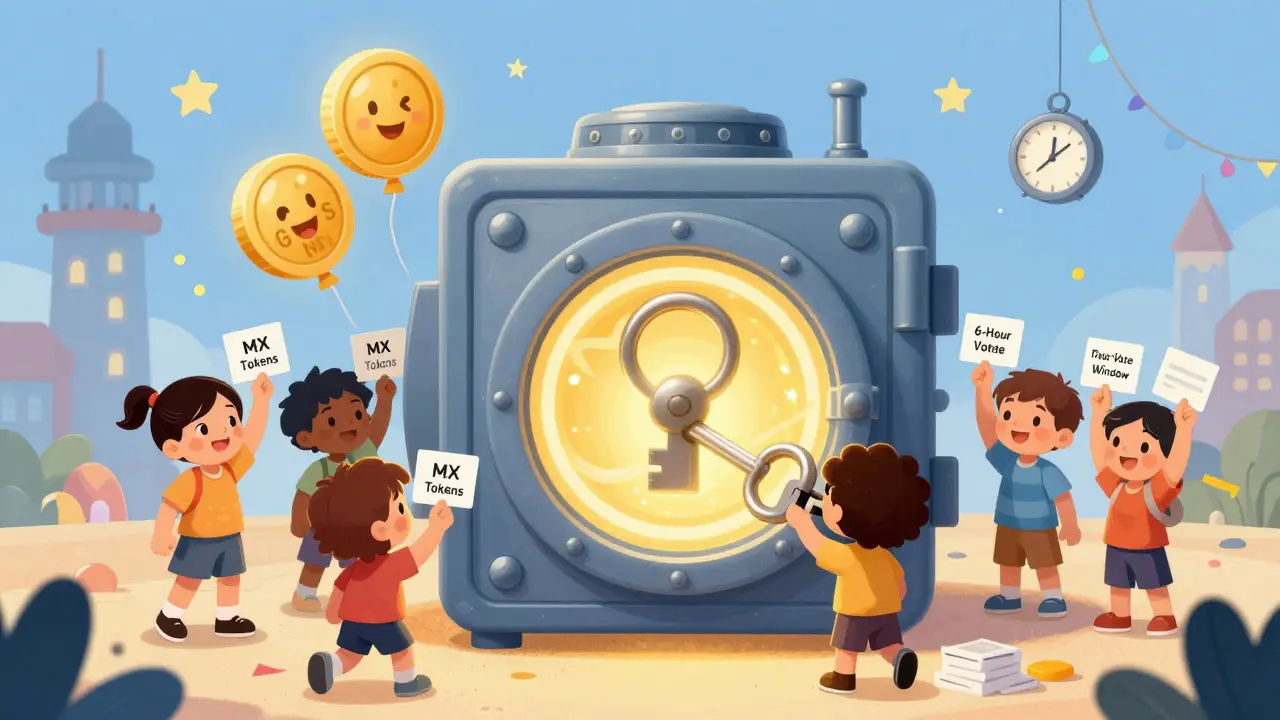
The biggest distribution happened on MEXC in January 2022. To qualify, you needed MX tokens-the exchange’s native token. You couldn’t just sit and wait. You had to vote. And you could vote multiple times. The rules? Use at least 10 MX tokens to cast a vote. You could lock up to 500,000 MX to maximize your chances. The voting window was tiny-just six hours. It opened at 04:00 UTC on January 22 and closed at 10:50 UTC the same day. Then, trading started at 14:00 UTC.
Why make it so complicated? Because Genshiro wasn’t trying to give away tokens to speculators. They wanted people who were already active in the ecosystem. The MX token requirement filtered out casual users. It rewarded those who were already trading, voting, or participating on MEXC. That’s not common. Most airdrops just snapshot wallets. Genshiro made you prove you cared.
The reward pool? 885,000 GENS tokens. At the time, each token was valued at $0.063. That meant the total giveaway was worth around $55,755. Not a fortune by today’s standards, but enough to get attention in early 2022.
Then there was Gate.io. They ran their own airdrop-bigger than MEXC’s. They distributed 1,277,825 GENS tokens for free. No voting. No minimum balance. Just sign up, complete a few steps, and claim. The exact dates and rules aren’t fully documented, but the scale tells you something: Gate.io saw potential. And they weren’t shy about backing it.
What Was Genshiro Even Trying to Do?
GENS wasn’t just another DeFi token. It was the native currency of a full DeFi ecosystem built on Kusama-the testnet for Polkadot. Think of it like Ethereum, but designed to be faster, cheaper, and more flexible. Genshiro’s goal? To be a one-stop shop for DeFi on Kusama.
It had eight core parts working together:
- Multi-chain swaps-move assets between blockchains without bridges
- Lending and borrowing-earn interest or borrow crypto without a bank
- Yield farming-lock up tokens to earn more tokens
- DAO governance-token holders voted on upgrades
- Liquidity pools-trade assets with low slippage
- Oracle systems-get real-time price data from outside the blockchain
- Layer-2 scaling-handle thousands of transactions per second
- Cross-chain security-built on Kusama’s shared security model
This wasn’t a simple DEX. It was trying to do everything DeFi does, but better. And it wasn’t just talking about it. The team had a roadmap that went all the way to 2030.

What Happened to the GENS Price?
Let’s talk numbers. In January 2022, GENS was priced at $0.063. That’s the number everyone saw when they got their airdrop. It felt like a win.
Fast forward to September 2025. The price? $0.00001301. That’s a 99.98% drop.
What went wrong?
It’s not one thing. It’s a mix:
- Market conditions-Crypto went through a brutal bear market. Kusama didn’t attract the same attention as Ethereum or Solana.
- Adoption-Even with a solid tech stack, not enough people used Genshiro’s tools. No users = no demand = no price.
- Competition-Other DeFi platforms on Solana, Polygon, and Ethereum outpaced it in user growth.
- Visibility-Genshiro never became a household name. No influencers, no viral campaigns, no big partnerships.
The tokens didn’t vanish. The platform didn’t shut down. But the market stopped believing.
Why the Airdrop Strategy Still Made Sense
Even though the price crashed, the airdrop design was smart.
Most projects give tokens to whales. The biggest wallets get the most. That creates imbalance. Genshiro made you vote. You had to earn it. That meant more small holders, fewer big ones. It created a more decentralized holder base from day one.
And it wasn’t just about distribution. It was about engagement. People who voted for GENS on MEXC were already familiar with crypto exchanges. They knew how to lock tokens, track deadlines, and use wallets. These weren’t random newcomers. They were users who could actually use the platform.
So even if the price tanked, the community might have been stronger than it looked. Maybe the real value wasn’t in the token price-it was in the network effect.
Is There Still Hope for Genshiro?
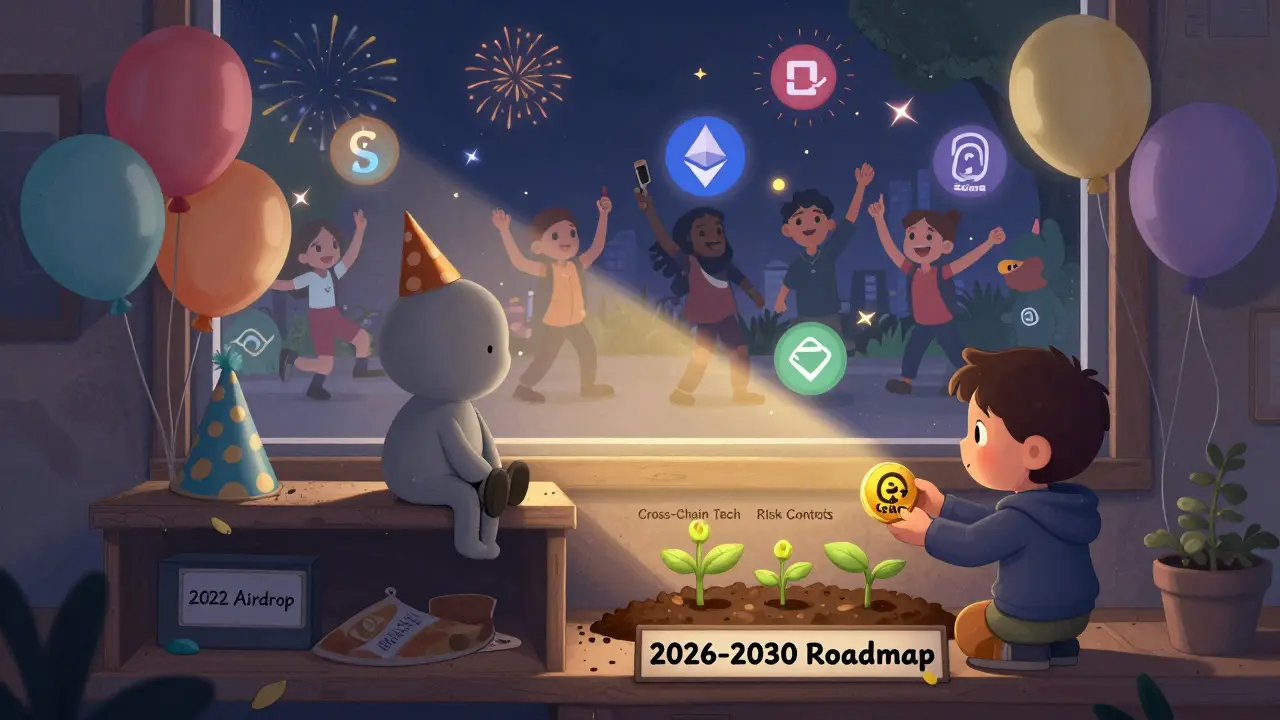
The roadmap didn’t disappear. The team kept building.
In 2025, they focused on improving cross-chain transfers. That’s huge. If you can move assets from Kusama to Ethereum or Solana smoothly, you open up millions of users. That’s the kind of feature that can turn things around.
In 2026, they’re adding better risk controls. That’s smart. DeFi users got burned too many times. If Genshiro can prove it’s safer than other platforms, people might come back.
By 2027, they plan to launch new staking and yield farming options. That’s the classic DeFi hook-earn passive income. If they nail this, they could attract users looking for returns in a low-rate environment.
The goal? To be a top-tier DeFi hub by 2030. That’s ambitious. But it’s not impossible.
Right now, GENS trades at pennies. But in crypto, a low price doesn’t mean dead. It means cheap. If the Kusama ecosystem picks up, if cross-chain tech becomes mainstream, if users start caring about security over hype-then Genshiro could be sitting on a hidden asset.
What Should You Do Now?
If you got GENS in 2022 and still hold it: you’re not alone. Most people sold long ago. But if you believe in the tech-not the price-you might just be waiting for the next cycle.
If you’re thinking about future airdrops:
- Watch for announcements on Equilibrium’s official channels-Twitter, Discord, their website.
- Don’t chase airdrops based on price. Look at what the project is building.
- Remember: the biggest airdrops don’t always win. The ones with real utility do.
GENS might never hit $0.063 again. But if Genshiro delivers on its 2026-2030 roadmap, it might not need to. It just needs users. And users don’t care about price-they care about what the platform can do for them.
Did the Genshiro airdrop only happen on MEXC and Gate.io?
The two largest and best-documented Genshiro airdrops were on MEXC and Gate.io. MEXC distributed 885,000 GENS through a voting system in January 2022. Gate.io gave out 1,277,825 GENS in a free offering, though exact details are less public. No other major exchanges have confirmed similar distributions. Smaller or private airdrops may have occurred, but they weren’t widely reported or verified.
Why did GENS crash so hard after the airdrop?
The crash wasn’t caused by one thing. Genshiro launched during a bull market when DeFi tokens were hyped. After the 2022 peak, the crypto market entered a long bear phase. Kusama didn’t grow as fast as Ethereum or Solana, so Genshiro lost momentum. Fewer users meant less trading, less demand, and a falling price. The team kept building, but without adoption, the market moved on.
Can I still get GENS tokens from an airdrop today?
As of early 2026, there are no active Genshiro airdrops running. The last major distributions were in 2022. Future airdrops would likely depend on new product launches or ecosystem growth. If one happens, it’ll be announced on Equilibrium’s official social media and website. Don’t trust third-party sites claiming to offer GENS airdrops-they’re likely scams.
Is Genshiro still being developed?
Yes. The Equilibrium team continues development according to its public roadmap. Updates in 2025 focused on cross-chain improvements, and 2026 plans include advanced risk management tools. The platform is live, and smart contracts are active. The lack of price growth doesn’t mean the project is dead-just that it hasn’t yet regained market attention.
Should I buy GENS now because the price is so low?
Buying GENS because it’s cheap is risky. A low price doesn’t mean it’s undervalued-it often means the market lost confidence. If you believe in Genshiro’s long-term tech and its roadmap for 2026-2030, then it could be a speculative play. But if you’re looking for quick gains, it’s not a good bet. Only invest what you can afford to lose, and only after researching the platform’s current activity and team updates.


Basil Bacor
March 7 2026lol at people still holding gens. you didn't get rich? duh. you got a lesson. that's the real airdrop. if you voted on mexc just to farm tokens, you were always gonna get burned. the platform was built for users, not gamblers. but nah, most of y'all just wanted to flip and vanish. classic.
gens didn't fail. the people who took it failed to understand it. now go cry in your solana bag.