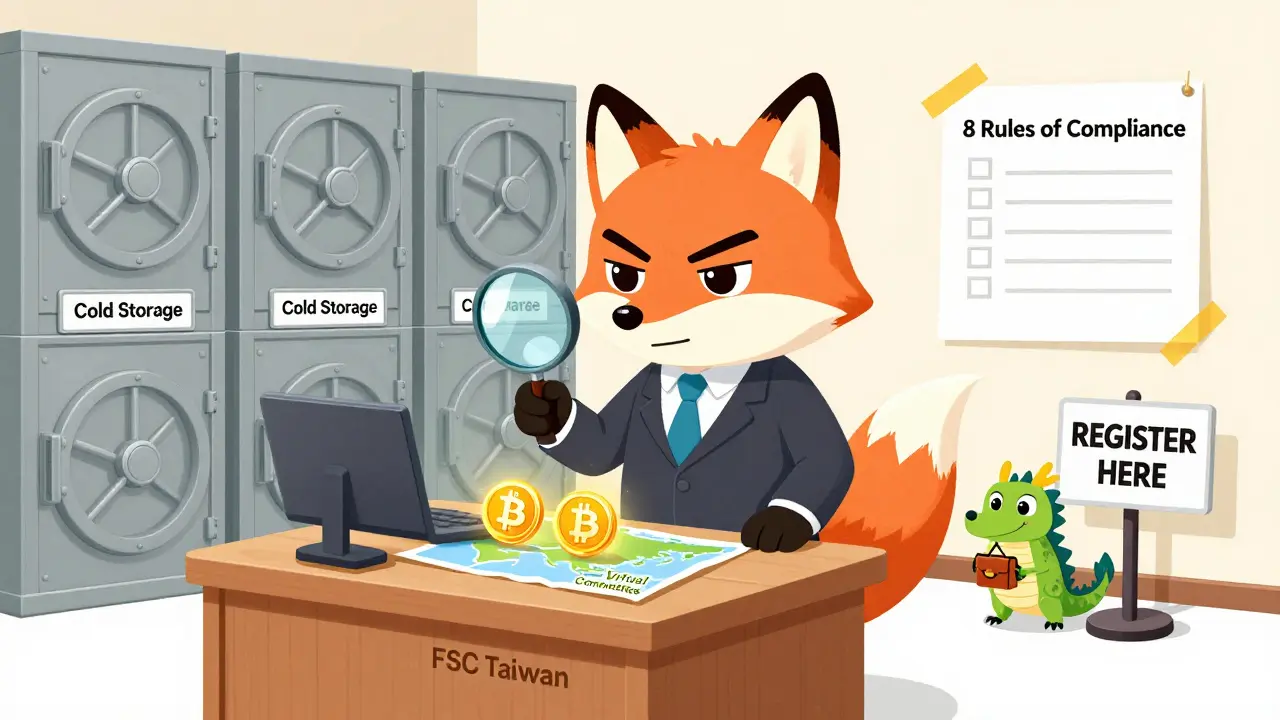
When you think of cryptocurrency regulation in Asia, places like Japan or Singapore often come to mind. But in 2026, Taiwan has quietly become one of the most structured and serious markets for crypto exchanges - not because it’s permissive, but because it’s strict. The Financial Supervisory Commission (FSC) isn’t playing games. If you’re running or using a crypto exchange in Taiwan, you’re operating under a system that demands real compliance, real oversight, and real consequences for failure.
It’s Not Legal Tender - It’s a Virtual Commodity
The FSC doesn’t treat Bitcoin or Ethereum as money. That’s critical. They classify them as virtual commodities. This means you can’t use them to pay your rent or buy coffee legally in Taiwan. But you can trade them - if you follow the rules. This distinction matters because it keeps crypto out of the traditional banking system while still allowing it to exist under a regulated umbrella. It’s not a ban. It’s a boundary.
Because of this, the FSC doesn’t apply banking laws to crypto exchanges. Instead, they created a separate set of rules under the Anti-Money Laundering Act. This is why every exchange - even if it’s based in Dubai or Berlin - must register with the FSC if it serves users in Taiwan. No exceptions. No loopholes. If you’re not registered, you’re breaking the law.
Registration Is Mandatory - And It’s Not Optional
In July 2024, the FSC made it crystal clear: no registration, no operation. All Virtual Asset Service Providers (VASPs), including crypto exchanges, wallet providers, and trading platforms, must complete mandatory Anti-Money Laundering (AML) registration before touching a single Taiwanese user’s funds. This isn’t a suggestion. It’s a legal requirement backed by criminal penalties.
What does registration involve? You need to submit detailed information about your company structure, ownership, AML policies, internal audit systems, and cybersecurity protocols. The FSC doesn’t just check your paperwork - they test your systems. They want to know how you store cold wallets, how you verify users, and how you monitor suspicious transactions. If your KYC process is outdated, you’ll be rejected. If your transaction monitoring software can’t flag a pattern of small, rapid transfers, you’re out.
Foreign exchanges aren’t exempt. Even if your company is registered in the U.S. or Singapore, if you have Taiwanese customers - even just 50 of them - you’re subject to FSC rules. That’s why some global exchanges pulled out of Taiwan entirely. Others spent millions upgrading their compliance infrastructure.
The Eight Rules of VASP Compliance
After the FTX collapse in late 2022, Taiwan didn’t wait for another disaster. In September 2023, the FSC rolled out its Guidelines for Virtual Asset Service Providers. These aren’t laws yet - but they might as well be. Every major exchange in Taiwan follows them. Here’s what they require:
- Whitepaper disclosure: Every new token or asset you list must come with a public whitepaper explaining its purpose, team, and risks. No vague marketing fluff. Real technical details.
- Asset segregation: Customer funds must be kept completely separate from company funds. No commingling. No using customer deposits to cover operational costs. This isn’t just best practice - it’s enforced with audits.
- Cold and hot wallet controls: You must document how much crypto you keep online (hot wallets) versus offline (cold wallets). The FSC expects 90%+ of assets in cold storage. If you’re keeping too much online, you’ll get flagged.
- Fair trading rules: No wash trading. No spoofing. No manipulating order books. The FSC uses transaction pattern analysis to detect fraud. If your exchange has a spike of identical trades between two accounts, expect a visit.
- Internal controls and audits: You need an independent audit team that reports directly to the board. Quarterly reports to the FSC are mandatory.
- Public disclosure: You must publish your AML policies, fee structures, and incident response plans on your website. Transparency isn’t optional.
- Information security: Your systems must meet FSC cybersecurity standards - encryption, multi-factor authentication, penetration testing, and breach reporting within 24 hours.
- Foreign VASP obligations: If you’re based overseas, you must appoint a legal representative in Taiwan and submit to FSC jurisdiction.
These aren’t suggestions. They’re the baseline. If you’re not meeting all eight, you’re not compliant. And in Taiwan, non-compliance means fines, suspension, or criminal charges.
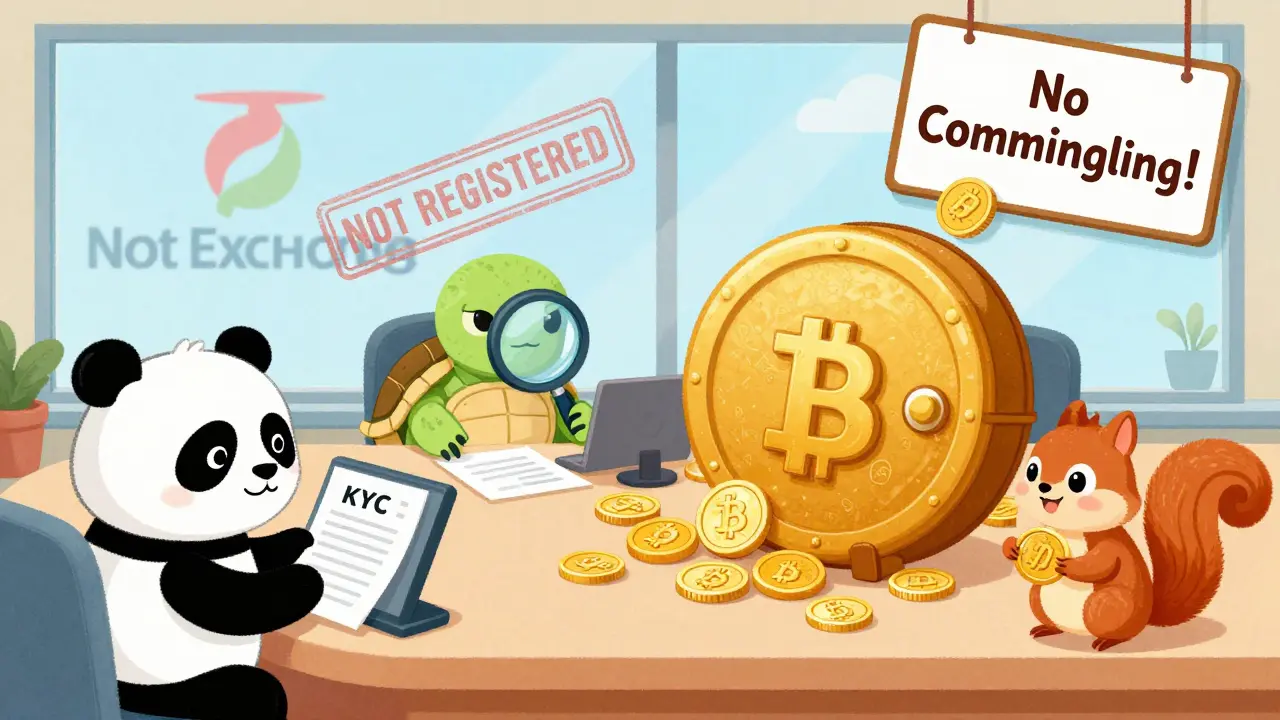
Security Tokens? Only for Licensed Dealers
Not all crypto is treated the same. If a token represents ownership in a company - like shares - it’s a security token. And those are tightly controlled. Only licensed securities dealers can trade them. The Taipei Exchange (TPEx) is the only authorized platform for security token offerings (STOs) in Taiwan.
Since 2022, only one STO has been approved. Why? Because the requirements are brutal. You need audited financials, legal counsel, investor disclosures, and approval from multiple government agencies. Retail investors can’t touch them. Even professional investors need special clearance. It’s designed to keep speculative noise out of the market.
Crypto ETFs Are Here - But Only for Pros
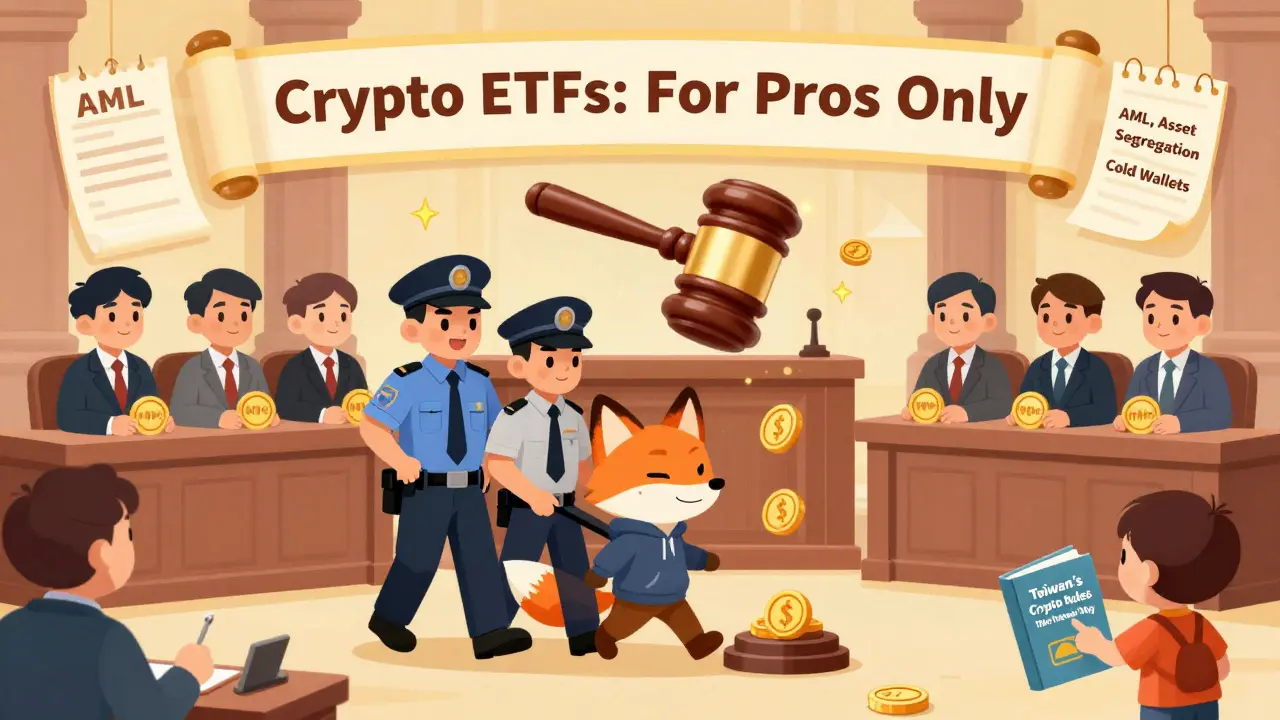
In early 2024, after the U.S. approved spot Bitcoin ETFs, Taiwan watched. Then it moved. By mid-2025, the FSC allowed professional investors to access foreign crypto ETFs - but only those listed on regulated exchanges like the NYSE or LSE. No retail access. No leverage. No exotic derivatives.
Who qualifies as a professional investor? You need a minimum NT$10 million (about $310,000 USD) in assets, or you must pass a knowledge test on derivatives and risk management. This isn’t about making crypto easy - it’s about making sure only people who understand the risks can play.
Penalties Are Real - And They’re Harsh
Taiwan passed four new anti-fraud laws in 2024. The message was clear: crypto crime won’t be tolerated. Violating AML rules can lead to:
- Fines up to NT$50 million (about $1.5 million USD)
- License suspension or revocation
- Custodial sentences of up to five years for executives
- Asset seizure
In late 2024, a local exchange was shut down after failing to report 12 suspicious transactions. The CEO was arrested. The company’s assets were frozen. The FSC didn’t warn them twice. They didn’t give them a chance to fix it. They acted.
What’s Next? A Real Crypto Law in 2025
The FSC isn’t done. A feasibility study for a full Cryptocurrency Act was completed in December 2024. A draft law is expected by July 2025. This could mean:
- Clearer definitions of what counts as a security vs. a commodity
- Standardized reporting formats for all exchanges
- Expanded oversight of decentralized finance (DeFi) protocols that serve Taiwanese users
- Potential pilot programs for retail crypto ETFs
Industry groups are already preparing. The Taiwan Virtual Asset Service Provider Association - made up of 24 major exchanges - has been working with the FSC on implementation. This isn’t resistance. It’s collaboration. The exchanges know: regulation brings legitimacy. And legitimacy brings institutional money.
Why This Matters - Even If You’re Not in Taiwan
Taiwan’s model is becoming a blueprint. It’s not as strict as China. It’s not as loose as the U.S. It’s a middle path: clear rules, real enforcement, and zero tolerance for fraud. Countries watching Taiwan’s progress include South Korea, Singapore, and even parts of the EU.
If you’re an exchange operator outside Taiwan, you should care. Why? Because the FSC’s rules are being copied. The AML registration process. The asset segregation standards. The cold wallet requirements. These are becoming global norms. If you’re planning to expand into Asia, Taiwan’s framework is your roadmap.
If you’re a trader or investor, Taiwan’s system gives you confidence. You know your funds are segregated. You know the exchange has been audited. You know they can’t just disappear overnight. That’s worth more than any marketing slogan.
Bottom Line
Taiwan’s FSC didn’t try to stop crypto. They didn’t ban it. They didn’t ignore it. They built a system that forces exchanges to behave - and protects users in the process. It’s not perfect. It’s not fast. But it’s honest. And in a world full of crypto chaos, that’s rare.
By 2026, if you’re using a crypto exchange in Taiwan, you’re using one that’s been vetted, registered, and monitored. That’s not luck. That’s regulation done right.
Do I need to register with the FSC if I run a crypto exchange serving Taiwanese users?
Yes. Any Virtual Asset Service Provider (VASP) that serves users in Taiwan - regardless of where it’s based - must register with the Financial Supervisory Commission (FSC) under the Anti-Money Laundering Act. Failure to register is a criminal offense and can result in fines, asset seizure, or imprisonment for executives.
Can I trade crypto on a foreign exchange if I live in Taiwan?
Technically, yes - but it’s risky. Foreign exchanges not registered with the FSC are operating illegally in Taiwan. If the FSC cracks down, your account could be frozen, and you may lose access to funds. Additionally, you won’t have legal recourse if the exchange is hacked or disappears. Only FSC-registered platforms offer protection under Taiwanese law.
Are Bitcoin and Ethereum regulated the same as security tokens in Taiwan?
No. Bitcoin and Ethereum are classified as virtual commodities and fall under VASP regulations. Security tokens - which represent ownership in a company or asset - are treated as securities and can only be traded on licensed platforms like the Taipei Exchange (TPEx). The rules for security tokens are far stricter and require full financial disclosures and investor qualification checks.
What happens if my crypto exchange fails an FSC audit?
The FSC will issue a corrective notice with a deadline. If you don’t fix the issues - like poor KYC, lack of asset segregation, or weak cybersecurity - your registration will be suspended. Repeat violations lead to revocation of your license. In severe cases, executives face criminal charges, and the company’s assets may be seized.
Can retail investors in Taiwan buy crypto ETFs?
No. As of 2026, only professional investors - those with at least NT$10 million in assets or who pass a rigorous financial knowledge test - can access foreign crypto ETFs in Taiwan. Retail investors are not permitted to invest in these products, even if they’re listed on international exchanges.
How does Taiwan’s crypto regulation compare to the U.S. or EU?
Taiwan’s approach is more centralized and rule-based than the U.S., which has a patchwork of state and federal rules. Compared to the EU’s MiCA framework, Taiwan’s system is less detailed but more strictly enforced. Like Japan and South Korea, Taiwan focuses on AML compliance, asset segregation, and operator accountability - with real penalties for violations. It’s less about innovation and more about integrity.
Is the FSC planning to allow more crypto products in the future?
Yes. A draft cryptocurrency law is expected in mid-2025, which may expand access to regulated crypto products, including possible retail crypto ETFs and clearer rules for DeFi. But the FSC is moving slowly. Their priority isn’t growth - it’s stability. Any new product will require strict investor protections and compliance checks.


Arya Dev
March 2 2026Okay, so Taiwan just turned crypto into a bureaucratic obstacle course???
Like, I get it - no one wants another FTX, but this is overkill. 90% cold storage? Mandatory whitepapers? Who even reads those???
I’m not saying it’s bad… but it’s exhausting. It’s like trying to open a lemonade stand and having to pass a CPA exam, submit a 30-page risk assessment, and get notarized by three different government agencies.
And don’t get me started on the ‘foreign exchange’ rule. So if I’m in India and I use Binance? I’m breaking Taiwanese law? Even if I’m not even in Taiwan???
This isn’t regulation. It’s digital colonialism. Who gave them the right to dictate how the rest of the world runs their crypto?
Also, why is there a 5-year jail sentence? For a *crypto exchange*? That’s not regulation - that’s a hostage situation.
I’m not anti-regulation. I’m pro-sanity. This is like putting a tank in front of a bicycle.
And yet… I kinda respect it? Because at least they’re not pretending it’s all chill and decentralized. They’re like, ‘Nope. We’re serious.’
Still. My brain hurts.