Trading large amounts of cryptocurrency usually feels like a gamble. You click "Swap," and within seconds, your order gets front-run by bots or crushed by slippage because there just isn't enough liquidity in the pool to handle the size. It’s frustrating, expensive, and frankly, unfair for anyone moving more than a few hundred dollars. This is exactly why Fraxswap v2 is a decentralized exchange built on the Avalanche blockchain that uses a unique Time-Weighted Average Market Maker (TWAMM) system to split large orders over time. It promises to solve the slippage problem without you needing to be a coding wizard.
But here is the hard truth about Fraxswap v2 on Avalanche in mid-2026: it is a niche tool with incredible technology but very low adoption. If you are looking for the fastest, cheapest place to swap small amounts of tokens, this might not be your first stop. However, if you are an institutional trader or a whale trying to move significant assets without crashing the price, this platform offers something almost no other decentralized exchange (DEX) does.
What Makes Fraxswap v2 Different?
Most decentralized exchanges, including giants like Uniswap and Trader Joe, rely on a simple mathematical formula called xy=k is the constant product formula used by automated market makers to determine token prices based on pool reserves. This works fine for small trades. But when you try to buy $100,000 worth of a token in one go, the price moves against you instantly. That is slippage.
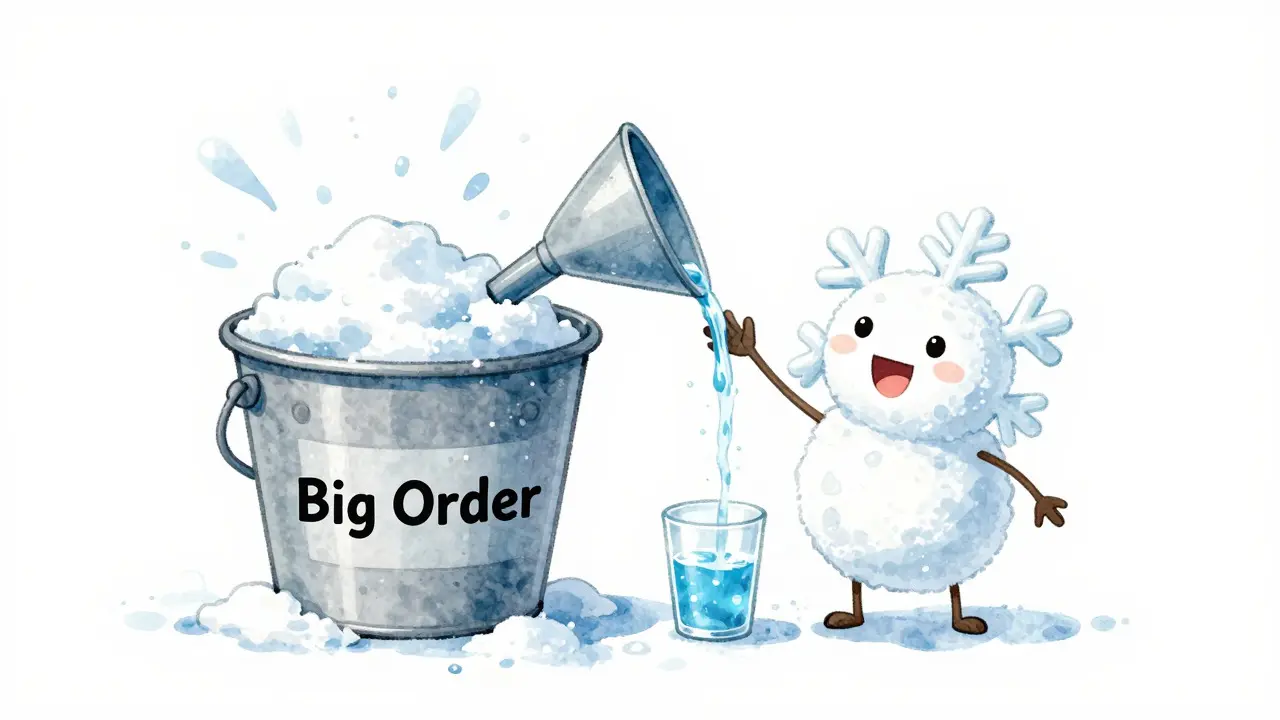
Fraxswap v2 keeps the xy=k base but adds a proprietary layer called TWAMM is Time-Weighted Average Market Maker, a feature that executes large trades gradually over a set period to minimize market impact. Think of it like pouring water into a glass. If you dump a gallon at once, it spills everywhere (slippage). If you pour it slowly and steadily, it fills perfectly. TWAMM breaks your massive order into tiny virtual chunks and executes them incrementally over hours or days.
This isn't just marketing fluff. According to technical assessments from early 2026, this is the first xy=k AMM to implement this specific type of long-term order execution natively. For regular users, it means better average entry prices. For big players, it means they can hide their intentions from predatory bots.
Performance and Liquidity: The Reality Check
Let’s talk numbers, because features don’t matter if no one is using them. As of February 2026, data from CoinMarketCap showed Fraxswap v2 on Avalanche had a 24-hour trading volume of roughly $9,600. To put that in perspective, its main competitor on Avalanche, Trader Joe is the leading decentralized exchange on the Avalanche network known for high liquidity and user-friendly interface, was processing over $87 million in the same timeframe.
That is a massive gap. Fraxswap v2 holds less than 0.01% of the market share compared to Trader Joe. Why does this matter to you? Because liquidity drives efficiency. Low liquidity means fewer trading pairs and potentially higher risks if you need to exit a position quickly during volatile markets. While the TWAMM feature helps mitigate slippage, the sheer lack of depth in the pools can still result in worse outcomes than expected if the underlying asset is illiquid.
| Feature | Fraxswap v2 (Avalanche) | Trader Joe | Pangolin |
|---|---|---|---|
| Primary Advantage | TWAMM for large orders | High liquidity & speed | Broad token support |
| 24h Volume (Feb 2026) | ~$9,600 | ~$87.3 Million | Varies (Lower than TJ) |
| Transaction Fees | $0.01 - $0.05 | $0.01 - $0.05 | $0.01 - $0.05 |
| Best For | Institutional/Whale trades | Retail daily trading | Niche altcoin swaps |
| Liquidity Depth | Low | Very High | Medium |
Note that transaction fees on Avalanche itself are incredibly low, averaging between one and five cents regardless of which DEX you use. So cost isn't the differentiator here; it's the execution quality and available liquidity.

User Experience and Setup
If you have ever used Uniswap on Ethereum, you will feel right at home on Fraxswap v2. The interface is clean, familiar, and doesn't require any special software downloads. You just need a Web3 wallet. MetaMask is a popular browser extension and mobile app wallet used to interact with decentralized applications on various blockchains, Trust Wallet, and Core Wallet all work seamlessly.
Here is how you get started:
- Install or open your compatible wallet (e.g., MetaMask).
- Add the Avalanche C-Chain network to your wallet settings if it isn't already there.
- Connect your wallet to the Fraxswap website.
- Select the token pair you want to trade.
- For standard swaps, enter the amount and confirm. For TWAMM orders, select the "Limit" or "TWAMM" option to set duration and parameters.
The learning curve is minimal-about 15 minutes for anyone who has done DeFi before. However, the documentation can be sparse for beginners. Most help comes from the Frax Finance Discord server, which has around 45,000 members as of early 2026. Response times for technical questions average 12-24 hours, so don't expect instant customer service if you get stuck.
Is It Safe? Security and Governance
Security in DeFi is never guaranteed, but Fraxswap benefits from being part of the larger Frax Finance is a decentralized fractional-algorithmic stablecoin protocol founded by Sam Kazemian in 2020 ecosystem. The platform operates fully on-chain, meaning there are no central servers to hack in the traditional sense. Your funds stay in your wallet until you approve a transaction.
Governance is handled through the FXS token, allowing community members to vote on upgrades and changes. This decentralization is a plus for transparency. However, smart contract risk always exists. While Fraxswap's code has been audited as part of the broader Frax ecosystem releases, the specific Avalanche implementation is newer and has seen less battle-testing than its Ethereum counterpart. Always start with small amounts to test the waters.

Who Should Use Fraxswap v2?
Not every trader needs this tool. Here is a quick breakdown of who should care and who should look elsewhere.
- Use Fraxswap v2 if: You are executing large trades ($10k+) and want to minimize slippage over time. You are comfortable waiting hours or days for an order to complete. You believe in the Frax ecosystem and want to support its growth.
- Avoid Fraxswap v2 if: You are a retail trader swapping small amounts ($10-$500). You need immediate execution. You want access to hundreds of exotic meme coins (liquidity is concentrated on major pairs).
For the average person buying AVAX or USDC, Trader Joe or Pangolin will likely offer a smoother experience due to deeper liquidity pools. Fraxswap v2 is a specialist instrument, not a general-purpose store.
Future Outlook: Will It Grow?
The future of Fraxswap v2 on Avalanche hinges on two things: institutional adoption of Avalanche and the success of the TWAMM model. In early 2026, we saw growing interest in Avalanche ETFs, with firms like VanEck amending filings to include staking rewards. This brings more professional money into the ecosystem. Professionals hate slippage. They love tools like TWAMM.
If Avalanche continues to attract institutional capital, Fraxswap v2 could see a surge in usage as these big players seek efficient ways to move assets. Analysts suggest that unless daily volume hits at least $1 million-a 100x increase from current levels-the platform may remain a niche curiosity. But given the innovative nature of TWAMM, it has a clear path to relevance if the broader market matures.
What is TWAMM on Fraxswap?
TWAMM stands for Time-Weighted Average Market Maker. It is a feature on Fraxswap that allows users to execute large trades gradually over a specified period. Instead of buying all tokens at once (which causes high slippage), the system splits the order into smaller chunks and executes them incrementally, resulting in a better average price.
Is Fraxswap v2 safe to use?
Fraxswap v2 is a decentralized platform operating on the secure Avalanche blockchain. It uses smart contracts governed by the Frax Finance community. While no DeFi platform is 100% risk-free, Fraxswap benefits from audits associated with the broader Frax ecosystem. Users should always verify contract addresses and start with small transactions.
How do fees compare to other Avalanche DEXs?
Transaction fees on Fraxswap v2 are extremely low, typically between $0.01 and $0.05 per transaction, similar to other Avalanche-based exchanges like Trader Joe and Pangolin. The cost advantage comes from the Avalanche network itself, not specifically the exchange.
Why is the trading volume so low?
Fraxswap v2 on Avalanche is a relatively new and specialized platform. Its primary feature, TWAMM, appeals mainly to large traders rather than the mass retail market. Consequently, it lacks the deep liquidity and user base of established competitors like Trader Joe, resulting in lower overall volume.
Which wallets work with Fraxswap v2?
Fraxswap v2 supports any Web3 wallet compatible with the Avalanche C-Chain. Popular options include MetaMask, Trust Wallet, Core Wallet, and Coinbase Wallet. You simply need to ensure your wallet is connected to the Avalanche network before accessing the site.