
Remember the wild west of crypto airdrops in 2021? It was a time when clicking "Join" on a website could net you free tokens just for having a Twitter account. The FEAR token airdrop is a perfect snapshot of that era. If you are digging through your wallet history or researching the Play2Earn sector's roots, understanding how this specific distribution worked helps you spot patterns in today's more complex campaigns.
The Core Mechanics of the FEAR Distribution
The FEAR token didn't build its own clunky claim portal. Instead, it partnered with CoinMarketCap, leveraging their massive infrastructure to handle the heavy lifting. This partnership concluded on September 24, 2021, marking the end of the primary distribution phase. Why does this matter? Because using established platforms like CMC reduced friction for users who were still wary of connecting wallets to unknown sites.
The process was dead simple. You logged into your CoinMarketCap account, found the official registration link, and clicked "Join This Airdrop." No smart contract interactions, no gas fees for claiming (usually handled by the platform), and no confusing bridge transactions. Just social proof and basic verification.
What Did Participants Actually Get?
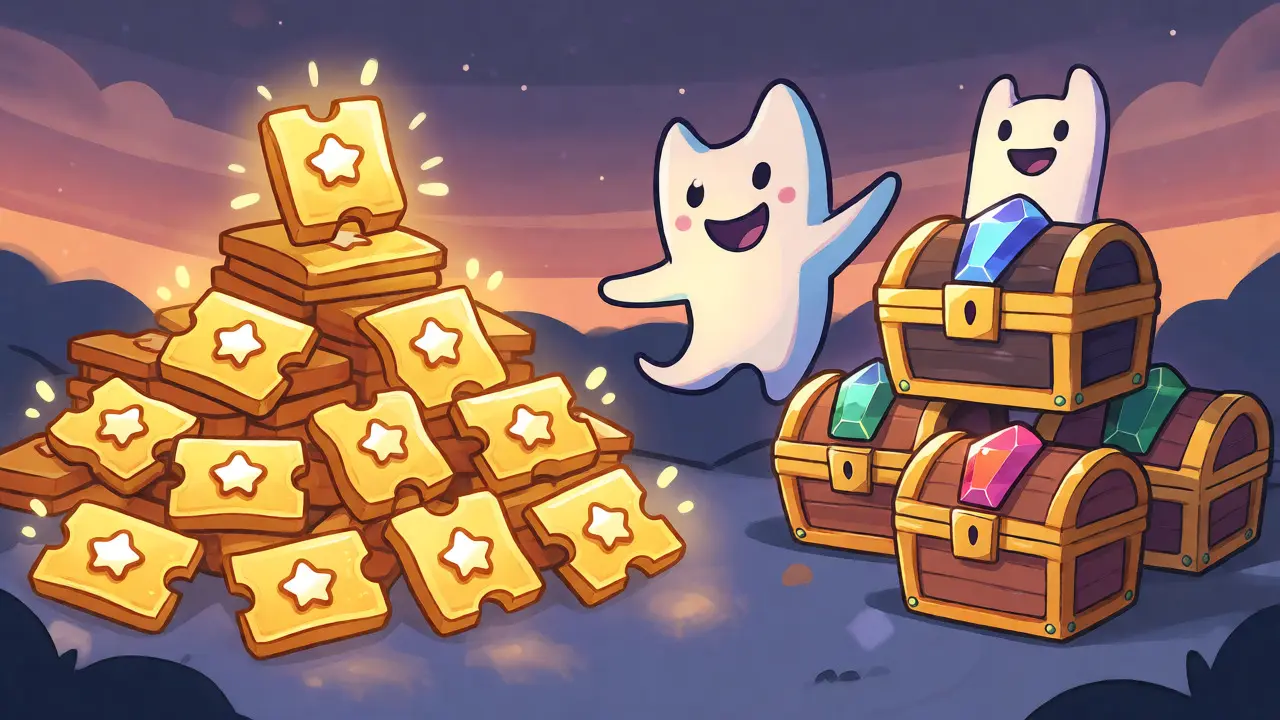
Not everyone got the same thing. The distribution was tiered, which was somewhat unusual for the time. Initially, the project handed out 2,000 Play2Earn NFT Airdrop tickets. Each ticket held a value of 25 FEAR tokens. That’s a modest start, but they scaled up quickly. Later rounds expanded the pool to distribute 20,000 $FEAR tokens among over 500 winners.
This structure suggests the team wanted to reward early adopters with tangible assets (NFTs) while spreading the wider token supply to a broader audience later. It was a community-building tactic before "community building" became a buzzword.
| Award Type | Quantity | Value per Unit | Total Tokens |
|---|---|---|---|
| NFT Tickets | 2,000 | 25 FEAR | 50,000 FEAR |
| Direct Winners | 500+ | Variable | ~20,000+ FEAR |
Requirements: The Social Media Gatekeepers
To qualify, you needed active accounts on both Twitter and Telegram. This dual-platform requirement was standard for 2021 airdrops. Projects wanted visibility on the public square (Twitter) and engagement in private groups (Telegram). If you had a dormant Telegram account or a Twitter profile with zero activity, you likely missed out.
Unlike modern airdrops that require you to swap tokens, provide liquidity, or bridge assets across chains, the FEAR campaign asked for nothing more than your attention. This low barrier to entry resulted in high participation numbers but also attracted many non-serious users who dumped tokens immediately upon receipt.
Where Does FEAR Stand Today?
Fast forward to October 2026. The landscape has shifted dramatically. Back then, gaming tokens were the hot new thing. Now, projects like EigenLayer and LayerZero dominate headlines with restaking and interoperability narratives. FEAR hasn't maintained the same visibility as giants like Axie Infinity or The Sandbox.
Price analysis for 2025 estimated an average range between $0.006654 and $0.008444. With current market prices hovering around $0.008443, the token has shown minimal appreciation potential based on recent forecasts. Extended predictions through 2028 suggest a potential high of $0.01123, representing a modest ROI if the project remains active. However, the lack of major updates in 2025 airdrop compilations hints at either dormancy or a pivot away from aggressive token distribution strategies.
How Modern Airdrops Differ from FEAR’s Approach
If you are looking to farm airdrops today, don't expect another FEAR-style giveaway. The industry matured. We moved from "social media farming" to "on-chain activity verification."
- Snapshots vs. Tasks: FEAR used manual sign-ups. Modern projects use wallet snapshots to verify historical activity.
- Soulbound Tokens: To prevent sybil attacks (one person making 100 wallets), projects now issue non-transferable tokens to prove unique human identity.
- Complexity: FEAR required zero technical skill. Today, you might need to understand restaking mechanisms or multi-signature wallets.
The FEAR airdrop occurred before strict regulatory frameworks affected distributions. Today, Know Your Customer (KYC) checks and geographic restrictions are common, adding layers of compliance that didn't exist in 2021.
Should You Still Care About FEAR?
For most investors, FEAR is a historical artifact. It represents a specific moment in crypto history when Play2Earn hype peaked. If you hold FEAR tokens from that era, check if they are still tradable on major exchanges. Given the low trading volume and limited development news, liquidity might be thin.
However, studying FEAR offers a lesson in tokenomics. Simple distribution without sustained utility often leads to price stagnation. Compare this to successful projects that integrated gameplay loops and economic sinks, keeping demand alive long after the initial airdrop hype faded.
When did the FEAR token airdrop end?
The primary distribution phase via CoinMarketCap concluded on September 24, 2021. Subsequent smaller distributions may have occurred, but the main campaign ended then.
What was the total number of FEAR tokens distributed?
The project distributed approximately 50,000 FEAR tokens via NFT tickets (2,000 tickets x 25 tokens each) and an additional 20,000+ tokens to direct winners, totaling roughly 70,000+ FEAR tokens in the main campaign.
Do I need KYC to claim FEAR airdrops today?
Since the main airdrop ended in 2021, there is no active claim process requiring KYC. If you missed the original window, you generally cannot retroactively claim those specific rewards unless the project announces a special extension.
Is FEAR token still active in 2026?
Development activity appears limited compared to leading gaming tokens. While price predictions exist, the absence of major news in recent years suggests the project may be dormant or operating with a small team.
Why did FEAR partner with CoinMarketCap?
Partnering with CoinMarketCap allowed FEAR to leverage a user base of over 100 million monthly active users, ensuring wide reach and trust without building custom infrastructure for user acquisition.